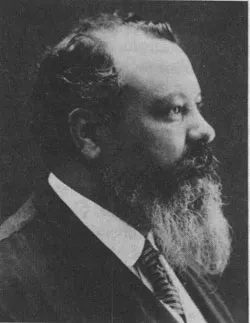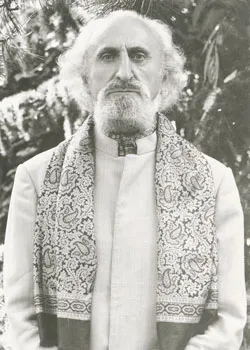
Frithjof Schuon
Human Design Chart
Biography
Frithjof Schuon — Manifestor with Profile 5/1
Manifestor 5/1 — Design at a Glance
Frithjof Schuon's design placed him as a pioneer whose task was to guide the world into new directions. Like an emperor in ancient Rome, he possessed the vision of a great whole but did not wage the necessary wars himself; instead, he delegated this work to others. This configuration brought with it a specific challenge: Since his thoughts often reached further than those around him, he was frequently misunderstood and polarized strongly. While some people loved his big dreams and followed him, others rejected or even hated him precisely because of this visionary perspective.
To minimize these tensions and find the right followership, it was crucial for him to inform others timely and accurately about his intentions and visions. This strategy of informing served to avoid friction before he acted. If Frithjof Schuon lived in accordance with this principle and his inner authority, he was rewarded with a sense of internal peace. However, if he acted against his design without creating this clarity, it likely resulted in persistent deep anger. His path thus was characterized by the effort to exercise his leading role through clear communication to achieve the characteristic internal balance and transform the resistance of his environment.
Emotional Authority
Frithjof Schuon's design indicated a tendency towards emotional depth: He showed himself as someone who filtered his perception through the lens of his feelings. His inner authority was Emotional Authority, carried by the defined Emotional Center. In Human Design mechanics, this authority is always considered primary regardless of which other centers are also defined.
This center is subject to natural waves of highs and lows. The world often appeared colored by his current mood; one moment could be marked by enthusiasm, the next by skepticism. His immediate feeling was only a snapshot, not a final judgment. Quick decisions based on this fleeting emotion could therefore prove misleading.
The mechanics of his design demanded patience. He needed time to let decisions mature. Only when intense feelings subsided and emotional distance was gained did clarity set in. This process of 'sleeping over' questions was essential for him, especially regarding long-term life decisions. Only through this waiting could he recognize his true inner truth beyond the transient emotional coloring. His strategy thus consisted of hesitating and not trusting the first impulse but letting the emotional wave subside before acting.
The 5/1 Profile — Heretic / Investigator
Frithjof Schuon's design indicated a tendency towards a dual life task: intense, often solitary research for truth (Line 1) and later the urge to provide this acquired knowledge as a solution for others (Line 5). As a 5/1 'Hero/Researcher', he initially showed himself in the phase of learning and inner condensation. Here, Gate 25 fostered an attitude of selflessness and spontaneous communication, coupled with the challenge of centering these insights. This first half of life was marked by Neptune's influence on scatter and uncertainty, a process where traditional wisdoms were experimentally explored.
In further development, Line 5 acted as 'Champion'. Schuon developed almost magnetic charisma that drew others to him for answers to existential questions. However, this role also brought risks: Without clear boundaries, exhaustion threatened from societal expectations and projections. Gate 12 in Line 5 promoted a pragmatic approach to crises and social skill but also taught caution. Deep emotional experiences and pain in human interactions led him to avoid certain interactions or withdraw to protect his energy. The balance between withdrawal for research and openness for solving others' problems was crucial. Only through setting boundaries could he maintain the beneficial tension between private knowledge acquisition and public teaching without sacrificing himself or burning out.
Single Definition — Defined & Open Centers
Frithjof Schuon's Human Design profile revealed a tendency towards consequent, conceptual precision, shaped by his defined Ajna Center. He possessed a consistent mental function to create concepts and theories without being easily influenced by others. His mind served to process data and act as an external authority for others, though it also carried the risk of clinging to incomplete thoughts. This mental structure culminated in a defined Throat Center: he could reliably express what he thought. His communication was a direct expression of his mental processes, allowing him to convey messages clearly and honestly if he trusted his strategy.
Simultaneously, profound emotional complexity emerged through his defined Solar Plexus Center. This was his inner authority; he had to wait out the emotional waves before making decisions. Truth for him revealed itself over time, not in the moment. Impulsive reactions to the highs or lows of this wave would have led to chaos; instead, he cultivated deep sensitivity and insight into the spiritual plane through patience.
In contrast, his Head Center was open. He had no consistent way to process inspiration but tended to be distracted by doubts or the pressure to answer others' questions. The secret lay in not letting mental pressure build up and remaining a detached observer of one's thoughts. His open G Center meant he did not carry a fixed identity but blended with his environment. He relied on being initiated into the right direction by others rather than dictating it himself. Likewise, his Heart, Sacral, and Spleen Centers were also open, making him vulnerable to conditioning regarding willpower, energy expenditure, and survival fears. He had to learn not to prove himself through promises or spontaneous actions but to trust his inner authority in the Solar Plexus to navigate these open fields healthily.
Channels for insatiable search and emotional openness.
Frithjof Schuon was someone who translated the abstract into tangible narratives. This ability stemmed from Channel of Curiosity 11-56, connecting his Ajna Center with his Throat Center. He gathered ideas and shaped them into stories that relied less on raw facts than on stimulating imagination and emotions. His portrayals served to teach or entertain by filling gaps in information with imaginative content.
At the same time, his expression was emotionally driven. Channel of Openness 22-12 linked his Solar Plexus Center with his Throat Center, making his communication dependent on his individual emotional wave. The way he touched or moved others depended on the right timing and his current mood; only when he felt it could he effectively use warmth to dissolve barriers.
This profile was complemented by additional energetic currents. Gate 25 endowed him with a mystical stance of innocence and individuation, while Gate 46 encouraged full immersion in the present moment. Logistical structures worked in the background: Gate 62 promoted patience and pattern recognition, Gate 6 introduced elemental friction for development, and Gate 20 supported recognizing authentic self-momentarily. Collective aspects like experimental joy (Gate 16), tribal hierarchy (Gate 45) as well as cyclical crisis management (Gate 36) rounded out his design by embedding him in larger social and evolutionary contexts.
Individual Circuitry — Circuit Signature
Frithjof Schuon's Human Design profile inclined towards emotional authenticity and reflective communication. His defined centers – Ajna, Throat, and Solar Plexus Centers – formed a cohesive energetic flow within a single group. This allowed him to directly express inner feelings into words without them being broken by undefined areas.
The Knowledge Circuit worked through him via the Channel of Openness (Gates 12 and 22). This connected his Solar Plexus Center with his Throat Center. The energy here was pulsing and acoustic, driven by emotional waves. Frithjof Schuon could thus manifest his unique identity through the expression of his current feelings – not as a cool analysis but as a living, emotional truth that arrived in the present.
Parallel to this, the Meaning Circuit worked via the Channel of Curiosity (Gates 11 and 56). This connected his Ajna Center with his Throat Center. The energy here was cyclical and visual, often plummeting in its intensity. It served to reflect on the past and find meaning behind past events. Frithjof Schuon used this connection to share felt insights from the past with the collective.
Both circuits culminated in the Throat Center. While the Knowledge Circuit carried the emotional wave of the Solar Plexus into the present, the Meaning Circuit filtered the visual reflection of the Ajna Center from the past. As all three centers were directly connected, Frithjof Schuon experienced a seamless transition between felt experience, mental categorization, and verbal articulation. His communication was thus always both emotionally grounded and meaningfully reflective.
Left Angle Cross of Education 1
Frithjof Schuon's Human-Design legte eine Tendenz zur tiefen, oft unausgesprochenen Verantwortung für die Weitergabe von Wissen und Werten fest. Das linke Kreuz der Erziehung beschreibt keine formelle Lehrertätigkeit, sondern eine innere Dynamik: Der Mensch fühlt sich berufen, Sinnstiftung und Orientierung zu bieten – nicht durch bloße Information, sondern durch das Vorbild einer gelebten Haltung. Diese Konfiguration wirkt subtil; sie zeigt sich in der Art, wie Frithjof Schuon andere beeinflusste, indem er Raum schuf, in dem Lernen aus Erfahrung möglich wurde. Es ging weniger um die Vermittlung von Fakten als darum, eine Atmosphäre zu schaffen, in der innere Reifung stattfinden konnte. Die Energie dieses Kreuzes ist geduldig und nachhaltig; sie baut keine schnellen Ergebnisse auf, sondern wirkt über lange Zeiträume hinweg im Hintergrund. Frithjof Schuon lebte diese Qualität nicht durch lautstarke Predigt, sondern durch eine stille Präsenz, die andere dazu einlud, ihre eigenen Antworten zu finden. Seine Art der „Erziehung“ bestand darin, Fragen zu stellen, die zum Nachdenken anregten, und Wege aufzuzeigen, ohne den Weg vorzugehen. Dies entspricht der Mechanik des linken Kreuzes: Es ist kein aktiver Lehrer im herkömmlichen Sinne, sondern ein Katalysator für das eigene Wachstum anderer. Die Wirkung war daher oft erst im Nachhinein erkennbar, wenn die von ihm berührten Menschen ihre eigenen Schritte unternahmen und dabei auf die inneren Ressourcen zurückgriffen, die durch seine Anwesenheit gestärkt worden waren.
Saturn Return · Uranus Opposition · Chiron Return · 2nd Saturn Return — Life Cycles
Frithjof Schuon's Human-Design legte eine Tendenz zu zyklischer Verdichtung und öffentlicher Veröffentlichung fest. Sein Leben folgte einem klaren Rhythmus, in dem innere Reifungsprozesse sich durch konkrete Werke nach außen wandelten. 1935, im Alter von 28 Jahren, veröffentlichte er „Leitgedanken zur Urbesinnung“. Dies markierte seinen ersten Saturn-Return: eine Phase, in der jahrelange Vorarbeit oft zu einem tragfähigen, strukturellen Ergebnis verdichtet wird und die eigene Positionierung festigt.
Zehn Jahre später, 1947 im Alter von 40 Jahren, trat für ihn die Uranus-Opposition ein. Mit den Veröffentlichungen „Tage- und Nächtebuch“ sowie „Sulamith“ zeigte sich der typische Effekt dieses Aspekts: eine plötzliche, oft unerwartete Öffnung oder Transformation, die alte Strukturen bricht und neue Perspektiven erzwingt. Es war kein gradueller Wandel, sondern ein deutlicher Schnitt in seiner künstlerischen und intellektuellen Ausdrucksweise.
Der Chiron-Return um das 50. Lebensjahr herum, konkret 1957 mit „Sentiers de gnose“ und „Castes et races“, signalisierte die Blüte seines Inkarnationszwecks. Sofern er zuvor seiner inneren Autorität gefolgt war, wurde nun sein tiefster Sinn erfahrbar und wirksam; es handelte sich nicht um Heilung im medizinischen Sinne, sondern um die volle Entfaltung dessen, wofür er da war.
Abschließend folgte 1961 der zweite Saturn-Return mit „Comprendre l’Islam“. Dieser Zyklus bestätigte und stabilisierte die zuvor erreichten Erkenntnisse in einer neuen, reiferen Form, wodurch sein Lebenswerk eine endgültige, kohärente Struktur erhielt.
Manifestor · Emotional Authority — Synthesis
He was a Manifestor who walked through life and conveyed a vision of profound understanding. The defined mental center (Ajna) and the channel of curiosity (Gate 11/56) indicated an unceasing drive to develop concepts and share them as inspiration – a process that was amplified by the Profile of Hero/Researcher (Profile 5/1). He sought new perspectives and shared his insights, always leveraging the depth of his knowledge to help others solve problems. This ability to generate and disseminate knowledge repeatedly manifested in publications on various topics (1935, 1947, 1957, 1961), underscoring the expression of his unique identity within the Knowledge Circuit.
Simultaneously, he lived through an emotional wave (Emotional Authority), creating an internal tension field. The necessity to let decisions mature and experience emotions contrasted with the impulsive nature of a Manifestor destined to initiate things and bring about change. This dynamic led to polarization – he was celebrated for his visions as well as misunderstood, illustrating the paradox between the trailblazer and the inner emotional process.
2 Defined Channels
Incarnation Cross - Left Angle Cross of Education 1
Solar Return
The Solar Return shows the moment when the sun returns to its exact birth position - your personal solar year.
Life Cycles
Discover the life cycles with a detailed triple view (birth chart, cycle chart, composite).
Human Design Profile
- Type
- Manifestor
- Strategy
- To inform others before acting
- Authority
- Emotional Authority
- Profile
- 5/1 - Heretic / Investigator
- Definition
- Single Definition
- Incarnation Cross
- Left Angle Cross of Education 1
- Date of Birth
- 18.06.1907 23:55
- Place of Birth
- Basel, SWTZ
Frequently Asked Questions
What was Frithjof Schuon's Human Design type?
Which Profile did Frithjof Schuon have in Human Design?
What Authority did Frithjof Schuon have?
What incarnation cross did Frithjof Schuon have?
When was Frithjof Schuon born?
Discover your own Human Design
Are you also a Manifestor? Find out in a personal reading how to use your initiation power peacefully and dissolve resistance.
More Personalities
Back to overviewChristian-Jaque
Kesha

Lucebert
Masaccio
Nadar
Papus