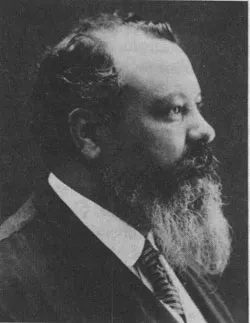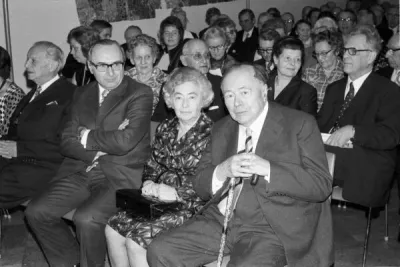
Fritz Baade
Human Design Chart
Biography
He died in Kiel on 15 May 1974, aged 81.
What does Manifestor 2/4 mean for Fritz Baade?
Manifestor 2/4 — Design at a Glance
Fritz Baade's Human Design profile marked him as a pioneer and visionary. His energy was focused on guiding the world towards a new future, much like an emperor in ancient Rome who possessed a grand vision for an empire but did not fight battles himself; instead, he sent others to conquer lands for him. This nature inevitably led to misunderstandings and polarization. Because his thinking often surpassed that of those around him, reactions were mixed: some loved his big dreams and followed him, while others hated these visions and rejected him.
This conflict was the core of his design. The path to inner peace lay in informing people accurately about his intentions and visions at the right time. By doing so, he could attract the right followers and avoid unnecessary friction. Living according to this strategy and following his authority brought a sense of internal peace. However, deviating from this path and living against his design led to persistent deep anger. This emotional reaction served as a clear indicator that he was not in his natural flow. His life was thus characterized by the tension between the necessity to share his vision and the challenge of finding the right resonance with others through informing to reduce polarization and achieve peace.
Splenic Authority
Fritz Baade's design featured an immediate, intuitive decision-making tendency. He trusted the first impulse as it directly served his physical well-being. This stance stemmed from his inner authority in the defined Spleen Center. This center functioned as his health and alarm system, equipped with a pronounced survival intelligence. His instinct signaled spontaneously whether a situation or environment was right for him.
For the Spleen Center to carry this authority, Fritz Baade's Emotional and Sacral Centers were open. This configuration is specific to Projectors or Manifestors. The key mechanism required decisions to be made in the moment; the first impulse was the correct one. Since this signal could easily be drowned out by external influences, it demanded vigilance and sometimes withdrawal for him to hear his own instincts clearly.
Long-term commitments did not fit this mechanism as his needs could change quickly. He needed flexibility and space rather than rigid plans. His ability to rigorously shield himself from harmful influences was a direct result of this system, which helped him take very good care of himself. The structure of his design prioritized spontaneous intuition over subsequent reflection or external validation.
The 2/4 Profile — Hermit / Opportunist
Fritz Baade's design featured a dialectical tension: the deep need for withdrawal into inner clarity (Line 2, the Hermit) clashed with an equally strong desire for community and network utility (Line 4). This configuration marked him as someone constantly swinging between two poles – the wish to be alone and the urge to spend time with his 'favorite people'.
The operational challenge lay in clearly communicating these shifting states. His design required creating a safe space to switch between 'Me-Time' for reflection and active exchange. In isolation, Fritz Baade immersed himself in internal processes, created calm, and examined projections. Line 2, combined with Gate 41, brought a Saturn/Mars dynamic: caution and the desire for recognition met contradiction. Without these withdrawal phases, external energy would have been uncontrolled.
Once the need of Line 2 was satisfied, he emerged from his 'cave'. Line 4 (Gate 28) allowed him to use his network for knowledge and unexpected impulses. Here, the distinction between Jupiter elevation – using knowledge for a higher good – and Mercury fall, which could lead to selfishly holding on, applied. By purposefully switching between isolation and connection, Fritz Baade developed brilliant ideas: he reflected network knowledge in his alone time, evaluated it, and only then brought mature insights outwards. The ability to set clear boundaries ('Now socializing' vs 'Do not disturb') was crucial to minimize projections of Line 2 and effectively utilize the network power of Line 4.
Single Definition — Defined & Open Centers
Fritz Baades design tends towards constant expressiveness and inner forward momentum. His defined Throat gives him a reliable voice that translates messages from the body into clear communication and action. Together with his defined Root Center, which provides constant adrenaline-driven pressure to overcome stress, Baade appears as someone who is capable of taking action and possesses impulses for forward movement. This energy is complemented by his defined Spleen Center, which allows him spontaneous intuitive perception in the present – an existential awareness of health and well-being that cannot be rationalized but must simply be trusted.
At the same time, Baade's design is marked by several open centers, making him prone to reflecting the environment rather than projecting fixed states. His open Head and Ajna Centers mean mental flexibility; he has no constant concepts or answers but absorbs inspirations and thoughts from others. Often, perhaps, he might wonder if he must find a solution that isn't his own, or feel pressure to answer questions coming from outside. His open G Center means he does not have a fixed identity or life direction but finds these through interaction and the right place. He tends to orient himself outwardly to discover who he is or where it's going rather than having an inner compass.
His open Heart Center makes him vulnerable to wanting to prove his worth through promises or competition, though he lacks constant willpower for this. He risks getting caught in spirals of self-proving instead of simply radiating his own essence. His open Sacral Center means variable energy; he has no generative constancy but absorbs the vital force of others, which can lead to overloading if he doesn't pause. Finally, his Solar Plexus is open, making him an emotional barometer: He absorbs and amplifies moods from his environment rather than having stable emotions of his own. Baade thus lives in the tension between his clear intuitive capability for action and the need not to identify with borrowed thoughts, identities, emotions, or energies of others.
Channels for sharp observation and critical judgment.
Fritz Baade's design establishes a tendency towards precise mastery, driven by an unrelenting impulse for correction. This configuration combines intuitive depth with technical perfection, where Channel 48-16 provides the mechanics: Gate of Depth (48) seeks life-critical information while Gate of Dexterity (16) refines skills through repeated practice. This process transforms mere dexterity into talent but requires external recognition and resources to obtain the necessary dedication.
Parallel to this, Channel Judgment 58-18 acts as a constant sentinel. It connects Gate of Vitality (58), which urges optimization with the cry "Better and more," to Gate of Correction (18). This combination generates an insatiable drive to question and perfect patterns to improve life in the collective. The logic of this channel constantly assesses whether something is healthy or balanced, identifying what needs correction.
The synthesis of these two channels shapes Fritz Baade's approach: intuitive insights are not only shared but also critically evaluated for their applicability by judgmental discernment. Talent (48-16) provides the solution or refined pattern while Judgment (58-18) ensures that this solution serves the well-being of the collective and excludes errors. This mechanism promotes a mindset of continuous improvement, where mastery is achieved through hard work and critical reflection, always with the goal of establishing functional patterns that benefit others.
Collective Circuitry — Circuit Signature
Fritz Baade's design points towards strategic thinking and the dissemination of rational insights. His Human Design shows him as someone who structures logical connections to guide society toward a better future. This orientation stems from his active Understanding Circuit. In Fritz Baade, this circuit connects the Throat Center with the Spleen and Root Centers. Since all three centers are in one group, their energy flows directly into each other.
The Channel "Wavelength" (Gate 16-48) links the Spleen to the Throat Center. This allowed him to immediately articulate and share visual or intuitive perceptions from the Spleen, often recognized as taste or essence. Simultaneously, the Channel "Judgment" (Gate 18-58), connecting the Root Center with the Throat Center, brought the urgent, impulsive energy of the Root Center directly into his communication.
The result was a kind of "emotionless ratio." Since the Solar Plexus Center is not part of this circuit, this analysis remained free from emotional conditioning. Fritz Baade shared logical insights based purely on intellect and strategy. The left side of his chart, where these centers are located, tends to focus on the future. His mechanics served to penetrate complex connections and convey them clearly, focused, and without emotional baggage, in order to bring about structural improvements.
Right Angle Cross of the Unexpected 4
Fritz Baade's design carried the signature of the right cross of the Unexpected 4. This configuration established a foundational attitude in which the unforeseen was not experienced as an interruption but rather as a vital driving force. His inner compass oriented itself less towards rigid plans and more towards the ability to immediately recognize and utilize sudden turns and unexpected opportunities.
The right cross of the Unexpected 4 describes an energetic structure characterized by spontaneous impulses. People with this expression often show high adaptability in chaotic or rapidly changing situations. They do not act based on long-term strategy but intuitively respond to what is happening at the moment. This mechanism fostered a lifestyle for Fritz Baade that was defined by flexibility and direct action. He did not seek security through predictability, but found his orientation in the immediate encounter with the new and unexpected.
This energy source allowed him to often interpret obstacles as door openers. What appeared chaotic to others served as a catalyst for new directions for him. His design supported a way of life based on the principle of immediate reaction. As a result, success often emerged from seemingly random encounters or sudden insights. Fritz Baade lived this dynamic not as a conscious choice but as a natural expression of his inner design. His strength lay in seizing the moment without having to analyze it beforehand. This immediacy shaped his way of interacting with the world and his fellow humans.
Saturn Return · Uranus Opposition · Chiron Return · 2nd Saturn Return — Life Cycles
Fritz Baade's design established a tendency towards structural anchoring that condensed into an external confirmation at a specific moment. In 1948, at the age of 55, he accepted the call to become Ordinarius and Director of the Institute for World Economics at Kiel University. This marked his transition from an experimental phase to established authority.
The second Saturn return often functions in Human Design mechanics as a turning point where inner maturity merges with outer responsibility. It signals the end of prolonged trial phases and entry into a period of clear positioning. For Fritz Baade, this cycle became effective through assuming a leading academic function. The design shows how years of groundwork condensed into a sustainable result: his internal development found its counterpart in a stable institutional role.
This moment was not a sudden break but the logical consequence of a process of self-discovery. The design's strategy requires confirmation by life; the call to Kiel provided this validation. It allowed Fritz Baade to develop his expertise theoretically and then apply it in a position of responsibility. Saturn energy here promoted stability and durability. Instead of continuing to search, he could now build. This event in 1948 thus served as concrete evidence of how the mechanics of the Saturn return supported the transition into a phase of established competence. Fritz Baade demonstrated during this period his readiness to harvest the fruits of his previous work and anchor them in a stable structure.
Manifestor · Splenic Authority — Synthesis
Fritz Baade lived a life marked by an inner logic and a drive towards perfection. The connection between Spleen Center and Throat Center, reinforced by the Channel of the Wavelength, points to a deep intuition that he could skillfully translate into concrete results – always aiming to refine and improve skills. This urge for correction, manifested in the Judgment Channel, was not mere criticism but an expression of his desire for a functioning system, an optimized world. His ability to recognize and correct patterns seemed innate, yet it required an environment that recognized and promoted his expertise.
A central paradox lay in the tension between his need for inner clarity and the open Solar Plexus Center. While he instinctively knew what was right for him through his defined Spleen, he simultaneously absorbed emotions from his surroundings. This led to a constant confrontation with foreign feelings, an interplay between his own intuition and other energies that forced him to remain vigilant and set boundaries to maintain his inner balance.
2 Defined Channels
Incarnation Cross - Right Angle Cross of the Unexpected 4
Solar Return
The Solar Return shows the moment when the sun returns to its exact birth position - your personal solar year.
Life Cycles
Discover the life cycles with a detailed triple view (birth chart, cycle chart, composite).
Human Design Profile
- Type
- Manifestor
- Strategy
- To inform others before acting
- Authority
- Splenic Authority
- Profile
- 2/4 - Hermit / Opportunist
- Definition
- Single Definition
- Incarnation Cross
- Right Angle Cross of the Unexpected 4
- Date of Birth
- 23.01.1893 11:30
- Place of Birth
- Neuruppin, Germany
Frequently Asked Questions
What was Fritz Baade's Human Design type?
Which Profile did Fritz Baade have?
What Authority guided Fritz Baade?
What incarnation cross did Fritz Baade have?
When was Fritz Baade born?
Discover your own Human Design
Are you also a Manifestor? Find out in a personal reading how to use your initiation power peacefully and dissolve resistance.
More Personalities
Back to overviewChristian-Jaque

Kesha

Lucebert
Marilyn

Masaccio

Papus