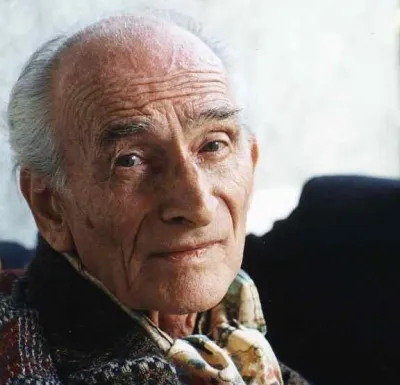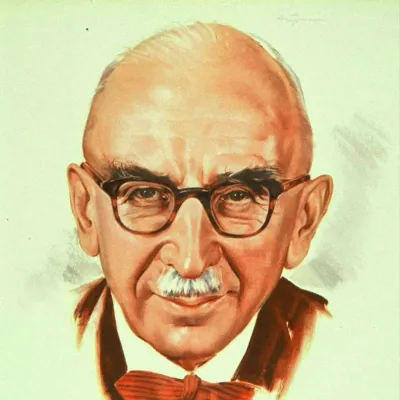
Fritz Schäffer
Human Design Chart
Biography
Human Design Analysis: Fritz Schäffer as Manifesting Generator 4/6
Manifesting Generator 4/6 — Design at a Glance
Fritz Schäffer revealed himself as someone who possessed hybrid energy: the constant power of a Generator paired with the lightning-fast assertiveness of a Manifestor. His design tended to draw things into his life by skipping steps and pursuing multiple projects simultaneously. However, this speed was a double-edged sword; without proper alignment, it led him to miss important milestones, forcing him to backtrack later— a source of deep frustration.
The mechanics of his Manifesting Generator required him not to initiate himself but to respond to inner impulses. Only when his Sacral Center said a clear "yes" could he efficiently use his energy. If he did this and regularly checked whether current activities were still enjoyable, he entered a state of "play mode." In this mode, it was no burden for him to work on various tasks simultaneously; instead, it became a source of deep satisfaction. The demand to focus on one thing at a time would have hindered rather than fostered his creative output. Therefore, his inner authority needed to be always in sync so that the speed did not turn into overload but resulted in satisfying action.
Emotional Authority
Fritz Schäffer showed an internal decision-making structure that was not characterized by spontaneous impulses but rather by emotional depth. His inner authority was Emotional Authority, carried by the defined Emotional Center. In Human Design mechanics, this center is considered dominant for decision-making if it is defined—regardless of which other centers are active in the design. This prioritization meant that his feelings formed the central filter for all important life decisions.
He was subject to a natural emotional wave, an ongoing fluctuation of his moods. The world always appeared colored by his current emotional state: A topic could seem highly relevant at one moment and then appear unimportant or negatively assessed in the next. However, his immediate feeling was only a snapshot, a first impression that did not yet represent his deeper truth. Quick, spontaneous decisions based on this fleeting emotion would often have been misleading.
Instead, his design required patience and the willingness to let decisions mature. By repeatedly "sleeping on things," intense feelings gradually subsided. Only with this temporal distance did he gain emotional detachment, leading to clarity and calmness. This process was particularly important for long-term decisions that significantly influenced his life course. Only through this delay could he recognize his true emotional truth and act accordingly.
The 4/6 Profile — Opportunist / Role Model
Fritz Schäffer revealed himself in his youth as an experimental networker who learned through numerous relationships and friendships. This early behaviour matched the line 4 of his 4/6 Profile, which often acts like a line 3 before the first Saturn return: impulsive, searching, and interaction-focused. He gathered experiences to understand his environment but acted without the later strategic distance.
With the activation of line 6, an inner conflict came to light. Fritz Schäffer now stood between the deep desire for belonging and community (line 4) and the urge to isolate himself in order to reflect on principles and the meaning of it all (line 6). This tug-of-war between heart and head shaped his development. Line 4 tended to seek influence through the network, which often led to fear or paranoia upon failure, as individual actions were not always understood by the collective.
At the same time, line 6 demanded a wise approach from him. He had to learn to observe revolutions and changes from a distance and carefully decide whether he would support them. His task was to effect transformation through his own example rather than just acting out of impulse. In later life, Fritz Schäffer was expected to serve as a role model. He should share his wisdom but always remain vigilant so as not to open his heart to false people and hurt himself in the process. His strength lay in balancing these two poles—the social network and solitary reflection.
Split Definition — Defined & Open Centers
Fritz Schaeffer was characterized by a design marked by constant inner dynamism and profound emotional awareness. Six defined centers endowed him with a robust, reliable energy base: The Sacral Center generated vital power for personal expression, while the Spleen Center steered spontaneous intuition and body consciousness. The connection between Head and Ajna Centers created an ongoing mental pressure towards inspiration and conceptual thinking; however, this process was not directly linked to energy for implementation, making patience in waiting for the right moment crucial. The Throat Center enabled reliable articulation of these thoughts as well as other internal impulses.
Additionally, his defined Solar Plexus Center as emotional authority and Root Center with its specific stress management shaped how he moved through the world. He was called to wait out the emotional wave to gain clarity rather than acting impulsively.
In contrast, Fritz Schaeffer had two open centers: The G Center (Identity and Direction) and the Heart Center (Willpower). Through his open G Center, he relied on his environment to initiate him in finding the right direction and love; he tended to feel lost in wrong environments or seek a fixed identity. His open Heart Center lacked consistent willpower; here there was a risk of making promises to prove self-worth, often leading to failure and self-doubt due to lacking energy for it. His challenge lay in not compensating these open areas through mental effort or false commitments but trusting his defined energies and authorities.
Channels for intuition, logic, manifestation and care.
Fritz Schaeffer's design was marked by a blend of logical rigor with intuitive depth. His mind worked analytically, yet sought patterns that were verifiable and enduring. This occurred via the Channel of Logic 63-4, which used doubt as a necessary filter for truth: Only what proved itself in practice counted as logically correct. Such skepticism created healthy distance from unfounded belief and demanded evidence-based answers.
Parallel to this, Fritz Schaeffer possessed the ability to formulate intuitive insights precisely. The Channel of Wavelength 48-16 connected his inner intelligence with a drive for perfecting skills. Here raw talent was transformed through repeated practice and engagement into masterful proficiency. However, recognition and resources were required to maintain this process of refinement.
Emotionally, his design was strongly oriented towards belonging and tribal values. The Channel of Synthesis 19-49 ensured he felt his position in the collective and stood for loyalty as well as clear principles. He sought balance between feasibility and fairness within his community.
Despite these reflective and structuring tendencies, Fritz Schaeffer possessed a strong, manifesting power. The Channel of Charisma 34-20 endowed him with energy to act in the moment and push projects forward once he internally responded. This vital life force was supported by the Channel of Power 34-57, which sharpened his survival intuition and made him sensitive to dangers in his environment.
Additionally, the Channel of Structuring 23-43 contributed to making innovative ideas understandable while the Channel of Preservation 27-50 strengthened his sense of responsibility for providing and protecting his surroundings. Individual Gates like Gate 31 (Leadership) and Gate 41 (evolutionary development) complemented this picture with aspects of power transmission and transformation without dominating the overall design.
Individual Circuitry — Circuit Signature
Fritz Schaeffer's design inclined towards structured intuition and strategic clarity. His Split Definition divided his energy into two parallel streams: a complex combination of Head, Ajna, Throat Center, Spleen, and Sacral as well as a separate flow between Root and Solar Plexus Centers. These groups did not work together but rather as independent forces.
The Knowledge Circuit connected Ajna, Throat Center, and Spleen in him through the Channels Structuring (43-23) and Flash of Inspiration (20-57), creating a pulsating energy that intuitively grasped new insights and articulated them acoustically. Parallel to this, the Understanding Circuit formed two isolated segments: Head with Ajna as well as Throat Center with Spleen. The Channels Logic (63-4) and Wavelength (16-48) promoted a focused, visual strategy sharing rational insights devoid of emotion – a process of future orientation.
In the Ego Circuit, the Channel Synthesis (49-19) connected Solar Plexus and Root Centers. This generated timeless, conservative energy for resource building through mutual support without direct life force from the Sacral Center. The Shielding Circuit linked via the Channel Preservation (27-50) Sacral and Spleen Centers. This primal connection served to protect genetics and preserve family through instinctive care.
Lastly, the Integration Circuit connected Throat Center, Sacral, and Spleen via Charisma (20-34) and Power (34-57). Here reactive power united with intuitive knowledge in the present moment to achieve self-affirmation through immediate effect. All circuits shaped his essence as a blend of individual creativity, rational strategy, and tribal protection.
Right Angle Cross of Explanation 2
Fritz Schäffer's Human Design showed a tendency towards clear and structured communication. He was someone who could grasp complex connections and express them in understandable, logical terms to share with others. This attitude aligned with the right cross of Explanation 2, a configuration aimed at formulating inner truths or insights so that they can be received and understood by the outside world. It wasn't just about talking; it was an attempt to bridge individual experience with collective understanding. For Fritz Schäffer, this meant his way of expressing himself was geared towards creating clarity and avoiding misunderstandings through precise words. The mechanics of this cross emphasized the power of language as a tool for connecting people over shared ideas. Without a specific event in the raw content, this description is limited to the fundamental orientation of his design: the pursuit of an explanation that is not only heard but also understood. This shaped his interactions and the path he took to bring his knowledge or perspective into the world – always with the goal that others could recognize the underlying logic.
Saturn Return · Uranus Opposition · Chiron Return · 2nd Saturn Return — Life Cycles
Fritz Schäffer's life was characterized by clear structuring and responsibility. In 1945, at the age of 57, when he became Bavaria's first post-World War II Minister-President, this attitude crystallized. For his Human Design, this marked his second Saturn Return cycle, which typically occurs between ages 28 to 30 and again around 56 to 59 years old, representing the maturation of identity and structure. While the first return often signifies laying a foundation, the second calls for affirmation or reorganization of one's position in the world. Schäffer's assumption of this leading role perfectly matched this mechanism: years of groundwork and internal clarity culminated in a stable public office. The Saturn Return acts like a test stone, showing whether previous life choices are solid enough to carry greater responsibility. In Schäffers case, this stability was evident; he did not appear as an innovator breaking existing systems but rather as a reformer bringing order to a crumbling structure. This phase of the second Saturn Return emphasized the need for continuity and a solid foundation. His appointment was thus no coincidence but the result of long-term development where personal integrity aligned with societal expectations. The design underscored the power of endurance: those who consistently live their strategy often find a firm place within established structures in this life stage.
Manifesting Generator · Emotional Authority — Synthesis
Fritz Schäffer lived a life marked by an internal dynamic between sacral energy and mental pressure. As a Manifesting Generator (MG), he had the ability to initiate things quickly, yet his defined Sacral Center required him to respond to impulses rather than initiating them himself. This combination led to recognizing potentials and acting swiftly – but also overlooking important steps and needing corrective action later on. His defined Head Center amplified this internal process through a persistent drive to understand and question (Channel 63-4), making him an inspiration for others while potentially causing mental concern. His Profile as Networker/Role Model suggests he sought balance between the desire for community and the necessity of personal paths (Line 4/6) throughout his life.
A central paradox in his design lay in the tension between emotional authority and the impulse of a Manifesting Generator. The emotional wave required time for decision-making, while his MG energy pushed him towards quick action. This likely led to an internal conflict between the need to thoroughly feel things out and the opportunity to implement them swiftly. His Saturn Return at age 57 marked a turning point in his career, a documented event showing his ability to take responsibility and chart a new direction – possibly as an expression of the Knowledge Circuit, which fosters transformation through authentic expression.
8 Defined Channels
Incarnation Cross - Right Angle Cross of Explanation 2
Solar Return
The Solar Return shows the moment when the sun returns to its exact birth position - your personal solar year.
Life Cycles
Discover the life cycles with a detailed triple view (birth chart, cycle chart, composite).
Human Design Profile
- Strategy
- To respond - wait for something to respond to
- Authority
- Emotional Authority
- Profile
- 4/6 - Opportunist / Role Model
- Definition
- Split Definition
- Incarnation Cross
- Right Angle Cross of Explanation 2
- Date of Birth
- 12.05.1888 13:30
- Place of Birth
- Munich, GER
Frequently Asked Questions
What was Fritz Schaeffer's Human Design type?
What Profile did Fritz Schaeffer have in Human Design?
Which Authority guided Fritz Schaeffer's decisions?
What incarnation cross was decisive for Fritz Schaeffer?
When was Fritz Schaeffer born?
Discover your own Human Design
Are you also a Manifesting Generator? Find out in a personal reading how to unfold your multi-talents and direct your energy wisely.
More Personalities
Back to overviewAldair

Alizée

Angeli

Arletty

Artus

Balthus