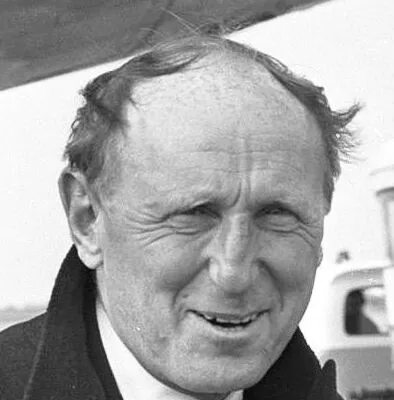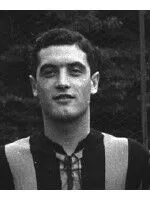
Gino Armano
Human Design Chart
Biography
Gino Armano died on 29 October 2003 at age 76.
Gino Armano as a Projector 6/2 in Human Design
Projector 6/2 — Design at a Glance
Gino Armano revealed himself through an aura that acted like a focused flashlight, enabling him to immediately spot systemic flaws in others. This ability came with a specific risk: Directly addressing these flaws was often perceived as unpleasant by his surroundings, akin to shining bright light directly into someone's face. His design suggested that he should not confront these insights but rather let them shine passively. By embodying harmonious patterns himself, he attracted others who then sought out his insights. The central strategy for him was to wait for a respectful and honest invitation to lead. This protected his dense aura from rejection and ensured access to his advice. Since Projectors do not have a defined Sacral Center, Gino Armano lacked a constant intrinsic energy source. He moved through phases of high activity followed by necessary rest periods to prevent burnout. If he lived according to the principle of patience and waiting for an invitation, he was rewarded with success. Ignoring this mechanism and acting without being invited led sooner or later to bitterness as an expression of his non-self state. His life task therefore did not lie in constant action but in precise, invited guidance of others.
No Inner Authority
Gino Armano lacked internal physical authority. This rarity fundamentally shaped his decision-making ability: Orientation only emerged through external interaction and subsequent reflection. As a mental projector, he had no center activations below the Throat Center. In dialogue with other people, dormant potentials in his open centers were activated by energetic interactions. This allowed him to view issues from multiple perspectives and express them differently. His high resonance capability served to identify the appropriate environment as well as the right exchange partners.
The evaluation of this acquired information was a complex process that required time and solitude. Only in silence could Gino Armano discern the red thread, distinguish what made sense from what did not, and thus develop his specific intelligence. His success capital lay in filtering out the essential elements from a mass of data, organizing them, and structuring them. A key element for him was staying in an environment that brought him well-being. There he found trustworthy exchanges with the right people. This process deepened over time his sense of what felt right to him, replacing the lack of an internal compass needle with wisdom based on relationships and context.
The 6/2 Profile — Role Model / Hermit
Gino Armano showed a two-phase life path, marked by Profile configuration 6/2. In his youth, before the age of 30, Line 2 energy dominated. This phase was characterized by experimentation, trial and error, as well as necessary retreat after mistakes. It was a time of learning through direct experience, during which he developed his natural leadership ability from Gate 31. Without this maturation, this ability could have appeared as arrogance; however, Line 2 demanded humility and development within the collective.
After turning 30, Line 6 activated itself. Gino Armano metaphorically retreated into a 'cave' to look back at his earlier experiments from a distance. This phase served intensive reflection, healing, and deep self-knowledge. The energy of Gate 50 came to the fore: He had an overview of the entire circuit of his experiences and decided on consistent values. Inconsistencies were recognized as risks and rejected.
From this inner work, he later emerged as a wise person. Others sought him out to partake in his life wisdoms and learn the ability for deep introspection. His leadership no longer rested on raw power or unconscious arrogance but on mature insight into value consequences. He became an example role model showing others how to distill collective wisdom from personal mistakes.
Single Definition — Defined & Open Centers
Gino Armano lived with a constant internal mental pressure originating from his defined Head and Ajna Centers. This configuration created an ongoing source of inspiration, questions, and concept formation that he could not arbitrarily stop or control. His mind was always active; he processed data and formulated theories in a specific and trustworthy manner. However, since these centers were not connected to any of the four energy motors, he lacked powerful energy to directly project his thoughts into the world. Attempts to alleviate this mental pressure through hasty action or forcing answers typically led to frustration and inner concern. Instead, his design encouraged him to accept confusion and doubt as a natural process. His strength lay in inspiring others to think by his presence and providing them with thought-provoking questions rather than manifesting solutions himself.
This intense mental focus contrasted sharply with his many open centers. His open Throat Center made him vulnerable to the pressure of seeking attention or needing to speak constantly, despite his true communication style being spontaneous and dependent on the right invitation. The open G Center meant he did not carry a fixed, unchanging identity; he absorbed directions and energies from his environment and crystallized his self-image only in correct relationships. Additionally, lacking consistent energy for willpower and competition in his open Heart Center led him to feel compelled to prove his worth unnecessarily. His open Sacral Center received the vital energy of others, which could lead to overload if he did not listen to his own limits. The open Solar Plexus Center absorbed foreign emotions while the open Spleen and Root Centers made him susceptible to conditioned fears and external stress. Gino Armano's path involved seeing these open fields not as deficits but as sensors helping him perceive the world, so long as he relied on his inner authority rather than mental noise.
Channels for mental patterns and abstract understanding.
Gino Armano's design tended towards intense internal processing: He filtered every experience through a kaleidoscope of mental images to recognize patterns and stories. This created a constant internal pressure to find meaning, often culminating in significant mental confusion – a state described by the mechanics as 'drunken monkey'. His strength did not lie in logical reasoning or solving his own problems but in generating inspiring narratives or new perspectives after patient waiting that he had to share.
This dynamic was determined by Channel Abstraction 64-47. This channel connects the Head Center with the Ajna Center through Gate Confusion (64) and Gate Understanding (47). It is under pressure to understand the past and gain perspective. Gino Armano sought a story he could communicate – whether about his own life or others'. For him, the mind was never an inner authority; clarity only emerged by enduring the vagueness until the 'aha moment'.
Additional energies also influenced his perception. Gate 50 brought a conservative protective reflex and value orientation, while Gate 3 demanded mutations and adaptation. Gate 31 focused on transferring power to achieve effect. Emotional fluctuations were marked by Gate 41, which understood evolutionary developments and crises as sources of feeling. On the personality level, Gate 43 promoted spontaneous insights he had to communicate, with fear of rejection accompanying them. Finally, Gate 11 helped him in visual recall and situational assessment before acting. This configuration described a life task: uncovering hidden connections and passing them on to others by enduring mental noise until a clear picture emerged.
Collective Circuitry — Circuit Signature
Gino Armano's design tended towards cyclical processing of the past. He was someone who used emotional waves to find meaning behind what had already happened and shared these insights with others. This attitude resulted from the active Meaning-Finding Circuit (Perceiving). In contrast to future-oriented logic, his energy focused on feelings and experiences of the past. Since emotions follow a wave pattern – with beginning, middle, and end – so did his process of insight.
In Gino Armano, this circuit was activated by Channel Abstraction (Gates 64-47). This channel connected the Head Center with the Ajna Center. Both centers belonged to the same energetic group, enabling a direct, coherent flow. The Head Center provided intuitive inspiration or initial impulses from the past, while the Ajna Center translated these into visual images and abstract concepts.
Since Gino Armano had a Simple Definition, these connected centers formed a clear, coherent energy type without separate, parallel existing segments within this circuit. Felt insights served not only personal reflection but were meant to be shared with the collective. Thus, he contributed to others learning together from history by making often inexplicable or illogical emotional connections of the past visible and understandable.
Left Angle Cross of Wishes 2
Gino Armano's Human Design carries the archetypal structure of the Left Desire Cross 2. This configuration sets an internal orientation towards fulfilling deeper, often unconscious desires, coupled with a specific life dynamics aimed at translating these wishes into reality. The Left Desire Cross 2 is not merely a collection of centers or channels but a complex pattern that defines how Gino Armano received and acted upon impulses. It describes a tendency to pursue not just superficial goals but strive for deeper fulfillment that aligns with his true nature. This structure served as an overarching theme in his life, significantly influencing his decisions and reactions. It was evident in how he dealt with his inner drives and attempted to manifest them into concrete forms. For Gino Armano, this meant that his path through the world was strongly shaped by this archetypal pattern, which helped him identify his personal desires and seek ways to live them out. It was a fundamental energy permeating his actions and being without relying on external recognition or validation. Instead, this power directed itself inwardly, serving as a driving motivation for his personal growth and development.
Saturn Return · Uranus Opposition · Chiron Return · 2nd Saturn Return — Life Cycles
In this phase of life, Gino Armano took on structure and responsibility. In 1954 at the age of 27, he became captain of the team – a concrete example of the dynamics of his first Saturn Return. This cycle marks the transition to adult self-determination where inner authority solidifies outwardly and long-term commitments are established. For Gino Armano, this was not just a role in a sports context but the incarnation of a new internal order. The Saturn Return challenges one to define their own boundaries and create sustainable structures that go beyond short-term impulses. At this age, his previous experiences coalesced into a solid foundation for future actions. His appointment as captain illustrated how his design was geared towards taking leadership when inner maturity allowed it. It was about establishing authority through consequence and reliability, not just sheer will. This moment shaped his further development into someone who understood responsibility as an integral part of their identity. The mechanics of the Saturn Return were clear here: from the uncertainty of youth emerged a defined position offering stability and attracting others. Gino Armano used this energetic push to anchor himself in a role that projected his inner structure outward.
Projector · No Inner Authority — Synthesis
Gino Armano lived a life marked by a deep internal pressure to recognize patterns and make them accessible to others. His design as a Projector, combined with the mental definition through Head and Ajna Centers, gave him the ability to perceive hidden flaws or untapped potential in his environment. However, this gift came with an ongoing search for recognition and the need to share insights – a dynamic amplified by the undefined Throat Center, leading him to wait for the right invitation. The connection of mental sharpness and open emotional expression (undefined Solar Plexus Center) pointed towards someone who could grasp complex connections but was also vulnerable to emotional conditioning by others.
This interplay manifested in a central paradox: Gino Armano was an observer and thinker whose strength lay in recognizing the unspoken, yet he relied on others' validation to effectively communicate his insights. The openness of many centers (Heart, Sacral, Root) made him susceptible to external influences and intensified the internal pressure to define himself and find his place in the world. This state led to profound wisdom and intuitive perception on one hand, but also constant struggles with self-doubt and fear of not being seen or understood.
1 Defined Channel
Incarnation Cross - Left Angle Cross of Wishes 2
Solar Return
The Solar Return shows the moment when the sun returns to its exact birth position - your personal solar year.
Life Cycles
Discover the life cycles with a detailed triple view (birth chart, cycle chart, composite).
Human Design Profile
- Type
- Projector
- Strategy
- Wait for the respectful invitation
- Profile
- 6/2 - Role Model / Hermit
- Definition
- Single Definition
- Incarnation Cross
- Left Angle Cross of Wishes 2
- Date of Birth
- 25.10.1927 23:30
- Place of Birth
- Alessandria, Italy
Frequently Asked Questions
What was Gino Armano's Human Design type?
What Profile did Gino Armano have in Human Design?
What authority did Gino Armano have?
What incarnation cross did Gino Armano have?
When was Gino Armano born?
Discover your own Human Design
Are you also a Projector? Find out in a personal reading how to unfold your leadership qualities and recognize the right invitations.
More Personalities
Back to overviewSissy Spacek
Alain-Fournier

Aldair

Anémone
Ann-Margret

Bourvil