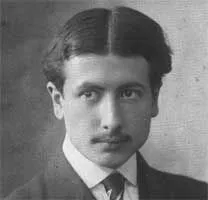
Photo: Wikimedia Commons
Gregor Strasser
Human Design Chart
Biography
Serving in the military during WW II, Strasser became a Lieutenant and was awarded the Iron Cross. Postwar, he became an apothecary up to 1932 when he sold his shop and entered politics. An able organizer and shrewd operative, he loved action but was not a strong speaker. During that time he founded a newspaper with his brother, Otto. Young Dr. Geobbels was the editor until he left to join Hitler.
As Hitler gained power, they quarreled in 1932 and Strasser resigned in December, saying that he'd take his wife and kids to Italy to bask in the sun. Though retired and no longer politically active, he was arrested by the Nazis around noon on 30 June 1934. He was shot through the window of his prison cell the same day, the most prominent victim of Hitler's blood purge.
What does Generator 5/1 mean for Gregor Strasser?
Generator 5/1 — Design at a Glance
Gregor Strasser, as a Generator, possessed immense inner endurance and a high potential for continuous work. His design established the basic structure of a 'workhorse': strong and resilient, provided he felt energized by his tasks. However, this strength was conditional on not persistently doing things that lacked intrinsic joy; otherwise, despite his high creative potential, there was a risk of burnout. Another characteristic challenge was being prevented from working on his heart project even though he still had plenty of power to continue.
The way his energy worked fundamentally differed from initiating. The power of his sacral center became primarily free when it could react to impulses from the environment. His strategy, therefore, was not to push forward plans but to respond to life's signals. When his inner self gave a clear 'yes', he acted accordingly. If Gregor Strasser lived in harmony with this principle of reaction, it led to deep satisfaction and a sense of fulfillment. However, if he constantly initiated independently without waiting for internal confirmation, he likely faced persistent frustration or a lack of energy. His path was marked by trust in his gut instinct as a compass for effective action.
Sacral Authority
Gregor Strasser's design inclined towards spontaneous, physically grounded reactions. As a Generator, he possessed sacral authority – the only inner guidance that simultaneously served as his strategy and thus simplified the decision-making process. This mechanism worked through the defined sacral center, which responded to external stimuli with an immediate 'gut feeling'. Such signals appeared as subtle sounds like grunts or affirming 'mmms', marking internal resonance.
It was crucial for his system that the emotional center remained open; this prevented feelings from overshadowing this clear physical response. When these sacral signals emerged, he felt vital and energized. Work was then carried out with great enthusiasm, driven by joy in the activity itself rather than duty-bound motivation.
Additionally, an activated spleen center acted as a supportive instance. Through its connection to the sacral center, it enabled quick, instinctive judgments about his own well-being. Gregor Strasser could thus reliably guide himself from this direct physical perception, allowing him to spontaneously and efficiently react to his environment without prolonged thought or seeking external validation.
The 5/1 Profile — Heretic / Investigator
Gregor Strasser emerged as someone who gathered deep knowledge to offer others for problem-solving. His design as a 5/1 profile endowed him with almost magnetic charisma: Others actively sought out his solutions and advice. However, this dynamic could quickly lead to overload if clear boundaries were not set. Similar to an acknowledged expert who answers questions for hours and ends up exhausted because the inbox is flooded with further inquiries, Strasser risked depleting his own energy.
This pattern rooted in his inner attitude. The line 1 in his profile brought a basic stance of calmness but also doubt. It was important for him to logically substantiate questions and provide evidence before acting or responding. Simultaneously, the line 5 – often referred to as 'the spoilsport' – initially rejected external recognition. Strasser did not necessarily see himself as talented and was critical of his own abilities. Only through transformation did he learn to overcome these self-doubts and consciously use his gifts for the collective. The challenge lay in maintaining balance between necessary research for himself (line 1) and service to others (line 5). Without learning to say 'no', exhaustion threatened due to the constant demand from his surroundings for his insights.
Split Definition — Defined & Open Centers
Gregor Strasser was characterized by a defined Sacral Center, indicating that he had a constant source of vital energy. This mechanical setup suggested that he needed external initiatives to effectively utilize his strength; self-initiated steps without prior questioning tended towards frustration and exhaustion. His defined Ajna Center ensured continuous mental activity: He thought continuously, developing concepts and theories that were hard for others to influence. These thoughts flowed directly into his defined Throat Center, meaning that he articulated what his mind conceptualized. Thus, his communication was a direct manifestation of his mental processes, coupled with the urge to articulate his ideas immediately.
At the same time, his design revealed specific vulnerabilities through several open centers. His open Head Center made him susceptible to external mental pressure and the tendency to get entangled in other people's questions or seek inspiration that did not come from within himself. His open G Center lacked a fixed identity; he tended to blend with his environment and often sought validation from others to find direction, rather than owning it from within himself. The open Heart Center led him to lack consistent willpower, trying to prove his worth through promises or competition – a mechanism that could lead to self-doubt if not fulfilled. Additionally, his open Solar Plexus absorbed the emotions of his surroundings, making him emotionally vulnerable and causing him to experience foreign moods as his own. His open Spleen Center lacked spontaneous intuitive knowledge; he tended to cling to people or situations that gave a false sense of security rather than trusting his own inner wisdom. This constellation described a person whose strength lay in the reactive implementation of clear mental concepts, while being strongly conditioned by external emotional and identity-related influences.
Channels for intuitive insight and mature growth.
Gregor Strasser's design inclined him towards innovative, structured thinking often manifesting as a quantum leap in collective consciousness. This was significantly influenced by Channel 43-23, connecting his Ajna Center to his Throat Center, allowing him to receive spontaneous insights (Gate 43) and translate them into clear, efficiency-enhancing concepts through assimilative thought (Gate 23). His challenge lay in letting go of control over the mental process and allowing his mind to process knowledge at its own pace rather than planning ahead. When his expressions occurred at the right time, they were recognized as genius; however, incorrect timing often led to rejection or a sense of alienation, as his thinking could seem light-years ahead.
Parallel to this, Channel 53-42 shaped his life through a cyclical process of learning and growth. Connecting his Root Center with his Sacral Center (Gates 53 and 42), it pushed him to complete experiences before reflecting on them to derive wisdom for future cycles. This mechanism encouraged him to enter new situations without rigid expectations to avoid frustration and utilize the depth of experience.
Additionally, other Gates influenced: Gate 9 promoted detail-oriented perfection through repeated experiments, while Gate 63 propelled mental processes forward through constructive doubt to gain security. Gate 64 helped interpret past experiences metaphorically for clarity. In the collective, Gate 16 with its ability to improve through mastery and experimentation as well as Gate 19 emphasizing resource awareness and spiritual community connections played roles. On a design level, Gate 3 supported adaptability through mutation from confusion towards new order, while Gate 11 enabled a harmonious assessment of the situation before action based on visual memories and collective ideas.
Individual Circuitry — Circuit Signature
Gregor Strasser's design inclined him towards structured communication and emotional expressiveness. The Knowledge Circuit in him connected his Ajna to his Throat Center through Channel 43-23, enabling clear, organized articulation of inner thoughts. Simultaneously, the energies of the Meaning Circuit shaped his actions: His Sacral and Root Centers were directly linked by the Maturation Channel (Gates 42–53). This connection created a cyclical flow between deep life energy and survival drive, leading to wave-like emotions moving through phases of build-up and decline.
As Gregor Strasser had a split definition, these two systems existed as parallel, not directly connected forces. The rational structuring in the head and neck area stood alongside emotional processing in the lower body region. There was no continuous energy flow between these groups; instead, they operated as independent modules. Structuring served external articulation while maturation controlled the inner rhythm from past experiences. This configuration described a personality that could articulate precisely on one hand but was also driven by deep, often inexplicable emotional waves originating in past experiences and manifesting in current actions.
Left Angle Cross of Identification 1
Gregor Strasser's design was marked by the 'left cross of identification'. This configuration signalled a profound, often unconscious search for his true identity and a clear place in the world. It wasn't about superficial adaptation but rather an inner process where he defined himself through perception and understanding of his environment.
In Human Design, this cross describes a dynamic where the person learns who they truly are by observing their reactions to external circumstances. It was about separating his essence from others' expectations. For Gregor Strasser, this meant that his path to self-discovery was closely tied to analyzing his social and political surroundings. He often had to understand what belonged to him and what didn't through 'mirroring' or identifying with groups or ideas.
This mechanism required patience and a certain distance from his personality to recognize patterns of identification. It was a process of elimination: What did not fit was rejected; what showed resonant power was integrated. Through this continuous testing of his own identity against reality, he developed a stable, authentic foundation for his actions. The cross underscored that his authority stemmed from this clear self-awareness and the ability to navigate complex systems without losing himself.
Saturn Return · Uranus Opposition — Life Cycles
Gregor Strasser's design set a tendency towards deep structuring processes that condensed into concrete institutional bindings. This was evident in 1921 when, at age 29, he joined the NSDAP – coinciding with his first Saturn return. In this phase of Human Design, internal values and long-term commitments often manifest externally; Strasser anchored himself within an organization that provided a solid foundation for him.
Later, however, his chart also showed potential for sudden, unexpected breaks in established systems. This dynamic was realized in 1932 when he experienced the so-called Strasser crisis at age 40 and lost the power struggle against Joseph Goebbels. This corresponded to the Uranus opposition in his design, a cycle often leading to a test of existing power structures. Where earlier stability had been sought, now compulsive reorganization or loss of control emerged. Thus, Strasser's path moved between building solid foundations and later confronting destabilizing forces that fundamentally questioned his position within the party.
Generator · Sacral Authority — Synthesis
Gregor Strasser was a Generator whose life was marked by a deep drive towards activity and the need to set energy in motion. His sacral authority guided him through physical reactions to external impulses – an inner 'yes' or 'no', showing him the way as long as he remained aware of his endurance and did not sink into unsatisfying work. As a Hero/Researcher (5/1 Profile), he sought deeper understanding and shared this knowledge willingly, with constant demand for his solutions challenging him to set clear boundaries.
A central paradox lay in the combination of his defined Ajna Center – a persistent mental process for concept development – and the Knowledge Circuit. Strasser developed original perspectives (Channel 43/23), which he had to express to effect change. At the same time, events like joining an organization in 1921 and the crisis of 1932 showed that external circumstances and power struggles could influence his path even when his inner authority pointed him elsewhere – a tension between the drive for innovation and the realities of the outer world.
2 Defined Channels
Incarnation Cross - Left Angle Cross of Identification 1
Solar Return
The Solar Return shows the moment when the sun returns to its exact birth position - your personal solar year.
Life Cycles
Discover the life cycles with a detailed triple view (birth chart, cycle chart, composite).
Human Design Profile
- Type
- Generator
- Strategy
- To respond - wait for something to respond to
- Authority
- Sacral Authority
- Profile
- 5/1 - Heretic / Investigator
- Definition
- Split Definition
- Incarnation Cross
- Left Angle Cross of Identification 1
- Date of Birth
- 31.05.1892 09:00
- Place of Birth
- Geisenfeld, GER
Frequently Asked Questions
What was Gregor Strasser's Human Design type?
Which Profile did Gregor Strasser have?
What was Gregor Strasser's Authority?
What incarnation cross did Gregor Strasser have?
When was Gregor Strasser born?
Discover your own Human Design
Are you also a Generator? Find out in a personal reading how to use your sacral energy correctly and discover deep satisfaction.
More Personalities
Back to overviewAaliyah

Alain-Fournier
Alexia

Angèle

Angeli
Anne-Marie