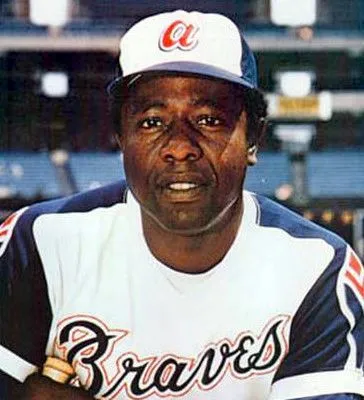
Hank Aaron
Human Design Chart
Biography
He played with the Braves from 14 March 1954 when he made his debut against the Boston Red Sox with a thrilling three-hit game. He was called the Greatest Slugger in Baseball History. However, his impressive success had a down side, as it made his life a living hell with hate-mail from bigots and threats so ugly that he was forced to travel with a bodyguard.
When he retired in 1976, he had not only scored a lifetime total of 755 homers in his 22-year career, but the love and respect of his teammates and the reverence of his many fans. On 8 April 1994, a pre-game ceremony was scheduled to honor Aaron.
After his retirement, Aaron held front office roles with the Atlanta Braves, including senior vice president. In 1999, MLB introduced the Hank Aaron Award to recognize the top offensive players in each league. He was awarded the Presidential Medal of Freedom in 2002.
His only health problem was sore knees. Aaron married twice and had six children. He died in his sleep on 22 January 2021, two weeks shy of his 87th birthday, in Atlanta.
Human Design Analysis: Hank Aaron as Projector 4/6
Projector 4/6 — Design at a Glance
Hank Aaron appeared as a Projector with a dense, focused aura that acted like a bright flashlight, revealing systematic weaknesses in his environment immediately. His design allowed him to identify errors in systems right away. Directly addressing these flaws would have provoked resistance; instead, he attracted others through harmonious example. This strategy of 'pleasant shining' invited others to be drawn by his clarity and seek advice.
Central for Hank Aaron was waiting for a valuing invitation. As a Projector, he did not have a defined Sacral Center, meaning he lacked constant intrinsic life energy. Instead, he experienced cycles of high productivity followed by mandatory rest phases to avoid burnout. Ignoring this need for recovery or acting without invitations led to bitterness as an unintended result. Living according to his design—through patient waiting and targeted guidance—he was rewarded with success. His ability to light the way for others did not rely on constant effort but on strategic use of his focused energy during moments of invitation.
Emotional Authority
Hank Aaron showed an inner decision-making structure that required time and distance. His design was marked by Emotional Authority, meaning his defined Emotions Center formed the source of his inner truth. This configuration followed a natural wave motion: feelings permanently swung between enthusiasm and skepticism, upswings and downturns. The current mood was always just a provisional snapshot, not a final insight.
Spontaneous reactions to these emotional peaks or valleys were misleading. A decision made in high spirits or despair often contradicted the deeper clarity that emerged later. Therefore, patience was the decisive mechanism for Hank Aaron. He needed the process of 'sleeping on it' to let intense waves subside. Only when emotional intensity had subsided and calmness set in did true insight emerge.
This authority took precedence over all other defined centers in his chart. Regardless of other energetic patterns, he always had to wait for what his Emotions Center provided after the rest phase. Quick responses were not only difficult but potentially harmful to his life path. His strength lay in hesitating, going through questions multiple times, and using time to discern between transient mood and lasting truth. This process of delay was no obstacle but the essential route to grounded, clear decisions.
The 4/6 Profile — Opportunist / Role Model
Hank Aaron's design was characterized by a deep inner conflict between heart and head. In the first thirty years of his life, he appeared as an experimenting Networker who intensely sought relationships and friendships. However, this phase was marked by specific exhaustion: His Line 4 attracted people who shared their stories with him, burdening him emotionally. He had difficulty stopping this intake, leading to burnout.
After the return of Saturn, his dynamics fundamentally changed. Line 6 became active and created distance from the earlier need for belonging. Hank Aaron now developed the ability to be objective in dealing with creativity. He learned to assess the true value of creation and distinguish fashion trends from authentic work. This process required time; wisdom did not arise immediately but through patience, allowing mutations to prove themselves.
His later life revolved around the tension between wanting to be part of a community and needing the distanced perspective of a role model. He was expected to take on this high position and act through cooperation with others. His heart remained cautious; it did not open to everyone to prevent injury. The development from an emotionally burdened listener to a wise authority figure shaped his structure, where early exhaustion due to absorbing foreign energy gradually transformed into clear, time-bound value assessment.
Single Definition — Defined & Open Centers
Hank Aaron lived with an inner authority that required patience and emotional depth. His defined Solar Plexus Center shaped his decision-making: truth did not reveal itself to him in the moment but only after riding out the emotional wave. He relied on sleeping at least one night over important matters to gain clarity and avoid impulsive chaos. This emotional intelligence served as a filter for the constant, adrenalized pressure of his defined Root Center, which propelled him forward and provided survival energy.
At the same time, Hank Aaron was strongly influenced by six open centers in his environment. His open Head and Ajna Centers made him vulnerable to mental confusion and taking on foreign ideas or opinions; he tended to get entangled in issues that were not his own instead of trusting his inner authority. The open G Center meant a lack of stable identity; he often sought direction through adapting to others and was sensitive to the right place, as false environments affected his well-being. His open Heart Center led him to be inconsistently willful and sometimes felt pressured to prove his worth or make promises that he could not keep.
Furthermore, his Sacral Center was open, making him vulnerable to exhaustion because he did not have constant vital energy but rather absorbed and amplified the energies of others. He had to learn to set boundaries and rest instead of running on borrowed energy. The open Spleen Center gave him a fundamental survival fear and spontaneity vulnerability; he tended to make spontaneous decisions to feel secure or cling to unhealthy situations because they offered a false sense of security. His mechanics required not accepting external influences as his own truth but patiently waiting for the emotional wave to subside and true clarity to emerge.
Channels for mystical synthesis of claim and principle.
Hank Aaron was characterized by a deep sensitivity to his position within the whole. His design placed a strong need for support and feeling needed; only in mutual care did he find true satisfaction. This primarily resulted from Channel Synthesis 19-49, which connected the Root Center with the Solar Plexus. This channel acted as an emotional glue for tribal belonging and loyalty. Gate of Claims (19) urged him to approach and build a sense of belonging, while Gate of Principles (49) rejected anything incompatible with the highest ideals of the collective. For Hank Aaron, family or his closest circle was the central enterprise; he was willing to do whatever necessary work to maintain this protective space and resources. His gift lay in always finding a balance between feasibility and fairness guided by emotional waves of acceptance or rejection.
Additionally, further energies influenced his design. Gate 13 promoted meaning-making and continuity through collective memory and reflection in the context of time. Gate 7 projected leadership patterns and hierarchies that he recognized as part of his social structure. Gate 1 emphasized his uniqueness and creative expression at the right moment, while Gate 2 prepared him for new evolutionary directions. On the personality side, Gate 55 brought extreme mood swings and emotional awareness, teaching him to act only on inner feeling. In the design center, Gate 58 through pressure and experimental joy ensured the perfection of processes for securing the future. Finally, Gate 30 conveyed an understanding of feelings and acceptance of limitations as fate, which kept him from illusions about absolute freedom. This constellation shaped a person who valued traditions but acted through emotional intelligence and practical adaptability.
Tribal Circuitry — Circuit Signature
Hank Aaron's design set a tendency towards emotional synthesis that showed itself as a process where inner feelings merged with the fundamental existential tension. This configuration connected the Solar Plexus Center to the Root Center via the Synthesis Channel (49-19). This channel promoted an approach in which emotional waves were not only processed individually but experienced as part of a larger, collective dynamic. The energy flowed here between emotional intuition and instinctive life force, enabling Hank Aaron to navigate complex situations through deep, emotional understanding.
Within the Ego Circuit, belonging to the tribe group, there was no direct connection to the Sacral Center. This meant that the constant source of life force was not directly integrated into this specific energetic circuit. Instead, the design required sufficient rest periods to regenerate the necessary resources for cooperation and mutual support within the tribe. Without these pauses, the ability for sustainable collaboration would have been compromised. The focus thus lay on a balanced relationship between giving and taking, with emotional synthesis serving as a tool to maintain and stabilize this balance in the group context.
Right Angle Cross of the Sphinx 1
Hank Aaron's design carried the archetypal structure of the right cross of the Sphinx 1. This configuration established a specific energetic alignment that was less about individual self-presentation and more about a deep, often unconscious connection to collective patterns and historical cycles. The right cross of the Sphinx 1 in Human Design does not describe an arbitrary personality trait but rather a fundamental life task: the role of a silent carrier or keeper of knowledge and tradition within a larger whole.
For Hank Aaron, this meant that his presence and work were always embedded in a context that went beyond the purely personal. The energy of this cross often works behind the scenes, stabilizing and connecting without necessarily standing in the spotlight. It demands a dedication to something greater than one's ego – whether it be a team, community, or historical movement. Hank Aaron lived this dynamic by defining himself not through loud protest but through constant, reliable presence. The mechanics of the right cross of the Sphinx 1 require patience and the ability to withstand pressure without losing one's integrity. It is an energy of constancy in times of change. Hank Aaron's chart clearly shows this trait: he was a fixed point whose strength lay in not swimming against the current but embodying the flow – calm, unobtrusive, yet irrevocable. This archetypal structure shaped his entire existence as someone who exercised a transformative effect on their environment simply through their mere being, without actively bringing it about.
Saturn Return · Uranus Opposition · Chiron Return · 2nd Saturn Return — Life Cycles
Hank Aaron's design followed a clear rhythm between impulsive breakthrough and later structural anchoring. This cyclical dynamic was evident in two key phases of his life. In 1974, at the age of 40, he surpassed Babe Ruth's home run record with 715 hits. This moment corresponded to the energy of a Uranus opposition: a sudden, explosive turning point that broke old boundaries and set new standards. It was not a gradual build-up but a decisive break from the known, lifting his success to a new level.
Then came the phase of confirmation. In 1994, exactly 20 years later and at the age of 60, he received an honor ceremony on April 8th. This fell into the second Saturn return, a cycle that stands for long-term structure, authority, and solidifying what has been achieved. Where Uranus had previously forced change, Saturn now ensured lasting recognition and integration of his achievements in history. Thus, Hank Aaron did not move forward linearly but oscillated between the disruptive potential of Uranus, which cleared the path, and the stabilizing power of Saturn, which anchored the result. This interaction shaped his life's journey: first a radical leap, then solid grounding of what was achieved.
Projector · Emotional Authority — Synthesis
Hank Aaron was a projector whose life was marked by a deep ability to recognize and foster potential in others – a natural expression of his design, which is geared towards bringing light into darkness. His tendency toward observation and the recognition of errors was strengthened by his emotional authority, compelling him not to make impulsive decisions but to wait until clarity emerged from the emotional wave. His profile as a networker and role model suggests that throughout his life he oscillated between the need for community and the desire for independent reflection – a tension that led him to embody the values of cooperation and wisdom.
A central paradox in Hank Aaron's design lies in the combination of open Sacral, Root, and G Centers with a defined emotional Solar Plexus. While he did not have a constant source of inner energy and was susceptible to environmental energies, his emotional center allowed him to filter these influences and transform them into deeper insights. This tension between receptivity and inner authority shaped his ability to respond to external stimuli as well as act from a stable internal base.
1 Defined Channel
Incarnation Cross - Right Angle Cross of the Sphinx 1
Solar Return
The Solar Return shows the moment when the sun returns to its exact birth position - your personal solar year.
Life Cycles
Discover the life cycles with a detailed triple view (birth chart, cycle chart, composite).
Human Design Profile
- Type
- Projector
- Strategy
- Wait for the respectful invitation
- Authority
- Emotional Authority
- Profile
- 4/6 - Opportunist / Role Model
- Definition
- Single Definition
- Incarnation Cross
- Right Angle Cross of the Sphinx 1
- Date of Birth
- 05.02.1934 20:25
- Place of Birth
- Mobile, AL, United States
Frequently Asked Questions
What was Hank Aaron's Human Design type?
What Profile did Hank Aaron have?
What authority did Hank Aaron have?
What incarnation cross did Hank Aaron have?
When was Hank Aaron born?
Discover your own Human Design
Are you also a Projector? Find out in a personal reading how to unfold your leadership qualities and recognize the right invitations.
More Personalities
Back to overviewSissy Spacek

Alain-Fournier

Aldair

Anémone

Ann-Margret

Bourvil