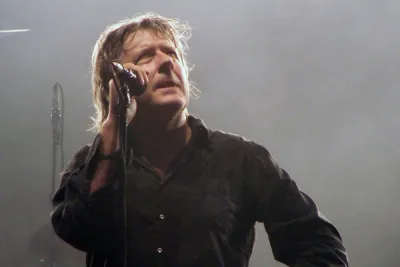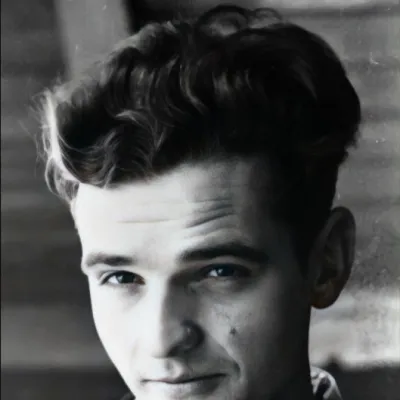
Hans Scholl
Human Design Chart
Biography
Human Design Analysis: Hans Scholl as Generator 1/3
Generator 1/3 — Design at a Glance
Hans Scholl revealed himself as someone with remarkable inner endurance that allowed him to walk long distances. As a Generator, Hans Scholl had a large sacral energy source, comparable to a workhorse: strong and resilient as long as the task aligned with his own motivation. His design suggested that this power was most effective when he responded to impulses from his environment – not through self-initiation but by reacting 'from the gut'.
This mechanism created two clear risks for Hans Scholl: He fell into frustration and energy loss if he did things that went against his inner will, or if he was prevented from working on his heart project when he still had plenty of power to continue. The strategy of his design involved waiting for signals and then responding with action once his sacral center gave a clear 'yes'. If Hans Scholl lived in harmony with this reaction, his system rewarded him with deep feelings of fulfillment. If he constantly initiated without an internal signal, it inevitably led to prolonged frustration and exhaustion. His strength lay not in external leadership but in the consistent use of his own reactive energy for what truly moved him.
Sacral Authority
Hans Scholl lived as a Generator whose decision-making was shaped by Sacral Authority. This inner guidance did not manifest in the head but as an immediate physical reaction to external stimuli. His design required waiting for the right impulse before acting with vital energy and enthusiasm. The prerequisite for this was an open emotional center, meaning he wasn't driven by fleeting emotional waves but waited for clear confirmation from his sacral center. This 'gut feeling' manifested in physical signals like a surge of power or inner twitching. When this motor started up, Hans Scholl had inexhaustible energy and went into his tasks with great joy without having an external goal in mind. The connection to the activated spleen center supported this authority through quick, instinctive reactions. This gave him direct access to his physical well-being and a reliable perception he could trust. His strategy was to wait for this inner impulse before acting, which simplified his process and allowed him to live with satisfaction.
The 1/3 Profile — Investigator / Martyr
Hans Scholl's design indicated a tendency towards intensive research and experimental learning. As someone with the Profile 1/3, the Researcher and Experimenter, he lived a life revolving around the process of trial and error. Line 1 conveyed the need for deep theoretical understanding while Line 3 promoted the urge to test insights practically.
This configuration meant that Hans Scholl valued self-earned and tested knowledge highly. If he deemed something good, he had previously examined it both theoretically and practically. His judgment was thus the result of double validation: through dedication in secrecy (Gate 46) and the active process of testing (Gate 15).
The mechanics described a learning path where mistakes were not seen as failure but as necessary steps towards knowledge. Line 3 required testing strategies personally to recognize their effectiveness, leading to an attitude based on authentic experience. Hans Scholl lived this dynamic by not just consuming knowledge but condensing it through his own application and reflection. His design marked him as someone who found truth through direct experience rather than relying solely on abstract theories.
Split Definition — Defined & Open Centers
Hans Scholl's design showed a tendency towards consequent clarity of thought. His defined Ajna Center ensured consistent mental preferences; he processed data and creativity in a trustworthy manner and was not easily influenced by external opinions. This internal structure led to his defined Throat Center, which served as a pivot point: He did not speak impulsively but articulated what his mind had conceptualized. Thus, his voice became the channel for thoughtful messages that emerged from his mental work.
Parallel to this, Hans Scholl also possessed a defined G Center. This gave him a fixed sense of self-identity and direction. He could love others without becoming dependent and showed people natural new paths supported by his deep connection with his center. His actions were therefore not only intellectually grounded but carried by a clear inner identity.
As a Generator with a defined Sacral Center, he had an enormous power source. However, his energy was available only for reactive decisions; he had to wait until life asked him something before releasing his full sacral power. Initiating actions without this internal consent led to frustration and exhaustion because the energy was not available.
In contrast, his vulnerability was revealed through several open centers. His open Head Center made him susceptible to mental pressure and doubt often coming from outside; he tended to get entangled in questions that were not his own problem. The lack of a defined Heart Center meant a lack of consistent willpower in the sense of ego; he did not seek competition or prove his worth through promises. Instead, his open Solar Plexus absorbed the emotions of the environment, making him vulnerable to foreign moods and personalizing emotional waves rather than experiencing them as their own. Additionally, his Spleen Center was open, creating a fundamental survival fear and the risk of unhealthy dependencies for safety, along with an open Root Center that amplified external stress and made him susceptible to burnout from outside pressure.
Channels for rituals, routine and clear structure.
Hans Scholl's design tended to use his own inner rhythm as a central orientation point. The channel of Rhythm 5-15 connected his Sacral Center with the G Center. Gate 5 held onto fixed habits and rituals, while Gate 15 integrated the diversity of society into the flow of life. This created a magnetic undercurrent that made him vital and closely tied to the natural flow of life. Others felt his timing as unique and determined by this inner pulse. When aligned with this flow, everything seemed effortless; otherwise, life around him could feel chaotic.
Parallel to this, Hans Scholl showed a specific way of thinking and expression. The channel of Structuring 23-43 connected his Ajna Center with the Throat Center. Here, Gate 43 received inspired knowledge as spontaneous insights that were then assimilated and clearly formulated through Gate 23. This allowed him to develop innovative perspectives that promoted efficiency and transformed collective thinking. His challenge was letting go of control and allowing his mind to process knowledge at its own pace. Only when his expressions came at the right time did these unique insights get understood and accepted by the environment; otherwise, he often felt like an outsider.
Additionally, further gates shaped his essence: Gate 25 brought a stance of innocence and mystical centering, while Gate 10 contributed to integration through genetically fixed behavioral rules. Gate 46 promoted dedication and full involvement in the process as a path to success. On the personality side, Gates like 35 with a drive for change through interaction and 27 with his caring warmth for the tribe were active. Gate 4 sought logical formulas for future security, while gates such as 45, 12, 31, and 33 added aspects of tribal energy, creative restraint, leadership, and reflection.
Individual Circuitry — Circuit Signature
Hans Scholl was marked by two separate yet parallel functioning energetic streams. His design showed a Split Definition: The Group Identity and Sacral Center as well as Ajna and Throat Centers were each internally connected but not linked to one another. This created two independent experience areas.
In the Understanding Circuit, the channel 15–5 (Rhythm) was active. It connected the Identity Center with the Sacral Center. This connection promoted an emotionless ratio and strategic logic aimed at improving things and guiding society towards a better future. Here it was about sharing rational insights free from conditioning, guided by the focus of the mind.
Parallel to this, in the Knowledge Circuit, the channel 43–23 (Structuring) was active. It connected the Ajna Center with the Throat Center. This configuration supported the structuring of thoughts and their acoustic expression. It contributed to the development of a unique identity by going new ways and transforming knowledge. The energy here was pulsating and rooted in the present, bringing creative impulses into the world through speaking.
Both circuits thus formed separate poles: On one hand, rational future-oriented strategy without emotional coloring, on the other hand, structured individual expression of new knowledge. These separate streams shaped Hans Scholl's approach to both logically planning and creatively communicating without these areas energetically directly overlapping.
Right Angle Cross of the Vessel of Love 3
Hans Scholl's design indicated a tendency towards deep emotional attachment, which was expressed through the right cross of the Love Vessel 3. This configuration linked his inner sensitivity with a strong desire for authentic interpersonal connections. He did not seek superficial contacts but rather relationships in which feelings could be openly and honestly exchanged. The 'Love Vessel' symbolized the ability to take on and hold emotions like a container – a quality that helped him give others security and understanding. Number 3 pointed towards a dynamic, often impulsive way of expressing these feelings; they could arise quickly and just as rapidly fade away, making his emotional landscapes fluid. Hans Scholl showed himself to be someone who not only received love but actively shaped it by creating space for intense emotional experiences. His inclination to empathize with others fostered deep compassion, yet this also made him vulnerable because he was easily influenced by the moods of those around him. This mechanism shaped his approach to closeness and distance: He attracted people who respected his emotional depth and distanced himself from those seeking only superficial interactions. His design challenged him to consciously direct these emotional currents to protect both himself and others from overstimulation.
Generator · Sacral Authority — Synthesis
Hans Scholl was a Generator whose life was marked by deep sacral energy. This driving force, combined with the Profile of an Investigator and Experimenter (1/3), led him to an unceasing quest for experience and knowledge. He repeatedly engaged in practical testing of ideas, always searching for what truly worked – a process further reinforced by the Rhythm Channel (5-15) as he embraced natural life flows and transformed them into stable patterns. This combination of energy, curiosity, and practical verification shaped his approach to the world, making him appear as someone whose judgment was based on solid experience.
A central tension lay in Hans Scholl being both a defined knowledge circuit – equipped with a steady mental process (defined Ajna) – while also being guided by sacral authority. This led to a dynamic between the need for conceptual clarity and the necessity of paying attention to his body's immediate reactions. He could develop and think through concepts, but true confirmation came only when his sacral energy responded positively to external stimuli, bringing him into a constant exchange between thinking and feeling.
2 Defined Channels
Incarnation Cross - Right Angle Cross of the Vessel of Love 3
Solar Return
The Solar Return shows the moment when the sun returns to its exact birth position - your personal solar year.
Life Cycles
Discover the life cycles with a detailed triple view (birth chart, cycle chart, composite).
Human Design Profile
- Type
- Generator
- Strategy
- To respond - wait for something to respond to
- Authority
- Sacral Authority
- Profile
- 1/3 - Investigator / Martyr
- Definition
- Split Definition
- Incarnation Cross
- Right Angle Cross of the Vessel of Love 3
- Date of Birth
- 22.09.1918 22:45
- Place of Birth
- Crailsheim, GER
Frequently Asked Questions
Which Human Design Type was Hans Scholl?
Which profile did Hans Scholl have?
What authority did Hans Scholl have?
Which incarnation cross did Hans Scholl have?
When was Hans Scholl born?
Discover your own Human Design
Are you also a Generator? Find out in a personal reading how to use your sacral energy correctly and discover deep satisfaction.
More Personalities
Back to overviewAaliyah

Alexia

Angèle

Anne-Marie

Arcángel

Arno