
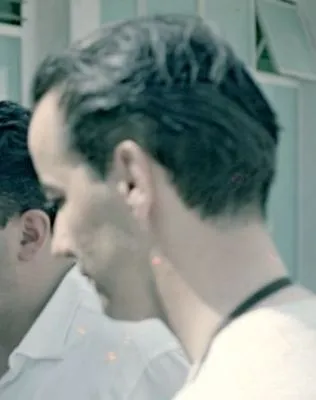
Harry Schell
Human Design Chart
Biography
Schell was the son of expatriate American and sometime auto racer Laury Schell; his mother was the wealthy American heiress Lucy O'Reilly Schell.
Shortly before the outbreak of the Second World War, Schell's parents were involved in a road accident in which Laury was killed and O'Reilly severely injured.
When France was occupied by Germany, Schell and his mother returned to America, where Schell took on the running of two Maseratis at the 1940 Indianapolis 500. Having already volunteered in the Finnish Air Force during their Winter War with Russia in 1939, Harry then earned a commission in the United States Tank Corps when America entered the Second World War.
Schell went on to race in Europe, driving Coopers in Formula 3, Formula 2 and even the Formula One World Drivers' Championship upon its inception in 1950. His first appearance was in a Cooper powered by a J.A.P. V-twin engine at Monte Carlo; it ended in an accident at the harbor chicane that involved the majority of the field.
Though Schell never won a championship Grand Prix, he twice stood on the podium with a best place of second in the 1958 Dutch Grand Prix, won the Caen Grand Prix of 1956, and balanced those with periodic sports car outings.
By the start of 1960, and nearing 40, Schell's prospects appeared dim, and he campaigned a private Cooper run under his family's Ecurie Bleue banner. That changed, however, when he was contracted by the British Racing Partnership team before the start of the European Grand Prix season for a full program of events, to be teamed with Tony Brooks and the up-and-coming Chris Bristow in year-old Coopers. Schell died in practice for the non-championship International Trophy event at Silverstone on 13 May 1960, when he crashed his Cooper at Abbey Curve.
Harry Schell as a Generator 4/6 in Human Design
Generator 4/6 — Design at a Glance
Harry Schell's design inclined towards great endurance. As a Generator, he had plenty of sacral energy, which made him seem like a strong workhorse – provided he had the strength for his task. His life energy was not released through self-initiative but rather by reacting to signals from life. The strategy involved waiting until the sacral center sent a clear "yes," and then responding with action.
When Harry Schell aligned himself with this harmony, his design rewarded him with deep satisfaction and a sense of fulfillment. If he did not live according to this mechanism – for example, by constantly initiating things on his own or doing tasks that he had no desire to do – he would eventually encounter frustration and energy depletion. Two stumbling blocks characterized this pattern: first, wasting energy on disliked tasks, which could lead to exhaustion. Second, holding back from heart projects even though he was still full of power. His motto always was: not initiating but reacting. When he responded to impulses from his gut instinct, nothing could stop him; if he ignored this inner guidance, his energy would stagnate.
Emotional Authority
Harry Schell's design points to a tendency towards emotional depth and wave-like perception. His inner authority was Emotional Authority, carried by the defined Emotional Center. In Human Design mechanics: When this center is activated, it always takes the lead in decision-making – regardless of all other defined centers in the chart. Harry Schell was subject to an emotional wave, a permanent up-and-down of his feelings. The world appeared colored by his current mood; a moment of excitement could quickly shift into a negative outlook. This feeling, however, was only a snapshot, not a final claim on truth. Spontaneous decisions made from this immediate emotion carried the risk of negative consequences. His strategy involved taking time. By hesitating and reconsidering decisions multiple times, he gained emotional distance. Over time, intense feelings subsided, clarity and calmness set in. This process was essential for long-term realignments that significantly shaped his life path. Harry Schell showed himself to be someone who needed patience to find true inner truth – not through quick action but by waiting until the emotional wave had passed its peak and peace settled in.
The 4/6 Profile — Opportunist / Role Model
Harry Schell's Human Design suggests a tendency towards a tension-filled alternation between social engagement and detached reflection. In the first three decades of his life, he acted experimentally, especially in the realm of relationships and friendships, driven by the energy of Line 4. This corresponded to the phase before his first Saturn return, when his Profile still behaved like a pure Three-Line – agile, eager to learn, and open to new connections.
With the activation of the sixth line, however, a fundamental contradiction became apparent: The inner drive to belong to a community (Line 4) clashed with the need for high, almost solitary distance to ponder the meaning of life (Line 6). This conflict between heart and head shaped his later development. He was expected to function as a wise role model that stood out through cooperation. At the same time, his big heart had to be careful not to open up to the wrong people and get hurt. The sixth line in Gate 17 conveyed an attitude of perfected succession; much like a Bodhisattva, he often expressed his opinion only when explicitly asked for it, which stabilized collective processes but also warned against sudden mutations.
Triple Split Definition — Defined & Open Centers
Harry Shell's design tends towards constant inner activity driven by defined Head and Ajna centers. This creates a permanent mental pressure to question and form concepts – not as solutions but as inspiration for others. Since these centers lack their own energy for implementation, direct action from the mind would be frustrating; instead, he worked through setting thought impulses.
His ability to act stemmed from his defined Sacral center, which provided vital energy once he responded to external stimuli. This sacral power combined with the willpower of his defined Heart center gave him the capacity to keep promises and work self-determinedly. However, this strength required discipline: Only by waiting for the right invitation could he use his energy efficiently instead of wasting it in initiated but unsupported actions.
Emotionally, Harry Shell was marked by his defined Solar Plexus center, which granted him an inner authority that needed time to develop. Decisions were not made at moments of excitement but after running through the emotional wave when clarity emerged. This protected him from impulsive failures and allowed deep insights beyond superficial reactions.
In contrast, vulnerabilities revealed themselves in undefined centers. His open G center meant he did not have a fixed identity or life direction but adopted these from his environment. He tended to question whether he was at the right place and sought security through adapting to others. Similarly, his open Throat center made him susceptible to feeling compelled to force attention if he didn't wait for an external invitation to speak. This openness required patience not to fall into conditioned patterns of self-assertion.
Channels for maturation, logic, care, community and abstraction.
Harry Shell's design tends towards analytical perfectionism. The Judgment Channel 58-18 connects the Root Center with the Spleen Center, creating a relentless drive to question and correct patterns. Gate 58 drives persistence while Gate 18 ensures only healthy elements remain; this acts like a guard checking if structures serve collective well-being. Simultaneously, he showed deep community connection through the Community Channel 37-40 between Solar Plexus and Heart. Here he sought recognition (Gate 37) and concluded agreements based on mutual benefit and emotional clarity rather than spontaneous impulses.
His life energy follows the Ripe Fruit Channel 42-53 from Root to Sacral center. This process requires fully experiencing – from start through middle to end – to gain wisdom. An early exit means repetition; only a complete run-through allows progression to the next stage. Parallel, the Preservation Channel 27-50 between Sacral and Spleen ensures provision. Gate 27 brings selfless care while Gate 50 guards traditional values necessary for protecting and nurturing tribe and infrastructure.
Mentally, further configurations marked him: The Abstraction Channel 64-47 between Head and Ajna filters every experience through mental images, often accompanied by confusion (Gate 64), until a meaningful pattern emerges. Individual gates complement this picture: Gate 17 strives for logical teaching and succession, while Gate 52 demands concentrated silence for pattern correction. Gate 32 seeks material success for tribal connection, Gate 21 exercises control over material things. In his design, Gate 3 with its mutation to new order, Gate 11 with visual memories for situational assessment, and Gate 24 with cyclical mental renewal work together.
Collective Circuitry — Circuit Signature
Harry Shell's design shows a triply divided structure indicating three parallel but energetically isolated focal points. This separation means the forces do not act as one continuous flow but exist as independent blocks side by side.
In the Understanding Circuit, the Judgment Channel connects Spleen and Root Centers. This sets a tendency towards instinctive security arising from logical evaluation of dangers – an 'emotionless ratio' aimed at future stability.
The Meaning-Finding Circuit consists of two separate parts: Head and Ajna centers are linked through Abstraction while Sacral and Root centers are connected via Ripe Fruit. This splits emotional processing into cognitive reflection on the past and a bodily, cyclical experience of meaning-finding without direct communication between both sides.
In the Ego Circuit, the Community Channel connects Heart and Solar Plexus Centers. Here it's about mutual giving and taking as well as emotional support within a group but lacks direct connection to the life force of the Sacral center, necessitating pauses for resource regeneration.
Finally, the Protector Circuit links Sacral and Spleen Centers through Preservation. This connection underscores a primal instinct for protection and preservation of one's genetics and family, fueled by instinctive perception and vital energy. Overall, these four circuits shaped Harry Shell's experiential world through clearly defined, specialized energetic fields.
Right Angle Cross of Service 2
Harry Schell's design carried the signature of the right cross of service. This configuration established a fundamental orientation towards supportive assistance, where the focus was not on personal glory or individual rule but rather on enabling and empowering others. The right cross of service is a specific pattern within Human Design mechanics that implies a deep connection to the well-being of communities or certain groups. It describes neither passive subordination nor active, strategic dedication to tasks beyond oneself.
For Harry Schell, this meant that his drive often sprang from perceiving needs in his environment. His energy was directed towards shaping structures or situations so they were functional and beneficial for others. This was not an act of sacrifice in a negative sense but a natural expression of his design: through service to others, he found his own confirmation and effectiveness. The mechanics of this cross show how personal intelligence merges with collective goals, where the individual acts as a catalyst for the success of the whole. Harry Schell lived this dynamic by taking on roles that allowed him to use his skills in the service of others rather than solely for self-confirmation. His path was marked by this constant balance between his own potential and the responsibility towards the environment that relied on or could benefit from him.
Saturn Return — Life Cycles
Harry Schell's design showed a tendency towards strategic patience and building sustainable structures before unleashing his full power. He appeared as someone who did not act impulsively but waited for the right moment to enter with maximum efficiency. This attitude was made tangible through his first Saturn return at age 29. This cycle marked in his Human Design the transition from an experimental phase to a serious confirmation of his life direction and taking responsibility for his potential.
In 1950, he debuted with a Cooper-J.A.P. in the Formula-1 World Championship. This event was no coincidence but the visible condensation of years of groundwork and inner maturity. The Saturn return acts like a test stone: what previously existed only as a possibility became now a real, measurable fact. For Harry Schell, this meant that he no longer prepared his strategic positioning in the world of racing but actively occupied it. The mechanics of the first Saturn return demand a solid foundation; his entry into the World Championship was precisely the moment when his inner structure translated into an outer, recognized role. He did not act out of haste but from the conviction that the groundwork was now stable enough to take the next step.
Generator · Emotional Authority — Synthesis
Harry Schell was a Generator whose life was marked by deep sacral energy – a force driving him to create and materialize things as long as he felt authentically connected with them. However, this ability for endurance was countered by his emotional authority: decisions matured slowly within him, an up-and-down of emotions accompanied every process. His profile as Networker/Role Model suggests that throughout his life, he oscillated between the desire for community and the longing for independent reflection – an inner conflict between heart and head that defined him. The defined mental pressure (Head Center) intensified this urge to understand and inspire, while the channel of judgment (58-18) constantly drove a search for perfection and correction.
This man lived in tension between the need to invest his energy into meaningful projects (sacral center) and the emotional depth required for thorough decision-making. The right cross of service points towards an orientation towards others' needs, yet the inner logic and drive for improvement (Understanding Circuit) created a paradox: he wanted both to serve and optimize things, which might have placed him in a constant state of analysis and deliberation. A documented event – his debut in motorsport at 29 years old – could be an expression of this early experiment to find and use his energy.
5 Defined Channels
Incarnation Cross - Right Angle Cross of Service 2
Solar Return
The Solar Return shows the moment when the sun returns to its exact birth position - your personal solar year.
Life Cycles
Discover the life cycles with a detailed triple view (birth chart, cycle chart, composite).
Human Design Profile
- Type
- Generator
- Strategy
- To respond - wait for something to respond to
- Authority
- Emotional Authority
- Profile
- 4/6 - Opportunist / Role Model
- Definition
- Triple Split
- Incarnation Cross
- Right Angle Cross of Service 2
- Date of Birth
- 29.06.1921 01:00
- Place of Birth
- Paris Arrondissement 16, France
Frequently Asked Questions
What was Harry Schell's Human Design type?
What were Harry Schell's Profiles?
What authority did Harry Schell have?
What incarnation cross did Harry Schell have?
When was Harry Schell born?
Discover your own Human Design
Are you also a Generator? Find out in a personal reading how to use your sacral energy correctly and discover deep satisfaction.
More Personalities
Back to overviewAaliyah

Aldair

Alexia

Angèle

Anne-Marie

Arcángel
