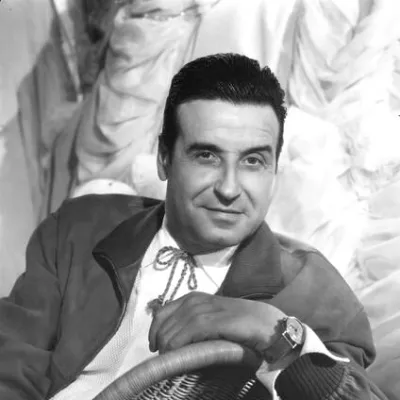
Heinrich Oster
Human Design Chart
Biography
Oster recognised the potential for growth of the Nazi movement and was one of the first leading figures in IG Farben to advocate close co-operation with Adolf Hitler's movement. Oster held sponsoring membership of the Schutzstaffel from 1935 to 1939, a position which entitled him to officer rank in the black uniformed movement. He did not become a full member of the Nazi Party itself until 1940. In 1939 he was awarded a First Class War Merit Cross.
Oster was arrested by the occupying American forces in 1946 and the following year was charged with war crimes as part of the IG Farben trial. In 1948 he was sentenced to two years imprisonment for "plunder and spoliation".
Following his release in 1949 he took on a position on the board at Gelsenberg AG.
He died on 29 October 1954, aged 76, in Essen, Germany.
The Human Design of Heinrich Oster: Projector 6/2
Projector 6/2 — Design at a Glance
Heinrich Oster appeared as a Projector with a dense, focusing aura. His design endowed him with the ability to immediately recognize systemic weaknesses – much like a bright light beam shining directly into darkness. This precise perception could be perceived as unpleasant in direct confrontation mode, as it exposed errors in others. The effective strategy for his system was not to actively intrude but to attract through his own harmony. Others should be drawn to his clarity and seek him out for advice. His chart did not show a defined Sacral Center, meaning he lacked constant intrinsic life energy. Instead, he experienced phases of high productivity followed by necessary rest periods for regeneration. A continuous, steady workload as prescribed by many career paths was in conflict with this energetic rhythm and threatened to drain him. If Heinrich Oster lived according to the strategy of waiting for an honest invitation, he was rewarded with success. Ignoring this mechanism and acting without invitations or sufficient recovery led sooner or later to his non-self theme: bitterness. His path therefore wasn't constant pushing but radiating solutions that others would then demand.
Self-Projected Authority
Heinrich Oster's design inclined towards extreme openness paired with the danger of being distracted by external motoric energies. As a Projector with rare Self Authority, his inner truth was anchored in his identity. The crucial trap lay in losing this openness and constantly chasing after energy rather than trusting his own guidance.
His decision-making occurred through two paths: self-dialogues or dialogues when invited. Crucial here was listening carefully to distinguish spontaneous speech of the true essence from calculated intellect. This direct expression made his uniqueness recognizable to others. Alternatively, he followed a physical feeling that drew him geographically or thematically in a certain direction – towards or away from something.
By remaining loyal to this inner pull and recognizing his own direction, Heinrich Oster became a directional guide for his environment. There lay his specific potential for success: not in active action but in clearly following his identity as a Projector with Self Authority. This mechanism required discipline to avoid being distracted and instead use the spontaneous truth of self as a compass.
The 6/2 Profile — Role Model / Hermit
Heinrich Oster's design inclined towards a two-phase life development, marked by the 6/2 line. In his youth, this configuration appeared as 3-energy: Heinrich Oster was experimental and gathered experiences through trial and error. This early phase was characterized by a need for security and preservation of individuality, where mistakes often led to temporary retreats.
After turning thirty with the activation of the sixth line, this attitude fundamentally changed. Heinrich Oster metaphorically retreated into a 'cave' to reflect on past experiments from a distance. This phase served intensive reflection and healing. The underlying mechanism here requires a decision between acceptance or rejection of mutation; Heinrich Oster used this time for deep self-awareness to gain an overview of his entire life.
From this introspective process emerged a wise stance. Heinrich Oster emerged from isolation and became a role model for others. His ability for deep self-reflection and the clarity gained allowed him to impart life wisdoms. Others sought his advice to benefit from the acquired distance and understanding of complex interconnections, reflecting the core of 6/2 dynamics as a natural talent and teacher.
Split Definition — Defined & Open Centers
Heinrich Osters Design indicates a tendency towards constant mental pressure and a clear, defined identity. His defined Head and Ajna Centers generate a permanent internal urge to question and form concepts – not as random thoughts but as a structural necessity of his thinking. This mental process culminates in his defined Throat Center, which allows him to express these ideas reliably once they are ripe.
Parallel to this, a defined G Center grants him stable self-identity and a clear sense of direction; he knew who he was and where he belonged without imposing it on others.
This inner strength contrasts with his open centers, making him vulnerable to external conditioning. His open Heart Center tends towards wanting to prove itself through promises or competitive pressure, often ending in cycles of self-doubt when he does not trust his inner authority. Similarly, his open Sacral Center is not designed for continuous vital energy; instead, it absorbs the work of others, leading him to overextend himself and interpret exhaustion as a state of being. Additionally, his open Solar Plexus takes on the emotions of his surroundings, causing him to fluctuate between foreign excitement and personal calm while the open Spleen Center encourages spontaneous decisions based on uncertainty or fear. Finally, his open Root Center amplifies external stress, pushing him to prove himself through chaos rather than relying on the calm of his inner strategy.
Channels for creative presence, reflection and inner clarity.
Heinrich Oster revealed himself through a tension between the urge to act publicly as a unique individual and the necessity to withdraw to fully digest experiences. His design suggested that he influenced others not primarily through arguments, but through the powerful emanation of his own authenticity.
The Channel of Inspiration 1-8 connected his G Center with the Throat Center via Gate 1 (Self-expression) and Gate 8 (Contributing). This configuration created a public outlet for creative leadership: Heinrich Oster was designed to attract attention by vividly exemplifying his individual direction. His contribution lay in courageously stepping out of the crowd and showing others through his example that they could express their own uniqueness. It was a co-creation between his dedication to individuality and recognition from the environment; words or explanations played a subordinate role compared to the effect of his presence.
At the same time, the Channel of the Lost Son 13-33, also between G and Throat Centers, via Gate 13 (Listener) and Gate 33 (Withdrawal). Here he gathered life stories and secrets but then withdrew to reflect on these pieces of information. This channel emphasized patience: it waited for deeper truths to reveal themselves beneath the surface before communicating them. This created a contrast to the immediate emanation of Channel 1-8; Heinrich Oster had to learn to wait for the right timing to share his collected wisdom neither too early nor too late.
Mentally, he was marked by the Channel of Awareness 61-24 (Head Center to Ajna Center via Gate 61 Secrets and Gate 24 Rationalizing). His mind sought sudden insights ("Satori") that broke through old thought structures. He could not control his thinking but had to trust in the happy coincidence of inner truth. Additional nuances were provided by Gate 2 (Receptivity for new directions), Gate 49 (emotional upheaval and principled loyalty) as well as Gate 4 (logical formulas for future security). These gates underscored his ability to transform external changes into evolutionary directions and develop logical patterns.
Individual Circuitry — Circuit Signature
Heinrich Oster's design laid a tendency towards pulsating creativity and emotional reflection, though these forces worked separately from each other. As someone with Split Definition, he had two independent energy blocks: Head and Ajna Centers formed a flow for mental inspiration, while G and Throat Centers made up a second, isolated unit of identity and expression. This separation prevented a direct connection between thinking and feeling or acting; the areas existed parallel to each other without nourishing one another.
In the Knowledge Circuit, Channel Awareness (24-61) connected his Identity Center with the Throat Center, promoting the expression of individual innovations and bold deviations from the known. Parallel to this, the Inspiration Channel (1-8), connecting Head and Ajna Centers, provided spontaneous mental impulses. Both segments of this circuit remained energetically separate.
The Meaning Circuit was shown through Channel "The Lost Son" (33-13), which also linked Identity and Throat Centers. Here it was about sharing emotional experiences from the past to gain collective insights. Since this channel used the same centers as part of the Knowledge Circuit, both themes—individual creativity and emotional meaning-making—shaped the same expression area in the throat without the underlying mental impulses (Head/Ajna) directly flowing into this process. Heinrich Oster thus operated with two clearly delineated, non-communicating energy centers.
Left Angle Cross of Defiance 1
Heinrich Oster's design established a foundational stance characterized by the "Challenge Left Cross." This configuration did not describe a passive waiting attitude but rather an active impulse to engage with difficult realities. For Heinrich Oster, this meant that he did not seek the path of least resistance but deliberately placed himself in situations that tested his limits and forced him into confrontation.
The mechanics of this cross show a person who learns and grows through friction and confrontation. Heinrich Oster demonstrated someone who did not reject challenges as obstacles but used them as necessary drivers for his development. He sought encounters with the difficult to gain clarity from them. This attitude shaped his actions: instead of avoiding conflicts, he confronted them directly because only through this direct engagement could inner structures be strengthened and new insights gained. His path was not a gentle flow but a process of shaping and forming through external pressure. Heinrich Oster lived this dynamic by repeatedly placing himself in challenging positions to strengthen his own substance. The difficulty was not the goal, but rather the means for self-discovery and strengthening his inner authority.
Saturn Return · Uranus Opposition · Chiron Return · 2nd Saturn Return — Life Cycles
Heinrich Oster was marked by a clear orientation towards structural anchoring and professional consolidation. His design suggested that he used phases of maturation to take on responsibility and secure stable positions within complex systems. This was particularly evident during his Saturn returns, cycles often associated in Human Design with the solidification of life structures.
In 1903, Oster completed his chemistry studies with a diploma. At age 25, this completion marked his first Saturn return; here, years of academic groundwork coalesced into a sturdy foundation for his later career. The mechanics of this cycle promoted the integration of knowledge into tangible qualifications, enabling Oster to specialize and establish a solid base.
Later, in 1921 at age 43, he became a board member at BASF. This step fell during his Uranus opposition, a phase often associated with sudden changes or new authority structures. Oster did not use this energy to destroy the existing order but rather to secure his position on a higher level and exert influence.
His second Saturn return in 1937, when he was a member of the commercial committee at I.G. Farben, underscored this tendency towards institutional anchoring. At age 59, he took responsibility for subcommittees dealing with fertilizers and explosives. These roles reflect how his design enabled him to work within established structures and bring stability gained through experience into corporate leadership. His career thus illustrates the process of gradually consolidating influence and expertise over key life cycles.
Projector · Self-Projected Authority — Synthesis
Heinrich Oster lived a process of continuous self-discovery, driven by a deep desire to grasp and transform the world through his unique perspective (Knowledge Circuit). His Projector design allowed him to act as an observer who recognized patterns (Gate 1) and provided impulses that inspired or challenged others. The defined connection between Head Center and Ajna Center intensified this mental pressure to constantly question and seek understanding – a process that continually realigned him. The Profile of being a role model suggests he gathered experiences to later impart wisdom, with the initial phase of experimenting giving way to intense reflection.
Central for Heinrich Oster was the tension field between his need for recognition and the inherent risk of encountering rejection through his direct manner. As a Projector, he projected his light onto others' weaknesses, yet the authentic expression of his inspiration (Channel 1-8) could easily be misunderstood as criticism. This paradox led him to weigh his self-expression and seek ways to effectively communicate his wisdom – a balancing act that was evident in his recurring career stations and intensified by Saturn Returns cycles.
3 Defined Channels
Incarnation Cross - Left Angle Cross of Defiance 1
Solar Return
The Solar Return shows the moment when the sun returns to its exact birth position - your personal solar year.
Life Cycles
Discover the life cycles with a detailed triple view (birth chart, cycle chart, composite).
Human Design Profile
- Type
- Projector
- Strategy
- Wait for the respectful invitation
- Authority
- Self-Projected Authority
- Profile
- 6/2 - Role Model / Hermit
- Definition
- Split Definition
- Incarnation Cross
- Left Angle Cross of Defiance 1
- Date of Birth
- 09.05.1878 08:00
- Place of Birth
- Strasbourg, France
Frequently Asked Questions
What was Heinrich Oster's Human Design type?
What Profile did Heinrich Oster have?
What Authority did Heinrich Oster possess?
What incarnation cross did Heinrich Oster have?
When was Heinrich Oster born?
Discover your own Human Design
Are you also a Projector? Find out in a personal reading how to unfold your leadership qualities and recognize the right invitations.
More Personalities
Back to overviewSissy Spacek

Alain-Fournier

Anémone

Ann-Margret

Bourvil
Christian-Jaque