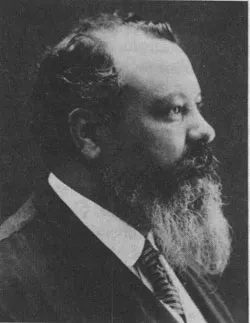
Helmut Kohl
Human Design Chart
Biography
What does Manifestor 4/6 mean for Helmut Kohl?
Manifestor 4/6 — Design at a Glance
Helmut Kohl showed himself to be a pioneer and visionary whose design predisposed him to lead the world into a new future. His role was similar to that of an emperor in ancient Rome: He possessed the great vision of an encompassing empire or a new order, but did not wage the necessary wars and battles himself. Instead, he sent others out to conquer foreign lands for him and realize his plans.
This nature led to a central conflict: Kohl was often misunderstood because he thought further ahead than most of his contemporaries. His big dreams polarized strongly. Some people loved him due to these visions and a loyal following developed that followed him. Others, however, did not like him or even hated him because of these huge goals. This was a key pain point in his design.
To master this dynamic and gain the right support, it was crucial for Kohl to inform others early enough and precisely about his visions. This strategy of information helped him find suitable followers. If he followed this strategy, he was rewarded with a feeling of inner peace. Living against his design and not informing sufficiently led to a persistent deep anger within him. His path thus revolved around the balance between visionary leadership, inevitable misunderstanding, and clear communication as the key to equilibrium.
Splenic Authority
Helmut Kohl's design tended towards intuitive, momentary decision-making. His inner authority was anchored in the Spleen Center, which acted as an over-survival intelligent alarm system. This defining center provided spontaneous internal knowledge about whether situations or people were health-promoting. Since the Emotional and Sacral Centers remained open, only this specific configuration could carry the Spleen Authority.
The first impulse was seen as the right path to protect well-being. Helmut Kohl demonstrated the ability to rigorously distance himself from harmful influences and protect himself. This impulse was however fine and came only once at each moment. High vigilance was necessary not to miss it or have it drowned out by external advice. Retreats supported the clarity of this inner voice.
Since what was right could only be recognized in the moment, long-term commitments proved difficult. Plans could change short-term, making flexibility and space essential. Rigid structures did not fit this dynamic; spontaneous adjustments were the natural expression of his mechanics. The distancing always served to maintain health, driven by the immediate intuition of the Spleen Center, which functioned as a filter for survival.
The 4/6 Profile — Opportunist / Role Model
Helmut Kohl's design led to an evolution from experimental network behavior in youth to the role of wise role model in maturity. As a person with Profile 4/6, he showed himself through the inner conflict between the emotional need for belonging (Line 4) and the intellectual drive for distance and higher meaning (Line 6). This resulted in a cautious opening of his heart to avoid injuries from false bonds.
The mechanics of this profile describe a life span that was strongly experimental, especially in relationships, before the Saturn Return. Once Line 6 became active, a contradiction between the desire for community and the need for transpersonal control emerged. Kohl's design required an unyielding stance through phases of misunderstanding until he matured into the role of model. Instincts and assessing hostile forces helped him to lead effectively and serve the common good. He was expected to meet high standards and stand out through cooperation, while his big heart always remained selective not to open up to the wrong people. This configuration shaped his way of exercising leadership: a mix of strategic distance and the foundation of deeper but chosen relationships.
Single Definition — Defined & Open Centers
Helmut Kohl's Human Design profile indicated a tendency towards reliable communication and spontaneous intuition. His defined Throat Center gave him a consistent voice that transformed messages from the body into clear expressions. This expressive power was supported by his defined Spleen Center, which provided him with an intuitive sense of the present moment – warning signals or opportunities were recognized in the moment without requiring rational analysis. Additionally, he had a defined Root Center, indicating a set approach to dealing with stress and survival pressure; this inner drive helped him move forward in the world and maintain material success.
In contrast, his Head, Ajna, G-, Heart, Sacral, and Solar Plexus Centers were open. This made him situationally dependent on his environment. His open Head and Ajna Centers meant that mental inspiration and conceptual thinking were not consistent; he tended to identify with the doubts or questions of others rather than having firm answers of his own. The absence of a defined G Center left him without a fixed identity or direction; he often adapted to the energy around him in search of love or affirmation, rather than asserting his own path.
His open Heart Center showed vulnerability to feeling compelled to make and keep promises to prove his worth – a pattern that could easily lead to overextension due to an inconsistent supply of willpower. His open Sacral Center meant no consistent flow of energy; he absorbed the generative power of others, which could lead to exhaustion if boundaries were ignored. Finally, his open Solar Plexus absorbed emotions from the environment, making him susceptible to foreign moods and emotional waves rather than having stable personal feelings. This configuration shaped a person who had to trust in their inner intuition and voice while learning not to identify with the energies of their open centers.
Channels & Gates
Helmut Kohl showed stubborn determination to follow his own path even when this meant resistance against external forces. This attitude stemmed from the Life Struggle Channel 38-28, connecting the Root Center to the Spleen Center. Gate 38 created pressure to maintain individual integrity and resist distractions, while Gate 28 evaluated which struggles were worth standing up for. This channel endowed him with the ability to discover deep life meaning in these conflicts through stubborn persistence, expressing his unique self.
Parallel to this, the Wave Length Channel 48-16 shaped his actions. It connected the Spleen Center to the Throat Center and integrated the intuitive depth of Gate 48, which sought vital information, with the technical skill of Gate 16. Gate 16 drove him to perfect skills through experimentation. Helmut Kohl used this configuration to translate inner intelligence into concrete mastery. His design suggested that talent for him was the result of 99 percent work and engagement, not just a gift. Through repeated practice and connecting intuitive depth with technical precision, he continuously refined his competencies. This mechanism described a process where control over a pattern through dedication led to eventual freedom to express his own unique wavelength. The combination of combative individualization and perfectionist focus on talent defined his characteristic approach in dealing with challenges and tasks.
Circuit Signature
Helmut Kohl's design combined a pulsating, emotional foundation with focused visual logic. This configuration showed as tension between seeking the authentic path and rational will to structure. The Knowledge Circuit shaped his identity through Channel 28-38 (Life Struggle). It connected the Spleen Center to the Root Center, creating a direct link between intuition and survival energy. It was about affirming individuality and dealing with emotional waves driven by mutations – deviations from the known. Parallelly, the Understanding Circuit worked via Channel 16-48 (The Wave Length), connecting the Throat Center to the Spleen Center and enabling rational dissemination of insights. Here, sharing logical strategies without emotional coloring stood out to improve things and lead towards a better future. As Helmut Kohl had a Simple Definition, these energies formed a cohesive flow: The intuitive power of Life Struggle flowed directly into the ability to clearly express strategic insights. This created a profile that united creative innovation with structured communication. The emotional depth of the Knowledge Circuit met the visual clarity of the Understanding Circuit, establishing new paths through a mix of individual inspiration and rational strategy.
Right Angle Cross of Tension 1
Helmut Kohl's design carried the right cross of tension 1. This configuration laid a foundational structure that characterized his life through a specific tension principle. It was not an accidental feature but rather a deeply rooted archetypal framework that shaped his inner dynamics.
In Human Design mechanics, this cross describes a particular quality of life tension. Since the specific behavioral description in the given raw content is not further elaborated, it remains as a structuring principle without deriving concrete action patterns. It served as background scaffolding for his experiential world.
The tension associated with this cross worked as a constant undercurrent in his design. It did not define the *how* of acting in detail but marked the area where certain energetic forces met and interacted. For Helmut Kohl, this meant that his inner state was permeated by this specific tension.
Without further mechanical differentiation, the interpretation is limited to this structural level. The right cross of tension 1 stands for a particular way of engaging with life, which is not translated into concrete behavioral patterns here. It was part of his energetic signature that shaped his existence without deriving specific biographical events or character nuances beyond this general tension structure.
Saturn Return · Uranus Opposition · Chiron Return · 2nd Saturn Return — Life Cycles
Helmut Kohl's design was marked by recurring astrological cycles that signified structural turning points and tested his inner authority. In 1959, at the age of 29, he experienced his first Saturn return. This cycle condensed years of preparatory work into a viable result: Kohl was elected as the youngest member to the Landtag of Rhineland-Palatinate. Ten years later in 1969, at the age of 39, the Uranus opposition took effect. It demanded adaptation to new realities and led him to become deputy federal chairman of the CDU – a step that questioned established structures and reordered them.
In 1982, when he was 52 years old, Kohl reached his Chiron return. This fulfillment cycle enabled the unfolding of his incarnation purpose if lived according to his strategy. During this phase of bloom, he posed the confidence question in the Bundestag on December 17th – a moment where his life's meaning crystallized politically. His second Saturn return followed in 1987 at age 57. It brought a crisis: The CDU/CSU lost seats in the Bundestag election. Nevertheless, the government coalition confirmed Kohl in office, which tested the resilience of his design under pressure. These cycles structured his career not as a linear ascent but as a series of tests where his inner stance and strategic orientation were repeatedly reinforced.
Manifestor · Splenic Authority — Synthesis
He was a Manifestor with defined communication and Spleen authority whose life was marked by a strong drive towards initiation. The connection of the Spleen center to the Throat center (Channel of Wavelength) indicates an instinct for recognizing vital information and the ability to articulate it – inner knowledge that he communicated as a pioneer. The profile as a networker/role model underscores this leadership tendency, while Line 4 in the profile reveals a deep longing for authentic connection and belonging, whereas Line 6 leads him towards introspective reflection and the pursuit of wisdom. Recurring career events in cycles (Saturn return, Uranus opposition, Chiron return) confirm this pattern of initiation followed by confrontation with consequences.
A central paradox lay in the tension between the need for separation and the desire for community. The Spleen authority challenged him to instinctively recognize what was right for him and separate from it, while the profile (Line 4) showed a deep yearning for connection and recognition within a group. This tension field manifested in his readiness to make decisions in the moment but also in the confrontation with expectations of a role model – an interplay between individual instinct and collective responsibility.
2 Defined Channels
Incarnation Cross - Right Angle Cross of Tension 1
Solar Return
The Solar Return shows the moment when the sun returns to its exact birth position - your personal solar year.
Life Cycles
Discover the life cycles with a detailed triple view (birth chart, cycle chart, composite).
Human Design Profile
- Type
- Manifestor
- Strategy
- To inform others before acting
- Authority
- Splenic Authority
- Profile
- 4/6 - Opportunist / Role Model
- Definition
- Single Definition
- Incarnation Cross
- Right Angle Cross of Tension 1
- Date of Birth
- 03.04.1930 06:30
- Place of Birth
- Oggersheim, Germany
Frequently Asked Questions
What is the Human Design type of Helmut Kohl?
What Profile did Helmut Kohl have in Human Design?
What Authority did Helmut Kohl have?
What incarnation cross did Helmut Kohl have?
When was Helmut Kohl born?
Discover your own Human Design
Are you also a Manifestor? Find out in a personal reading how to use your initiation power peacefully and dissolve resistance.
More Personalities
Back to overviewChristian-Jaque
Kesha

Laurent-Eynac
Lucebert
Masaccio

Papus