
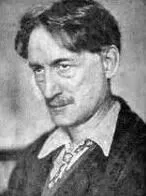
Henri Barbusse
Human Design Chart
Biography
Barbusse first came to fame with the publication of his novel "Le Feu" (translated as Under Fire) in 1916, which was based on his experiences during World War I. He won the Prix Goncourt.
In January, 1918 he left France and moved to the city of Moscow where he married a Russian woman and joined the Bolshevik Party. He joined the French Communist Party in 1923. Barbusse was the author of a 1936 biography of Joseph Stalin.
Barbusse was an Esperantist.
He died from pneumonia on 30 August 1935, Moscow.
Human Design Analysis: Henri Barbusse as Generator 3/5
Generator 3/5 — Design at a Glance
Henri Barbusse was someone with immense endurance and a deep, sacral energy source. His design suggested he functioned like a workhorse: strong and durable, but only effective when tackling the right tasks. This power wasn't available for arbitrary initiatives; it became active only in response to impulses from his environment. The central mechanism of his Generator type required him to wait for signals from life and respond accordingly rather than taking the first step himself.
This reactive strategy was key to his energy efficiency. When Henri Barbusse heard a signal and his inner confirmation – that 'yes' urging action – he could act with full power. Deviations from this pattern quickly led into two typical traps: either wasting his substance on tasks not internally compelling, leading to exhaustion, or being hindered in continuing where his drive was strongest. Both blocked the natural flow of his strength.
Living in harmony with this logic of reacting filled him with deep satisfaction. Initiating actively without an external trigger brought ongoing frustration and a lack of energy. His success thus didn't depend on constant activity but rather on responding from the gut to what presented itself.
Emotional Authority
Henri Barbusse was subject to an emotional wave that shaped his inner experience in a perpetual up-and-down of feelings. His internal authority was the defined Solar Plexus Center, which took precedence over all other defined centers regardless of further configurations in his design. This meant he always saw the world through the filter of his current mood: one moment he could be enthusiastic about something, the next completely negative.
Since his immediate emotion was merely a provisional snapshot and not necessarily the deeper truth, spontaneous decisions based on emotional impulse often appeared risky or disadvantageous. Henri Barbusse's strategy thus involved strategic hesitation. Speed here was a source of error; instead, his design required patience and readiness to 'sleep over' decisions multiple times.
By giving himself time for an issue to mature, he gained emotional distance. Intense feelings subsided with time, leading to clarity and calmness. This process of waiting was essential for long-term decisions that could significantly impact his life course. Only after the emotional wave had abated could he recognize his true truth and become action-ready.
The 3/5 Profile — Martyr / Heretic
Henri Barbusse revealed himself as someone who gained knowledge not from books but through personal, often painful experimentation. His design indicated a tendency to initially distrust anything prescribed and experience everything firsthand – Line 3 of the Experiencer. This meant he made mistakes, failed, adapted, and acted accordingly. The harsh school of trial and error created a rich trove of practical experience.
Exactly this acquired knowledge was put into practice through his second line, Line 5, to solve others' problems. As 'hero and savior,' this role appealed to him; it flattered him to appear as an expert advisor who had become wiser from personal hardship. The appeal of his character arose from others seeking his practical solutions. Yet, this mechanism came at a price: Since learning happened publicly, every failure in front of others was deeply painful. The conflict between the need for acceptance (Line 3) and the role of teacher (Line 5) shaped him. He had to learn that style often mattered more than content to be accepted while simultaneously grappling with the transience of his own achievements. His life was a constant balancing act between the pain of public failure and the pride of having shown others the way.
Split Definition — Defined & Open Centers
Henri Barbusse revealed himself as someone with immense internal consistency in thinking, feeling, and acting. His design was permanently "on" due to defined centers: The Ajna Center provided continuous mental concept formation, while the defined throat reliably translated these thoughts into communication or action. Energy for this came from the Sacral Center as a constant vital source, filtered through the emotional wave of the Solar Plexus as an inner authority. Spontaneous intuition (Spleen) and fixed stress pressure (Root) rounded off this robust system.
In contrast, Head, G, and Heart Centers were open. This meant that inspiration, identity, and willpower did not stem from himself but were situationally taken up from the environment. He tended to question whether he had found the right answers or direction – a typical pattern of open centers making him vulnerable to external influences. Since he was not an initiator in terms of will, he reacted to life with his full energy rather than actively steering it. This mechanism shaped him as someone who consistently processed thoughts and feelings but relied on others' initiatives for big questions or identity search.
Channels for care, change, clarity and emotional intuition.
Henri Barbusse revealed himself as someone whose inner energy did not flow linearly but in sudden pulses and interruptions. This rhythmic unpredictability came from the channel of Mutation 60-3, connecting Root Center with Sacral Center. Here Gate 60 acted as a pivot point for evolutionary possibilities while Gate 3 tried to realize new orders. This connection generated a powerful yet melancholic dynamic: In phases where the energetic pulse stopped, inner tension arose, felt as moodiness or stagnation. The key was not to rationalize these times but patiently wait for the next impulse.
Simultaneously, Henri Barbusse had unique insights shaped by the channel of Structuring 43-23. This channel connected Ajna Center with Throat Center and allowed him to receive complex ideas as spontaneous breakthroughs (Gate 43) and express them clearly (Gate 23). This perspective often seemed forward-thinking and efficiency-enhancing. However, the effectiveness of this knowledge depended crucially on timing: Only when Henri Barbusse waited for the right moment rather than forcing his ideas immediately were they understood and accepted by others.
The true strength of his design arose from the interplay of these two forces. The radical innovation of Mutation found its form in the clear expression structure of Structuring channel. However, this required discipline: While the melancholy of Mutation pauses persisted, Henri Barbusse had to resist the urge to prematurely or under false conditions express his insights. By respecting the natural rhythm of his energy – waiting for the pulse and timing the right moment for expression – he could contribute to the world without being overwhelmed by inner frustration or external rejection. His mechanism taught him that change and innovation were only sustainable when in harmony with his internal timing.
Individual Circuitry — Circuit Signature
Henri Barbusse showed a dynamic tension between impulsive renewal and emotional reflection, underpinned by instinctive protection. His design featured split definition: two energetically isolated groups existed parallel to each other. The first group connected Sacral-, Root-, Solar Plexus- and Spleen Centers; the second Ajna- and Throat Centers.
In the Knowledge Circuit, two separate segments worked. Channel 3-60 (Mutation) linked Sacral with Root Center, generating a pulsating energy for deviation from the known. Parallel to this, channel 43-23 (Structuring) connected Ajna with Throat Center, structuring internal concepts into articulate form. These impulses met in the Sense-making Circuit: Channel 30-41 (Recognition) linked Solar Plexus with Root Center. Here emotional processing of the past ran wave-like, a cyclical recognition of meaning behind events.
These inner processes were stabilized by the Guardian Circuit. Channel 27-50 (Preservation) connected Sacral with Spleen Center. This connection activated timeless, instinctive care for genetics and family survival. While Ajna and Throat structured new paths in expression, the other group provided emotional depth and biological protection. Henri Barbusse thus lived in a balance between creative expression, emotional meaning-making, and the primordial urge to preserve.
Right Angle Cross of Contagion 2
Henri Barbusse revealed himself through a deep, often unconscious receptivity to the energies and emotional states of his surroundings. His design was marked by the mechanics of the right infection cross (Cross 2), which described a constant intuitive intake of foreign impulses as a central life drive. This configuration did not signify weakness but rather functioned as the primary mechanism for connecting with the collective and developing empathy. Henri Barbusse continuously processed these absorbed signals, finding himself in the feelings of others and responding to them. The 'infection' here was not a passive occurrence but an active process of resonance that allowed him to feel and understand the mood of his contemporaries. This ability significantly shaped his interactions as he was always engaged with surrounding energies. The structure of his design suggested that his understanding of other people directly arose from this sensitive openness, making him a mirror of collective experiences.
Saturn Return · Uranus Opposition · Chiron Return · 2nd Saturn Return — Life Cycles
Henri Barbusses design was characterized by three decisive turning points that structured his life. In 1902, at the age of 29, he resigned from his position in the French Ministry of the Interior. This marked his first Saturn Return, a cycle often heralding professional separations and a necessary reorientation to build on more solid foundations.
A new impulse followed in 1916: The publication of the war diary 'The Fire' as well as winning the Prix Goncourt brought him public recognition. Here the Uranus Opposition was at work, a phase where long-held ideas often break through established structures into visible success.
The last major turning point occurred in 1923 with his entry into the French Communist Party. At the age of 50, he experienced his Chiron Return, a fulfillment cycle. This period did not promote healing in a medical sense but rather the unfolding of one's incarnation purpose. Through his political engagement, Barbusse found a deeper identity and a clear meaning for his life mission, which was now fully reflected in his actions.
Generator · Emotional Authority — Synthesis
Henri Barbusse was a Generator whose life was marked by profound inner dynamics. His Sacral Center provided a constant source of energy, but this unfolded most effectively in response to external impulses – not through self-initiation. This responsiveness, coupled with emotional authority, points to someone who only reached clear decisions after waiting for their own wave of feelings and then acted with perseverance. The Channel 60/3 (Mutation) reinforces this impression: a constant breaking out of old patterns, combined with the need to explore new paths, yet always in harmony with the inner readiness of the Sacral Center. The defined Root Center provided the drive and persistence to actually implement these changes, while the Ajna Center supported a consistent thought process.
A central paradox in Barbusse's design lies in the combination of the open Heart Center and the defined Sacral Center. He was not naturally oriented towards self-affirmation or building a firm identity but possessed the energy and endurance to engage intensively with issues and process them. This tension between inner emptiness and outer engagement likely led to an ongoing search for authentic experiences and the need to constantly realign – a process intensified by the connection of the undefined G Center with the need for external affirmation.
4 Defined Channels
Incarnation Cross - Right Angle Cross of Contagion 2
Solar Return
The Solar Return shows the moment when the sun returns to its exact birth position - your personal solar year.
Life Cycles
Discover the life cycles with a detailed triple view (birth chart, cycle chart, composite).
Human Design Profile
- Type
- Generator
- Strategy
- To respond - wait for something to respond to
- Authority
- Emotional Authority
- Profile
- 3/5 - Martyr / Heretic
- Definition
- Split Definition
- Incarnation Cross
- Right Angle Cross of Contagion 2
- Date of Birth
- 17.05.1873 23:00
- Place of Birth
- Asnières, France
Frequently Asked Questions
What was Henri Barbusse's Human Design type?
What profile did Henri Barbusse have?
What authority did Henri Barbusse have?
What incarnation cross did Henri Barbusse have?
When was Henri Barbusse born?
Discover your own Human Design
Are you also a Generator? Find out in a personal reading how to use your sacral energy correctly and discover deep satisfaction.
More Personalities
Back to overviewAaliyah

Alain-Fournier

Alexia

Angèle

Angeli

Anne-Marie
