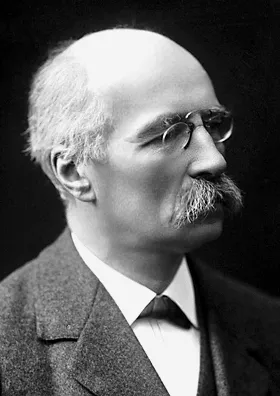
Henri La Fontaine
Human Design Chart
Biography
La Fontaine took an early interest in the International Peace Bureau, founded in 1882, and was influential in the Bureau's efforts to bring about The Hague Peace Conferences of 1899 and 1907. He served as president of the Bureau from 1907 until his death in 1943. World War I convinced La Fontaine that the world would establish an international court when peace returned. La Fontaine also promoted the idea of unification of the world's pacifist organizations.
He was a member of the Belgian delegation to the Paris Peace Conference in 1919 and to the League of Nations Assembly (1920–21). In other efforts to foster world peace, he founded the Centre Intellectuel Mondial (later merged into the League of Nations Institute for Intellectual Co-operation) and proposed such organizations as a world school and university, and a world parliament. In 1907, with Paul Otlet, he founded the Union of International Associations. He also is the co-founder of Institut International de Bibliographie (which later became the International Federation for Information and Documentation, FID) along with Paul Otlet. It was in this role that he and Otlet attended the World Congress of Universal Documentation in 1937.
Henri La Fontaine as a Manifesting Generator 6/2 in Human Design
Manifesting Generator 6/2 — Design at a Glance
Henri La Fontaine's design features a tendency towards hybrid energy: He possesses the constant power of a Generator, yet also has the ability to skip steps and achieve results quickly. As an Manifesting Generator, he primarily responded to internal impulses rather than initiating on his own. This structure allowed him to advance multiple projects simultaneously, as long as his Sacral Center – his energy source – responded with a clear "yes." Living in this resonance space, a playful mode emerged that brought him deep satisfaction.
However, the mechanics of this type presented specific pitfalls. His speed could lead to overlooking important steps, forcing him to backtrack and fill in gaps, often resulting in frustration, the typical non-self theme of this design. Additionally, he tended to split his attention by reacting simultaneously to multiple impulses. Only when strategy and inner authority aligned did this potential overload transform into productive versatility. Thus, Henri La Fontaine demonstrated someone who fueled his creative power through variety and constant alignment with his inner approval, rather than sticking to linear, single-track paths.
Sacral Authority
Henri La Fontaine revealed himself as someone whose decision-making relied on an immediate, physical resonance. As a Generator, his strategy to react was identical to his inner authority: the Sacral Authority. This simplified his process, as he did not need to switch between strategy and inner compass. His inner guidance came from the defined Sacral Center, which acted as a motor and responded to external stimuli with a clear "gut feeling." This reaction did not manifest as an intellectual thought but as a physical signal—a grunt, a hum, or a spontaneous "mm-hm" in agreement. When this motor engaged, he felt vital and energized, allowing him to dive into activities with great enthusiasm without needing an external purpose. The condition for this was an open Emotional Center, so he did not react to fluctuating moods but to the stable energy of the Sacral Center. Additionally, his activated Spleen Center served as a supportive instance, giving him the ability to decide particularly quickly and spontaneously, based on an instinctive perception of his physical well-being. Henri La Fontaine could thus reliably be guided by this inner, physiological feedback, which gave him direct access to his life force and helped him navigate daily life with joy and satisfaction, driven by the inexhaustible energy available through appropriate reactions.
The 6/2 Profile — Role Model / Hermit
Henri La Fontaine's Human Design suggests a profound transformation that only fully matures after decades of experience. As a 6/2 Profile (Role Model/Innate Talent), his essence went through two distinct phases. In his youth, before Saturn's return, he acted like a 3/2 Line: characterized by a love of experimentation, trial and error, and necessary retreats after failures. This period was for accumulating raw life experience.
Around age 30, his sixth line activated. Henri La Fontaine metaphorically retreated into a "cave" to view his earlier experiments with great distance. This phase was a time of intense reflection, healing, and deep self-awareness. The mechanics of Line 6 require this distance to distill wisdom from the confusion of youth. Only after completing this inner work did he re-emerge as a mature role model. Others sought him out to partake in his life wisdom and learn the ability for deep introspection.
This process was supported by specific energies: The sixth line from Gate 3 helped him realize when struggle is futile and surrender to the process is necessary. Mutations were accepted as a natural part of life. Simultaneously, the second line from Gate 41, associated with caution and projections, directed energy initially towards his own feelings to realize fantasies and fostered a desire for recognition without endangering the necessary inner security. He understood order not as a rigid problem but as a dynamic process that culminated in self-care.
Split Definition — Defined & Open Centers
Henri La Fontaine's Human Design shows a tendency towards constant mental pressure and a deep, reactive vitality. He lived in a permanent tension field between inspiration and implementation. His defined Head and Ajna Centers created a continuous inner drive to question and form concepts. However, this mental process was not directly linked to energy for execution; he had to wait for the right resonance to avoid frustration.
This intellectual structure contrasted with his physical strength. His defined Sacral Center had an enormous, constant energy source that was only released through reaction. Henri La Fontaine could not initiate without encountering resistance; he had to wait for life to call upon him to unleash his full power. This stability was supported by his defined Spleen Center, which gave him spontaneous, intuitive intelligence for survival in the present, as well as his defined Root Center, which provided the necessary adrenergic pressure for logical, step-by-step progress. His defined Throat enabled him to communicate these inner processes reliably.
At the same time, he was vulnerable to conditioning through his open Centers. His open G Center meant he did not have a fixed identity or direction but rather absorbed it from the environment. He tended to question whether he was in the right place and often sought confirmation from others to feel a sense of belonging. His open Heart Center led him into a cycle of promises and self-proof, as he lacked the energy for willful assertion. Additionally, his open Solar Plexus absorbed the emotions of his surroundings, causing him to personalize emotional waves of others and avoid conflicts to maintain stability. This combination of strong inner energy and external receptivity shaped his life path.
Channels for care, change, action and clarity.
Henri La Fontaine's Human Design shows a tendency towards evolutionary change, paired with the ability to create inner order from chaos. This configuration was evident through the Channel of Mutation 60-3, connecting the Root Center with the Sacral Center. Gate 60 brought the limitation and pressure of evolution, while Gate 3 provided the drive for renewal and organization. This combination generated a pulsing energy, often accompanied by melancholy when the inner pulse stalled. La Fontaine had to learn not to rationalize these moods but to wait patiently until the mutation revealed itself on its own.
Parallel to this, the Channel of Charisma 34-20 channeled sacral power directly to the Throat. Gate 34 offered raw, physiological power, which was expressed in the "now" through Gate 20. This gave La Fontaine a charismatic presence and the ability to act quickly, provided he waited for inner reactions. Without this waiting period, the energy threatened to erupt chaotically.
Mentally, the Channel of Awareness 61-24 shaped his thinking. Inspiration from Gate 61 met with the rationalizing of Gate 24, leading to sudden flashes of insight. His mind did not seek logical patterns but inner truth, which revealed itself spontaneously.
In the social field, the Channel of Preservation 27-50 was at work. Gate 27 provided care and sustenance, while Gate 50 protected traditional values and laws. This gave La Fontaine a deep connection to the tribe and a need to maintain structures.
Additionally, Gates like 41 (evolutionary development), 31 (leadership), and 17 (succession and human rights) contributed to his Profile. Gate 29 in the Sacral Center emphasized persistence and saying the correct "yes." In his design, Gates like 16 (experimentation), 9 (detail work), and 8 (contribution) supported his practical implementation power, while 47 (meaning) and 38 (integrity) fostered his inner stability.
Individual Circuitry — Circuit Signature
Henri La Fontaine's Human Design shows a tendency towards separate, parallel energetic focal points. Through the Split Definition, there were two independent energy fields: A network connected the Sacral, Root, Throat, and Spleen Centers, while the Head and Ajna Centers formed an isolated pair. This separation prevented a continuous flow between thinking and acting.
The Knowledge Circuit worked in two separate strands. The Channel of Awareness (24-61) connected the Head and Ajna Centers, fostering innovative flashes of insight. Parallel to this, the Channel of Mutation (3-60) linked the Sacral with the Root Center, showing a deviation from the known. Both parts belonged to the same circuit but were not energetically intertwined.
In the Hunter Circuit, the Channel of Preservation (27-50) connected the Sacral with the Spleen Center. This created a primordial energy for preservation and care, based on the protection of one's own genetics.
The Integration Circuit used the Channel of Charisma (20-34), which linked the Throat with the Sacral Center. Here, Henri La Fontaine responded to life to gain strength and express it through the throat in the present moment. This mechanism shaped his way of securing individual strength through direct reaction and expression, without intellectual impulses from the Head-Ajna part directly flowing into this action sequence.
Left Angle Cross of Wishes 1
Henri La Fontaine's Human Design profile featured the left cross of desires. This configuration shaped a fundamental attitude characterized by a deep, often unspoken longing for the essential. It was not about superficial desire but rather an inner orientation towards what truly matters and gives meaning.
The left cross of desires describes an energetic structure that focuses on the quality of one's intentions and the purity of motivation. Henri La Fontaine was someone who pursued his goals not just for pragmatic reasons but because they aligned with his deepest values. This orientation fostered an intuitive ability to distinguish the essential from the non-essential.
In his life, this manifested as a quiet but persistent force. He sought ways to translate his inner desires into reality without demanding perfect external confirmation. The mechanics of this cross support a stance of patient expectation and trusting action. Henri La Fontaine lived this dynamic by engaging in processes driven by authentic inner truth. His energy was directed at keeping the gap between what he desired and what he did as small as possible, creating an inner coherence that stabilized his decisions.
Saturn Return · Uranus Opposition · Chiron Return · 2nd Saturn Return — Life Cycles
Henri La Fontaine's design inclined towards long-term, structured work that crystallized into concrete institutional outcomes. This was evident during his first Saturn return. In 1883, at age 29, he co-founded the Belgian Society for Arbitration and Peace with Hodgson Pratt. The first Saturn return marks in Human Design mechanics often the transition from an experimental phase to the sustainable anchoring of one's life mission. Here, the ability to effectively translate theoretical ideals into a sustainable organization that should endure beyond one's life became evident.
This structural confirmation continued during his second Saturn return. In 1913, at 59 years old, Henri La Fontaine received the Nobel Peace Prize. The second Saturn return confirms and stabilizes the foundations established in the first cycle. It was not a sudden stroke of luck but the logical consequence and recognition of the work previously built. The design promoted an orientation where personal convictions were transformed through persistent, organized action into socially relevant structures. The mechanics of the Saturn return underscore the importance of endurance and the ability to transform visions into real, measurable results that are then also recognized by the broader public.
Manifesting Generator · Sacral Authority — Synthesis
Henri La Fontaine lived an existence marked by the dynamic tension between initiation and reaction. As an Manifesting Generator, he possessed the ability to quickly initiate processes (Channel 3-60), yet his sacral center required him to wait for external impulses. This combination led to a life where he had the energy to set things in motion while also feeling the need to surrender to the flow of life. The defined Mental Center, combined with a constant search for understanding, reinforced this inner drive and created a force aligned with the transformation of knowledge (Knowledge Circuit).
A central paradox in his design lay in the interplay between the desire for independent action and the necessity to open oneself to life's experiences. The 6/2 Profile line points to a development where early experiments (up to about 30) were followed by a phase of deep reflection and wisdom, which he then shared with others. This pattern was reflected in documented events, such as the founding of a society (Saturn Return 1) and the later receipt of an award (Saturn Return 2), each following phases of activity and withdrawal.
4 Defined Channels
Incarnation Cross - Left Angle Cross of Wishes 1
Solar Return
The Solar Return shows the moment when the sun returns to its exact birth position - your personal solar year.
Life Cycles
Discover the life cycles with a detailed triple view (birth chart, cycle chart, composite).
Human Design Profile
- Strategy
- To respond - wait for something to respond to
- Authority
- Sacral Authority
- Profile
- 6/2 - Role Model / Hermit
- Definition
- Split Definition
- Incarnation Cross
- Left Angle Cross of Wishes 1
- Date of Birth
- 22.04.1854 08:00
- Place of Birth
- Bruxelles, Belgium
Frequently Asked Questions
What was Henri La Fontaine's Human Design type?
What Profile did Henri La Fontaine have in Human Design?
What Authority did Henri La Fontaine have?
What incarnation cross determined Henri La Fontaine's design?
When was Henri La Fontaine born?
Discover your own Human Design
Are you also a Manifesting Generator? Find out in a personal reading how to unfold your multi-talents and direct your energy wisely.
More Personalities
Back to overviewAldair
Alizée

Angeli
Arletty
Artus
Balthus