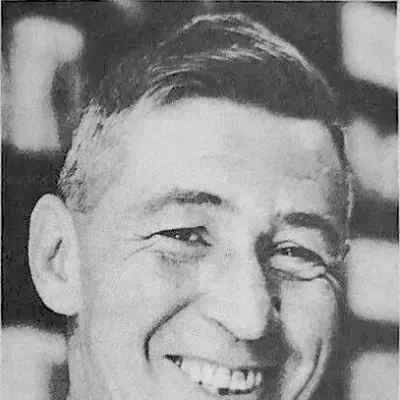
Henri Lhote
Human Design Chart
Biography
He died on 26 March 1991 in Saint-Aignan.
Henri Lhote — Projector with Profile 1/3
Projector 1/3 — Design at a Glance
Henri Lhote was someone who could spot weaknesses in systems and relationships with sharp insight. His Human-Design Type, the Projector, gave him a dense, focused aura, like a bright flashlight that shines directly on dark spots in his surroundings. However, this ability to identify flaws immediately was only effective when it wasn't used in an aggressive or confrontational manner. Directly addressing issues often led to resistance from others; instead, Henri found success by setting an example of harmony and waiting for invitations to share his insights. This approach attracted those who would seek out his knowledge on their own accord. His strategy involved waiting for a genuine invitation before taking on a leadership role. With his undefined Sacral Center, Henri Lhote lacked a constant source of life energy. Instead, he experienced phases of high productivity that were inevitably followed by necessary rest periods to prevent burnout. By living according to this rhythm and his wait-for-invitation strategy, he was rewarded with success. Ignoring these mechanics led to the non-self theme of bitterness surfacing, indicating that he was acting against his natural inclination.
Emotional Authority
Henri Lhote demonstrated a decision-making style characterized by emotional waves. His inner authority resided in his defined Solar Plexus Center. This configuration meant that his perception of the world was always colored by his current mood; enthusiasm could quickly turn to rejection. The immediate feeling was just a snapshot, not necessarily the deeper truth. Quick, spontaneous judgments made from this emotional heat often risked negative consequences or mistakes.
The mechanics of his Emotional Authority required patience as a central tool. Since the Solar Plexus Center carried his authority, it always took precedence over other defined centers in his design, regardless of further configurations. He needed to take time for decisions to mature. This meant literally sleeping on them and actively delaying action. Only when intense feelings subsided and emotional distance was gained did clarity and calm set in. This process of emotional distancing was essential for him to make long-term life decisions that significantly influenced his path. Without this waiting period, he remained trapped in the fluctuations of his moods; with it, he accessed a stable, well-considered truth beyond first impressions.
The 1/3 Profile — Investigator / Martyr
Henri Lhote emerged as someone who sought knowledge not just theoretically but through personal action and failure. His design as an Investigator and Experimenter (Profile 1/3) dictated that his life revolved around the interplay of learning and practical application. The first line drove him to understand fundamentals, while the third line compelled him to validate these through trial and error. Often, internal tensions arose: the desire for complete theoretical security clashed with an insatiable urge to simply try things out. Yet it was precisely in this dynamic that his strength lay. When Henri Lhote gave an assessment, it was the result of hard practice; he had tested the matter both mentally and practically. His judgment was therefore considered absolutely trustworthy as it wasn't based on mere speculation but on self-earned experience. The mechanics of his design emphasized honesty and sharing knowledge within a community. He learned that true understanding only arises when one is willing to make mistakes and draw consequences from them. This attitude of resignation in the sense of acceptance – accepting life as it comes without hasty judgment – allowed him to progress through mutation and change. His insights were thus never static but living results of an ongoing process of adaptation and comprehension.
Single Definition — Defined & Open Centers
Henri Lhote's design revealed a tendency towards deep emotional resonance and persistent inner pressure. His defined Solar Plexus Center acted as an internal authority that did not make decisions in the moment but only after experiencing the full emotional wave. This mechanism required patience to gain clarity; impulsive action at the highs or lows of mood often led to regret later on. Simultaneously, his defined Root Center propelled a constant, adrenaline-fueled life impulse that nourished existential awareness and survival energy. This fixed pressure helped him cope with stress and rise materially as long as he was guided by his emotional authority.
In contrast, Henri Lhote revealed himself through several undefined centers, making him susceptible to external influences. His open Head Center tended to absorb mental pressure from the environment and get entangled in questions that were not his own. Instead of consistent inspiration, he often sought answers outside himself, which could lead to confusion if he did not trust his inner authority. Similarly, his open Ajna Center allowed a flexible mind that reflected concepts and ideas from the surroundings rather than holding firm opinions. Henri Lhote was designed to take in and process intellectual stimulation from the outside without identifying with it.
His open G Center also meant that he lacked a fixed identity or direction. Instead, he adapted to the people and places around him and searched for the right environment where he could thrive. The fear of not being noticed drove his open Throat Center to force attention through speaking, although his natural wisdom lay in waiting for an invitation. Finally, lacking consistent willpower in his open Heart Center, he tended to prove himself through promises, often ending in a cycle of self-doubt if he failed. This configuration shows a person who drew strength from emotional depth and survival pressure but was constantly at risk of being mentally and identity-wise conditioned by their environment.
Channels for restless drive and emotional imagination.
Henri Lhote exhibited a deep, often restless drive to experience life intensely and feel his emotions fully. This fundamental attitude resulted from the Channel of Recognition 41-30, which linked root pressure with emotional processing. The impulse from Gate 41 generated a longing for new scenarios and possibilities, while Gate 30 colored these through emotional waves. This led to a strong need not only to experience but also to emotionally condense and understand experiences. The challenge lay in resisting immediate action impulses and waiting for emotional clarity to make conscious decisions.
Additionally, Gate 8 shaped his pursuit of individual contribution and leadership within groups, where his uniqueness attracted attention. Gate 14 endowed him with the ability to handle power and resources with grace and self-control, fostering a clear direction in his undertakings. In the background, personality gates influenced his social environment: Gate 6 introduced emotional friction as a motor for growth, while Gate 22 enabled openness and patient listening without being intrusive. Gate 19 connected him to the need for secure resources, territory, and communal spirituality. This configuration created a person who navigated between an intense inner drive for experience and the external necessity of gently shaping power and relationships. His energy was shaped by the tension field of restless longing and discipline in emotional reflection.
Collective Circuitry — Circuit Signature
Henri Lhote's design revealed a tendency towards emotional reflection driven by internal wave movements. He showed himself as someone who sought meaning in past experiences and shared these insights with others. This attitude resulted from his Simple Definition, which directly connected two centers: the Solar Plexus and Root Centers.
This connection formed what is known as the Perceive Circuit (referred to as 'Finding Meaning' in raw content). Unlike purely logical processes, this energy revolved around feelings and memories from the past. Emotions in the Solar Plexus Center flow wave-like – with a beginning, middle, and end – making Henri Lhote's emotional reactions appear cyclical and sometimes inexplicable.
The active channel 'Recognition' (Gates 30 and 41) directly connected these two centers. As a result, the emotional energy of the Solar Plexus flowed into the Root Center, responsible for survival instincts and long-term endurance. This did not mean cold analysis of the future but rather deep, felt understanding of what had already occurred. Henri Lhote used these shared, emotional insights to share them with the collective and learn together from the past. His experiential world was thus strongly marked by this rhythmic, visual, and emotional processing always aimed at making hidden connections in old events visible and passing them on.
Right Angle Cross of Contagion 2
Henri Lhotes Human-Design featured the right cross of infection. This shaped a fundamental attitude characterized by a profound, often painful sensitivity to the suffering of others. His inner programming was not only to process his own experiences but also to absorb the emotional and physical wounds of those around him. This configuration did not describe a passive victim role but an active yet burdensome capacity for empathy. Henri Lhote lived with the challenge of integrating this intensity without being overwhelmed by it. The mechanics of this cross were evident in how he grew through experiencing pain and loss, learning to transform these experiences into a higher form of understanding and compassion. It was a path of transformation where personal hardships became the source of deeper spiritual or emotional wisdom. Henri Lhote had to constantly ensure that he did not lose his own identity in the suffering of others but used it as a catalyst for his own consciousness. His design challenged him to make light out of the darkness experienced by channeling his feelings into a healing or understanding force. This was no easy task, but it defined the core quality of his being: the ability to reach deeper humanity through bearing burdens.
Saturn Return · Uranus Opposition · Chiron Return · 2nd Saturn Return — Life Cycles
Henri Lhotes Human-Design inclined towards long-term, structured work that only crystallized after years of preparation. This configuration describes a life rhythm where inner maturity and external validation often coincided with Saturn cycles – moments when years of effort led to substantial results.
In 1934, at the age of 31, Henri Lhote discovered rock paintings in Oued Djerat. This fell exactly during his first Saturn return. For his design, this was a typical moment of consolidation: The early phase of life did not end with an abrupt break but culminated in a concrete, visible achievement. His first Saturn return marked the transition from preparation to substantive realization of his destiny.
This structure repeated itself during his second Saturn return. In 1958, at age 55, more images were exhibited at the Musée des Arts décoratifs in Paris. This was no coincidence but a logical continuation of a pattern: During planetary returns to Saturn, Henri Lhotes design showed an ability to carry inner clarity outward and gain recognition for work accomplished. The mechanics of his chart did not promote impulsive leaps but rather the gradual building of authority through demonstrable results over decades.
Projector · Emotional Authority — Synthesis
Henri Lhote was a Projector whose life seemed marked by a deep need to recognize patterns and make these insights accessible to others. The combination of emotional authority and the Profile of Researcher/Experimenter points to a process where experiences were first filtered emotionally (Solar Plexus) over extended periods before being passed on as judgment or inspiration. This led to an ability to grasp the essence – see the flaw in the system – and validate this knowledge through personal exploration (Channel of Recognition). The recurring Saturn returns, coinciding with professional breakthroughs, confirm this cycle of deep engagement followed by dissemination of insights.
A central paradox in his design lay in the tension between the Projector impulse to recognize and highlight others' potential and the emotional wave that prevented an immediate reaction. While his light beam (Projector) directly targeted inadequacies, his emotional authority required patience and maturity in decision-making, leading to internal conflict between the urge for immediate correction and the necessity of waiting. This dynamic likely shaped his approach to presenting insights not as absolute truths but through years of research and experimentation (Profile 1/3).
1 Defined Channel
Incarnation Cross - Right Angle Cross of Contagion 2
Solar Return
The Solar Return shows the moment when the sun returns to its exact birth position - your personal solar year.
Life Cycles
Discover the life cycles with a detailed triple view (birth chart, cycle chart, composite).
Human Design Profile
- Type
- Projector
- Strategy
- Wait for the respectful invitation
- Authority
- Emotional Authority
- Profile
- 1/3 - Investigator / Martyr
- Definition
- Single Definition
- Incarnation Cross
- Right Angle Cross of Contagion 2
- Date of Birth
- 16.05.1903 19:00
- Place of Birth
- Paris, France
Frequently Asked Questions
What was Henri Lhote's Human Design type?
What profile did Henri Lhote have?
What authority did Henri Lhote possess?
What incarnation cross did Henri Lhote have?
When was Henri Lhote born?
Discover your own Human Design
Are you also a Projector? Find out in a personal reading how to unfold your leadership qualities and recognize the right invitations.
More Personalities
Back to overviewSissy Spacek

Alain-Fournier

Anémone

Ann-Margret

Bourvil
Hergé