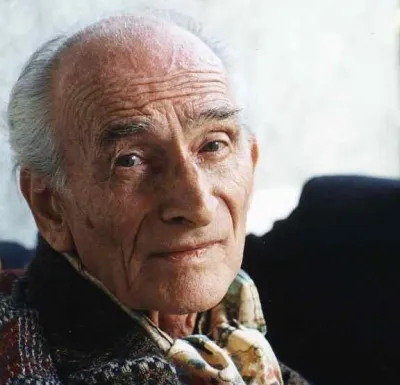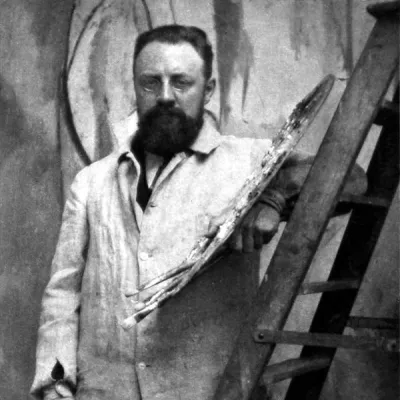
Henri Matisse
Human Design Chart
Biography
Matisse is commonly regarded, along with Pablo Picasso, as one of the artists who best helped to define the revolutionary developments in the visual arts throughout the opening decades of the twentieth century, responsible for significant developments in painting and sculpture.
The intense colourism of the works he painted between 1900 and 1905 brought him notoriety as one of the Fauves (French for "wild beasts"). Many of his finest works were created in the decade or so after 1906, when he developed a rigorous style that emphasized flattened forms and decorative pattern. In 1917, he relocated to a suburb of Nice on the French Riviera, and the more relaxed style of his work during the 1920s gained him critical acclaim as an upholder of the classical tradition in French painting. After 1930, he adopted a bolder simplification of form. When ill health in his final years prevented him from painting, he created an important body of work in the medium of cut paper collage.
His mastery of the expressive language of colour and drawing, displayed in a body of work spanning over a half-century, won him recognition as a leading figure in modern art.
Human Design Analysis: Henri Matisse as Projector 1/3
Projector 1/3 — Design at a Glance
Henri Matisse was revealed as someone with a focusing aura that shone like a bright flashlight. His Human Design type was Projector, meaning he immediately recognized where errors lay in other people's systems or what remained hidden in the dark. However, this ability to 'shed light on darkness' could be unpleasant when applied directly.
The mechanics of his design explained: A projector has a dense aura. When they actively and instantly radiate their energy onto others' problems – similar to shining light straight into someone's face – it often provokes resistance or anger from the other person. Henri Matisse lived according to the strategy of passive illumination. Instead of immediately correcting others, he created an attractive effect through his own harmony. Others were drawn to this natural glow and actively sought him out for advice.
Important for his energy balance was waiting for a respectful invitation. Since projectors do not have a defined Sacral Center, they lack constant life force energy. Henri Matisse went through phases of high activity followed by necessary rest periods for regeneration to prevent burnout. The traditional work model often did not take this need for breaks into account.
Living according to this design – that is, waiting for the invitation and radiating harmoniously – rewarded him with success. Deviations from this strategy, such as unbridled intervention without an invitation, led to his non-self theme: bitterness. His path was to patiently exercise his leadership role without imposing himself.
Emotional Authority
Henri Matisse showed an internal decision-making structure that required patience and time. His inner authority lay in the defined Solar Plexus Center, meaning he was subject to emotional waves. This mechanism ensured that his perception of the world was always colored by his current mood: A topic could deeply inspire him at one moment while appearing completely unattractive the next.
For Henri Matisse, however, these spontaneous impulses were only snapshots and not the final truth. Quick decisions made directly from such transient emotions risked negative consequences as they were based on an immature assessment. Clarity emerged through the process of waiting. By giving himself time and reconsidering decisions multiple times, he could let intense feelings subside.
This cycle of emotional ups and downs was central to his decision-making process. The longer he waited, the deeper and more comprehensive he could perceive the situation. Only when calmness set in and an emotional distance had been gained did he know what truly mattered. This approach took highest priority: Regardless of which other centers were defined in his design, this emotional authority always took precedence for important life decisions. Henri Matisse thus learned to let himself be delayed and wait for the calm at the end of the wave before acting.
The 1/3 Profile — Investigator / Martyr
Henri Matisse was someone whose life was marked by a constant tension between a deep desire for knowledge and the urge to experiment practically. His design tended towards initially intensive research – driven by the intuitive understanding of Line 1, which emphasizes recognizing life value through contrast and 'struggle'. This phase could lead to paralysis if the feeling arose that he wasn't theoretically prepared enough.
Opposing this inner block was the energy of Line 3, which urged Henri Matisse to act and experiment. For him, life was a process of learning, trial, and error. Line 7 demanded isolation from collective life to develop depth. In this solitude, mistakes were not seen as failures but as essential sources of learning. Through connections and their subsequent dissolution and by getting to know various 'tastes', he sharpened his discernment.
Only when Henri Matisse had both theoretically examined something and practically tested it on a personal level did his judgment hold weight. Self-earned insights were the highest value here. His development of taste and depth required this protective space of isolation, where the intuitive intelligence of Line 1 merged with the experimental necessity of Line 3. Thus, an attitude emerged where theoretical knowledge was only truly valid if confirmed by personal experience.
Split Definition — Defined & Open Centers
Henri Matisse revealed himself through a constant mental inspiration paired with deep emotional processing. His design combined defined Head and Ajna centers, creating a perpetual pressure for conceptual clarification. This intellectual impulse was not acted upon impulsively but filtered through his defined Solar Plexus as an inner authority. Here lay the necessity to wait out emotional waves until clarity emerged before acting or speaking. This patience matured mental concepts into profound insights.
His defined Throat allowed him to reliably articulate these mature thoughts and feelings. Additionally, his defined Spleen center provided spontaneous intuitive security in the present moment, while his defined Root Center supplied a steady pressure for existential well-being. This combination created a mechanism of deep processing: thoughts were refined through an emotional cycle and then clearly communicated.
In contrast, his open G Center revealed a vulnerability to seek identity and direction from outside influences. Matisse tended to lose himself in relationships or environments that did not suit him due to the lack of a firm inner identity. His open Heart Center made him vulnerable to the pressure to prove his worth through willpower, often leading to exhaustion when he promised more than his inner authority could deliver. Finally, his open Sacral Center showed fluctuations in vital energy; he was dependent on reacting to others' energy and had to learn to set boundaries to avoid overexertion as he lacked a consistent generative force. These opennesses challenged him to rely on his strategy and authority rather than falling into conditioned patterns of identity or performance pressure.
Channels & Gates
Henri Matisse revealed himself as someone carrying a deep tension between spontaneous, often misunderstood insights and the narrative desire for new ideas. His design was marked by Channel 43-23 (Structuring): spontaneous breakthroughs of the mind were processed and expressed, leading to a unique, mutative perspective. This kind of thinking often seemed light-years ahead; he needed time to clearly explain his innovative knowledge so it could be accepted by the collective rather than dismissed as an outsider.
Simultaneously, his personality constantly sought inspiration through Channel 11-56 (Curiosity). Here ideas were linked with stories; he was less interested in dry facts but rather how narratives could teach or entertain others. His creativity became magical when he transformed philosophical contemplations into life parables that stimulated the imagination of listeners.
This conflict between the design's need to structure unique truths and the personality's desire to communicate these through inspiring narratives was amplified by Channel 38-28 (Life Struggle). This juxtaposed channel endowed him with a stubborn determination to defend his individual integrity against external distractions. He found meaning in resistance and fought for his own path, even if it was not accepted by others.
Additionally, Gates like 60 (Acceptance of limitations as a prerequisite for transcendence) and 53 (Freedom for new experiences) played out in his personality, while in the design Gate 31 (Transference of power) and Gate 62 (logical pattern recognition) interacted. This constellation created a person waiting for the right timing to effectively implement mutative insights while simultaneously drawing attention through stories and struggles for individuality.
Circuit Signature
Henri Matisse revealed himself as marked by a split definition, where two energetically separate systems worked in parallel. The Knowledge Circuit connected his Head, Ajna, and Throat centers into a cohesive flow, while Spleen and Root centers existed as a second, isolated group. This configuration drove him to generate novel insights that he articulated acoustically through emotional filtering in the Solar Plexus – which was here not linked with other centers – to initiate change. The Awareness (Channel 24-61) underscored the individual dimension of this energy. Parallel to this, the Meaning Circuit also connected Ajna and Throat centers as well as Solar Plexus with Root Center. This stream focused on reflecting past experiences and finding meaning in them to share insights visually and emotionally wave-like. Through split definition, these two circuits were not directly merged; Henri Matisse navigated between these different energetic focuses: the innate path of new knowledge and individual identity on one hand, and the cyclical processing of past and emotions on the other. This mechanism thus promoted both pulsating creative articulation of new ideas as well as deep, often melancholic understanding of historical contexts without merging these areas into a single continuous flow.
Right Angle Cross of Tension 4
Henri Matisse was marked by the structure of his right cross tension 4. This configuration acted as a profound, archetypal background to his design. It described an internal rhythm aimed at resolving tensions in order to return to a higher unity or wholeness. It wasn't a single characteristic but rather an overarching energetic landscape that permeated his entire existence.
The right cross tension 4 linked specific centers and channels into a closed system, creating an inner logic that united stability with the drive for transformation. Matisse moved within this framework without external circumstances disrupting this fundamental mechanism. Tension 4 implied a process of letting go and reformation that was recurrent.
Since there were no specific behavioral traits or events in the raw content, the description remained on this structural level. It was about recognizing the framework within which Henri Matisse lived. This framework offered a certain kind of inner order but it was dynamic. The mechanics showed as a constant size regardless of external fluctuations. They shaped his way of dealing with challenges and seeking meaning. It was a path of integration where seemingly contradictory forces were subsumed into a greater whole. Henri Matisse carried this structure as an unchanging part of his nature.
Saturn Return · Uranus Opposition · Chiron Return · 2nd Saturn Return — Life Cycles
Henri Matisse's development proceeded in clearly defined phases structured by planetary cycles. The first Saturn return marked the transition from preparation to concrete establishment. In 1897, at age 28, he created 'The Dinner Table' – an early work that made visible this consolidating power of the Saturn cycle in his artistic career.
With the Uranus return, opposition to his birth Uranus, a phase of detachment and new orientation began. This cycle often demands breaking with established structures for individual freedom. In 1909, Matisse moved to Issy-les-Moulineaux; this step reflects the typical Uranus dynamics of changing one's living space to give room to personal development.
The Chiron return around age 49 is a fulfillment cycle in which the inner purpose unfolds if one follows their strategy. It isn't about healing but blooming and affirming one's essence. In 1918, the exhibition 'Matisse – Picasso' took place at Galerie Guillaume. This was no coincidence but visible proof of his leading role in contemporary art, precisely that moment when the incarnation cross fully unfolded its effect.
The second Saturn return deepened this recognition and stabilized it internationally. In 1927, his son Pierre organized an exhibition in New York, and Matisse received the painting prize at the Carnegie International Exhibition in Pittsburgh. These events show how the second Saturn cycle solidifies previously achieved accomplishments and publicly affirms them.
Projector · Emotional Authority — Synthesis
Henri Matisse was a projector whose life was marked by constant oscillation between recognizing patterns and the necessity to communicate these insights. His defined Head Center (with Channel of Curiosity) generated an unceasing mental pressure to question, find inspiration, while his emotional center pulled him into waves of feelings that needed to mature before they could be authentically expressed. This combination led to a profound ability to recognize potential in others – and simultaneously a need to process these observations on his own terms and pass them forward. The Investigator/Experimentor Profile amplified this process through an unrelenting search for new insights and their practical verification.
A central paradox in his design lay in the tension between the projector as someone who 'brings light into darkness' (Gate 11), and emotional authority that required time for inner maturation. He quickly recognized errors or untapped potential, yet an immediate confrontation would have provoked resistance. Instead, he followed a process of personal learning and experimenting (Line 1/3) to validate his insights and then – at the right time – express them. Documented events showed career boosts following phases of intense engagement with new ideas, underscoring the necessity of maturation and expression from deep inner conviction.
5 Defined Channels
Incarnation Cross - Right Angle Cross of Tension 4
Solar Return
The Solar Return shows the moment when the sun returns to its exact birth position - your personal solar year.
Life Cycles
Discover the life cycles with a detailed triple view (birth chart, cycle chart, composite).
Human Design Profile
- Type
- Projector
- Strategy
- Wait for the respectful invitation
- Authority
- Emotional Authority
- Profile
- 1/3 - Investigator / Martyr
- Definition
- Split Definition
- Incarnation Cross
- Right Angle Cross of Tension 4
- Date of Birth
- 31.12.1869 20:00
- Place of Birth
- Le Cateau, France
Frequently Asked Questions
What was Henri Matisse's Human Design type?
What profile did Henri Matisse have?
What authority did Henri Matisse have?
What incarnation cross did Henri Matisse have?
When was Henri Matisse born?
Discover your own Human Design
Are you also a Projector? Find out in a personal reading how to unfold your leadership qualities and recognize the right invitations.
More Personalities
Back to overviewSissy Spacek

Alain-Fournier
Anémone

Ann-Margret

Baekhyun

Balthus