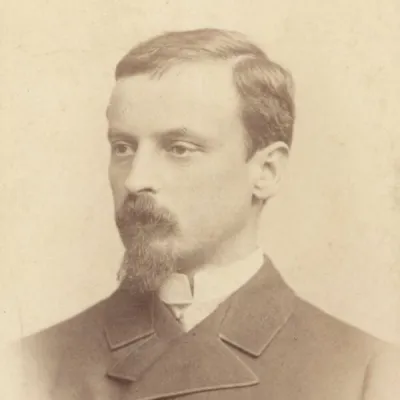
Henryk Sienkiewicz
Human Design Chart
Biography
Born into an impoverished Polish noble family in the Kingdom of Poland, at the time part of the Russian Empire, he began publishing journalistic and literary pieces in the late 1860s. In the late 1870s he traveled to the United States, sending back travel essays that won him popularity with Polish readers. In the 1880s he began serializing novels that further increased his popularity. He soon became one of the most popular Polish writers of the turn of the 19th and 20th centuries, and numerous translations gained him international renown, culminating in his receipt of the 1905 Nobel Prize in Literature for his "outstanding merits as an epic writer".
Many of his novels remain in print. In Poland he is known for his "Trilogy" of historical novels—With Fire and Sword, The Deluge, and Sir Michael—set in the 17th-century Polish–Lithuanian Commonwealth; internationally he is known for Quo Vadis, set in Nero's Rome. The Trilogy and Quo Vadis have been filmed, the latter several times, with Hollywood's 1951 version receiving the most international recognition.
The Human Design of Henryk Sienkiewicz: Manifesting Generator 2/4
Manifesting Generator 2/4 — Design at a Glance
Henryk Sienkiewicz was someone who could act swiftly and manage multiple projects simultaneously. His design as an expressing generator combined the constant energy of the sacral center with the ability to skip steps. This allowed him to quickly draw things into his life but also risked missing important stages or overloading himself through multitasking. The resulting frustration arose when he initiated actions on his own rather than responding to inner impulses. His strategy was to respond to life's impulses and only proceed once the sacral center gave a clear 'yes'. When applied correctly, this reactive approach brought Henryk Sienkiewicz deep satisfaction in his work. He needed variety and a playful mode to maintain his creative power. The advice to focus on one thing at a time contradicted his nature; for him, working on multiple projects with the approval of his inner authority was not an obstacle but a source of fulfillment. His energy worked best when he did not go against the flow but instead used life's impulses as occasions to employ his hybrid strength of manifestor speed and generator endurance.
Emotional Authority
Henryk Sienkiewicz's inner authority was emotional. His defined Emotional Center fundamentally determined his decision-making process, always taking precedence over all other defined centers regardless of further configurations in his design. He was subject to a natural wave of emotions that showed up as constant ups and downs. The world appeared colored by his current mood: he could be totally enthusiastic at one moment and negatively evaluate the same thing shortly after. His immediate feeling was, however, just a snapshot, an initial impression not yet reflecting his deepest truth. Quick, spontaneous decisions based on such emotion often had negative consequences for him. The more time he took to let a decision mature, the deeper and more comprehensive could he see it. This required patience and multiple reconsiderations of questions. He should take pride in taking his time and asking himself repeatedly. Over time, intense feelings subsided, emotional distance was gained, clarity and calmness set in. Only then had he gone through the process. This mechanism was particularly relevant for long-term decisions that could have a significant impact on his life path. Through waiting for this emotional clarity, he found his true direction.
The 2/4 Profile — Hermit / Opportunist
Henryk Sienkiewicz showed a constant interplay between a deep need for withdrawal and an attraction to his immediate environment. His design as Profile 2/4, the 'Natural Talent', established a tension: on one hand, he delved into his inner world to gain clarity; on the other, he sought connection with familiar people. This dynamic required clear boundaries. Only when Henryk Sienkiewicz consciously communicated when he needed company and when he wanted solitude could he utilize this polarity. In isolation, he reflected upon what he had learned from his network and developed new insights.
Line 2 gave him a natural talent for the right direction, which worked without conscious control. He had to be correctly called out to develop this talent; a defined ego supported its realization better than openness. At the same time, Line 4 emotionally drained him significantly. As an 'exhaust zone', it absorbed much energy as he attracted people who shared their stories with him. This often led to exhaustion and feelings of overload. After such phases, Henryk Sienkiewicz withdrew into silence and reflection to regain strength. Only when this inner peace was restored did he emerge from his 'cave' to nurture his network again and transform collected impressions into brilliant ideas. This cycle of absorption, depletion, and regenerative withdrawal shaped how he interacted with his environment and himself.
Split Definition — Defined & Open Centers
Henryk Sienkiewicz was a person who possessed a consistent way of expressing himself and acting. His defined Throat Center served as the pivot for messages from his body; it transformed information into clear communication and action. This definition gave him a reliable voice that wasn't arbitrary but rather sourced from specific inner wellsprings.
This expressive power served his immense vitality. The defined Sacral Center generated daily energy, which could be experienced as a constant hum or restlessness. For Henryk Sienkiewicz, it was crucial to use this force by reacting to external impulses instead of initiating himself. Only then did he have the full energy available for work and satisfaction; false initiations would have led to frustration.
However, his decisions were not made instantly. The defined Solar Plexus Center acted as an emotional authority. He was designed to wait out the ups and downs of the emotional wave before acting. Emotional clarity emerged only over time, not in the moment of impulse. This patience protected him from impulsive mistakes at the peaks or troughs of his feelings.
At the same time, he carried a steady internal pressure. The defined Root Center provided the energy to move forward in the world and cope with stress. This pressure was constant and helped him master existential challenges as long as he followed his strategy.
On the other hand, he tended to feel mental pressures. His open Head Center had no consistent way of processing mental information. He could get entangled in irrelevant questions or doubts that didn't actually belong to him. Similarly, the open Ajna Center was flexible for concepts but vulnerable to interpreting foreign opinions as his own truth. Rather than needing to appear certain, he could use his mind as a playground without identifying with fleeting ideas.
Identity and willpower were also areas of openness. The open G Center meant that he didn't carry a fixed identity but rather absorbed it from his environment. He relied on others to initiate him in the right direction instead of seeking it himself. The open Heart Center lacked consistent willpower; he tended to want to prove himself or make promises to demonstrate his worth, which often led to overextension. Instead, wisdom lay in not having to compete.
Finally, the open Spleen Center was sensitive to health and well-being. He could cling to people with defined spleens for security or make spontaneous decisions that were later regretted. The challenge was to accept fears rather than acting impulsively and distinguish intuition from conditioned reactions.
Channels for change through limits and emotional openness.
Henryk Sienkiewicz's design tended towards sudden, profound transformation processes accompanied by a melancholic undercurrent. This energy wasn't a constant flow but appeared in unpredictable pulses, alternating between long phases of inner tension and waiting with moments of intense creative release.
Central to this was the Channel of Mutation 60-3. It connected the Root Center with the Sacral Center through Gate of Limitation (60) and Gate of Order (3). This configuration generated a powerful but also capricious energy that depended on accepting limitations to bring about evolutionary change. The inner confusion of a new beginning had to be penetrated so that new possibilities could be realized. When the pulse of this mutation stood still, often a feeling of melancholy or frustration arose as the energy was suppressed and waited for the right moment to unfold.
Parallel to this, in interpersonal communication, there was a specific form through Channel of Openness 22-12. It connected the Solar Plexus Center with the Throat Center via Gate of Openness (22) and Gate of Caution (12). This connection allowed emotional waves and moods to be directly translated into voice and articulation. The effect on others depended strongly on timing: Only when the inner mood was right could this openness become a catalyst that touched listeners and prompted change. If, however, the emotional wave was low or social interaction forced, it led to harshness and misunderstandings as Gate 12's natural restraint then no longer regulated.
Additionally, Gates like Gate 1 (Uniqueness) and Gate 2 (Receptivity) fostered a stance of creative mutation in the here-and-now, while Gate 13 promoted the ability to reflect experiences within the context of time and thus establish continuity. This combination of impulsive change and reflective meaning-making shaped Henryk Sienkiewicz's specific way of dealing with change and relationships.
Individual Circuitry — Circuit Signature
Henryk Sienkiewicz's design tended towards two parallel, not directly connected energy fields. This corresponded to his split definition: Energies flowed in separate paths without disturbing or unifying each other.
One part of his system linked the Throat Center with the Solar Plexus. Here, the Knowledge Circuit operated through Channel of Openness (Gates 12 and 22). This connection allowed him to directly translate emotional waves and inner moods into words. His expressive power was pulsing and acoustically marked; he could convey feelings so that they resonated immediately with others. This served the expression of his unique identity through authentic communication.
Simultaneously, there existed an independent current between Sacral and Root Centers. This too belonged to the Knowledge Circuit, specifically via Channel of Mutation (Gates 3 and 60). Here lay the energy for deviation from the known and creation of new paths. This force drove him to break away from established structures and initiate change. Since this group was not connected with the Throat-Solar Plexus flow, his impulsive drive towards renewal and emotional expressiveness acted as separate, coexisting forces. He possessed the ability to initiate something new as well as the means to express emotions, yet these two aspects of his personality did not flow in a single continuous energetic circuit.
Right Angle Cross of the Sphinx 2
Henryk Sienkiewicz exhibited a fundamental disposition rooted in a deep, often unspoken connection to collective values and traditional structures. His design suggested that he was distinguished by a strong sense of the 'we' and the protection of established orders. This orientation stemmed from the mechanics of the right cross of the Sphinx 2: It is a configuration focusing on loyalty, duty, and the preservation of cultural or social continuity. Those who carry this structure tend to feel responsibility not as a burden but as a natural expression of their identity. The energy of this cross acts stabilizing; it seeks security in proven paths and feels affirmed by sharing values with the community. For Henryk Sienkiewicz, this meant an inner orientation towards maintaining the status quo, marked by an instinctive understanding of what holds communities together. It was not an active search for something new but a loyal dedication to the foundation upon which communities rest. This dynamic shaped his way of positioning himself in social contexts: as someone who took on the role of guardian of tradition and value systems without necessarily standing in the spotlight. The strength lay in the silent affirmation of what already existed, and in an unshakable belief in the significance of this continuity for the well-being of all involved.
Saturn Return · Uranus Opposition · Chiron Return · 2nd Saturn Return — Life Cycles
Henryk Sienkiewicz's design indicated a tendency towards profound, cyclical transformation phases. His Chiron Return around his 50th year marked a fulfillment cycle where his incarnation purpose – if he had followed his strategy up to that point – showed as tangible bloom in life. This occurred in 1896 when the publication of the novel 'Quo Vadis' brought him worldwide success; a moment when inner orientation and external effectiveness came together.
Later, his second Saturn Return followed, a phase often associated with consolidation of structure and long-term commitments in Human Design. Here Henryk Sienkiewicz was seen at 57 years old, entering a new relational dimension: his third marriage to Maria Babska. This step underscored the mechanical logic of his chart, which in later life years not only redefined creative but also private anchoring points. Both events illustrate how specific astrological-design-mechanical cycles shaped concrete life stations – first through public triumph during the Chiron period, then through personal restructuring during the Saturn arc.
Manifesting Generator · Emotional Authority — Synthesis
Henryk Sienkiewicz lived a life marked by a constant interplay between inner maturity and the urge for rapid implementation. His design as an Manifesting Generator (with defined sacral center) pointed to a constant energy source that, however, pursued an unconventional path through the ability to skip steps. This dynamic was evident in the tendency to grasp impulses immediately and put them into motion, with the emotional center (emotional authority) requiring deeper engagement with resulting emotions – a process needing time and maturity.
A central paradox lay in the tension between the need for isolation and community (Profile 2/4). The inner world of the knowledge circuit and the associated creativity demanded withdrawal and reflection while simultaneously there was a desire to share these insights and exchange with others. This interplay between individual process and social interaction shaped his decisions, such as regarding relationships (documented event at age 57), culminating in successes enabled by mutative energy (Channel 3-60) – like the publication of a work at age 50.
2 Defined Channels
Incarnation Cross - Right Angle Cross of the Sphinx 2
Solar Return
The Solar Return shows the moment when the sun returns to its exact birth position - your personal solar year.
Life Cycles
Discover the life cycles with a detailed triple view (birth chart, cycle chart, composite).
Human Design Profile
- Strategy
- To respond - wait for something to respond to
- Authority
- Emotional Authority
- Profile
- 2/4 - Hermit / Opportunist
- Definition
- Split Definition
- Incarnation Cross
- Right Angle Cross of the Sphinx 2
- Date of Birth
- 05.05.1846 18:00
- Place of Birth
- Wola Okrzejska, Poland
Frequently Asked Questions
What was Henryk Sienkiewicz's Human Design type?
What Profile did Henryk Sienkiewicz have in Human Design?
What Authority did Henryk Sienkiewicz have?
What incarnation cross did Henryk Sienkiewicz have?
When was Henryk Sienkiewicz born?
Discover your own Human Design
Are you also a Manifesting Generator? Find out in a personal reading how to unfold your multi-talents and direct your energy wisely.
More Personalities
Back to overviewAlain-Fournier

Aldair

Alizée

Angeli

Arletty
Artus