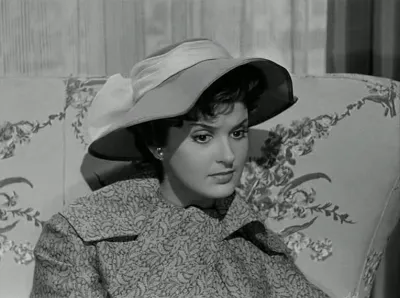
Irène Tunc
Human Design Chart
Biography
She appeared in 35 films and television shows between 1955 and 1971.
She was the wife of film director Alain Cavalier and she died in a car crash on 16 January 1972, aged 37, in Versailles, France.
Human Design Analysis: Irène Tunc as Projector 4/6
Projector 4/6 — Design at a Glance
Irène Tunc's design inclined towards a focused and penetrating perception. As a Projector, she did not have an intrinsic energy source like other types but rather acted as an intense beam of light directed specifically at weaknesses in her environment. This configuration endowed her with the ability to immediately recognize systematic errors or inefficient processes in others.
The challenge of this design was not to express these insights directly and confrontationally, which often felt uncomfortable to others. Instead, Irène Tunc was most effective when she demonstrated her own harmony and clarity. Through this inner alignment, she attracted people who then sought her guidance on their own accord. Her strategy involved waiting for an honest invitation before sharing her knowledge or perspective.
Since Projectors had to alternate phases of high activity with necessary rest periods to avoid burnout, Irène Tunc's rhythm did not conform to the constant performance pressure of society. Living by this principle of patience and waiting for recognition rewarded her with success. Ignoring this mechanism and trying to impose her insights against others' resistance led sooner or later to her non-self theme: bitterness. Her influence thus relied less on continuous action than on the quality of her presence and the ability to illuminate a path for others without blinding them.
Emotional Authority
Irène Tunc's design inclined towards emotional wave motion, significantly shaping her inner decision-making process. As someone with Emotional Authority, she was subject to constant ups and downs in her feelings, coloring her perception of the world through her current mood. What appeared inspiring at one moment could be perceived negatively the next. Her immediate feeling was only a snapshot, not necessarily her deeper truth.
This mechanism of the defined Solar Plexus Center meant that spontaneous decisions based on emotion were risky and often had negative consequences. The structure of her design required patience: she needed to take time for decisions to mature. Sleeping on questions was essential as intense feelings would subside over time, creating emotional distance. Only then did clarity and calmness set in. This process was particularly important for long-term life-changing steps to ensure that the choice came from a place of calm rather than temporary excitement.
The 4/6 Profile — Opportunist / Role Model
Irène Tunc's design featured Profile 4/6, describing a dynamic development from the social experimentation phase towards the role of wise role model. In her first three decades, she primarily operated through the energy of Line 3, which in this context appeared as Line 4. This led to Irène Tunc intensely experimenting with relationships and friendships driven by a strong need for recognition and influence within her network.
With Saturn's return, however, Line 6 was activated, creating a fundamental inner conflict: the heart of Line 4 yearned for belonging and cooperation while the head of Line 6 desired to withdraw to reflect on the meaning of life. This contradiction between social drive and desire for distance significantly shaped her later years.
Irène Tunc showed high sensitivity towards weaknesses in systems or relationships, a characteristic of Line 6 marked by self-defense and humility. Although expected as a role model to appear wise and guide others, she kept her large heart cautious. She protected herself from opening up to the wrong people to prevent hurt. This mechanism of selective openness was at odds with her natural fixation on her own process and desire for success, which always accompanied her interactions with a certain reserve alongside social presence.
Split Definition — Defined & Open Centers
Irène Tunc's design revealed a tendency towards constant mental pressure and deep emotional reflection. She was someone who asked questions and formed concepts but couldn't immediately translate them into action – her defined Head Center and Ajna Center generated inspiration, yet lacked the direct energy for execution. Instead, her defined Solar Plexus acted as an inner authority: decisions matured only after experiencing the emotional wave, requiring patience and temporal distance. Her defined Root Center provided physical pressure for survival and movement, grounded in reality.
At the same time, Irène Tunc was vulnerable to conditioning through her open centers. The open Throat Center tended to feel pressured, demand attention, or speak impulsively if she didn't wait for natural invitations. Her open G Center meant a lack of fixed identity; she adapted to environments and sought directions from others rather than asserting them herself. The open Heart Center led her to often prove herself or make promises to demonstrate value – a pattern that triggered self-doubt if not fulfilled. Additionally, her open Sacral Center was sensitive to foreign energy; she could easily become overwhelmed and didn't always know when breaks were necessary since she lacked a constant vital source. Finally, her open Spleen Center reflected environmental fears, leading to uncertain, spontaneous decisions if she didn’t wait for emotional clarity.
Irène Tunc's mechanics described a path of waiting: asking mental questions, letting emotional waves pass before acting, and disengaging from external identity or will demands to act in her own truth.
Channels for mental images, basic needs and principles.
Irène Tunc's design was characterized by deep emotional sensitivity for belonging and an unrelenting experience-based mind. The Synthesis Channel 19-49 connected her Root Center with the Solar Plexus. This connection generated a instinctive drive to secure the sense of belonging in the “tribe.” She sought principles that held communities together and rejected anything weakening these bonds. Loyalty and resource protection were emotional glue for her; she needed to feel needed to be happy. This channel determined her approach in relationships: it wasn't about logic but an emotional frequency of acceptance or rejection, defining who belonged.
Parallel to this, the Abstraction Channel 64-47 connected her Head Centers and Ajna Center. Irène Tunc filtered every life experience through a kaleidoscope of mental images. Her mind constantly sought stories or perspectives that made sense. This process could be confusing but ultimately led to unique insights. She learned to practice patience with her own fuzziness until clarity emerged, then shared it as an inspiring narrative. Her design warned against using the mind as absolute authority for personal problems; instead, it was about carrying out the emerging stories.
Additionally, prioritized gates shaped her orientation. Gate 46 demanded full commitment and presence in the here and now, with the body being tended to like a temple. Gate 25 brought a mystical stance of innocence and self-love. Gate 15 organized according to natural rhythms and collective behavior, while Gate 10 dictated genetically set behavioral rules for integration into the environment. In her design, Gate 30 also operated, steering longing and recognition of feelings often linked with learning through limitation and fate awareness.
Collective Circuitry — Circuit Signature
Irène Tunc's design revealed a tendency towards separate, parallel functioning energetic focal points. She was someone who oscillated between two independent experiential worlds: on one hand, emotional reflection from the Solar Plexus Center, connected to Root Energy for immediate reactions; on the other, creative thinking in the Ajna and Head Centers, separated from emotional waves. This Split Definition meant these areas didn't function as a continuous flow but rather existed as separate energy fields side by side.
The Meaning-Making Circuit connected Irène Tunc's Ajna and Head Center through the Abstraction Channel (64-47). This shaped an ability for visual and abstract information processing that developed cyclically. The energy of this circuit related to understanding past events through cool logic and reason, sharing insights with the collective.
Parallel to this, the Ego Circuit connected Irène Tunc's Solar Plexus and Root Center via the Synthesis Channel (49-19). This was about emotional processing of experiences from the past in wave movements. Since this circuit lacked a connection to the Sacral Center, it required necessary rest periods for resource regeneration. Irène Tunc utilized these separate systems: one for intellectual abstraction and sharing, the other for emotional synthesis and support within her community, each with its own rhythms and demands.
Right Angle Cross of the Vessel of Love 3
Irène Tunc's Human Design profile carries the signature of the right cross of the Love Vessel 3. This configuration sets a specific orientation towards emotional and interpersonal fields, connected with a deep resonance for themes of connection and empathic potential. The right cross of the Love Vessel describes in Human Design mechanics an archetypal path characterized by a strong dedication to life and the ability to receive and transform emotional currents. Number 3 points to a particular phase or intensity of this process, often marked by learning through one's body in relationships and emotional dynamics.
For Irène Tunc, this meant that her inner landscape was strongly shaped by the quality of her connections with the world. She had the capacity to experience love not just as a feeling but as an active force to be shared. This profile supports a nature that dwells deeply in emotions and helps others access their own feelings. It is a pattern that connects empathy with a certain weight or seriousness, since the 'vessel' here serves as a container for intense emotional experiences. Irène Tunc lived this dynamic by using her own emotional truth to build bridges with others and understand the complexity of human bonds.
Saturn Return — Life Cycles
Irène Tunc's Human Design profile indicated a tendency towards structural anchoring that gained weight with age. She was someone who understood stability not as a static state but as an active process of building foundations. This attitude was marked by her first Saturn Return, a cyclical turning point in Human Design typically occurring between the ages of 27 and 30. During this phase, years of groundwork condensed into a solid result; what had previously appeared as experimentation or uncertainty took on clear form. For Irène Tunc, this cycle marked the transition from searching to consolidation. She used the energy of this return to translate inner clarity into external structures. It was not a sudden event but a process of maturation in which her strategy and authority became increasingly effective. The Saturn Return acted as a catalyst: it challenged her to take responsibility for what she had already built, thereby deepening her connection with her own design. Irène Tunc learned that true strength comes from accepting boundaries and consciously building support. This cycle laid the groundwork for future developments by stabilizing her inner order and enabling her to face future challenges with greater composure. The experience of this return left a lasting impression on her life, as she recognized the importance of continuity and consistency in her personal development.
Projector · Emotional Authority — Synthesis
Irène Tunc lived marked by a deep internal tension between the need for connection and the desire for distance. Her Projector design, combined with emotional authority and the profile of Networker/Role Model, points to someone who intuitively recognized others (Channel Synthesis) and could bring 'light into darkness' for them – yet always through the filter of her own, shifting emotions. Line 4 in the profile strengthened this urge towards belonging, while line 6 added a deep need for reflection and the search for overarching principles (Soul-Seeking Circuit). This internal conflict between heart and head shaped her life, especially during the first decades.
The central paradox of her nature lay in being designed as a Projector to guide and inspire others (defined Head Center) while simultaneously being subject to an emotional wave that made quick decisions difficult. This cycle of departure and retreat, coupled with the ability to perceive deep needs, led her often to move between the desire for community and the need for inner freedom – a constant weighing of closeness and distance, sharing and holding back.
2 Defined Channels
Incarnation Cross - Right Angle Cross of the Vessel of Love 3
Solar Return
The Solar Return shows the moment when the sun returns to its exact birth position - your personal solar year.
Life Cycles
Discover the life cycles with a detailed triple view (birth chart, cycle chart, composite).
Human Design Profile
- Type
- Projector
- Strategy
- Wait for the respectful invitation
- Authority
- Emotional Authority
- Profile
- 4/6 - Opportunist / Role Model
- Definition
- Split Definition
- Incarnation Cross
- Right Angle Cross of the Vessel of Love 3
- Date of Birth
- 25.09.1934 02:00
- Place of Birth
- Lyon, France
Frequently Asked Questions
What was Irène Tunc's Human Design type?
What Profile did Irène Tunc have in Human Design?
What Authority did Irène Tunc possess?
What incarnation cross did Irène Tunc have?
When was Irène Tunc born?
Discover your own Human Design
Are you also a Projector? Find out in a personal reading how to unfold your leadership qualities and recognize the right invitations.
More Personalities
Back to overviewSissy Spacek

Alain-Fournier

Anémone

Ann-Margret

Arletty

Arno