
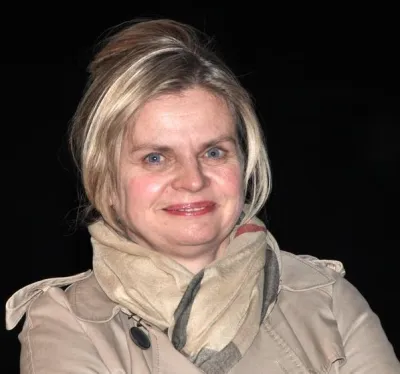
Isabelle Nanty
Human Design Chart
Biography
Born on the same day: actress Marie Trintignant.
The Human Design of Isabelle Nanty: Reflector 6/2
Reflector 6/2 — Design at a Glance
Isabelle Nanty revealed herself as someone whose inner experience was strongly influenced by her environment. Her Human Design lacked defined centers, meaning she did not have constant personal energy sources. Instead, she acted like a mirror for her surroundings and perceived the energy of other people and nature with exceptional intensity. This openness made her a sensitive receptor for external influences, including cosmic cycles such as seasons or planetary constellations.
For Isabelle Nanty, it was crucial to live in harmony with these natural rhythms. Her strategy involved waiting at least one month – corresponding to a lunar cycle – before making important decisions to gain clarity. By following this approach and trusting her inner authority, she automatically found people and situations that suited her well. This allowed her to observe the world without attachments and rewarded her with a feeling of joyful surprise. If she lived against this design, however, deep, lasting disappointment would arise both in relation to herself and the state of the world. Her path therefore involved consciously using the mirror function and letting patience prevail.
No Inner Authority
Isabelle Nanty demonstrated a decision-making approach that did not rely on a firmly established inner authority – a rare trait. Instead of orienting herself around a single physical impulse, she used exchanges with other people as her central tool for clarifying her paths. This approach is typical for Mental Projectors or Reflectors who do not have defined centers below the throat and thus lack an immediate internal source of answers.
Through her open energetic structure, Isabelle Nanty was highly receptive to information and perspectives from her environment. In dialogue, dormant potentials in her open centers were activated, allowing her to view issues from multiple angles. This resonance ability helped her identify the right environment and suitable conversation partners.
Evaluating these diverse impressions, however, was a complex process requiring time and withdrawal. Isabelle Nanty had to learn to filter out the essential thread from the information chaos alone and structure it meaningfully. This formed her specific capital of success: the ability to develop ordered intelligence from chaos. A key element for her was always choosing an environment where she felt comfortable and could exchange ideas confidently. Only there did her sense deepen about what truly suited her and what purpose her decisions served.
The 6/2 Profile — Role Model / Hermit
Isabelle Nanty revealed herself in her youth as someone who learned through intense experimentation and direct life experience. Her design indicated a tendency towards trial and error, often retreating after setbacks to try new paths. This phase was characterized by the dynamics of Line 2, which demands an unconditional quest for personal meaning through taking risks and accepting unpleasant alliances. For Isabelle Nanty, this meant being willing to violate principles if it served a higher purpose, with intuition guiding calculable risks.
Around age 30, her orientation fundamentally shifted. Line 6 became active, metaphorically leading Isabelle Nanty back into a 'cave' on a mountain. Here she withdrew from the outside world with great distance to reflect upon the numerous experiments of her younger years. This period served for healing and deep self-awareness. The inflexibility of Gate 60 played a central role: she accepted limitations without compromise, acting as a strict prerequisite for internal mutations. Uranus enhanced her intuitive judgment to correctly apply this rigor.
From this phase of introspective distance emerged Isabelle Nanty as a wise person. Others recognized this wisdom and sought her advice to benefit from her life insights. Thus, her earlier risk-taking experimentation transformed through the slow, inflexible maturation of Line 6 into a stable source of guidance for others who wished to learn from her deep introspection.
No Definition — Defined & Open Centers
Isabelle Nantys design is characterized by the complete absence of defined centers, which shapes an extreme openness and flexibility in all areas of life. Since there are no fixed energetic structures present, she was someone who was strongly influenced by her environment and did not have a constant internal source for decisions or identity.
This profile means that Isabelle Nanty had no own, constant mental focus; her Head Center was open, which led to her absorbing mental inspirations and questions from her surroundings rather than generating them herself. She tended to be infected by doubts and confusion of others since her Ajna Center was also undefined. This made her mind a sensitive receiver for ideas and concepts that she could not consider as her own truth but rather as transient impulses.
In communication, this open Throat Center manifested: Isabelle Nanty had no constant way to speak or gain attention. Instead, she relied on being invited from the outside to express herself. Attempts to take the initiative independently often led to frustration since her voice was not supported by an internal, defined energy.
Her identity and direction were fluid due to the open G Center: Isabelle Nanty adapted to people and places she encountered rather than radiating a fixed personality. This allowed her to assume various roles and experience love as well as life direction through external initiation instead of actively seeking or forcing them.
Even her willpower was not constantly present; the open Heart Center made her vulnerable to the pressure to prove herself. She could not give promises based on a constant energy foundation and tended to measure her worth by performance, which often ended in cycles of self-doubt.
Her vitality fluctuated strongly due to the undefined Sacral Center: Isabelle Nanty had no uniform energy flow and needed to learn to trust her inner authority to set boundaries and rest rather than succumbing to the conditioning expectation of constant productivity.
Emotionally, she was highly sensitive through the open Solar Plexus Center and absorbed the moods of her surroundings. She learned to distinguish between her own and others' feelings, which helped her avoid emotional decisions and not identify with the whims of others.
Finally, her intuition and body awareness were inconsistent due to the open Spleen Center: Isabelle Nanty had to learn to face her fears and avoid spontaneous decisions since these often relied on conditioned impulses. Her Root Center was also open, making her vulnerable to external stress; however, she could use or reduce this pressure through targeted breaks rather than being overwhelmed by it.
Channels & Gates
Isabelle Nanty showed herself as someone who translated mental processes into tangible images. This ability for abstraction came from Gate 56, the Stop-Code-Gate, allowing her to visually represent complex thoughts and tell stories from beginning to end – a process that shaped collective narratives.
At the same time, she faced constant decisions in the here and now: take risks or not? Gate 28, the Player's Gate, demanded persistence in listening to one’s own sense. The fear that life could be meaningless drove her to take appropriate risks according to her strategy. Such steps often led to abrupt changes but were necessary to recognize her personal expiration date and life purpose.
Her actions were marked by deep care: Gate 27 connected her with the genetic role of nurturing – not only for her own children, but for the entire tribe. This caring warmth improved the quality of all her activities and worked almost magically through its all-encompassing nature. She cared equally for self-preservation and species preservation.
Yet this energy met internal limits: Gate 60 brought melancholy as a physical experience with it. It was about accepting limitations to transcend them. Pressure and transformation were characteristic of this gate. Isabelle Nanty had to learn that genetic mutations and creative outbursts were ways to overcome this heaviness. Accepting her own boundaries became the prerequisite for further development.
Without defined channels, these gates appeared as individual impulses: the narrative clarity of Gate 56, the risk-taking now of Gate 28, the altruistic warmth of Gate 27, and the transformative pressure of Gate 60. Together they formed a profile that oscillated between mental abstraction and genetic responsibility – always challenged to find personal meaning in the here and now while it was about the survival of the whole.
Circuit Signature
Isabelle Nanty showed herself through her design as someone who did not possess any fixed internal structures or automated reactions. Her chart indicated a 'No Definition', which means that all centers were undefined, thus remaining open to the influence of their environment. This shaped her not as an empty vessel but as highly adaptable personality, drawing her identity and actions always from the context of the specific situation and people in her surroundings.
Since there were no defined centers, Isabelle Nanty lacked a continuous internal energetic flow or a fixed inner voice that would act independently of external impulses. Instead, she functioned like a mirror: She absorbed the energies, moods, and demands of her environment and responded authentically to them without having to adopt a rigid, predefined role. This openness allowed her to express different facets of her personality in various social or professional contexts since she was not bound to one fixed way of being.
Without defined circuits or channels, there were no specific recurring life tasks or themes running through her entire existence at Isabelle Nanty: Every experience was processed as new and unique, bringing great flexibility but also the necessity to always consciously choose which external influences she wanted to let into her own system. Her strength thus lay in the ability to behave situationally appropriate and not be restricted by internal constraints or rigid patterns.
Left Angle Cross of Distraction 2
Isabelle Nanty revealed herself through an internal tension between the desire for clear orientation and the constant danger of being distracted from her true path. Her design suggested that she often felt like she was heading in the wrong direction or getting lost in side issues instead of pursuing her core purpose. This is characteristic of the left cross of Distraction 2: a configuration indicating that external circumstances or self-doubt can draw focus to details that seem important but distract from the essential. Isabelle Nanty had to learn to accept these distractions as part of her process rather than viewing them as mistakes. The challenge was to have the courage, despite many stimuli and opportunities in life, to concentrate on what is truly important and not be swayed by every new input. Her path was marked by the need to find clarity in a frequently confusing environment and strengthen her own intuition to make the right decisions. Through this experience, she could establish a deeper connection with her true self and learn to use distractions as opportunities for self-reflection rather than being overwhelmed by them.
Saturn Return · Uranus Opposition · Chiron Return · 2nd Saturn Return — Life Cycles
Isabelle Nanty showed a structure aimed at cyclical condensation followed by later expansion. Her design suggested that internal maturation processes would result in concrete, visible outcomes, followed by phases of expanding her sphere of influence.
In 1990, at the age of 28, she embodied the character of Sandrine Vonnier in Étienne Chatiliez’s tragedy *Tante Daniele*. This marks her first Saturn Return. In this cycle, years of groundwork often condense into a solid result; it is a moment of confirmation and structuring where the previous foundation is reviewed and reinforced. For her design, this was a typical time when internal development became outwardly effective.
Later, in 2002 at the age of 40, she received further nominations as best supporting actress for her portrayal of Georgette in Jean-Pierre Jeunet’s *The Fabulous World of Amélie*. This falls into the Uranus Opposition. This cycle often brings unexpected turns or an expansion of the previous role; it is a moment when the established self-image is challenged and simultaneously placed in new, broader contexts. The nominations show how her presence grew beyond the initial success and was reflected in new facets.
Her path thus follows a pattern: first the consolidation of one’s substance through concrete achievements, then an opening to new dimensions of recognition. Both events underscore how her design was attuned to these specific life phases – not as coincidence but as an expression of her inner mechanics that fostered maturity and expansion in these phases.
Reflector · No Inner Authority — Synthesis
Isabelle Nanty's chart reveals a profound adaptability running through the entire design. As a Reflector without defined centers, she intensely perceives the energy of her environment and reflects it back (Design View). This openness, combined with the undefined Head Center, leads to constant fluctuations in mental processes – inspiration alternates with doubt (Centers, Channels/Gates), yet this also allows her to take in information from multiple perspectives and transform it into narratives (Channels/Gates). The successes during Saturn Return and Uranus Opposition indicate that this adaptability is not passive but manifests through phases of intense experience followed by reflection (Cycles), thereby generating wisdom.
A central paradox lies in the tension between complete openness and the potential for deep wisdom. The absence of defined centers implies a constant dependence on external factors, lacking an internal compass (Authority). At the same time, her profile as role model/natural talent suggests that from this openness and accumulated experiences over time emerges a unique wisdom – a capacity to give orientation to others. This wisdom, however, does not arise from inner certainty but through reflecting and passing on learned knowledge (Profile Role).
Incarnation Cross - Left Angle Cross of Distraction 2
Solar Return
The Solar Return shows the moment when the sun returns to its exact birth position - your personal solar year.
Life Cycles
Discover the life cycles with a detailed triple view (birth chart, cycle chart, composite).
Human Design Profile
- Type
- Reflector
- Strategy
- Wait a lunar cycle (approx. 28 days)
- Authority
- No inner authority - learn more
- Profile
- 6/2 - Role Model / Hermit
- Definition
- No Definition
- Incarnation Cross
- Left Angle Cross of Distraction 2
- Date of Birth
- 21.01.1962 23:50
- Place of Birth
- Verdun, France
Frequently Asked Questions
What is Isabelle Nanty's Human Design type?
What profile does Isabelle Nanty have in Human Design?
What authority guides Isabelle Nanty in Human Design?
What incarnation cross does Isabelle Nanty have?
When was Isabelle Nanty born?
Discover your own Human Design
Are you also a Reflector? Find out in a personal reading how to find the right environment and understand your unique mirror effect.
More Personalities
Back to overviewSissy Spacek

Anémone

Ann-Margret

Arletty

Arno

Artus
