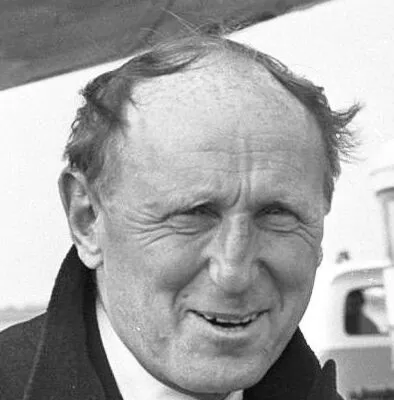
Photo: Wikimedia Commons
Jakob Van Hoddis
Human Design Chart
Biography
Unable to flee Nazi Germany, Van Hoddis, who suffered mental illness, had little chance of survival. On the 30 April 1942, he and all the other patients and staff (five hundred people) of his sanatorium were transported to Sobibór via Krasnystaw. None of them survived. The date of van Hoddis´ death remains unknown.
Human Design Analysis: Jakob Van Hoddis as Projector 1/3
Projector 1/3 — Design at a Glance
Jakob Van Hoddis revealed himself through an aura that acted like a focusing flashlight: it shed light directly on those areas in his surroundings that were still in darkness. His design suggested that he immediately perceived system errors – yet addressing these flaws head-on risked irritating others, as if shining a bright light into their faces. For him, the more elegant approach was to radiate subtly: by embodying harmony himself, he became attractive and drew others who asked how he managed it.
The strategy of his Projector design involved waiting for appreciative, honest invitations rather than pushing forward independently. With his undefined Sacral Center, he lacked a constant source of life energy. Instead, he experienced phases of high activity followed by necessary rest periods for regeneration – a rhythm that often conflicted with societal work structures. When Jakob Van Hoddis lived according to this pattern, he was rewarded with success; when he ignored the invitation or his energy limits, the non-self theme "Bitterness" appeared. His role was not to force but to illuminate the path through his own presence and help others recognize their blind spots.
No Inner Authority
Jakob Van Hoddis shows a rare configuration: the absence of an inner authority. This marks either mental projectors or reflectors. As a mental projector, he does not find decisions through his own inner certainty but in exchanges with many different people. Through energetic interactions in his open centers, dormant potentials are activated and provide information. His high resonance capability allows him to view issues from numerous perspectives and express them differently. It also helps him identify the right environment and conversation partners.
Evaluating these diverse impressions is a complex process that requires time. Jakob Van Hoddis should withdraw alone for this purpose. Over time, he recognizes the red thread, distinguishing between what is meaningful and what does not fit. Thus, he develops his specific intelligence: filtering out the essential from a mass of information, organizing it meaningfully, and structuring it. This is his capital for success as a projector.
A crucial key for him is being in an environment where he feels comfortable. There he meets the right people with whom he can confidently discuss decision-making processes. This exchange deepens over time his sense of what is right for him. Without this external reflection and necessary withdrawal, orientation remains difficult since there is no central inner authority to guide direction.
The 1/3 Profile — Investigator / Martyr
Jakob Van Hoddis revealed himself as someone who not only collected knowledge but also rigorously tested it through practical trials and tribulations. His design inclined him to make judgments only when theory and experience aligned—a process of learning by trial and error. As a Researcher (Line 1), he initially sought the foundation, yet his Experimentalist nature (Line 3) pushed him to negotiate and validate these insights in real life.
This dynamic was shaped by Gate 8, emphasizing honesty and the willingness to lead through mutation. Jakob Van Hoddis had to share his knowledge to be accepted within the community; his authority did not come from titles but from proven competence. Simultaneously, Gate 30 with its energy of fate and resignation played a role. This did not mean passive surrender but rather deep acceptance of what is—the willingness to live life as a wave without needing to evaluate it.
The tension between the desire for secure knowledge (Line 1) and the urge to act (Line 3) defined his approach. When Jakob Van Hoddis deemed something good, it was the result of this double filter: understood theoretically and tested practically. His honesty served as a bridge to the community, teaching him that true insight often arises from the willingness to make mistakes and draw consequences from them rather than staying in the Head Center alone.
Single Definition — Defined & Open Centers
Jakob Van Hoddis was characterized by a constant internal mental pressure. His defined Head and Ajna Centers created a continuous source of inspiration and conceptual thinking. This state did not provide immediate answers for implementation but formulated questions and concepts that challenged consciousness. The challenge lay in accepting this unresolved mental state without falling into self-doubt or hasty actions. Clarity and confusion were natural processes with their own timing.
At the same time, his design was marked by several open centers, making him susceptible to external conditioning. His open Throat Center tended to become stressed, demanding attention or speaking out of fear of being overlooked rather than waiting for natural invitations to express itself. The open G Center lacked a fixed identity; Jakob Van Hoddis relied on interaction and the right place to find his direction and love instead of constructing it himself.
The open Heart Center drove him to prove his worth through promises or competition, often ending in cycles of overextension and self-doubt due to a lack of consistent willpower. The open Sacral Center allowed him to absorb and amplify foreign vital energy, leading to exhaustion if he did not pause. Additionally, the open Solar Plexus Center absorbed emotional waves from the environment, causing inner unrest when these were misinterpreted as his own emotions. The open Spleen Center made him vulnerable to fears and the temptation to cling to unhealthy situations to simulate a sense of security. Finally, the open Root Center amplified external stress, which could lead to hyperactivity if he tried to escape this pressure through constant activity.
Channels for critical mind and clear formulations.
Jakob Van Hoddis was someone whose mind was marked by a constant, almost compulsive examination of patterns. His design tended towards not simply believing but putting everything to the test until it was logically sound. This attitude resulted from Channel Logic 63-4, connecting the Head Center with the Ajna Center. Here, the doubting mind works: Gate 63 of Doubt constantly filters for consistency while Gate 4 of Formulating attempts to structure answers. For Jakob Van Hoddis, skepticism was not a lack of trust but the essential tool of knowledge. A statement was only valid if it could be verified and functioned practically; unfounded belief had no place in this system. The mental pressure that arose when a pattern did not fit drove him to question until a consistent solution was found – often to pass on this clarity to others.
Alongside this analytical sharpness, other energies worked in the background. Gate 14 brought skillful handling of power and direction, coupled with the need to accept boundaries gracefully as Gate 30 demands with its longing for emotional truth. Gate 29 emphasized the importance of saying yes at the right time and persisting in the face of challenges, while Gate 8 delivered an impulse towards individual contribution and promotion of new ideas. In his personality aspect, Gate 24 provided cyclical mental renewal, a process of rationalizing that replaced old thought patterns to gain inner peace and new knowledge. Jakob Van Hoddis processed these impulses not through blind action but through continuous skeptical analysis that only rested when logic was sound.
Collective Circuitry — Circuit Signature
Jakob Van Hoddis showed himself as someone marked by a design aiming for logical clarity and strategic structuring. His focus lay on improving things and guiding society towards a better future, using emotionless ratio – the Solar Plexus is not involved here. This attitude stems from the Understanding Circuit, whose core is sharing rational insights ideally free of conditioning. In Jakob Van Hoddis' case, this circuit was specifically active through Channel Logic, connecting the Head Center with the Ajna Center. As he has a Simple Definition and these two centers are connected in one group, they formed a direct, unpartitioned energetic flow. This manifested not as general knowledge but as focused visual strategy: Energy from the Head Center (the place of impulses) flowed directly into the Ajna Center (the area of focus and formulation). Thus, he could precisely grasp logical connections and structure them for others to understand. It was less about emotional understanding than cognitive ordering of information to make it comprehensible for others. This configuration underscores a tendency to unravel complex issues through clear logic and strategically apply these insights rather than passively receiving them.
Right Angle Cross of Contagion 2
Jakob Van Hoddis was marked by the 'Right Cross of Contamination', a configuration aimed at deep emotional resonance and intuitive connection. His design inclined him to empathize with others, feeling their emotions and reflecting them back in an empathetic manner. This did not happen as a conscious strategy but rather as a natural reaction to his environment.
This mechanism describes a high sensitivity towards interpersonal currents. Those who carry this cross often unconsciously absorb the moods of others, which can lead to great depths of compassion as well as the risk of emotional overload. The boundary between one's own feelings and those of others blurs easily; Jakob Van Hoddis was thus dependent on clearly distinguishing these energetic influences to not dissolve his identity in the emotional chaos of others. It was an inner antenna constantly seeking connection, often receiving more than could be consciously processed. This configuration challenged him to stay close without losing himself entirely – a balancing act between devotion to the collective and protection of one's own emotional space.
Saturn Return · Uranus Opposition · Chiron Return · 2nd Saturn Return — Life Cycles
Jakob Van Hoddis showed a life path marked by external constraints and structural fractures. His design did not establish a stable internal fortress but reacted sensitively to the pressure of time. In 1914, at age 27, he gave his last lecture in the New Club. This coincided with his first Saturn Return, a cycle often leading to consolidation or dismantling of old structures; here it marked the end of public presence.
The inner conflict sharpened in 1926: At age 39, he was declared incompetent by the Amtsgericht Tübingen. This corresponds with the Uranus Opposition, a point of extreme tension between the need for freedom and external limitations. The crisis was not only psychological but legally fixed – an indication of how strongly this configuration can shake control over one's life.
The Chiron Return around 1933 (age 46) is in Human Design not a healing process, but a phase of finding meaning and unfolding the purpose of incarnation. In that year, his mother emigrated with his sisters to Palestine. This relationship break falls into the period when one's life task often becomes clearer – here through the loss of familial bonds.
The second Saturn Return around 1942 (age 55) usually brings a final structuring or end of a cycle. Jakob Van Hoddis was murdered in the extermination camp Sobibor. His design shows no resistance against systematic destruction, but rather a vulnerability that found its tragic conclusion in this historical catastrophe.
Projector · No Inner Authority — Synthesis
A central red thread in this design is the dynamic interaction between the drive to understand and the ability to recognize patterns. The defined connection between Head Center and Ajna Center (Logic Channel) generates constant mental pressure to ask questions and comprehend things – a process further strengthened by the Investigator/Experimentor Profile. This investigative spirit seeks not only theoretical knowledge but must also practically test it to gain valid insights. High resonance capacity in openness allows for the uptake of diverse perspectives, while projecting this inspired logic onto others is a core motif.
The central paradox lies in the interplay between clarity and resistance. On one hand, this design has an acute ability to identify errors and shed light on darkness – the essence of the Projector. On the other hand, it lacks inner authority, meaning that decisions do not come from one's own center but must be validated through exchange with others. This process carries the risk that clear vision will encounter resistance if communicated unfiltered, requiring a sensitive navigation in interaction with the environment.
1 Defined Channel
Incarnation Cross - Right Angle Cross of Contagion 2
Solar Return
The Solar Return shows the moment when the sun returns to its exact birth position - your personal solar year.
Life Cycles
Discover the life cycles with a detailed triple view (birth chart, cycle chart, composite).
Human Design Profile
- Type
- Projector
- Strategy
- Wait for the respectful invitation
- Authority
- No inner authority - learn more
- Profile
- 1/3 - Investigator / Martyr
- Definition
- Single Definition
- Incarnation Cross
- Right Angle Cross of Contagion 2
- Date of Birth
- 16.05.1887 04:45
- Place of Birth
- Berlin, GER
Frequently Asked Questions
What is the Human Design type of Jakob Van Hoddis?
What are Jakob Van Hoddis's Profiles?
What authority does Jakob Van Hoddis have?
Which incarnation cross is active for Jacob van Hoddis?
When was Jakob Van Hoddis born?
Discover your own Human Design
Are you also a Projector? Find out in a personal reading how to unfold your leadership qualities and recognize the right invitations.
More Personalities
Back to overviewSissy Spacek

Alain-Fournier
Anémone
Angeli
Ann-Margret

Bourvil