
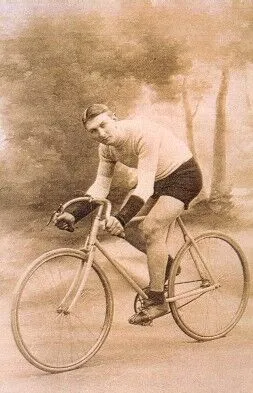
Jean Alavoine
Human Design Chart
Biography
He died on 18 July 1943, aged 55, in Argenteuil, France.
Jean Alavoine — Projector with Profile 3/5
Projector 3/5 — Design at a Glance
Jean Alavoine appeared through a dense, focusing aura that immediately revealed system errors. His design marked him as someone who intuitively recognized inconsistencies in his environment – comparable to a bright flashlight that directs itself towards dark spots. This ability to identify weaknesses in the system was his natural drive to bring light into darkness and show others the way.
However, directly addressing these flaws often triggered resistance from those around him. Instead of confronting his observations, Jean Alavoine was most effective when he attracted others through his own harmonious glow. His strategy involved waiting for a respectful and honest invitation before offering his knowledge or leadership. This approach allowed him to use his focusing energy elegantly without friction.
Since he lacked a constant sacral center as a projector, he did not have continuous intrinsic life force energy. Instead, he experienced phases of high activity followed by necessary rest periods for regeneration and the prevention of burnout. Living according to this rhythm of invitation and withdrawal brought him successful rewards. Ignoring this dynamic and acting without invitations or against his energy cycles led to bitterness as a consequence. His design thus required patience and trust in the attraction power of his own integrity.
Splenic Authority
Jean Alavoine relied on spontaneous survival intelligence for his decisions, which served as his inner authority. His design carried this competence in the defined Spleen Center while the Emotional and Sacral Centers remained open – a configuration only projectors or manifestors exhibit. This conveyed him an immediate physical knowledge about whether situations, environments, or people were beneficial to his health. His instinct functioned as a reliable compass for his well-being and enabled him to rigorously distance himself from harmful influences.
The key mechanism was that the first spontaneous impulse always contained the truth. However, this fine signal tone only appeared once in the current moment; it could not be reproduced or delayed through thinking. Thus, his decision-making required high vigilance to not miss this short impulse or have it drowned out by external influences. Since what was right became clear to him only at the moment, his plans often changed last-minute. Long-term commitments were difficult and unproductive for him; instead, he needed a lot of space and flexibility to react spontaneously to the current situation. A temporary withdrawal could help him perceive this subtle inner sound more clearly before acting.
The 3/5 Profile — Martyr / Heretic
Jean Alavoine's design was characterized by the dynamics of Profile 3/5: The Experimenter and Hero. Initially skeptical towards new ideas, he did not believe anything at first but had to test everything himself. Line 3 drove him to learn through trial and error, often confronted with superior forces or experiences of helplessness that were necessary to avoid dependencies and find his own path.
From these personal experiences, he created a rich treasure trove of practical life experience. Line 5, the Hero line, used this knowledge to act as a problem solver for others in crisis times. Jean Alavoine appeared attractive through this authentic competence gained from practice; others sought his advice and saw him as an authority. Yet, precisely this role carried risks: If he failed at public experiments, it was visible to all. Line 5 also brought isolation – the danger of alienation was real if he isolated himself or did not receive support from others. His life followed the pattern of a lone fighter who produced mutations through isolated struggles in crises while balancing between the need for recognition as a hero and the painful experience of public failure.
Single Definition — Defined & Open Centers
Jean Alavoine's Human Design profile emphasizes a tendency towards clear and authentic expression, supported by his defined Throat Center. This center ensures him a consistent voice and the ability to transform information from various sources into understandable communication or action. His assertiveness was not arbitrary but followed a reliable inner structure that allowed him to express his truth with honesty once he trusted his strategy.
This communicative clarity was complemented by his defined Spleen Center, which functioned as spontaneous intuition and body awareness. The Spleen provided Jean Alavoine with a dependable internal compass based on well-being in the "now." It enabled intuitive judgments about health, values, and safety that could not be rationalized but served the moment of survival. This combination of defined Throat and Spleen created a foundation for spontaneous, instinctive expressions that emerged directly from his existential consciousness.
In contrast, his Head, Ajna, and G Centers were open. The open Head Center meant he did not have a constant source of inspiration or mental questions; instead, he absorbed the mental pressure of his environment. He tended to get stuck in doubts and confusions that belonged to others and often sought external answers to relieve this pressure. His open Ajna Center amplified this: he was receptive to concepts and theories from his surroundings but lacked a consistent, enduring mental truth. The open G Center led him to lack a fixed identity or direction; instead, he blended with the people and places around him. He often searched for love and orientation through reflecting others rather than generating it internally.
Similarly, his Heart, Sacral, and Solar Plexus Centers were also open. His open Heart Center made him vulnerable to the need to prove his worth through promises or performance, despite lacking a consistent willpower. He tended to undervalue himself compared to others. The open Sacral Center meant an unstable energy flow; he absorbed the vital energy of his environment and amplified it, often leading to overexertion and exhaustion as he did not know when enough was enough. Finally, his open Solar Plexus absorbed the emotions of others, making him emotionally vulnerable and prone to personalizing foreign moods or avoiding confrontation to maintain stability.
Channels for intuitive clarity and precise communication.
Jean Alavoine revealed himself through the ability to spontaneously and verbally express existential truths. His design suggested that he encouraged others to awaken their inner survival intelligence. This primarily occurred through Channel Flash of Insight 57-20, which connects the Spleen Center with the Throat Center, allowing him to communicate intuitive insights directly in the present moment. Rather than thinking, he acted from a deep instinctive knowledge based on ancient primal instincts. His statements like "I know that I am living now" served not for self-assertion but to awaken listeners' own understanding of health and well-being.
Additionally, further energetic patterns were at work in his system. Gate 21 brought a desire for control over material things and respect within the service of the community. Gate 38 added necessary aggression to set boundaries and defend individual integrity against resistance. Through Gate 39 he received the drive to mutate through provocation and analysis, which released adrenaline and triggered changes. Gate 48 enabled the recognition of deeper connections and patterns, although implementation often remained frustrating.
On a personality level, Gate 32 focused on continuity and material success for the tribe, with past failures serving as warnings. Gate 56 promoted abstraction of mental processes into pictorial narratives, while Gate 33 created space for reflection and active withdrawal to process experiences. Gate 31 supported the transfer of leadership to others, and Gate 8 urged him to make an individual contribution to the group and act as a creative role model. Together, these configurations formed a Profile oscillating between intuitive clarity in the moment and the structural preservation of collective values.
Individual Circuitry — Circuit Signature
Jean Alavoine's design shows a tendency towards impulsive, creative ideas that he immediately put into words. His chart reveals someone who doesn't store new ideas for long but articulates them right away to initiate change. This structure stems from the Knowledge Circuit, but in Jean Alavoine’s case, it is strongly focused: He has only Channel 20-57, the "Eureka" channel. This connects his Spleen Center with his Throat Center. The Spleen Center drives the intuitive recognition of new and innovative things – sudden insights or creative mutations. Since this energy flows directly into the Throat Center without being filtered through other centers like the Solar Plexus, there is an immediate, audible expression of these Eureka moments. Jean Alavoine thus emerges as a carrier of pulsating format energy: His identity does not express itself through slow emotional waves but rather through the direct and often surprising articulation of what his intuition recognizes. It’s about transforming new knowledge in a primal way and bringing it into the world immediately. Because Jean Alavoine has a simple definition, these two centers form one clear energetic flow. Other aspects of the Knowledge Circuit, such as emotional filtering or inspirational sources from other channels, are not active in him; his creativity is purely intuitive and directly manifested verbally.
Right Angle Cross of Tension 1
Jean Alavoine's Human Design featured the structure of the Right Cross of Tension. This configuration described an inner dynamics oriented towards carrying pressure and overcoming tension. The cross 24 represented an archetypal setup where tension was not seen as a disturbance but rather as a driving force. It was about the ability to function under stress and transform this energy into tangible results without defining specific behavioral patterns or emotional reactions in raw content. The mechanics of this structure emphasized the need to come to terms with inner tensions by acknowledging and utilizing them, instead of fleeing from them. For Jean Alavoine, this meant a life path characterized by enduring pressure. Without further details for description or concrete events, this characterization remained on the purely structural level. It indicated that his internal compass was calibrated towards overcoming tension, influencing his actions and reactions in challenging situations. Thus, tension became the central element of his experiential world, which he had to integrate to use his energy effectively. This was not a choice but a given condition of his design, fundamentally determining his way of being and acting.
Saturn Return · Uranus Opposition · Chiron Return — Life Cycles
Jean Alavoine established himself as a solid figure in professional cycling in his late twenties, with his design allowing for a phase of identity consolidation through concrete achievement and status. This became evident in 1914: At the age of 26, he finished third overall and won an individual stage at the Tour de France. This success marked his first Saturn Return, a cycle where youthful uncertainty gives way to adult responsibility and a clear life position. Often during this phase, years of groundwork condense into a solid result that serves as a foundation for further life. Jean Alavoine's podium finish was not only a sporting triumph but the moment when his standing in the field and reputation as a reliable force were recognized. The Saturn Return demands the establishment of a stable identity through proven success; Jean Alavoine fulfilled this by achieving measurable success at the highest level. This cycle laid the groundwork for his further career, endowing him with the necessary authority and self-confidence to master future challenges as an established professional. The mechanics of this transition from youth to adult responsibility shape his life sustainably, defining the framework for his future actions and social status.
Projector · Splenic Authority — Synthesis
Jean Alavoine lived a life marked by the ability to recognize subtle flaws in systems (Gate 21), combined with a deep understanding of others' energy (open Root and Solar Plexus Centers). This combination led him to perceive patterns and initiate changes – a role reinforced by his Projector type and the Profile of the Experimenter/Savior. He was an observer capable of grasping hidden dynamics and transforming these insights into creative impulses (Channel 57-20). His authority in the Spleen Center gave him the ability to respond spontaneously and intuitively, while he remained particularly sensitive to external influences through his open centers.
A central paradox in Jean Alavoine's design lies in the tension between his capacity for deep insight and the lack of a constant energy source (undefined Sacral and Heart Centers). He could recognize others' needs but was not designed to act tirelessly on their behalf. Instead, his design required careful balancing of energy expenditure and rest phases to avoid burnout. This oscillation between recognizing potential and the necessity of self-conservation shaped his path and revealed a subtle balance between engagement and distance.
1 Defined Channel
Incarnation Cross - Right Angle Cross of Tension 1
Solar Return
The Solar Return shows the moment when the sun returns to its exact birth position - your personal solar year.
Life Cycles
Discover the life cycles with a detailed triple view (birth chart, cycle chart, composite).
Human Design Profile
- Type
- Projector
- Strategy
- Wait for the respectful invitation
- Authority
- Splenic Authority
- Profile
- 3/5 - Martyr / Heretic
- Definition
- Single Definition
- Incarnation Cross
- Right Angle Cross of Tension 1
- Date of Birth
- 01.04.1888 07:00
- Place of Birth
- Roubaix, France
Frequently Asked Questions
What was Jean Alavoine's Human Design type?
Which Profile did Jean Alavoine have?
What was Jean Alavoine's Authority?
What incarnation cross did Jean Alavoine have?
When was Jean Alavoine born?
Discover your own Human Design
Are you also a Projector? Find out in a personal reading how to unfold your leadership qualities and recognize the right invitations.
More Personalities
Back to overviewSissy Spacek

Alain-Fournier

Aldair

Anémone

Ann-Margret

Bourvil
