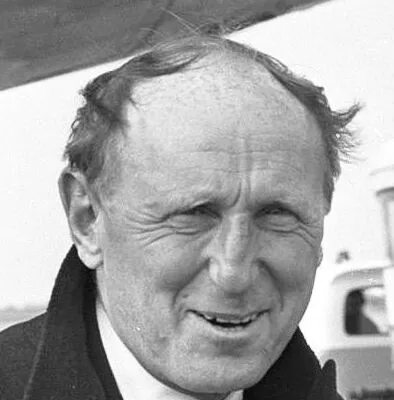
Jean Alesi
Human Design Chart
Biography
Alesi won World championships: 9th in 1990, 7th in 1991, 6th in 1992 and 1993, 5th in 1994. His first victory at the Grand Prix du Canada was on 11 June 1995. At the Formula One with Benetton in 1996, he was 4th overall with 47 points and at the Formula One with Benetton in 1997, was 4th overall with 35 points. He raced the Formula One with Sauber in 1998; 11th overall, 9 points.
Alesi is the son of parents who immigrated from Sicily to Avignon. Known for his aggressive driving style, he learns new tracks in record time due to his photographic memory and is considered the best driver in rainy conditions since Ayrton Senna. Divorced, he lives in Nyon, Switzerland with his girlfriend, Kumiko Goto, and his second child, Helena.
Jean Alesi — Projector with Profile 5/1
Projector 5/1 — Design at a Glance
Jean Alesis Human Design points to a tendency towards a dense, focused aura that acts like a flashlight, immediately recognizing system errors. This Projector configuration illuminates the path for others and identifies weaknesses in their counterparts by shedding light on them.
The paradox of this perception lies in its interaction: When Jean Alesi directly addressed these flaws, it was often perceived as unpleasant – akin to shining bright light into someone's face. The more elegant expression of his design involved attracting people through his own harmonious presence. By being a glowing example himself, others naturally came to him seeking advice rather than feeling attacked.
A critical success factor for Jean Alesi was waiting for an honest, appreciative invitation. Without this external validation, his design risked developing bitterness as a non-self theme. Additionally, the undefined Sacral Center left him without a constant intrinsic energy source. Instead, phases of high activity and quick workability were followed by necessary rest periods to prevent burnout. Living according to the strategy of invitation and protected rhythm rewarded his design with success; ignoring it led to bitterness.
Emotional Authority
Jean Alesi displayed a decision-making stance that required time and distance: His inner truth did not emerge in the first impulse but after passing through an emotional wave. This was due to his Emotional Authority, carried by the defined Solar Plexus Center. In Human Design mechanics, this authority always takes precedence over all other defined centers, regardless of further configurations in the chart.
This center is subject to constant ups and downs of feelings. The current mood heavily colors perception: What appears inspiring at one moment can be felt as negative in the next. Since this feeling is only a snapshot, spontaneous action carries risks. Quick reactions based on transient emotions often prove detrimental because they do not rest on deep truth.
For Jean Alesi, it was crucial to exercise patience and let decisions mature. The process required multiple iterations of sleeping on questions to gain emotional distance. Only when the intense feelings subsided did clarity and calmness emerge. Through this hesitation and allowing time, he ensured that his decisions came from a stable inner position rather than the fleeting hue of the moment. This method served to make long-term life decisions grounded by fully experiencing the emotional wave.
The 5/1 Profile — Heretic / Investigator
Jean Alesi exhibited a fundamental stance oscillating between his public role as a problem solver and private need for deep research. His design generated magnetic attraction: Others unconsciously sought solutions from him, as he naturally radiated authority in crisis situations due to being a genetic leader. This trait of Line 5 establishes leadership and respect within the lineage without needing active promotion.
Simultaneously, his inner structure, represented by Line 1, demanded withdrawal into depth. Here it was about securing the foundation and overcoming resistance through intensive research. The challenge lay in balancing these two poles: On one hand serving others as a hero, on the other requiring isolation for personal knowledge accumulation.
Without clear boundaries, there was a risk of his energy being exploited as an inexhaustible resource. The design warns that lacking 'No' leads to burnout when the private research space of Line 1 is sacrificed in favor of public expectations. Success depended on strategically setting limits to maintain balance between service and personal development. Only then could he optimally utilize his gifts without self-depletion.
Split Definition — Defined & Open Centers
Jean Alesi was characterized by a consistent inner identity and emotional depth. His defined G Center provided him with a reliable self-image and a clear sense of direction, independent of external circumstances. Simultaneously, his defined Solar Plexus acted as an internal authority: He was designed to wait for the wave movement of his feelings before acting or deciding. This emotional clarity only emerged after experiencing the wave, not in impulsive moments.
His defined Throat Center functioned as a reliable anchor point for communication and manifestation. It translated signals from his system – especially those from G and Solar Plexus – into clear expressions and actions. Together with his open Root Center, which provided constant pressure for forward movement, Jean Alesi could express his truth easily and honestly if he followed his strategy.
At the same time, his design revealed specific vulnerability fields through his open Centers: Head, Ajna, Heart, Sacral, and Spleen. His open Head Center made him receptive to external mental inspirations; he tended to get entangled in questions that were not his own instead of trusting his inner authority. The open Ajna Center allowed a flexible mind but warned against adopting foreign concepts as one's own truth or pretending to be more secure than felt.
The open Heart Center lacked consistent willpower. Jean Alesi was not designed to prove his worth through competition or promises. Instead, he risked getting caught in cycles of self-doubt and excessive effort when trying to meet others' expectations. His open Sacral Center meant no constant energy flow; he could absorb and amplify the vital energy of his environment but ran the risk of overextending himself with borrowed energy instead of listening to his own rhythm.
Finally, his open Spleen Center made him sensitive to well-being and fears in his surroundings. He tended to cling to situations or people that gave a false sense of security rather than using his intuition and authority to set healthy boundaries. Spontaneous decisions here were risky as they often relied on conditioned fears rather than true wisdom.
Channels for awareness, emotional waves and creative expression.
Jean Alesi inspired others through his mere presence, needing no words. This radiance stemmed from the Inspiration Channel 1-8, connecting G Center with Throat Center, allowing a creative expression of a transformative perspective. By living his individual direction and beauty, he drew attention to himself and potentially altered the viewpoint of those around him. Simultaneously, Jean Alesi was in a state of authentic awakening in the present moment. The Awakening Channel 10-20 expressed wisdom through self-love and trust, fulfilling one's potential; his survival and validation came from accepting oneself in every moment as who they are. This clarity unconsciously inspired others to be themselves too. However, this effect was strongly dependent on his current mood. The Emotional Release Channel 39-55 generated a pulsating emotional wave between passion and melancholy that provoked the minds of others. His ability to express spiritual depth creatively or influence others depended on whether he acted in the right emotional alchemy. Only when he authentically engaged with this mercurial nature could he generate the desired mental resonance and effectively manifest his inner truth.
Individual Circuitry — Circuit Signature
Jean Alesi's design inclined him towards following his unique path through acoustic expression and emotional waves. This configuration shows someone who not only thinks about new impulses but directly brings them into the world via inspiration (Channel 1-8) between Throat and Identity Centers. The Knowledge Circuit connected these two centers in a closed loop: Creativity becomes an individual voice. Simultaneously, there was separate energy in his lower body: Solar Plexus Center (emotions) was linked to Root Center (tension/stress) via Channel 55-39. Here, a pulsating rhythm translated emotional states into physical action impulses. These two groups – above voice and identity, below emotion and drive – existed as parallel force fields in Jean Alesi's design without direct connection. The Integration Circuit added: Through Channel 20-10 (Awakening), it reconnected Throat and Identity Centers with the present moment (Gate 20) and proper behavior (Gate 10). This emphasized the need to express intuition and reaction to life in the here and now. The split definition meant that these internal streams only fully unfolded their effect through contact with the environment. Thus, Jean Alesi was a carrier of pulsating formative energy aimed at making his individuality visible through emotional transformation and acoustic presence in the present moment.
Left Angle Cross of Confrontation 1
Jean Alesi is marked by the left cross of Confrontation 1, a configuration that suggests direct confrontation and breaking through resistance. His design points towards a tendency for confrontational situations where he cannot avoid challenging existing structures or expectations. This energy often acts as a catalyst to break stagnation by creating friction and thus forcing change.
The mechanics of this cross describe a process in which conflicts are not avoided but actively sought out or provoked to achieve a deeper truth or new equilibrium. It is not about destructive behavior in the everyday sense, but rather about the necessity to shatter illusions and face reality, even if it is painful. Jean Alesi thus appeared as someone who made tensions visible through his mere presence or actions that had previously been ignored.
This confrontation served to break old patterns and make space for new ones. The energy of this design requires courage not to shy away from discomfort but to accept it as a necessary part of the growth process. Jean Alesi carried this burden of revelation, which brought him into situations where he was either accepted or rejected depending on how his environment could handle this raw, unpolished energy. It was a path of learning through direct experience and resistance, not harmonious adaptation.
Saturn Return · Uranus Opposition · Chiron Return · 2nd Saturn Return — Life Cycles
Jean Alesi is someone whose life rhythm is marked by clear cycles of condensation and transformation. His design points towards a tendency to set decisive courses at certain age phases, with internal maturation processes often becoming visible externally. This was evident in 1992: At the age of 28, he became sixth in the driver rankings. For his Human Design, this marked the first Saturn Return, a cycle where years of groundwork and inner structuring often condense into a solid, measurable result. It was a moment of confirmation when one's substance found its form.
Later, his chart showed another dynamic: The Uranus opposition around age 38 typically brings unexpected changes and a drive for new freedom or direction. This mechanism became active as Jean Alesi moved to the H.W.A. DTM team in 2002. This step was not just a career change but aligned with the archetypal energy of this phase – a necessary break from the known to give space to new impulses. His design thus describes a path that alternates between phases of firm anchoring and sudden shifts, both aspects being necessary to fully explore his life's purpose.
Projector · Emotional Authority — Synthesis
Jean Alesi’s chart reveals a thread of deep inner truthfulness running through his lifestyle. As a projector with emotional authority and a defined G Center, he is destined to grasp the quality of others and enter authentic connections (G Center). This ability is strengthened by knowledge from the Knowledge Circuit that enables him to recognize new perspectives and give transformative impulses. His profile as Hero/Researcher (5/1) underscores this role: He is designed to accumulate profound knowledge and make it accessible to others – but only when asked. The repeated emphasis on
3 Defined Channels
Incarnation Cross - Left Angle Cross of Confrontation 1
Solar Return
The Solar Return shows the moment when the sun returns to its exact birth position - your personal solar year.
Life Cycles
Discover the life cycles with a detailed triple view (birth chart, cycle chart, composite).
Human Design Profile
- Type
- Projector
- Strategy
- Wait for the respectful invitation
- Authority
- Emotional Authority
- Profile
- 5/1 - Heretic / Investigator
- Definition
- Split Definition
- Incarnation Cross
- Left Angle Cross of Confrontation 1
- Date of Birth
- 11.06.1964 19:00
- Place of Birth
- Avignon, France
Frequently Asked Questions
What is Jean Alesi's Human Design type?
What profile does Jean Alesi have in Human Design?
What authority determines Jean Alesi's decision-making process?
What incarnation cross is Jean Alesi associated with?
When was Jean Alesi born?
Discover your own Human Design
Are you also a Projector? Find out in a personal reading how to unfold your leadership qualities and recognize the right invitations.
More Personalities
Back to overviewSissy Spacek

Alain-Fournier

Aldair

Anémone

Ann-Margret

Bourvil