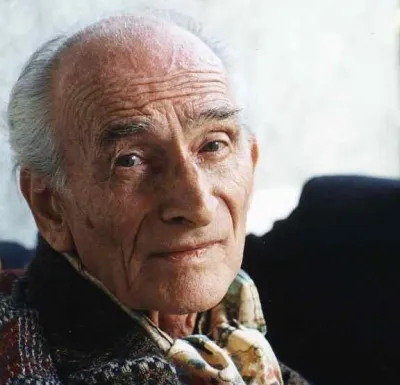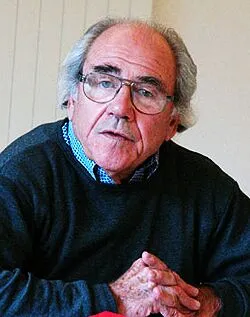
Jean Baudrillard
Human Design Chart
Biography
Human Design Analysis: Jean Baudrillard as Manifesting Generator 2/4
Manifesting Generator 2/4 — Design at a Glance
Jean Baudrillard's Human Design is a hybrid nature: the constant sacral energy of a Generator paired with the lightning-fast implementation power of a Manifestor. This allowed him to skip steps and quickly bring things into existence. However, this speed carried risks. Often he was too quick and skipped necessary intermediate steps, forcing him to backtrack and fill in gaps – a source of deep frustration corresponding to his Non-Self theme. Additionally, he tended to pursue multiple projects simultaneously, driven by various impulses. Without strategic alignment with the inner impulse, this creative drive quickly turned into exhaustion.
The mechanics of the Manifesting Generator require reaction rather than initiation. Only when the sacral center signals a clear "yes" and internal authority agrees should action be taken. Then speed becomes useful. With correct application – in the "play mode," with fun and variety – Jean Baudrillard drew deep satisfaction from his work. Parallel work was no obstacle for him, but rather a source of strength as long as he did not act against his inner rhythm. The danger lay always in ignoring this strategy and blocking himself through hasty action or uncoordinated multitasking. His contentment depended on whether he reacted to life instead of trying to forcefully shape it.
Sacral Authority
Jean Baudrillard sought his answers not in the Head Center but in physical resonance. His decision-making relied on whether an external stimulus triggered an internal, somatic response – a surge of energy or a clear gut feeling. This mechanism of Sacral Authority, unique to Generators, simplified his process: he waited for the impulse.
Central was the open Emotional Center; it had to be calm so that sacral signals could be heard clearly. Jean Baudrillard learned to pay attention to bodily sounds – a grunt, a hum or a simple "mhm" signalled agreement. When his sacral motor kicked in, he felt vital and alive. Then an almost inexhaustible energy was at his disposal. He tackled his work with great enthusiasm, fully immersed in the tasks without any sense of purpose being paramount. This allowed him to move through life with joy and satisfaction.
The strategy of waiting for this response was identical to his inner authority. By doing so, he avoided the trap of mental analysis or compulsive efficiency. Instead, he followed the natural flow of his energy. When the Spleen Center was additionally activated, it supported this spontaneous reaction capability and instinctive access to physical well-being. Jean Baudrillard let himself be guided by this reliable inner perception that allowed him to quickly and spontaneously decide as soon as the right impulse came.
The 2/4 Profile — Hermit / Opportunist
Jean Baudrillard oscillated between an intense need for withdrawal and a drive to connect. His design created tension: Line 2 demanded solitude for internal clarity, while Line 4 called for community. This dynamic required clear communication of his availability – when he sought company and when he wanted to be undisturbed. In the "cave," he processed network knowledge, reflected on it, and developed brilliant ideas.
The second line in Gate 31 gave him a natural leadership ability that without development could tend towards arrogance or a mere facade. He often acted without regard for collective opinions, which others perceived as authoritarian. Without experience, this role risked falling into corruption. Simultaneously, the fourth line of Gate 27 brought transpersonal care and generosity into play. This was about noble sharing within the network, but blind giving risked energy loss and fatigue. The challenge lay in learning who the right partners were.
Jean Baudrillard used this interplay: He withdrew to condense what he had seen in the community. Only after his need for solitude was satisfied did he return to the community. This rhythm of isolation and exchange shaped how he absorbed and recombined knowledge. It was not mere whim but a structural necessity of his Profile 2/4, allowing him both deep insights as well as situating them within a social context.
Split Definition — Defined & Open Centers
Jean Baudrillard revealed himself as someone with a constant, unchanging inner architecture. His design indicated a tendency towards persistent mental concept formation and stable identity. The defined Ajna Center fostered continuous conceptual thinking; he processed data in the same way consistently and was not easily influenced by others. This mental structure culminated in his also defined Throat Center, through which his concepts were directly translated into communication and manifestation. He spoke from a reliable source without necessarily implying impulsivity but rather a clear expression.
His actions and will were shaped by his defined Heart Center, giving him the ability to keep promises and control his own resources. This was linked with the generative energy of his defined Sacral Center, marking him as a generator. His vitality was fully available only when he responded rather than initiated; any mental decision that suppressed this sacral response led to resistance and exhaustion. The existential pressure of his defined Root Center propelled him forward, processing this stress in a fixed manner to maintain the life impulse.
In contrast to this stable structure stood his open centers as situational antennae. His open Head Center had no consistent way to process inspiration; he tended to be distracted by doubts or questions from others that were not his own. Instead of seeking answers in mental monologues, he needed to learn to release this pressure. His open Solar Plexus absorbed emotional waves from the environment. He was prone to personalizing and identifying with other people's emotions, which could lead to emotional confusion. Healthy practice meant using these emotions as information only and letting them go once alone. Finally, his open Spleen Center made him sensitive to intuitive health signals from others' fields. He tended to cling to those with defined spleens for a sense of security, often creating unhealthy dependencies. Spontaneous decisions were risky for him as they could be based on conditioned fears rather than his inner authority.
Channels for curious exploration, structuring and personal maturation.
Jean Baudrillard exhibited a fundamental stance of radical autonomy fueled by deep reactive self-love. This inner security allowed him to carry transformative insights that often preceded collective understanding, without losing himself or being rejected.
This dynamic arose from the interplay of two design channels. The Exploration Channel 34-10 connected his Sacral Center with his G Center. Through Gate 34 (Power) and Gate 10 (Self Behavior), this energy propelled Jean Baudrillard to follow his own convictions – no matter how unusual they were. However, it worked correctly only through authentic reactions to the environment, not by actively imposing them. It fostered a mastery of self that inspired others to embrace their uniqueness rather than submit to the collective.
Simultaneously, the Structuring Channel 43-23 shaped his intellectual expression. This channel linked Ajna with Throat Center via Gate 43 (Insight) and Gate 23 (Assimilation). It provided innovative perspectives that felt like they were
Collective Circuitry — Circuit Signature
Jean Baudrillard's design indicated a tendency to structure knowledge and resources to find individual validation. In the Knowledge Circuit, Channel 23-43 (
Right Angle Cross of the Unexpected 2
Jean Baudrillard's life was characterized by a dynamic that integrated the unpredictable and sudden turns as constant factors. His design suggested that his path did not follow a linear trajectory but was marked by spontaneous events and intuitive leaps. This structure stemmed from the mechanics of the 'Right Cross of the Unexpected 2'. This configuration signaled an ongoing openness to the unexpected. It described the ability to act in the moment without being dependent on a prior plan. For Jean Baudrillard, this meant that he did not adhere to rigid predictions but utilized the energy of the present moment to chart new directions. Life appeared less as a coordinated sequence and more as a consequence of impulses to which he responded. This attitude allowed him to act in situations where others might have hesitated or sought logical justification. The mechanics underscored not chaos, but a specific kind of adaptability to the unexpected. Jean Baudrillard lived this dynamic by relying on immediate experience rather than controlling it beforehand. This shaped his interaction with his environment and processes significantly.
Saturn Return · Uranus Opposition · Chiron Return · 2nd Saturn Return — Life Cycles
Jean Baudrillard's design indicated a tendency towards structural consolidation that found its reflection in clear academic milestones. In 1968, at the age of 39, he earned his doctorate with 'Le Système des Objets' and took up a chair for sociology at the University Paris-Nanterre. This coincided with an Uranus opposition, a cycle often marked by breaking away from old establishments to establish new independent structures. Here, years of groundwork condensed into a solid institutional foundation.
The phase of Chiron Return then marked the bloom of his specific purpose. In 1976, at age 47, his magnum opus 'Symbolic Exchange and Death' was published. During this fulfillment cycle, one's incarnation cross unfolds increasingly; those who live according to their strategy experience here meaning and purpose as tangible reality. It was not a moment of healing old wounds but the concrete realization of the deepest design intention in the form of a significant work.
Finally, in 1987, at age 58, he earned his habilitation with 'L’Autre par lui-même'. This corresponded to the second Saturn Return, a phase of intense maturation and confirmation of one's authority. While the first return often sets the framework, the second solidifies the position within this framework through proven competence and deep expertise. Jean Baudrillard thus showed himself as someone whose intellectual architecture did not arise by chance but found its logical completion in these specific temporal windows – Uranus for a new beginning, Chiron for essence unfolding, Saturn for confirmation.
Manifesting Generator · Sacral Authority — Synthesis
Jean Baudrillard navigated his life marked by a profound inner tension between the need for individual exploration and the ability to structure and communicate complex ideas. His defined G Center and sacral authority pointed towards a strong internal direction and authentic reaction (fed from centers, profile), while his defined Ajna and Throat Centers endowed him with the capacity to develop concepts and express them precisely (design gaze, circuit). This combination led him to question existing systems and present new perspectives – a process amplified by the connection of Gate 1 (Uniqueness) and Gate 17 (Opinions) in the Channel of Structuring. He was thus driven to find his own truth and share it with others, always striving for clarity and precision.
Central to his design was the paradox between the urge towards individuality and the need for connection. His open Root and Spleen Centers made him susceptible to fears and external influences (open centers), yet the defined sacral authority challenged him to act from himself and not be overwhelmed by these forces. This tension manifested in his work as a constant engagement with the role of the individual within societal structures and the influence of media and technology (cross). The cyclic returns of Uranus, Chiron, and Saturn attested to his ability to grow through crises and transformations and continually realign his thinking.
6 Defined Channels
Incarnation Cross - Right Angle Cross of the Unexpected 2
Solar Return
The Solar Return shows the moment when the sun returns to its exact birth position - your personal solar year.
Life Cycles
Discover the life cycles with a detailed triple view (birth chart, cycle chart, composite).
Human Design Profile
- Strategy
- To respond - wait for something to respond to
- Authority
- Sacral Authority
- Profile
- 2/4 - Hermit / Opportunist
- Definition
- Split Definition
- Incarnation Cross
- Right Angle Cross of the Unexpected 2
- Date of Birth
- 27.07.1929 07:00
- Place of Birth
- Reims, France
Frequently Asked Questions
What was Jean Baudrillard's Human Design type?
What profile did Jean Baudrillard have?
Which authority guided Jean Baudrillard?
What incarnation cross did Jean Baudrillard have?
When was Jean Baudrillard born?
Discover your own Human Design
Are you also a Manifesting Generator? Find out in a personal reading how to unfold your multi-talents and direct your energy wisely.
More Personalities
Back to overviewAldair

Alizée

Angeli
Arletty
Artus

Balthus