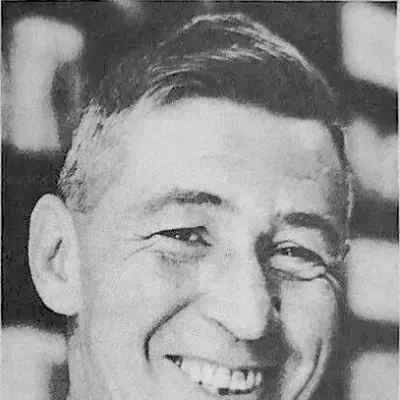
Jean-Christophe Cambadélis
Human Design Chart
Biography
Human Design Analysis: Jean-Christophe Cambadélis as Projector 2/5
Projector 2/5 — Design at a Glance
Jean-Christophe Cambadélis revealed himself through his Projector nature as someone who identified systemic weaknesses with almost unerring sharpness. His design inclined him to work not through his own endless labor, but through a focused, dense aura that shone like a bright flashlight on the 'dark spots' in structures or relationships. This ability to immediately recognize a flaw in the system was his primary tool, but it required a specific approach to remain effective.
As a Projector, Jean-Christophe Cambadélis lacked a defined Sacral Center, meaning he did not have a constant, intrinsic source of life energy. Instead, he worked in phases of high intensity, followed by necessary rest phases to prevent burnout. The conventional expectation of always being available and energized often stood in opposition to this biological rhythm. His optimal strategy was to wait for an honest and appreciative invitation before sharing his insights. If this invitation was not extended and he spoke his observations unbidden, it often felt like a glaring light in the face of the other, provoking rejection. Living by the principle of invitation, however, was rewarded with success; ignoring it led to his non-self theme of bitterness sooner or later. His impact thus depended less on the quantity of his actions than on the quality of his selectivity and the resonance he generated through patient shining.
Emotional Authority
Jean-Christophe Cambadélis showed an inner decision-making structure that did not rely on immediate clarity but on the penetration of emotional waves. His inner authority lay in the defined Solar Plexus Center. This means that his feelings and moods were the primary source of his truth, independent of other defined centers in his design.
This emotional authority is subject to a natural rhythm of ups and downs. The current mood heavily colored his perception of the world: A topic could appear highly relevant in one moment, irrelevant or negative in the next. Since the first emotional impression is only a snapshot and does not necessarily reflect the deeper truth, spontaneous decisions based on immediate emotion were often risky and could have negative consequences for him.
Therefore, his design required patience. By letting decisions rest and reviewing them multiple times – ideally after a night's sleep – he could smooth out the intense feelings. With this distance, he gained emotional distance, leading to true clarity and calm. This process of 'ripening' was crucial, especially for long-term decisions that significantly influenced the course of his life. Only by waiting for the emotional wave to calm could he recognize his deeper, stable truth and become action-ready.
The 2/5 Profile — Hermit / Heretic
Jean-Christophe Cambadélis was marked by the Profile 2/5, the 'Natural Talent' or 'Hero and Savior', characterized by a fundamental tension between the deep need for withdrawal and the external expectation to always be ready to solve problems. Line 2, the Hermit Line, indicated that he needed time for himself to gain inner clarity and accept boundaries. This timing was crucial; incorrect reaction times here easily led to misunderstandings that did not stem from lack of understanding but from a wrong moment.
At the same time, Line 5 acted as a projection line into the collective. Others sought answers from him and saw him as someone who could solve problems. This position, however, carried the risk of idealization: He had to learn to clearly communicate his individual insights to be accepted without fully conforming to collective expectations or forgetting himself. The challenge was to strategically use the 'alone time' to define where he wanted to invest his energy. Only through this conscious selection could he fulfill the role of helper without falling into the trap of overextension or the illusion that he must be immediately and endlessly available for all problems.
Split Definition — Defined & Open Centers
Jean-Christophe Cambadélis revealed himself through a persistent mental intensity and a clear, resolute way of expression. His design was marked by a defined Head and Ajna Centers, creating a constant internal pressure to question and conceptualize. This mental process was not impulsive but followed a fixed structure that allowed him to develop ideas before they entered the world. The connection to the defined Throat Center ensured that these thoughts materialized in reliable communication, while the defined Heart Center brought willpower and the ability to make promises. He had the energy to do what he said and sought recognition for his contribution.
At the same time, he was subject to the dynamics of a defined Solar Plexus Center, which acted as an emotional authority. Here, the necessity arose to follow the emotional wave and make decisions only after cycling through the emotional phases to gain clarity. Without this patience, impulsive reactions that were later regretted were a risk.
In contrast, his vulnerabilities were revealed in the undefined centers. The open G Center meant that he did not carry a fixed, unchanging identity but was shaped by the environment and relationships. He tended to question whether he was in the right place, as false environments could severely impact his well-being. The open Sacral Center made him susceptible to overexertion, as he did not have a constant vital energy source but absorbed and amplified the energy of others. This required conscious breaks to avoid exhaustion. Additionally, the open Spleen Center was marked by fears that could lead him to cling to unhealthy situations to simulate a sense of security. The open Root Center also absorbed external stress, leading to a feeling of pressure that he did not generate himself but took in from the environment. This configuration challenged him to distinguish between his own and others' pressure as well as identity.
Channels for community, logic, structure and abstraction.
Jean-Christophe Cambadélis approached the world with a healthy, almost compulsive skepticism. His design tended to filter patterns persistently to check if they were consistent or not. This attitude was shaped by the Channel of Logic 63-4, which embodies the doubting mind. Here, pressure arises as soon as a pattern appears inconsistent, eventually leading to a question that demands a verifiable answer. For Jean-Christophe Cambadélis, unfounded belief had little room; an answer was valid only if it was logical and practical.
Alongside this analytical sharpness, the Channel of Abstraction 64-47 drove him to sift through every experience through a kaleidoscope of mental images. This channel sought a story that made sense, often accompanied by a feeling of confusion until clarity suddenly emerged. It was a mind that dealt with the consequences of being alive and never stopped playing with possibilities.
Jean-Christophe Cambadélis' expression was also influenced by the Channel of Structuring 23-43. This channel enabled spontaneous breakthroughs and insights that he then translated into an efficient, often metaphorical language. His goal was to formulate unique perspectives in a way that changed the thinking of others. He had to learn to let go of control and allow his mind to process knowledge at its own pace.
In interpersonal relations, the Channel of Community 37-40 shaped his actions. He sought his place in the whole and understood the importance of good agreements based on mutual benefit and willpower. For him, community was not a spontaneous event but something that needed careful consideration and formulation over time to be beneficial for all involved.
Additionally, individual Gates like Gate 49 with its emotional wave and focus on principles, and Gate 21 with the need for control and respect in material life, contributed to a profile that was both analytically deep and socially engaged, always seeking a just and efficient order.
Collective Circuitry — Circuit Signature
Jean-Christophe Cambadélis revealed himself through a split definition, meaning two independent, unconnected energy blocks. One block connected the Head, Ajna, and Throat Centers, the other the Heart and Solar Plexus. This separation created parallel but isolated forces.
In the Knowledge Circuit, the Channel of Structuring (43-23) connected the Ajna with the Throat Center, promoting the ability to clearly structure and express thoughts to forge new paths. The Understanding Circuit activated the Channel of Logic (63-4) between the Head and Ajna Centers. This was about focused, rational analysis and sharing logical insights for the future, free from emotional coloring. Additionally, in the Meaning Circuit, the Channel of Abstraction (64-47) between the Head and Ajna was active. This channel referred to reflecting on the past, finding meaning in past experiences, and sharing these emotional insights.
The second, isolated block consisted of the Heart and Solar Plexus Centers, connected through the Ego Circuit and the Channel of Community (40-37). This channel regulated the relationship of giving and taking as well as mutual support. Since there was no connection to the Sacral Center, pauses for resource regeneration were essential. This area dealt with cooperation and the joint creation of prosperity, separate from the intellectual processes of the first block. Jean-Christophe Cambadélis thus moved between rational, future-oriented structuring and abstract reflection on the past on one hand, and emotional, cooperative resource building on the other, without these areas directly overlapping.
Right Angle Cross of Explanation 3
Jean-Christophe Cambadélis displayed a fundamental stance aimed at clarity and direct communication. His design indicated a tendency to reduce complex issues to their essence and articulate these insights clearly. This aligns with the mechanics of the right cross of Explanation 3. This configuration combines the ability to recognize profound truths with the drive to convey them through words. It is not about superficial reporting but rather the decryption of connections that often remain hidden. The energy of this cross promotes a type of thinking that seeks the underlying structure and then formulates it precisely. For Jean-Christophe Cambadélis, this means that his strength lies in his ability to eliminate uncertainties through clear definitions and explanations. He acts not just as someone who disseminates information but also as someone who places it in a comprehensible context. The mechanics support a direct, often unvarnished way of expression aimed at avoiding misunderstandings. This characteristic shapes his interaction with his environment, as it places a high value on authenticity and logical consistency. The search for truth serves the communication to inform and orient others.
Saturn Return · Uranus Opposition · Chiron Return · 2nd Saturn Return — Life Cycles
Jean-Christophe Cambadélis' design shows a structure where external recognition and internal integrity are strongly intertwined. This became visible in 1980 when he became the president of the UNEF-ID at the age of 29. His first Saturn return marked the transition from individual ambition to institutional responsibility, a process that often condenses years of preparation.
The Uranus opposition, which occurred in 1989 when he was recruited by Irving Brown, underscores the tension between established structures and the need for radical change. At the age of 38, the typical Uranus dynamics were evident: sudden turning points that dissolve old bonds and create new, often unexpected alliances.
His Chiron return around the year 2000, at the age of 49, coincided with his conviction to probationary sentences. In Human Design mechanics, this cycle is not a moment of healing but the fulfillment of the incarnation purpose. Here, the deepest layer of his life task emerged, connected with a crisis that challenged his identity.
The second Saturn return in 2006, also with a conviction to probation, confirmed these patterns. At the age of 55, the structure of his authority was reinforced through these experiences. The recurring crisis points served not as punishment but as a mechanism to anchor his inner truth in the external world and redefine his role within the system.
Projector · Emotional Authority — Synthesis
A central red thread runs through the design: the ability to recognize patterns and shed light on the dark (Projector type, Channel of Logic 63/4). This manifests in a constant mental pressure to ask questions and understand things (defined Head and Ajna Centers), coupled with the urge to offer solutions to others (Profile 2/5, Line 5 as Hero/Rescuer). However, emotional authority demands time for decision maturation, which contrasts with the expectation of Line 5 to provide immediate help. This combination of sharp perception, analytical thinking, and the need for inner clarity shapes a personality oriented towards both uncovering problems and finding solutions.
The central paradox lies in the tension between the need for withdrawal and the expectation to be available as a rescuer. The Line 2 of the profile requires solitude to gain inner clarity, while Line 5 simultaneously intensifies the call for help and problem-solving. This creates an internal field of tension between the desire for self-observation and the urge to engage in the world – a dynamic further amplified by the emotional wave (emotional authority), as decisions must be made in a process of inner struggle.
4 Defined Channels
Incarnation Cross - Right Angle Cross of Explanation 3
Solar Return
The Solar Return shows the moment when the sun returns to its exact birth position - your personal solar year.
Life Cycles
Discover the life cycles with a detailed triple view (birth chart, cycle chart, composite).
Human Design Profile
- Type
- Projector
- Strategy
- Wait for the respectful invitation
- Authority
- Emotional Authority
- Profile
- 2/5 - Hermit / Heretic
- Definition
- Split Definition
- Incarnation Cross
- Right Angle Cross of Explanation 3
- Date of Birth
- 14.08.1951 09:10
- Place of Birth
- Neuilly sur Seine, France
Frequently Asked Questions
What is Jean-Christophe Cambadélis' Human Design type?
What Profile does Jean-Christophe Cambadélis have in Human Design?
What Authority determines Jean-Christophe Cambadélis' decision-making?
Which incarnation cross is Jean-Christophe Cambadélis assigned to?
When was Jean-Christophe Cambadélis born?
Discover your own Human Design
Are you also a Projector? Find out in a personal reading how to unfold your leadership qualities and recognize the right invitations.
More Personalities
Back to overviewSissy Spacek

Alain-Fournier

Anémone

Ann-Margret

Bourvil
Hergé