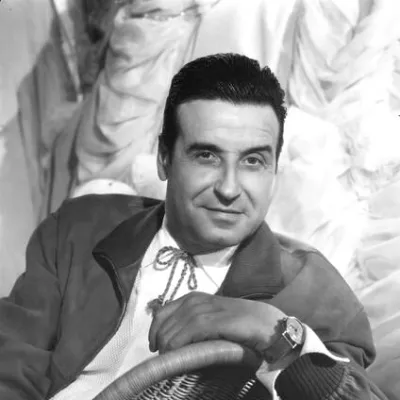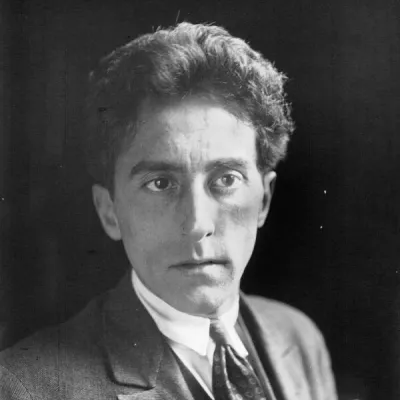
Jean Cocteau
Human Design Chart
Biography
Cocteau was an avant-garde experimenter in many of the arts in France. In 1923 he became addicted to opium after the death of his companion, Raymon Radiquet. His following two books, 1930 and 1932, describe his recovery from the addiction. In 1946, he made the film "Beauty and the Beast" with Jean Marais. He was considered unconventional throughout his creative life, constantly changing the style of his work in order to remain on the cutting edge. He wrote his autobiography, "Professional Secrets" and "Maalesh," a published journal chronicling his 1949 Egyptian journey. Cocteau was elected to the French Academy and Royal Belgian Academy in 1955 and the American Academy and National Institute of Arts and Letters in 1957.
Cocteau was gay; one of his lovers was Jean Marais. He was described by friends as bird-like, unrestrained with a big ego who loved to join in the gossip and glamour of Paris life.
He died on 11 October 1963 at age 74 in Paris from a heart attack, one hour after hearing about the death of his friend Edith Piaf.
What does Projector 4/1 mean for Jean Cocteau?
Projector 4/1 — Design at a Glance
Jean Cocteau appeared as a Projector with a dense, focusing aura that projected his energy directly onto the environment. This design tended to quickly identify weaknesses or 'system errors' in others – comparable to a bright flashlight illuminating darkness. As this direct approach was often perceived as unpleasant, his most effective strategy involved not actively pushing forward but attracting through his own harmony and clarity. People came to him naturally for advice, drawn by his radiant presence. His undefined Sacral also meant that he did not have constant life energy; instead, he worked in intense phases followed by necessary rest periods for regeneration. If he lived according to the strategy of inviting value, he was rewarded with success. Ignoring this necessity and acting without invitation or breaks led sooner or later to his non-self theme: Bitterness. Thus, his design shaped a life path based on resonance and recognition from others rather than continuous self-motivation.
Splenic Authority
Jean Cocteau exhibited an immediate, intuitive stance of setting boundaries: His decisions did not arise from long deliberations but as spontaneous impulses in the present moment. This reactive approach was an expression of his inner authority in the Spleen – a defined center functioning as a health and alarm system. With open Emotional and Sacral centers, he possessed fine survival intelligence that showed him in the moment whether a situation or person was beneficial. This immediate impulse served directly to his well-being; any delay could have drowned out the clear signals of the body.
This mechanism required high vigilance and flexibility from Jean Cocteau. Since he only knew what was right for him at the moment, his plans changed repeatedly in short notice. Long-term commitments contradicted this nature; instead, he sought freedom to react spontaneously. A retreat helped him distinguish the fine voice of his spleen from external influences and rigorously set boundaries against harmful factors. His ability to protect himself thus did not rely on strategy but on this immediate bodily intuition valid only in the present.
The 4/1 Profile — Opportunist / Investigator
Jean Cocteau's design tended towards extreme fixity. As a 4/1 profile – the only fully fixed profile in Human Design – his essential nature was so deeply rooted that he barely deviated from his individual path. This marked the transition from 'I' to 'You'.
The fourth line emphasized moderation and careful judgment before any action, yet the Sun in this position simultaneously provoked a strongly fixed character regardless of circumstances. Cocteau had a big heart but needed protection against injuries. Well-meaning impulses for change by others were often perceived as non-acceptance; he cautiously excluded these people from his heart. To his environment, it appeared like stubbornness or inability to accept criticism – he was called a 'thick-skull'.
The first line of his configuration showed an evolutionary path that required time and experience to cope with shocks. It was about willpower and dealing with emotional withdrawals after disturbances. Pluto marked his ego through slow genetic changes over long periods, while Venus promoted the tendency towards inner distance before reacting.
Only when he truly recognized himself and his life theme did he become stable as a rock in the waves. In this security, he could teach others magnificently, as his nature neither wanted nor could be changed. His path was challenging, yet internal stability allowed him to act as an unmovable instance.
Single Definition — Defined & Open Centers
Jean Cocteau's Human Design profile revealed a tendency towards a reliable voice that came from his identity and the moment. His defined G Center gave him a firm sense of self-image and a clear direction for his path; he knew who he was without needing external validation. This inner security flowed directly into his defined Throat Center, which served as a focal point to clearly and honestly express both his identity and spontaneous intuitions from the also defined Spleen Center. His communication was thus not just the conveyance of thoughts but an authentic manifestation of his Higher Self and current perception.
At the same time, Jean Cocteau's open centers made him susceptible to external influences. The open Head and Ajna Centers made him receptive to inspirations that he should not treat as his own truth; instead, he tended to question whether certain thoughts were truly relevant or merely mental distractions. His open Heart Center lacked consistent willpower, which could prevent him from keeping promises unless they stemmed from inner necessity. Additionally, his open Solar Plexus absorbed the emotions of his environment, putting him at risk of personalizing foreign moods and feeling emotionally overwhelmed as a result. The open Root Center also caused him to take on external stress that he did not generate himself. This configuration required him to always distinguish between his clear inner voice and the often confusing external stimuli he took in, so as not to invest energy into non-personal conflicts or mental whirlpools.
Channels for intuitive clarity, authentic action and presence.
Jean Cocteau's design was based on a deep intuitive self-love for survival. His profile connected the Spleen Center with the G Center through Channel Perfect Form 57-10. This configuration projected behavior guided by spontaneous insight, perfecting the art of survival. He acted not out of fear of the future but from an acute perception of the quality of his environment, allowing him to move existentially unburdened through the world.
This intuitive clarity found its voice in Channel Lightning Flash 57-20. Here, knowledge from the Spleen flowed directly to the Throat Center, enabling Jean Cocteau to express his deepest truth in the present moment. His verbal outbursts were not premeditated strategies but pure intuition waves that hit the core of a matter immediately. This encouraged others to awaken their own inner survival intelligence as he reduced resistance and avoided misunderstandings through spontaneous authenticity.
Simultaneously, Channel Awakening 10-20 shaped his approach. He lived in a constant state of self-awareness by accepting himself. This was not an intellectual feat but an existential practice: “I am! I live NOW!” Through this radical self-acceptance, he unconsciously inspired his environment to be themselves too. His uniqueness served as a model that invited genuine invitations and protected him from taking criticism personally or defending against resistance. His life was a continuous process of perfecting his individual form through intuitive action and clear expression in the moment.
Individual Circuitry — Circuit Signature
Jean Cocteau's inner compass and his expression were intricately intertwined. His simple definition connected the G Center with the Throat and Spleen Centers into one continuous flow. This configuration created a direct line from identity through intuition to voice.
This energetic path manifested concretely in two circuits. The Knowledge Circuit activated Channel 20-57 (Lightning Flash) for him, connecting the Throat Center with the Spleen Center, fostering sudden, acoustically impactful insights – intuitive realizations that were immediately expressed.
Parallel to this, the Integration Circuit was strong. It included Channels 20-10 (Awakening) and 10-57 (Perfect Form). These channels linked the Throat Center with the Identity Center and the Spleen Center. Energy flowed here from deep self-determination through intuitive perception to articulation. The focus was on drawing power from reactions to life and guiding it through proper behavior and present moment intuition.
Since all three centers – identity, spleen, and throat – were in a single group, there were no separate segments. Jean Cocteau's design allowed him not only to feel or think his unique individuality but to express it immediately and authentically. The pulsating energy of the present moment connected with the highest individuality, making his expression always arise from a deeply personal intuitive truth.
Juxtaposition Cross of Provocation
Jean Cocteau exhibited a fundamental attitude characterized by the so-called Juxtaposition Cross of provocation. This configuration in Human Design described not an arbitrary rebellion, but a deep inner drive to consciously question established norms and structures. For him, the task was to juxtapose apparently incompatible elements – opposites that did not seem to belong together on first glance – thereby opening up new perspectives.
This mechanism worked as a constant impulse towards provocation in its true sense: Not out of malice but from the need to break through rigid thought patterns and sharpen awareness for hidden connections. Jean Cocteau lived this dynamic by blurring boundaries between art forms and societal expectations. His design suggested that stagnation could only be avoided if the status quo was regularly challenged. Provocation served as a tool to encourage others to re-examine their own assumptions, making it a process of constant renegotiation of truths where dissonance between old and new became the motor for change. Jean Cocteau used this energy to create spaces where the unexpected could find room and traditional categories lost their validity.
Saturn Return · Uranus Opposition · Chiron Return · 2nd Saturn Return — Life Cycles
Jean Cocteau showed himself as someone whose creative expression gained strength in clear cyclical phases. His design indicated a tendency towards structured milestones that condensed through planetary influences throughout his life course. The first Saturn Return often marked the transition from preparatory work to tangible results. In 1917, at age 28, he wrote the libretto for the cubist ballet *Parade*. This success confirmed the mechanics: After years of development, a consolidated form emerged based on solid foundations.
Another turning point was seen during the Uranus Opposition, a time when internal tensions or addiction patterns often had to be broken through in order to gain new clarity. In 1930, at age 41, he published a book about his recovery from addiction. This work was not just a report but the result of a necessary inner restructuring that now manifested in his career.
The Chiron Return around the age of fifty is a fulfillment cycle where one's individual life purpose unfolds if one has lived according to their own strategy beforehand. It is not about healing old wounds, but rather the bloom of the incarnation cross. In 1940, at age 51, he wrote the highly successful one-act play *Le Bel Indifférent* for Édith Piaf. This success in the relationship level and artistic expression was the visible fruit of this maturation phase.
Finally, this development condensed during the second Saturn Return, the time of mastery and integration of all previous experiences. In 1946, at age 57, he directed the film *Beauty and the Beast*. This work stood for the full unfolding of his creative potential, supported by the previously traversed cycles of structuring, liberation, and fulfillment.
Projector · Splenic Authority — Synthesis
Jean Cocteau lived a path deeply marked by an inner drive towards self-knowledge and transformation. As a projector with defined throat (and the Awakening Channel) he recognized patterns and potential improvements in his environment – a gift that allowed him to bring
3 Defined Channels
Incarnation Cross - Juxtaposition Cross of Provocation
Solar Return
The Solar Return shows the moment when the sun returns to its exact birth position - your personal solar year.
Life Cycles
Discover the life cycles with a detailed triple view (birth chart, cycle chart, composite).
Human Design Profile
- Type
- Projector
- Strategy
- Wait for the respectful invitation
- Authority
- Splenic Authority
- Profile
- 4/1 - Opportunist / Investigator
- Definition
- Single Definition
- Incarnation Cross
- Juxtaposition Cross of Provocation
- Date of Birth
- 05.07.1889 01:00
- Place of Birth
- Maisons Laffitte, France
Frequently Asked Questions
What was Jean Cocteau's Human Design type?
What profile did Jean Cocteau have?
What authority did Jean Cocteau possess?
What incarnation cross did Jean Cocteau have?
When was Jean Cocteau born?
Discover your own Human Design
Are you also a Projector? Find out in a personal reading how to unfold your leadership qualities and recognize the right invitations.
More Personalities
Back to overviewSissy Spacek

Alain-Fournier

Anémone

Ann-Margret

Bourvil

Christian-Jaque