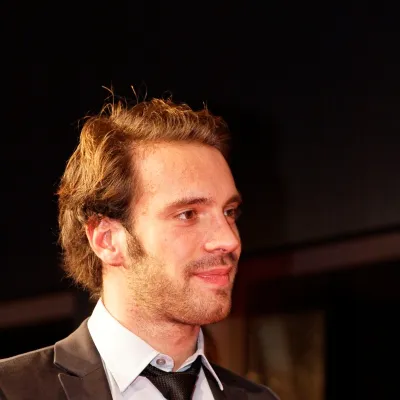
Jean-Eric Vergne
Human Design Chart
Biography
The Human Design of Jean-Eric Vergne: Projector 3/5
Projector 3/5 — Design at a Glance
Jean-Eric Vergnes Human-Design suggests a tendency towards precise system analysis. As a Projector, he did not have an intrinsic energy source in the Sacral Center but rather acted like a focused beam of light. This aura allowed him to immediately recognize weaknesses in other people's structures or relationships – he found the flaw in the system.
Directly addressing these deficiencies would often provoke resistance, comparable to shining a bright spotlight directly into someone else's face and thus blinding them instead of helping. The effective strategy was not to impose these insights but rather to shine through his own harmony. When Jean-Eric Vergne himself lived stable patterns, he became attractive to his environment; others then actively sought his advice.
His success therefore depended on the appreciation that was offered to him from his surroundings. The central requirement was waiting for a genuine invitation to lead or advise. Without this external validation and recognition, there was a risk of energy depletion and burnout since his system did not generate continuous life force. Instead, he worked in phases of high intensity followed by necessary rest periods. If he lived according to the principle of awaiting an invitation, he was rewarded with success; if he ignored this dynamic and forced himself into prominence, it led sooner or later to the experience of bitterness as an expression of his non-self.
Splenic Authority
Jean-Eric Vergnes Human-Design suggests a tendency towards intuitive, immediate decision-making. His inner authority resides in the defined Spleen Center, which presupposes that both the Emotional and Sacral Centers are open – a configuration only Projectors or Manifestors exhibit. This structure endowed him with pronounced survival intelligence: his body functioned as a sensitive alarm system signaling through spontaneous internal knowledge whether a situation, environment, or society was healthily beneficial. The first impulse served directly to his well-being and enabled him to rigorously distance himself from harmful influences. Since this Spleen impulse is fine and only occurs momentarily, his life required high vigilance not to be overshadowed by external voices. Plans could change at any moment since what was right became apparent only in the moment; long-term commitments were therefore difficult. Instead, Jean-Eric Vergne needed much freedom and flexibility to follow this spontaneous intelligence. A temporary retreat often helped him perceive these subtle signals more clearly without being restricted by rigid structures.
The 3/5 Profile — Martyr / Heretic
Jean-Eric Vergne showed himself as someone who acquired knowledge not from books but through direct, often risky experimentation. His Profile 3/5 – Explorer and Hero – established a fundamental attitude: there was hardly any initial belief; everything had to be experienced personally. This Line of the Adventurer (3) ensured that he approached problems through his own experiential solutions while the Hero Line (5) created the need to offer this practiced knowledge as a solution to others.
This dynamic made him attractive in his environment; others projected onto him the role of the rescuer who knows the way. Yet, precisely this expectation could be painful when experiments before an audience failed – an unavoidable part of his learning process.
Additionally, Gate 27 on Line 3 dealt with themes like adaptation through trial and error as well as the compulsion to possess more than necessary (greed), signaling strength through abundance. Parallel to this, aspects of Gate 41 on Line 5 shaped his interactions: here it was about empowerment and imagination, coupled with a strong projection by others. The 'Venus in Fall' dynamic pointed towards persistent frustration over limitations, forcing him to choose one single fantasy or vision instead of pursuing many simultaneously. His design thus described a path from chaotic experimentation to focused authority that inspires others through his lived truth – as long as he is willing to accept the errors as part of the story.
Split Definition — Defined & Open Centers
Jean-Eric Vergne revealed himself through a reliable inner compass needle and a direct, authentic way of expression. His defined G Center gave him a stable self-image and a clear sense of direction without being dependent on others; he intuitively knew what suited him. This identity flowed into his defined Throat Center, which served as a focal point to clearly and honestly convey this inner truth outward – not out of impulse but from a constant source of self-love and orientation.
At the same time, a strong existential awareness manifested through his defined Spleen Center. It provided him with spontaneous, intuitive warning signals in the here and now that protected his survival and well-being. Combined with the defined Root Center, he had a firm, adrenaline-driven pressure that propelled him forward materially and helped him overcome challenges with specific, corrective energy. This constant inner drive was his natural way to be present in the world and push through obstacles as long as he acted from inner calm.
In contrast, his design revealed significant vulnerabilities in the mental and emotional realms. His open Head Center made him susceptible to mental confusion and pressure to find answers that weren't his own; he tended to get lost in endless rumination instead of simply letting go. His open Ajna Center amplified this: He absorbed foreign concepts and opinions but risked interpreting them as his own truth or feigning uncertainty to be accepted.
Emotionally, he was exposed through the open Solar Plexus Center to a constant shift in feelings often absorbed from the environment; he had to learn not to personalize every emotional wave. His open Heart Center lacked consistent willpower for competitive recognition struggles; he was vulnerable to overcompensating efforts that ended in self-doubt when unsuccessful. Finally, he needed to be cautious with his open Sacral Center as it lacked constant generative energy and easily became exhausted by taking on foreign work energy or ignoring boundaries.
Channels for leadership, reflection and meaningful struggle.
Jean-Eric Vergne revealed himself through a tension between the desire for collective recognition and the necessity of internalizing experiences first. His design tended towards understanding leadership not as sole rule but as a shared process where community trust is crucial.
This was concretely expressed in the Alpha Animal Channel 7-31. Here, Gate 7, the logical role of self and
Collective Circuitry — Circuit Signature
Jean-Eric Vergne thus showed himself as someone who expressed rational future planning and emotional past resolution verbally – but always separately, as no energetic bridge existed between strategic mind and emotional waves.
Right Angle Cross of the Unexpected 1
Jean-Eric Vergnes Human-Design shows a tendency towards unpredictable turning points that often appear as sudden insights or unexpected opportunities. This configuration, known as the Unexpected Right-Cross 1, describes a life dynamic where new perspectives frequently open up without prior warning. It is not about planned developments but rather moments when reality changes unexpectedly and new paths become visible.
This mechanism works like an impulse from nowhere: situations that were previously considered closed or set in stone suddenly open up for alternative solutions. Jean-Eric Vergne thus showed himself to be someone who could deal with such surprises – not through rigid planning, but through an inner readiness to accept the unexpected and learn from it. The energy of this cross promotes the ability to remain clear in chaotic or unclear moments and to let new orders emerge out of chaos.
It is about resonance rather than control: when something unexpected happens, the design responds with a deep inner adaptability. Jean-Eric Vergne used this quality to not freeze up during critical phases but instead to understand the situation as an opportunity for realignment. The Unexpected Right-Cross 1 thus shapes an attitude of openness towards the unknown – less as risk and more as a source of new possibilities.
Saturn Return — Life Cycles
Jean-Eric Vergnes Human-Design shows a tendency toward structured, long-term goals that solidify through perseverance and discipline. This configuration is evident in the ability to work on a project over years until it takes a stable form. The first Saturn Return marks the moment when years of groundwork leads to a tangible result. For Vergne, this moment occurred in 2018: at age 28, he won his first driver title in the FIA Formula E Championship for the first time. This success is no coincidence but rather the logical consequence of a life phase where internal structures manifest outwardly – meaning becoming visible and effective. The design supports such achievements not as isolated events but as confirmation of a path based on clarity and reliability. The mechanism of Saturn Return here acts like a seal: what was in development before now becomes tangible reality. Vergnes chart indicates that he finds strength in taking responsibility for his goals and pursuing them consistently. His title win in 2018 confirms this orientation – it is the point where inner work becomes visible outwardly and receives recognition.
Projector · Splenic Authority — Synthesis
A central red thread runs through the design: the ability to recognize patterns and use these to lead others (Channel of Alpha Animal). This manifests as a natural tendency to highlight weaknesses – shining a bright light into darkness (Projector Type) – combined with the internal authority of the Spleen, which provides spontaneous knowledge about the right measure and healthy development. The Line 3/5 of Profile strengthens this impulse through continuous experimentation and learning from experience, then passing on this knowledge. It is a cycle of observation, experiment, and offering solutions to others, fueled by the connection between logical leadership (Gate 31) and individual role (Gate 7).
However, the design harbors a central paradox: the necessity to project – pointing out errors – stands in tension with potential rejection from others. The direct address can be perceived as intrusive, even though it stems from the desire to help (Projector). This conflict is intensified by the knowledge of the Knowledge Circuit, since the transformation and expression of new ideas bring a certain vulnerability along. His success in 2018 (Saturn Return) could serve as an example of how this tension can be channeled into positive results when timing and environment align.
3 Defined Channels
Incarnation Cross - Right Angle Cross of the Unexpected 1
Solar Return
The Solar Return shows the moment when the sun returns to its exact birth position - your personal solar year.
Life Cycles
Discover the life cycles with a detailed triple view (birth chart, cycle chart, composite).
Human Design Profile
- Type
- Projector
- Strategy
- Wait for the respectful invitation
- Authority
- Splenic Authority
- Profile
- 3/5 - Martyr / Heretic
- Definition
- Split Definition
- Incarnation Cross
- Right Angle Cross of the Unexpected 1
- Date of Birth
- 25.04.1990 00:01
- Place of Birth
- Pontoise, France
Frequently Asked Questions
What is Jean-Eric Vergne's Human Design type?
What profile does Jean-Eric Vergne have in Human Design?
Which authority guides Jean-Eric Vergne?
What incarnation cross is Jean-Eric Vergne associated with?
When was Jean-Eric Vergne born?
Discover your own Human Design
Are you also a Projector? Find out in a personal reading how to unfold your leadership qualities and recognize the right invitations.
More Personalities
Back to overviewSissy Spacek

Alain-Fournier

Aldair
Anémone

Ann-Margret

Bourvil