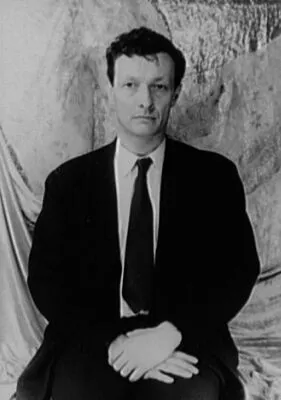
Jean-Louis Barrault
Human Design Chart
Biography
Barrault decided on a theatrical career when he was six. In the early '30s, he studied at the Atelier, and began as a mime.
His first production was in 1935, entitled "Autour D'une Mere." During World War II, he acted and directed the Comedie-Françoise. He proved himself an excellent mime and accomplished vocal melodramatics. His many movies include "The Children of Paradise," 1945 and "The Longest Day," 1961.
Married on 5 September 1940, with his wife, Madeleine Renaud, he formed his own company in 1946; they became one of France's most enduring and prominent stage couples.
His full originality emerged as he experimented with "total theater." In 1959, he took over the Odean-Theatre de France, producing plays by classical and avant-garde writers. He brought to his personal affairs a passionate force for human rights and tolerance. During the student-worker rebellion in May 1968, Barrault sided with the rioting students, whom he let into the Odean. He was later fired as director but agreed to return at Government invitation three years later.
He died of heart failure on 22 January 1994 at 7:30 AM at his home in Paris.
Jean-Louis Barrault as a Generator 4/6 in Human Design
Generator 4/6 — Design at a Glance
Jean-Louis Barrault's design points to a tendency towards great endurance, but this endurance is not driven by his own initiatives; rather, it only becomes effective in response to external impulses. As a Generator, he had abundant sacral energy, comparable to a workhorse that is strong and durable – provided there is nourishment for its strength. This energy could only be unleashed when Barrault responded to signals from life; the clear motto was: not initiate but react.
His deepest satisfaction and sense of fulfillment arose when he followed this inner 'yes signal'. Acting against this impulse or taking initiatives from his head led, sooner or later, to persistent frustration and a lack of energy. Two specific stumbling blocks characterized this pattern: On one hand, wasting his strength on tasks that did not interest him, which made him, despite his high creative potential, vulnerable to burnout. On the other hand, he suffered when prevented from working on his heart project even though he still had plenty of power left. Barrault's most successful strategy was to wait for an external signal and then respond with action as soon as his gut feeling agreed. Living by this design made him unstoppable; deviating from it led to energy loss and dissatisfaction.
Sacral Authority
Jean-Louis Barrault's decision-making process followed a direct physical resonance to external stimuli. His inner authority is the Sacral Authority, a mechanism exclusive to Generator types whose strategy aligns with this authority. This simplified his process: He did not react through intellectual analysis but rather through a 'gut feeling' or a noticeable surge of energy.
It was crucial for him to pay attention to specific physical signals – grunts, hums, or similar sounds like an affirming 'mm-hm'. These noises marked the moment when his sacral motor kicked in. Once this happened, he had vital energy and seemingly inexhaustible enthusiasm. He was born to perform tasks with great joy and satisfaction, fully immersed without a necessary sense of purpose.
Additionally, the Spleen Center acted as a supportive instance. As it was activated and possibly directly connected to the Sacral Center, it allowed him quick, spontaneous reactions. This gave him immediate access to his instinctive perception and physical well-being. He could reliably guide himself from these deep, body-based impulses, which marked his decisions with an additional layer of intuition and speed.
The 4/6 Profile — Opportunist / Role Model
Jean-Louis Barrault's design points towards a tendency characterized by an internal conflict between the need for belonging and the call for wise distance. In his first thirty years, he acted like an experimenting networker: His Line 6 behaved similarly to a Line 3, which encouraged him to experiment extensively in relationships and friendships. This early period was marked by searching for the right network, with his inner certainty about the meaning of his experiences often only emerging through resolving initial confusion.
With the activation of Line 6, a contradiction became apparent: The desire to belong to a community (Line 4) stood in contrast to the need to withdraw and philosophically contemplate life's purpose (Line 6). This conflict between heart and head shaped his development. In later years, he was expected to take on the role of a wise mentor. His Line 6 developed into a corrective authority: It consciously sought out crises or resistance to bring about authenticity and progress. However, this correction only worked through cooperation with others; his large heart remained cautious not to open up to the wrong people and get hurt. Thus, he matured from an experimenting seeker to an authoritative role model that addressed societal resistance through strictness and reflection.
Split Definition — Defined & Open Centers
Jean-Louis Barrault's Human Design profile indicated a tendency towards constant mental presence and clear expression. His defined Head, Ajna, and Throat Centers created an uninterrupted flow of inspiration that was directly translated into speech. This gave him the ability to mentally inspire or pressure others through his aura as he continuously generated and articulated concepts. His defined G Center anchored this communication in a stable self-identity and direction, allowing him to show others new paths without becoming dependent on them.
The energy for this expression came from his defined Sacral Center. As a Generator, Barrault had an enormous vital energy source that required external stimuli to react correctly. His strategy was not to initiate but to wait until life asked of him, at which point his Sacral Center would respond with a clear yes or no tone. This ensured satisfaction and prevented frustration from hasty mental decisions.
At the same time, Barrault's open Centers made him situationally sensitive. His open Heart Center left him vulnerable to the pressure of needing to prove his worth; he tended to make promises he couldn't keep, leading to a cycle of self-disapproval. His open Solar Plexus absorbed the emotions of his environment, putting him at risk of personalizing others' moods and making emotional decisions that he later distanced himself from. Additionally, his open Spleen Center was marked by a fundamental survival fear, which led him to make spontaneous decisions or cling to unhealthy situations for a false sense of security. Finally, his open Root Center absorbed external stress, making him vulnerable to hyperactivity and burnout as he tried to escape this non-self pressure through overwork.
Channels for clear structure, abstract images and inner rhythms.
Jean-Louis Barrault's Human Design profile indicated a tendency towards constant mental activity driven by a mind that filtered experiences through a kaleidoscope of images. This abstracting power was his primary identity marker: a mind that never stopped playing with possibilities and making connections, often accompanied by the feeling of confusion until clarity suddenly emerged. This state was shaped by the Abstraction Channel 64-47, which contained the Sun Gate 64 and created an extremely active, experience-based mind constantly seeking meaning but not serving as inner authority.
This abstract-seeking nature served other channels as tools for analysis and formulation. The Logic Channel 63-4 generated a skeptical mind that filtered patterns and sought verifiable evidence; it was collectively oriented and demanded logical experimentation to resolve doubts. Simultaneously, the Structuring Channel 43-23 allowed spontaneous insights and innovative perspectives but were often felt as too far ahead and required patience in communication due to their mutative effect on others' understanding.
In his design, the Rhythm Channel 5-15 acted as a biological rhythm determining energy flow and timing. It connected fixed habits with a love for extremes and drew others into a continuous flexible energy flow that propelled humanity forward. This rhythm was neither subject to mind nor emotional waves but based on natural recurring patterns influencing Jean-Louis Barrault's timing and his contribution to the collective.
Collective Circuitry — Circuit Signature
Jean-Louis Barrault's Human Design profile showed two separate, parallel existing energy systems: a rational system for structure and future as well as an emotional system for meaning. There was no direct connection between mind and feeling; these areas remained isolated.
The Knowledge Circuit connected his Ajna with Throat Center via the Structuring Channel (43-23). This enabled clear expression of inner thoughts through structured communication. Knowledge was not communicated as mere impulses but in a structured manner.
The Understanding Circuit comprised two unconnected segments: Head Center and Ajna (Logic Channel 63-4) along with Identity and Sacral Centers (Rhythm Channel 15-5). The left side focused on logical strategies for the future, while the right side offered a rhythmic life flow from essence. These two poles were energetically not connected; logic and life rhythm ran separately.
The Meaning Circuit linked Head and Ajna Centers via the Abstraction Channel (64-47). Here it was about recognizing patterns and finding meaning in past experiences. This abstract perception served to learn from experience and share insights.
Overall, these separate circuits shaped his way of encountering the world: rational planning and emotional reflection were not mixed but lived as independent processes. Structuring helped make thoughts tangible while abstraction gave meaning to experiencing. The separation of left (future/logic) and right side (past/meaning) prevented a merging of mind and heart; each level had its own dynamics and function.
Right Angle Cross of Consciousness 3
Jean-Louis Barrault's design features what is known in Human Design as the 'Right Consciousness Cross 3'. Since the specific mechanical expression or description of this element is not provided in the available data, it is impossible to derive a detailed characterization of his nature or behavior directly linked to this configuration. The design shows an absence at the point where a defined energetic tendency or characteristic pattern would typically be described. Without additional information on how this cross functioned within his chart—such as whether it emphasized certain themes of consciousness or brought specific challenges—it remains neutral and without interpretative elaboration. It is not claimed that this aspect was irrelevant; rather, there is insufficient information to describe its influence on Jean-Louis Barrault's experiential world or role in decision-making. Therefore, his overall design must be examined elsewhere as this particular element does not provide meaningful data for a personalized assessment.
Saturn Return · Uranus Opposition · Chiron Return · 2nd Saturn Return — Life Cycles
Jean-Louis Barrault's design exhibited a cyclical dynamic where personal authority was closely tied to institutional recognition. His first Saturn return around the age of 30 marked entry into established structures: in 1940, he was appointed to the Comédie-Française and married Madeleine Renaud, solidifying his position within the artistic establishment.
This integration paved the way for his Chiron return around the age of 49, a fulfillment cycle where his incarnation purpose crystallized. In 1959, he took over the state-run Théâtre de France. Here, his ability to assume power and shoulder its responsibility was evident; it was a peak in the exercise of his destiny within the system.
However, his second Saturn return around the age of 58 brought confrontation with these structures. In 1968, Barrault opened the Odéon Theatre to students, leading to his dismissal from his post. This event illustrated the tension between his individual authority and institutional boundaries. His design revealed that true identity formation was not only through power acquisition but also through its loss or questioning within established frameworks. The mechanics of his chart described a path where institutional roles served both as foundations for unfolding and as tests for personal integrity when these roles reached their limits.
Generator · Sacral Authority — Synthesis
Jean-Louis Barrault lived a life profoundly marked by the ability to receive energy and transform it into expression. As a Generator, he responded to impulses from life, guided by his sacral authority—a direct physical reaction that filled him with vitality so long as he followed his own rhythm. This natural flow was reinforced by a defined G-Center, providing an inner compass for direction and authenticity. His defined throat allowed him to communicate this inner truth while the logical mind (Head and Ajna Centers) recognized patterns and generated insights he shared further. This interplay of reaction, inner guidance, and mental acuity formed the red thread of his creation.
Simultaneously, his chart revealed a central paradox: The connection between spontaneous energy (Sacral) and a mind constantly seeking meaning (Gate 64/47). While his sacral authority urged him to act when the energy was there, his defined head center pushed him towards analysis and understanding. This led to an internal tension between immediate experience and the need to articulate or formalize it—creative tension that both shaped his strength and presented challenges.
4 Defined Channels
Incarnation Cross - Right Angle Cross of Consciousness 3
Solar Return
The Solar Return shows the moment when the sun returns to its exact birth position - your personal solar year.
Life Cycles
Discover the life cycles with a detailed triple view (birth chart, cycle chart, composite).
Human Design Profile
- Type
- Generator
- Strategy
- To respond - wait for something to respond to
- Authority
- Sacral Authority
- Profile
- 4/6 - Opportunist / Role Model
- Definition
- Split Definition
- Incarnation Cross
- Right Angle Cross of Consciousness 3
- Date of Birth
- 08.09.1910 06:00
- Place of Birth
- Le Vésinet, France
Frequently Asked Questions
What was Jean-Louis Barrault's Human Design type?
What profile did Jean-Louis Barrault have in Human Design?
Which authority guided Jean-Louis Barrault?
What incarnation cross did Jean-Louis Barrault have?
When was Jean-Louis Barrault born?
Discover your own Human Design
Are you also a Generator? Find out in a personal reading how to use your sacral energy correctly and discover deep satisfaction.
More Personalities
Back to overviewAaliyah

Alexia

Angèle

Anne-Marie

Arcángel

Arno