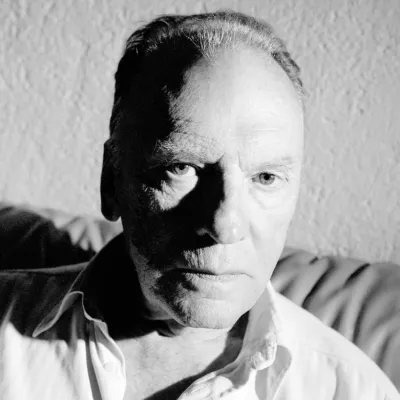
Jean-Louis Trintignant
Human Design Chart
Biography
Trintignant’s first marriage was to Colette Dacheville in 1954, second with actress Stephane Audran and third to film maker Nadine Marquand, the director of several of his films. His 4th marriage was to Marriane Hoepfner, his last wife, in 2000 He suffered a leg injury from a motorbike accident in 2007.
His daughter, Marie Trintignant, died of cerebral edema in Neuilly, France on 1 August 2003, the victim of a domestic dispute. The 41-year-old actress had been in a coma since 27 July 2003 when, in a violent argument with her boyfriend in a Vilnius, Lithuania hotel room, she suffered multiple blows to the head. Her boyfriend was taken into custody.
Jean-Louis Trintignant received the Cesar for Best Actor in 2013 for his role in Amour, directed by Michael Haneke. In 2019, he ended his career after 120 films, suffering from prostate cancer since 2018. He died on 17 June 2022 at the age of 91 in Uzès, Gard, France.
The Human Design of Jean-Louis Trintignant: Manifesting Generator 3/5
Manifesting Generator 3/5 — Design at a Glance
Jean-Louis Trintignant revealed himself as a person with a hybrid energy constitution: a Manifesting Generator. This design combined the constant, sacral life force of a Generator with the ability to initiate actions swiftly and skip steps in the process. He thus had the potential to quickly draw things into his life, giving him a special dynamism.
The challenge of this type lay in the speed itself. Often, impulses were so rapid that important intermediate steps were overlooked. This could lead to having to return later to catch up on missing foundations – a process that, if ignored, led to frustration because the non-self theme of the Manifesting Generator precisely involves fighting against or not understanding this natural rhythm. Additionally, his design tended to react simultaneously to numerous different impulses and start multiple projects at once.
To sustainably utilize his creative power, it was crucial that he did not initiate but rather reacted to life. Only when his Sacral Center signaled a clear yes after an initial "testing," should he proceed. Regular checks to see if the projects still had inner approval were essential. With this correct application, he could draw deep satisfaction from his work. The compulsion to focus on only one thing went against his nature; instead, his energy flourished in the "play mode" with variety and fun from multiple parallel activities.
Sacral Authority
Jean-Louis Trintignant lived as a Generator, whose decision-making was shaped by sacral authority. This configuration simplified his process: strategy and inner guidance merged into one. A prerequisite for this was his open emotional center, which excluded immediate emotional reactions and instead allowed him to listen to his body. His responses came from the gut – either as spontaneous bursts of energy or physical signals like an internal "mmh" in agreement or disagreement. When he encountered an external stimulus that activated his sacral motor, he felt vital and energetic. This enabled him to engage in activities with great enthusiasm and without obsessive purposefulness; the joy of doing stood at the forefront. Additionally, his active spleen center supported this dynamic. Through its connection to the sacral center, he could react particularly quickly and spontaneously. He had immediate access to his instinctive perception and physical well-being, allowing him to reliably guide himself from these deep impulses. This combination of sacral confirmation and spleen-supported intuition formed the foundation for his actions and reactions in everyday life.
The 3/5 Profile — Martyr / Heretic
Jean-Louis Trintignant revealed himself through his 3/5 Profile as someone who primarily acquired knowledge through personal experimentation. As an experimenter (Line 3), he assumed that he could not blindly believe anything initially; instead, he learned from direct experiences and even from failures. This process of trial and error served to gain influence and strengthen his ego through the experience of rejection, in order to overcome vulnerability.
The accumulated practical life experiences later shaped him as a hero (Line 5). He used his self-acquired knowledge to offer practical solutions to others during times of crisis. His ability to find meaning in experiences and maintain harmony even under pressure made him attractive to those around him. Others sought his proximity to learn from his stories and wisdom.
This role of rescuer or storyteller flattered his ego, as it confirmed his competence. At the same time, this position came with risks: If he failed at public experiments or attempts to solve problems, this became visible to others and could be painful. His design suggested that he gained wisdom through overcoming these public trials by learning not to take suppression or crises personally but rather to accept them as necessary parts of life's process.
Split Definition — Defined & Open Centers
Jean-Louis Trintignant revealed himself as someone who possessed immense inner vitality that he carried outward through clear communication. His design was marked by five defined centers: The Sacral Center provided a constant source of energy and fertility, which only worked satisfactorily when it responded to external stimuli rather than initiating action on its own. This power was guided by the defined Heart Center, giving him willpower and the desire to determine his life course as well as fulfill promises. His ability to express himself stemmed from the defined Throat Center, serving as a focal point to translate these inner energies into words and actions. At the same time, the defined Spleen Center provided spontaneous, intuitive judgments in the present moment, while the defined Root Center ensured a constant pressure towards movement and survival.
In contrast to this firm internal structure were three open centers that made him vulnerable to external influences. The open G Center meant he did not have a fixed, unchanging identity but rather reflected himself in relationships and environments; he tended to seek direction by waiting for others to show him the right path instead of forcing it himself. The open Head and Ajna Centers allowed him to absorb mental inspirations and concepts from his surroundings. He was not designed to develop consistent theories on his own, but could be inspired by foreign ideas, yet had to be careful not to fall into the trap of accepting others' answers as his own truth or becoming overwhelmed by mental confusion. This configuration enabled him to react flexibly to life as long as he drew his energy from the Sacral Center and did not try to impose an identity in the G Center.
Channels for logical struggle, finding meaning and personal maturation.
Jean-Louis Trintignant revealed himself as someone who filtered life through relentless perfectionism and a drive for material control. His design inclined towards constantly questioning patterns while simultaneously taking responsibility for resources.
The Judgment Channel 58-18 connected his Root Center with the Spleen, nurturing a logical impulse that sought 'better and more' while Gate 18 ensured only what was in balance was considered healthy. This created an inner vigilance that scrutinized every aspect of life for its functionality. Parallel to this, the Line of Money Channel 21-45 between Heart and Throat drove the will to maintain control over material resources ('I have or I do not'), while Gate 21 insisted on determining when work was done to preserve his own heart. This conflict between the need for authority and the urge to serve shaped his approach to power and survival.
Additionally, the Life Struggle Channel 28-38 formed his stance towards resistance. It endowed him with the determination to fight for his individual integrity and find meaning in difficulties rather than merely endure them. The Ripe Fruit Channel 42-53 complemented this through a cyclical process: experiences had to be run their course to gain wisdom; premature giving up led only to repeating the same pattern.
Individual Gates underscored this dynamic. Gate 26 in the Heart Center allowed him to introduce innovations into conservative structures, while Gate 47 distilled collective sense from past confusions. Gate 22 promoted a calm openness for mutations in social environments, and Gate 40 demanded recognition as reward for work done. In his design, Gate 20 supported awareness of authentic self in the here and now, while Gate 39 stimulated self-recognition through provocative analysis. Gate 32 ensured continuity of material success, and Gate 59 pursued a genetic strategy of binding independent of personal preferences.
Collective Circuitry — Circuit Signature
Jean-Louis Trintignant's design presented itself through separate, parallel operating energetic poles. On one side, he connected Spleen and Root Center in two independent strands: The Knowledge Circuit utilized the Life Struggle Channel (Gates 28-38), fostering an instinctive, pulsating search for essence in the here and now. Parallel to this, the Understanding Circuit operated through the Judgment Channel (Gates 18-58). This strand also linked Spleen and Root but focused on logical analysis and strategic future perspectives, free from emotional coloring. Both systems thus provided different impulses – one side intuitive innovation, the other rational structure – that did not directly flow into each other but stood as separate competencies.
On the other side of his design existed a clear connection between Heart and Throat Center. The Ego Circuit activated here the Line of Money Channel (Gates 21-45). This created a direct flow of willpower to expression, aimed at jointly creating material resources and mutual support. This connection was timeless and tradition-influenced but required pauses as it was not tied to the constant life energy of the Sacral Center.
A third, isolated aspect appeared in the Meaning Circuit. Here, the Ripe Fruit Channel (Gates 42-53) connected the Sacral Center with the Root Center. This generated a cyclical energy for processing past experiences and emotions. Since this connection was not linked to other groups, it formed an independent area of emotional reflection and learning from the past, separate from his strategic or resource-oriented expression style.
Right Angle Cross of Rulership 4
Jean-Louis Trintignant's Human Design shows a tendency towards strategic action based on the goal of exercising control over his environment and destiny. This orientation did not manifest as impulsive imposition, but rather as a thoughtful attempt to influence and establish structures that aligned with his vision.
This stance resulted from the configuration of the right cross of Governing 4. In Human Design mechanics, this pattern describes a specific energy aimed at gaining authority and maintaining it. It is a process where one learns how to effectively use power without sliding into pure tyranny or passivity. The focus was on the ability to make decisions that create long-term stability and bring personal visions into reality.
For Jean-Louis Trintignant, this meant his actions were often driven by the need to shape his environment according to his own standards. He sought ways to take responsibility without losing his integrity. This dynamic promoted a lifestyle where strategic thinking and readiness to stand up for one's goals were paramount. It was less about fighting against others than it was about striving to carry inner clarity outward, thereby creating space in which his values could be lived.
Saturn Return · Uranus Opposition · Chiron Return · 2nd Saturn Return — Life Cycles
Jean-Louis Trintignant's life path was marked by significant turning points deeply rooted in his astrological configuration. In 1955, at the age of 25, he began his career as a film actor. This step coincided precisely with his first Saturn Return. In Human Design mechanics, this cycle often marks the transition from experimental youth to structural responsibility; here, years of groundwork condensed into a solid professional foundation that profoundly shaped his public presence.
Another crucial moment occurred in 1970 when he was 40 and experienced the loss of a child through sudden infant death syndrome. This event corresponded with Uranus opposition in his chart. This mechanical configuration represents disruptive breaks and unexpected changes that dissolve old structures to make way for new space. For Jean-Louis Trintignant, this was not an abstract energy but a deep crisis that inevitably changed his inner orientation. The mechanics show how external shocks aligning with planetary cycles can fundamentally reshape a person's life without romanticizing it.
Manifesting Generator · Sacral Authority — Synthesis
Jean-Louis Trintignant lived a life characterized by a dynamic interplay between initiation and reaction. As a Manifestor Generator, he had the ability to quickly initiate things (sacral center, defined throat), yet his design also required him to heed external impulses before acting. This interplay of inner drive and need for external validation permeated his decisions and shaped his path – especially evident in an early career start at 25 years old, which was later overshadowed by a profound personal crisis at 40. The line 3/5 of his profile amplified this trait: constant experimentation, learning from experiences, and then sharing that knowledge.
A central paradox in his design lay in the tension between the urge for correction and life energy. The Channel of Judgment (58-18) points to an insatiable desire for perfection, while the defined sacral center promised a constant source of vitality and joy. It seems he moved between striving for improvement and the necessity of fully enjoying the present moment – a dynamic that propelled him but may also have led to inner unrest.
4 Defined Channels
Incarnation Cross - Right Angle Cross of Rulership 4
Solar Return
The Solar Return shows the moment when the sun returns to its exact birth position - your personal solar year.
Life Cycles
Discover the life cycles with a detailed triple view (birth chart, cycle chart, composite).
Human Design Profile
- Strategy
- To respond - wait for something to respond to
- Authority
- Sacral Authority
- Profile
- 3/5 - Martyr / Heretic
- Definition
- Split Definition
- Incarnation Cross
- Right Angle Cross of Rulership 4
- Date of Birth
- 11.12.1930 19:00
- Place of Birth
- Piolenc, France
Frequently Asked Questions
What is Jean-Louis Trintignant's Human Design type?
What Profile did Jean-Louis Trintignant have in Human Design?
What Authority did Jean-Louis Trintignant have?
What incarnation cross did Jean-Louis Trintignant have?
When was Jean-Louis Trintignant born?
Discover your own Human Design
Are you also a Manifesting Generator? Find out in a personal reading how to unfold your multi-talents and direct your energy wisely.
More Personalities
Back to overviewSissy Spacek

Aldair

Alizée

Anémone

Angeli

Ann-Margret