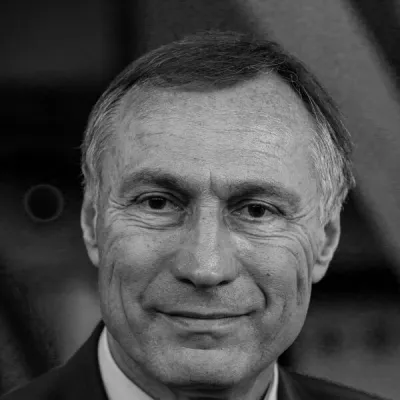
Jean-Marie Bockel
Human Design Chart
Biography
Jean-Marie Bockel as a Projector 3/5 in Human Design
Projector 3/5 — Design at a Glance
Jean-Marie Bockel's design showed a tendency towards precise system analysis. His aura acted like a bright flashlight that immediately revealed structural weaknesses or errors in his environment. This focused energy could be perceived as unpleasant by others if used directly and without invitation – similar to shining light directly into someone else's face.
The mechanics of his Projector type show: Instead of correcting things right away, which often met resistance, the most effective strategy was waiting for a respectful invitation. By setting a harmonious example himself, he became attractive; others came to him on their own seeking advice because his glow drew them in. This spared him the conflict of direct criticism and utilized his natural authority.
Furthermore, Jean-Marie Bockel did not have a defined Sacral Center, meaning that he did not possess constant intrinsic life energy. His energy flow followed waves: phases of high productivity had to be balanced by rest periods to prevent burnout. Societal expectations of constant availability often stood in opposition to this biological rhythm.
Living according to these principles – waiting for invitations and conserving energy – rewarded him with success. Deviations from them, such as ignoring the need for recovery or intervening uninvited in systems, led to his non-self theme of bitterness. His design therefore demanded patience and withdrawal as active tools, not passivity.
Splenic Authority
Jean-Marie Bockel showed a decision-making structure based on immediate physical intuition. His design suggested that the first spontaneous impulse always revealed truth for health and well-being. This results from his inner authority in the Spleen Center. For this authority to be effective, both the Emotional and Sacral Centers must be open – a configuration only Projectors or Manifestors can possess.
The Spleen Center functions here as a highly sensitive health and alarm system. It provides excellent survival intelligence that shows up as spontaneous inner knowledge: Jean-Marie Bockel knew instantly whether an environment, situation, or society was right for him. His instinct and physical well-being were reliable indicators. Decisions therefore had to be made in the moment; the first impulse served his health directly and enabled him to rigorously defend against harmful influences.
This Spleen voice is a very fine impulse that only comes once and can easily be drowned out. This required high alertness. Often, withdrawal helped to clearly hear this subtle signal tone. Since what was right could only be recognized in the moment, plans changed at short notice. Long-term commitments were difficult; instead, Jean-Marie Bockel needed a lot of space and flexibility to act spontaneously without unnecessarily limiting himself.
The 3/5 Profile — Martyr / Heretic
Jean-Marie Bockels design formed an identity through direct experimentation and personal failure. He showed himself as someone who initially accepted nothing but knowledge only when he had experienced it firsthand. This process of 'trial and error' (Line 3) was necessary for gaining authenticity. Through these practical experiences, however, a strong attraction to his environment developed. Others projected onto him the role of healer or savior (Line 5), seeing solutions to their own problems in his accumulated life experiences.
This dynamic created an internal conflict: While Jean-Marie Bockel had to learn through mistakes, society expected him as a 'hero' to be infallible. The attractiveness of his figure was based on participation in his experiences but became painful when public failures were visible. His design thus described a path where personal failure became a prerequisite for societal recognition. He had to learn how to deal with projections and accept his own limits without adopting the role of all-knowing savior imposed from outside.
Single Definition — Defined & Open Centers
Jean-Marie Bockel was characterized by a reliable inner stability stemming from his defined G Center. This provided him with a firm self-image, a clear sense of personal direction, and the feeling of being fundamentally lovable. This identity served as a constant pillar, independent of external circumstances.
Additionally, a spontaneous intuition emerged from his defined Spleen Center, allowing moment-based judgments about health and well-being that were anchored in the present and did not require rationalization. This intuitive clarity flowed directly into his ability to express himself: His also defined Throat Center ensured that he articulated his perceptions and identity clearly. His voice was not a product of fleeting moods or mental constructs but sprang from this stable source.
In contrast, Head, Ajna, Heart, Sacral, Solar Plexus, and Root Centers were open. These centers did not act as independent generators of inspiration, concepts, willpower, energy, emotions, or stress, but reflected the environment. Jean-Marie Bockel tended to absorb mental pressure waves or questions from others without identifying them as his own. Similarly, he could amplify emotional currents or adrenaline-induced stress in his surroundings, making him vulnerable to conditioning if he personalized these influences. His challenge lay in not interpreting open areas as a lack of will or energy – such as feeling the need to prove his worth – but rather using them as mirrors. Through placing trust in his defined centers, he could learn to distinguish between his own truth and the reflected field of the world, thereby freeing himself from the necessity of constantly proving himself or submitting to external pressures.
Channels for intuitive perception and authentic presence.
Jean-Marie Bockel exhibited a fundamental approach based on intuitive self-awareness and the refinement of specific skills. His design suggested that he presented himself through spontaneous adaptation to the here and now as well as deep engagement in repetitive processes – independent of external validation.
This dynamic was particularly influenced by Channel 57-10, which connects intuitive insight (Gate 57) with self-behavior (Gate 10). This enabled a kind of 'creative integration', where Jean-Marie Bockel responded to acoustic and energetic nuances in his environment rather than rational thoughts. The result was an authentic behavior loved by himself that secured his physical well-being and resolved unfounded future anxieties. His creativity did not arise from reflection but from direct, spontaneous perception of what was right in the moment.
Parallel to this, Channel 48-16 also had a significant impact. It links inner depth (Gate 48) with technical skillfulness (Gate 16). Here Jean-Marie Bockel's ability to refine raw skills into talents through continuous practice and experimentation was evident. This process required dedication and repetition to achieve precision. While the first channel provided internal security, this second aspect often needed external resources or recognition to continue training. Together they created a mechanism of mastery: intuitive self-love as a foundation for technical excellence.
Additional influences came from Gates like 15 (collective rhythm), 25 (spiritual innocence), and 46 (physical dedication). They supported his ability to move with the natural flow and maintain the body as a temple of experience. Gates like 13 (memory/continuity) and 7 (leadership/hierarchy) added perspectives from past and structure without overshadowing central intuition.
Collective Circuitry — Circuit Signature
Jean-Marie Bockel's design indicated a tendency towards structured, logical analysis. His energy aimed at visually clarifying complex information for strategic future use – free of emotional coloring. This aligned with the Understanding Circuit, active between Throat Center and Spleen via Channel 16-48. Here it was about sharing rational insights focused on improvement and guiding toward a better future.
Parallel to this, another aspect emerged: securing individual survival through integration. The channel of Perfect Form (Gates 10-57) connected Identity Center and Spleen. This described a mechanism where strength was drawn from reacting to life, guided by proper behavior and intuitive knowledge, realized in the present moment.
As Jean-Marie Bockel had a Simple Definition, these two circuits formed a cohesive flow. The Spleen served as a common node: It provided both visual clarity for strategic understanding and intuitive knowledge for individual integration. Thus his energy was not separate but unified power from rational structure and intuitive self-affirmation aimed at clearly communicating insights and making them effective in the present moment.
Right Angle Cross of the Vessel of Love 2
Jean-Marie Bockel's Human Design profile points towards a tendency for deep, often silent dedication to the principle of unconditional love. This configuration, known as the right cross of the Love Vessel 2, does not describe an active search for romantic partners in the conventional sense but rather an inner alignment with experiencing and understanding love as a universal force. For Jean-Marie Bockel, this manifested as a life task where the ability to love and be loved was not primarily defined by external validation but through a profound, often painful or challenging internal experience.
The mechanics of this cross suggest that Jean-Marie Bockel was called upon to explore the limits of his capacity for love, sometimes even pushing beyond what is allowed or expected. It was less about giving love as projection and more about being a vessel for this energy – receiving it, transforming it, and experiencing it in its purest form. This shaped an attitude of humility and learning through relationship experiences where personal identity often receded behind the experience of connection. Jean-Marie Bockel thus carried a hidden wisdom about the nature of love that was not accessible through intellectual understanding but rather through direct experience and enduring intense emotional currents. This energy acted as a quiet yet powerful force in the background of his being, driving him to understand love not just as an emotion but as a fundamental state of existence.
Saturn Return · Uranus Opposition · Chiron Return · 2nd Saturn Return — Life Cycles
Jean-Marie Bockel's Human Design profile is characterized by a clear structuring of his professional career path, marked by fixed intervals reaching new levels of responsibility. In 1981 at the age of 31, he was elected to parliament. This coincided with his first Saturn Return, a cycle often serving to consolidate years of groundwork and establish stable structures for further development. The election thus marked the transition from preparation to an established position in public life.
Eight years later, in 1989 at age 39, he was appointed Mayor of Mülhausen. This step correlated with his Uranus Opposition, a period often characterized by sudden changes or breaking old patterns. Here, there was a dynamic where established roles were redefined to meet broader leadership responsibilities.
In the year 2007 at the age of 57, Jean-Marie Bockel took on the role of Secretary of State for Cooperation and Francophonie. This occurred during his second Saturn Return. This cycle deepens the foundations laid in the first return and leads to further consolidation of authority in a specific area. His career development thus followed rhythmic cycles of structuring (Saturn) and change (Uranus), each demanding new responsibilities and stabilizing them.
Projector · Splenic Authority — Synthesis
Jean-Marie Bockel's Human Design profile reveals a central thread of intuitive adaptation, fueled by the combination of a Projector type with defined centers for Identity (G Center), Health (Spleen Center), and Communication (Throat Center). This constellation points to a natural ability to grasp the environment, perceive subtle cues, and adapt accordingly – not through personal drive but by absorbing others' energy. The Channels 'Perfect Form' and 'The Wavelength' reinforce this tendency by connecting intuitive insights with practical skillfulness and creating an inner navigation system for authentic action. The Profile as Experimenter/Hero underscores this process: experiences are gathered to serve others in a radiant way, while Line 3 brings the courage to experiment and Line 5 the need for recognition of proven solutions.
A central paradox lies in the tension between the open Solar Plexus Center and the defined Spleen. While the Spleen provides clear, instinctive knowledge about one's well-being, the Solar Plexus is vulnerable to others' emotions. This creates a dynamic where Bockel may possess fine perception but also risks being overwhelmed by foreign feelings and making decisions based on conditioned reactions – rather than from the clear impulse of the Spleen. This internal conflict requires constant self-perception and the ability to maintain personal boundaries.
2 Defined Channels
Incarnation Cross - Right Angle Cross of the Vessel of Love 2
Solar Return
The Solar Return shows the moment when the sun returns to its exact birth position - your personal solar year.
Life Cycles
Discover the life cycles with a detailed triple view (birth chart, cycle chart, composite).
Human Design Profile
- Type
- Projector
- Strategy
- Wait for the respectful invitation
- Authority
- Splenic Authority
- Profile
- 3/5 - Martyr / Heretic
- Definition
- Single Definition
- Incarnation Cross
- Right Angle Cross of the Vessel of Love 2
- Date of Birth
- 22.06.1950 04:30
- Place of Birth
- Strasbourg, France
Frequently Asked Questions
What is the Human Design type of Jean-Marie Bockel?
Which Profile does Jean-Marie Bockel have?
What authority does Jean-Marie Bockel possess?
What incarnation cross does Jean-Marie Bockel have?
When was Jean-Marie Bockel born?
Discover your own Human Design
Are you also a Projector? Find out in a personal reading how to unfold your leadership qualities and recognize the right invitations.
More Personalities
Back to overviewSissy Spacek

Alain-Fournier

Anémone

Ann-Margret

Bourvil
Hergé