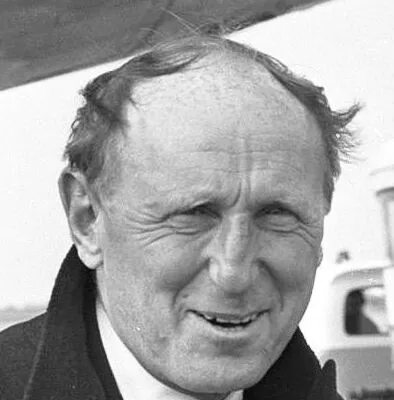
Jean Piaget
Human Design Chart
Biography
The eldest child of Arthur Piaget, professor of medieval literature and Rebecca Jackson, a strict Calvinist, Jean, a child prodigy, wrote his first paper at age ten. After high school graduation he studied natural sciences at the University of Neufchatel obtaining his Ph.D. in 1918. After a semester at the University of Zurich, where he developed an interest in psychoanalysis, he attended lectures by Carl Jung.
Piaget went to France for a year to work at a school established by Alfred Binet. In 1921 he became director of studies at the Rousseau Institute in Geneva. In 1923 the first of his over 60 scholarly books was published and in 1929 he was appointed director of the International Bureau of Education. One of his greatest and most pioneering books, "The Origins of Intelligence in Children," was published in 1948. Piaget established the Center for Genetic Epistemology in 1955.
Jean married Valentine Chatenay in 1923 and they had three children whom he observed from birth for his studies.
He was still working at his death in Geneva on 16 September 1980.
Human Design Analysis: Jean Piaget as Projector 4/6
Projector 4/6 — Design at a Glance
Jean Piaget was someone who could instantly recognize the weaknesses in systems. His Human Design type is Projektor, a configuration without a defined Sacral Center. This meant he did not have a constant internal source of life energy. Instead, his energy worked in waves: phases of high productivity and rapid insight alternated with necessary rest periods to prevent complete burnout.
His aura acted like a focused flashlight that directed straight at the areas around him still in darkness. Jean Piaget could immediately see what was not functioning properly in others or within structures. The challenge lay in expressing these observations without direct criticism, as this often provoked resistance. It was more effective for him to attract through his own harmony and clarity. When he followed his strategy of waiting for an honest invitation from others, his leadership was accepted.
The conventional school system and rigid work structures ignored his need for rhythmic renewal. If Jean Piaget did not live in alignment with this design, the theme of non-self bitterness would arise. However, when he adhered to his path, he was rewarded with success. His ability to light the way for others was only sustainably effective if he carefully managed his energy and did not try to push it against the resistance of his environment.
Self-Projected Authority
Jean Piaget was a Projektor with rare authority in Self. This configuration shaped an extreme openness that made him vulnerable to distraction by external motor energies. The central danger lay in getting lost in this irritability and constantly seeking external energy. His inner truth, however, firmly resided within his identity. Decisions did not arise from logical analysis but through two paths: First, through self-dialogues or stimulated conversations with others. Crucial was listening to the internal voice and recognizing spontaneously spoken words as expressions of true essence, separate from intellect. This authentic expression made his uniqueness visible to others. Second, a physical feeling that drew him geographically or thematically in a specific direction or repelled him. By following this inner orientation faithfully, he became a guide for his environment. Wherever he perceived and maintained his specific alignment, his full potential unfolded. The authority in Self demanded of him to trust this internal voice rather than getting lost in the multitude of external impulses. His path was to use the spontaneous resonance of his self as a compass.
The 4/6 Profile — Opportunist / Role Model
Jean Piaget's life journey was marked by a deep inner conflict between Heart and Head. His Human Design Profile 4/6 established a specific dynamic: Before the return of Saturn, line 6 still acted like line 3 for the first thirty years. This led to him experimenting frequently and extensively in his youth, particularly in relationships and friendships.
Once line 6 became active, Jean Piaget often experienced the contradiction between wanting to belong to a community (line 4) and the urge to withdraw to contemplate life's meaning (line 6). His entire life revolved around this conflict. In later years, he was expected to meet the high standards of a wise role model through cooperation. The great heart of line 4 always remained cautious about opening up to the wrong people and getting hurt.
Line six tried to maintain an overview and see the whole picture, which was difficult. Mutation was either accepted or rejected, a crucial decision. Saturn in case showed a need for security and fixation on material aspects. Stagnation served as negative learning to preserve individuality. Line four resonated with line one: authority was only effective if it was recognized; otherwise, Jean Piaget stepped back because influence without consent was impossible.
Single Definition — Defined & Open Centers
Jean Piaget was characterized by a defined G Center, indicating a firm, reliable self-identity and a clear sense of direction. This center endowed him with the ability to comfort others and offer new perspectives, speaking from his inner security. His voice, guided by the also defined Throat Center, expressed this identity: He communicated clearly and honestly from his Higher Self without needing to prove himself or act impulsively.
At the same time, his design revealed a high sensitivity to external influences through several open centers. The open Head Center made him vulnerable to mental pressure and confusion; he tended to get entangled in other people's issues rather than trusting inner inspiration. His open Ajna Center allowed for a flexible mind that absorbed concepts from all directions but lacked the consistent logical structure, making him prone to misinterpreting ideas as personal truth or feeling uncertain.
The open Heart Center meant that he was not designed to prove willpower or make promises. He avoided demonstrating his worth through performance, which would have led into a cycle of self-disapproval. Instead, he learned to avoid putting his dignity on trial. The open Sacral Center resulted in him lacking consistent generative energy; he had to learn to distance himself from the overflowing energy of others and take breaks to prevent exhaustion.
The open Solar Plexus Center made him susceptible to absorbing emotions from his environment and amplifying them. He was prone to personalizing other people's feelings and avoiding confrontation out of fear of rejection. The open Spleen Center brought a fundamental survival anxiety; he tended to cling to people or situations that gave a false sense of security rather than trusting his intuition for health. Finally, the open Root Center absorbed external stress and adrenaline, making him prone to frenzy if he did not learn to recognize this as foreign and walk away from it instead.
Channels for creative expression and logical leadership.
Jean Piaget emerged as an individual whose influence was less about direct instruction but inspiring others through the authentic life of his own uniqueness. This foundational stance resulted from Channel of Inspiration 1-8, connecting the G Center with the Throat Center. Through Gate 1, the individual expression of a mutative perspective, and Gate 8, the gate of contribution, he acted as a public outlet for creativity. His impact did not arise through mere explanations but by living his unique identity; this exemplary attitude drew attention and encouraged others to express their own uniqueness, much like virtuosic play inspires learning.
Parallel to this, Jean Piaget had potential for logical, collective leadership through the Alpha Animal Channel 7-31. This channel linked Gate 7, the role of self and logical guidance, with Gate 31, the collective leader. Here it was not about absolute dominance but gaining trust and being invited by a majority to lead. He could understand patterns and trends from an influential position, showing the way without taking it away from others. His success depended on leading the right people under appropriate conditions while respecting existing social structures.
Additionally, further gates shaped his profile: Gate 13 promoted meaning-making and continuity through reflection in a temporal context, while Gate 2 as the ground of receptivity enabled new evolutionary directions. Gate 45 brought tribal-level energy and hierarchical attraction, connected with willpower from the Heart Center. Gate 16 stood for collective experimentation to improve the new, where mastery arose through identification with skills. Finally, Gate 35 allowed change and progress through interaction, with true satisfaction only coming later through the meaning of experiences made.
Individual Circuitry — Circuit Signature
Jean Piaget's design inclined towards clear, strategic communication. As a simply defined type, he had a direct energetic flow between the Identity and Throat Centers. This connection enabled him to express inner convictions and logical structures immediately in words without external factors blocking the expression.
The Knowledge Circuit worked through him via Inspiration (Channel 1-8). This connected the Identity with the Throat Center and promoted spontaneous, acoustically marked insights. New ideas often arose as sudden inspirations that were directly expressed to initiate change.
Parallel to this, the Understanding Circuit operated through Channel 31-7 (The Alpha Animal). Also this channel linked identity and throat but emphasized rational analysis and strategic thinking. Jean Piaget utilized this energy to structure logical connections free from conditioning, aiming to guide society into a better future with clear intellect.
Since both circuits connected the same centers – Identity and Throat – a coherent expression emerged: Strategic logic and inspiring creativity flowed together. This shaped his way of not only thinking complex thoughts but immediately and precisely articulating them. The energy was focused on sharing insights based on individual identity.
Right Angle Cross of the Sphinx 3
Jean Piaget's Human Design configuration established a specific, deeply rooted tendency towards an intuitive connection between the material and spiritual realms. This setup, known as the right cross of the Sphinx 3, described more than just an intellectual inclination; it was a fundamental impulse to not only analyze the world but also grasp its underlying essence. It was like an internal compass system that pushed him to seek the truth behind visible phenomena.
For Jean Piaget, this meant that his approach to questions often stemmed from a strong, almost physical certainty. The right cross of the Sphinx 3 linked the ability to understand abstract concepts with a deep desire for authenticity and wholeness. He was someone who was not satisfied with superficial explanations; instead, he strove to unite the 'how' and the 'why' into one coherent experience.
This mechanism shaped his way of taking in and processing information. It was less about deriving logical conclusions in the strict sense but rather an intuitive grasp of connections that were hidden from others. Jean Piaget lived with the constant challenge of translating these inner visions into a language that could be understood by others without losing their original power and depth. His design challenged him to build bridges between the visible and invisible, profoundly influencing his entire life perspective.
Saturn Return · Uranus Opposition · Chiron Return · 2nd Saturn Return — Life Cycles
Jean Piaget's Human Design configuration established a tendency towards structural anchoring and long-term institutional foundation. His life phases marked clear transitions where inner maturity transformed into outer reality. In 1923, at age 27, he married Valentine Châtenay. This first Saturn Return condensed years of personal development into a stable relationship and created a solid base for his further work. The center of partnership thus became concrete reality.
Later, in 1948 at the age of 52, he published 'The Origin of Intelligence in Children'. This Chiron Return signaled the bloom of his life's work: where previously he had followed his strategy and authority, now the fulfillment of the incarnation cross was evident. The meaning of his research became tangible not as a healing of old wounds but as visible unfolding of his purpose. The publication marked the peak of intellectual maturity.
In 1955 at age 59, he founded the Center for Genetic Epistemology. This second Saturn Return institutionalized this achievement. What was previously individual or published became now anchored in a lasting structure. Jean Piaget showed himself to be someone who not only formulated his insights but embedded them into organizations that could have an impact beyond his own life. This sequence - relationship, publication, institution - underscores the mechanical logic of his design: maturity leads to anchoring, and anchoring creates sustainability.
Projector · Self-Projected Authority — Synthesis
Jean Piaget was a Projector whose Human Design configuration destined him to illuminate darkness for others and point out flaws in the system (Design View). This ability to recognize and communicate patterns sprang from a deeply rooted inner authority (Authority) that pushed him to listen to himself and express his spontaneous insights. The Profile as Networker/Role Model indicated a development where he initially experimented and later fulfilled expectations through cooperation with others (Profile Role). This process was marked by an internal conflict between the desire for community and the need for independent thinking.
A central paradox in Piaget's design lay in the interplay of inspiration and the necessity to filter it. The Channel of Inspiration (Channels/Gates) gave him the ability to receive and express creative impulses, yet his defined Throat Center (Centers) required a reliable source for his communication. This led to a tension between spontaneous expression of new ideas and the need to channel them through emotional validation from the Solar Plexus Center (Circuitry). Evidence of professional success and relationship experiences in certain cycles (Cycles) underscores the dynamics between individual expression and social interaction.
2 Defined Channels
Incarnation Cross - Right Angle Cross of the Sphinx 3
Solar Return
The Solar Return shows the moment when the sun returns to its exact birth position - your personal solar year.
Life Cycles
Discover the life cycles with a detailed triple view (birth chart, cycle chart, composite).
Human Design Profile
- Type
- Projector
- Strategy
- Wait for the respectful invitation
- Authority
- Self-Projected Authority
- Profile
- 4/6 - Opportunist / Role Model
- Definition
- Single Definition
- Incarnation Cross
- Right Angle Cross of the Sphinx 3
- Date of Birth
- 09.08.1896 00:45
- Place of Birth
- Neuchâtel, SWTZ
Frequently Asked Questions
What was Jean Piaget's Human Design type?
What Profile did Jean Piaget have in Human Design?
What was Jean Piaget's Authority?
What incarnation cross did Jean Piaget have?
When was Jean Piaget born?
Discover your own Human Design
Are you also a Projector? Find out in a personal reading how to unfold your leadership qualities and recognize the right invitations.
More Personalities
Back to overviewSissy Spacek

Alain-Fournier
Anémone

Angeli
Ann-Margret

Bourvil