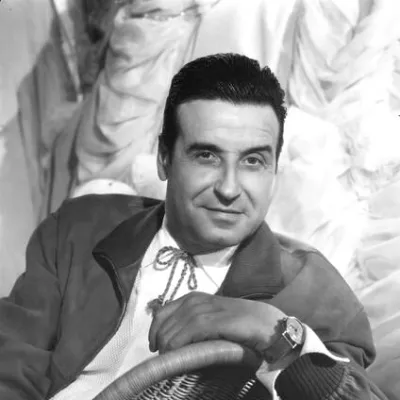
Jean Vautrin
Human Design Chart
Biography
Vautrin (pen-name meaning "wild boar") became famous in 1989, winning the Prix Goncourt for his novel "A major step towards God". He also won the 1986 Prix Goncourt de la Nouvelle for "Baby-boom".
The Human Design of Jean Vautrin: Projector 2/4
Projector 2/4 — Design at a Glance
Jean Vautrin revealed himself through a dense, focusing aura, which he directed like a bright flashlight onto weaknesses in his surroundings. As a Projector, he possessed the ability to immediately identify flaws in the system. However, this sharp vision could be perceived as unpleasant or intrusive when he expressed his observations directly and unexpectedly. His design suggested that he would have the greatest influence by not confronting but attracting through his own harmony. Since Projectors do not have a constant intrinsic energy source in the Sacral Center, Jean Vautrin lived in phases of high activity followed by necessary rest phases to avoid burnout. The best strategy for him was to wait for a respectful and sincerely meant invitation from others rather than taking the initiative himself. Once this invitation was accepted, he could effectively bring his specific knowledge and leadership into play. If he did not live by this principle, he risked feeling overwhelmed and falling into bitterness. His success therefore directly depended on whether he received the recognition and structured invitation that his design required for sustainable effectiveness.
Emotional Authority
Jean Vautrins inner compass was Emotional Authority, carried by his defined Emotional Center. This configuration fundamentally shaped his decision-making: He was subject to a constant emotional wave, manifesting in the steady ups and downs of his feelings. The world appeared to him always colored by his current mood; in one moment he was enthusiastic about something, in the next he saw the same thing negatively. His feeling in the moment, however, was only a snapshot, a first impression that did not necessarily represent his truth. Quick, spontaneous decisions based on emotion could therefore have negative consequences.
The mechanics of this authority required patience. The more time Jean Vautrin took to let a decision mature, the deeper and more comprehensive he could see. This required repeatedly sleeping on decisions. He should take his time and ask himself multiple times. Over time, the intense feelings subsided, he gained emotional distance, and clarity and calmness set in. Only then had he gone through the process. This rule applied regardless of what else was defined in his chart: Whenever the Emotional Center was activated, it was also the inner authority. This priority over other defined centers was a central mechanism of his design, ensuring that long-term decisions influencing his life course were based on clarity rather than fleeting passion.
The 2/4 Profile — Hermit / Opportunist
Jean Vautrins design revealed a pronounced tension between a deep need for withdrawal and the urge for social connection. He was someone who constantly oscillated between two poles: the desire to be alone and the longing to spend time with his closest community. His Profile 2/4 required him to create a safe environment where he could clearly communicate when he sought company and when he wanted to be undisturbed. In his isolated 'Me-Time', he immersed himself in internal processes to gain clarity. Once this need was satisfied, he emerged from his 'cave' to maintain his network.
This dynamic was shaped by specific lines. Line 2, connected with his natural talent and role as a role model, drove him to a selective, selfless contribution to the collective. This often happened in unusual ways, but could lead to crises if his individual service was not recognized. Simultaneously, Line 4, known as the 'burnout' line, characterized him through a strong desire to be influential in the network and a fixation on opportunities. For him as a Projector, this held the risk of getting caught up in the longing for repeated intense feelings. While analytical thinking enabled positive results, an emotional breakdown threatened if the energy of feelings remained uncontrolled. His design thus described a cycle of reflective solitude and network-based interaction, based on clear communication to prevent burnout and develop brilliant ideas from the synthesis of knowledge and reflection.
Split Definition — Defined & Open Centers
Jean Vautrins Human-Design shows a tendency towards constant mental pressure, paired with clear willpower and emotional depth. He was someone who asked questions and formed concepts, but was unable to directly implement them. This configuration described a life task of standing under the permanent pressure of inspiration, which often led to mental worry, as inspiration is always something that has not yet been understood. His defined Head and Ajna Centers created a fixed way of thinking that enabled him to inspire others, but did not provide the energy to directly implement ideas.
At the same time, he had a defined Heart Center, which gave him strong willpower and the desire to control his own life and resources. He recognized his own value and enjoyed working, but preferred to follow his own inner rhythm. His defined Solar Plexus Center functioned as an inner authority that required waiting for the emotional wave before making decisions. This gave him deep emotional sensitivity and the ability to gain clarity through patience.
In contrast, his Throat, G, Sacral, Spleen, and Root Centers were open. This made him vulnerable to conditioning in these areas. He tended to wonder how to gain attention or find his identity, as he lacked a fixed direction. His open Sacral Center made him dependent on the energy of others, which could lead to exhaustion if he did not listen to his inner authority. The open centers required him to wait for external initiation rather than initiating himself, and protected him from impulsive decisions out of fear or stress.
Channels for community, mental images and deep comprehension.
Jean Vautrins Human-Design shows a tendency towards deep mental analysis and the building of stable, fair community structures. He was someone who filtered experiences through a kaleidoscope of mental images to recognize hidden connections, and at the same time felt the urge to build bridges between individuals to find an honorable place in the whole.
This attitude was shaped by the Abstraction Channel 64-47. This channel connects the Head Center with the Ajna Center and forces the mind to examine every experience for its deeper meaning. Jean Vautrin was under the pressure to understand the past and gain a perspective that he could communicate as an inspiring story or new viewpoint. His mental confusion was not a mistake, but the necessary process until clarity showed and he could make a unique contribution.
Parallel to this, the Community Channel 37-40, which connects the Solar Plexus Center with the Heart Center, ensured that Jean Vautrin entered relationships not spontaneously, but carefully and with emotional clarity. He sought recognition and his place in the group (Gate 37), but was also willing to work for those he loved, provided there was a fair agreement (Gate 40). For him, a good business or relationship was only sustainable if it was based on mutual benefit and respect, without hierarchies, but through voluntary contribution.
Additionally, Gates like the Gate of Contribution (8) and the Gate of Skilled Power Bypass (14) contributed to him individually stepping up for group goals and acting with grace. The Gate of Saying Yes (29) challenged him to meet challenges with persistence, while the Gate of Emotional Awakening (55) brought extreme mood swings that he could only channel through mindfulness. His design required patience: first find mental clarity, then build community connections.
Collective Circuitry — Circuit Signature
Jean Vautrins Human-Design shows a tendency towards emotional reflection, paired with a clear orientation towards mutual support. His chart showed two separate, not directly connected energetic blocks.
In the Sense-Finding Circuit, the Abstraction Channel connected the Head with the Ajna Center. This created a wave movement of thought that focused not on cool logic, but on emotional experiences from the past. Jean Vautrin reflected on meaning connections and shared these visual, felt insights with the collective to learn together.
Parallel to this, the Ego Circuit worked through the Community Channel, which connected the Heart with the Solar Plexus Center. Here it was about cooperation and creating resources within a group. The dynamics followed the principle of give and take – mutual support. Since this area did not have a connection to the Sacral Center, the constant life force was missing; instead, rest periods were necessary to generate new energy for the tribe.
These two systems – emotional reflection of the past and cooperative action in the community – existed side by side in Jean Vautrin, without forming a common energetic flow. They shaped his essence as someone who sought meaning in the past and was simultaneously dependent on reciprocal relationships in the here and now.
Right Angle Cross of Contagion 2
Jean Vautrins design was marked by the right infection cross, a configuration that describes not a biological illness but an intense, often painful confrontation with collective wounds and societal taboos. This mechanism acted as a deep, inner impulse not to ignore the painful, often repressed aspects of human coexistence but to address them directly. It was an energetic commitment to delve into the dark, neglected corners of the human psyche and social structure to create healing or at least awareness there. This dynamic meant that Jean Vautrin tended to touch on themes that others avoided out of fear or discomfort. The right infection cross demanded a kind of courage that involved not sugarcoating the dirty, unpleasant reality but accepting and integrating it as a necessary part of the whole. It was a path of transformation through confrontation, where the individual served as a catalyst for the cleansing and understanding of deeper, often collective wounds. This energy drove him to not remain superficial but to find the root of the problem, even if this process was personally strenuous and challenging.
Saturn Return · Uranus Opposition · Chiron Return · 2nd Saturn Return — Life Cycles
Jean Vautrins design marked a life path where internal maturation processes were linked with external recognition. In 1974, at the age of 41, he published the novel “Billy-ze-Kick”. This period coincided with a Uranus opposition, a cycle that often favors sudden changes or the breakthrough of new, individual expressions. For his chart, this marked a moment when his creative voice became clear and unmistakable.
Later, in 1982, he received the César Award for the screenplay of “The Interrogation”. He was 49 years old and going through a Chiron return. In Human Design mechanics, this is not a healing process in the traditional sense but a fulfillment cycle. Here it shows whether and how the individual’s incarnation cross – the deepest life purpose – manifests in everyday life. The award signaled that Jean Vautrins specific gift of storytelling now reached its full bloom and social resonance. His path led to meaning, not repair.
The culmination of this arc occurred in 1989 with the Prix Goncourt for “Un grand pas vers le Bon Dieu”. At 56, he went through his second Saturn return. This cycle condenses long-term work into a stable, recognized structure. It was the moment when his life’s work not only existed but was considered an established entity. The mechanics of his design thus revealed a clear progression: from individual assertion through the confirmation of purpose to institutional anchoring. Jean Vautrin lived these cycles not as passive events but as active phases of self-realization that manifested in concrete, high-profile artistic results.
Projector · Emotional Authority — Synthesis
Jean Vautrin lived a large part of his life in the tension field between inner clarity and emotional depth. His defined Head Center (mental pressure) points to a constant search for understanding and the ability to inspire others, while emotional authority suggests a deep, cyclical experience of the world. This combination led to an internal dynamic where he was both analytical and exploratory, as well as guided by his feelings – a tendency that showed in recurring themes of his work. The profile as a natural talent and networker reinforced this pattern by combining the need for withdrawal and inner reflection (Line 2) with the desire for connection and exchange (Line 4).
A central paradox in his design lay in his projection ability, which made him recognize the flaws and imbalances in his environment (Projector type), and the emotional wave that colored his perception of these flaws. He could point out patterns and problems, but emotional authority required time to process and communicate these insights appropriately. The documented events, such as the publication of a novel or awards, seem to occur during phases of a Uranus cycle or Saturn return, suggesting a cyclical nature of his creative energy and success.
2 Defined Channels
Incarnation Cross - Right Angle Cross of Contagion 2
Solar Return
The Solar Return shows the moment when the sun returns to its exact birth position - your personal solar year.
Life Cycles
Discover the life cycles with a detailed triple view (birth chart, cycle chart, composite).
Human Design Profile
- Type
- Projector
- Strategy
- Wait for the respectful invitation
- Authority
- Emotional Authority
- Profile
- 2/4 - Hermit / Opportunist
- Definition
- Split Definition
- Incarnation Cross
- Right Angle Cross of Contagion 2
- Date of Birth
- 17.05.1933 10:35
- Place of Birth
- Pagny sur Moselle, France
Frequently Asked Questions
What was Jean Vautrin's Human Design type?
What Profile did Jean Vautrin have in his Human Design?
What Authority guided Jean Vautrin in his decisions?
Which incarnation cross determined Jean Vautrins life path?
When was Jean Vautrin born?
Discover your own Human Design
Are you also a Projector? Find out in a personal reading how to unfold your leadership qualities and recognize the right invitations.
More Personalities
Back to overviewSissy Spacek

Alain-Fournier

Anémone

Ann-Margret

Bourvil

Christian-Jaque