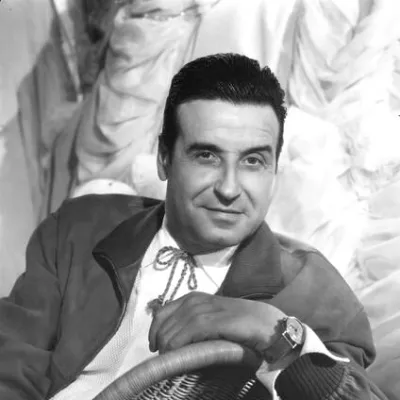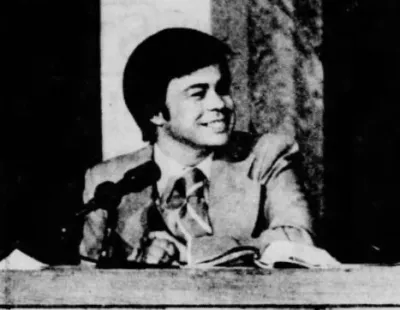
Jim Bakker
Human Design Chart
Biography
In 1965, they went on TV where he played on his boyish innocence and appeal to claim divine healings and to solicit donations. He built his PTL (Praise The Lord) ministry into a $129 million a year business, with company purchased mansions, cars, jewels and trips. They also sold fraudulent "partnerships" in a theme park. His autobiography was published in 1976 and was entitled "Move That Mountain!"
Bakker's house of cards began to collapse when church secretary Jessica Hahn reported his seduction and betrayal in 1980. When the investigation began, he faced a possible 120 years in prison and a $5 million fine for siphoning $3.7 million from the business to live like Croesus. He was also accused of homosexual encounters. In May 1987, he tearfully confessed on TV to his tryst with Hahn and was defrocked. Charles Shepard won a Pulitzer Prize for his investigation of the PTL with his book "Forgiven," which was published in September 1989.
Convicted in October 1989 of fleecing his flock to a total of $158 million, he went to federal prison in Jesup, Georgia. He was released to a half-way house in July 1994 after serving 4 1/2 years behind bars and on 1 December 1994, he was a free man. He moved to a secluded North Carolina farm where he worked as a handyman and wrote a memoir, "I Was Wrong," published in 1996.
"I never planned to minister again," he said. In 1998, he visited the Dream Center in Los Angeles, a hospital complex associated with the L.A. International Church.
The Human Design of Jim Bakker: Projector 2/4
Projector 2/4 — Design at a Glance
Jim Bakker's design had a tendency towards focused perception: His aura seemed like a bright flashlight that immediately revealed places in others' systems still shrouded in darkness. This ability to quickly spot errors or inefficiencies is characteristic of the Projector type. However, this direct confrontation with the 'wrongness' in others can be felt as unpleasant, similar to a light beam shining directly into one's face.
Therefore, his design strategy was not active correction or imposing solutions but passive attraction. By radiating his own harmony and clarity, he became attractive to others. The optimal approach involved waiting for an honest, appreciative invitation before taking on a leadership role. Only this way could he avoid bitterness – the non-self theme of Projectors – and instead be rewarded with success.
Since Jim Bakker had an undefined Sacral Center, he did not have a constant source of intrinsic life energy. His energy flow was wave-like: Phases of high productivity alternated with necessary rest phases to prevent burnout. The traditional work model that demands constant availability stood in opposition to this natural rhythm. Acknowledging his specific way of leading and respecting his energy balance were crucial for him to effectively utilize his potential without exhausting himself.
No Inner Authority
Jim Bakker showed decision-making ability that did not stem from an inner, physical authority but was exclusively formed through external interaction followed by reflection. As a mental projector, he lacked defined centers below the throat, meaning his design offered no internal instance for spontaneous decisions. Instead, he reached conclusions in exchanges with many different people. Through these dialogues, latent potentials in his open centers were activated, allowing him to view issues from numerous perspectives and express them differently. This high resonance ability helped him identify the right environment and conversation partners for this intense information exchange.
However, evaluating this complex input required time and withdrawal. Jim Bakker had to withdraw to discern the red thread, filter out essential information from a mass of data, and structure it meaningfully. This process of information filtering – from exchange through activation of latent potentials to solitary evaluation – formed his specific capital for success. Only in this way could he develop his intelligence by distinguishing what made sense and what truly belonged to him. His path involved staying in a trustworthy environment to deepen an intuitive sense, through exchanges with suitable people, of which decisions were right for him.
The 2/4 Profile — Hermit / Opportunist
Jim Bakker showed a clear tension between the deep need for withdrawal into inner clarity and the simultaneous need for community. His design suggested a cycle of isolation and connection driven by the necessity to set clear boundaries between disturbance and desired interaction.
This pattern corresponds to Profile 2/4, known as 'Natural Talent / Networker'. Here, the person constantly oscillates between two poles: Line 2, the hermit phase, where one must be alone to show resistance and gain intuitive insights without violating behavioral norms; and Line 4, representing a desire for time with favorite people and their network.
For Jim Bakker, it was crucial to create a safe environment in which he could clearly communicate these shifts: 'Now I need peace' versus 'I want company'. In his hermit phase, he immersed himself in internal processes to find calm and clarity. Once this need was satisfied, he returned from his 'cave' to absorb the knowledge of his network.
The strength of this design lies in reflecting on external network knowledge during alone time, evaluating it, and developing brilliant ideas from it. Line 2 provides necessary discretion and intuitive insight, while Line 4, despite possible frustration with limitations, maintains connection to community. Success depended on recognizing these rhythms and not going against the natural cycle.
Single Definition — Defined & Open Centers
Jim Bakker's Human Design profile suggests a tendency towards constant, independent mental structure paired with reliable expression. His defined Ajna Center ensured consistent conceptual thinking; he was always in a mental process and hard to influence by others. These thoughts flowed directly into his defined Throat Center, serving as the pivot for communication. He spoke reliably what his mind conceptualized, making his voice a clear but limited instrument of manifestation.
In stark contrast, all other centers were open, creating situational dependency on the environment. His open G Center meant lacking a fixed identity; he tended to orient himself towards the direction and 'who' of his surroundings or mirror them rather than own them. The open Heart Center made him vulnerable to the pressure of proving his worth through promises or willpower, often ending in cycles of overcompensation due to the lack of consistent energy for this.
The open Sacral Center led to taking up foreign vital energy and amplifying it without having personal limits for endurance, promoting exhaustion. His open Solar Plexus absorbed emotional moods from the environment; he tended to interpret these as his own mood swings or instability rather than recognizing them as an external field. Furthermore, his open Spleen Center was marked by a fundamental survival fear that made him cling to people with defined Spleens for a sense of security and well-being, even if these bonds were not healthy. Finally, he took in external stress through the open Root Center, leading to feelings of inner pressure that he could not relieve through his own actions.
This mechanism shows a clear separation: Mind and voice remained the only constant instrument while identity, energy, emotions, and intuition were filled or emptied by external influences.
Channels for insatiable search and new perspectives.
Jim Bakker's Human Design profile suggests a tendency towards narrative influence: He presented himself as someone who translated abstract ideas not as dry facts but into captivating stories. This configuration works through Channel of Curiosity 11-56. This flow connects the Ajna Center with the Throat Center and drives an insatiable search process. The energy aims not at final truths, but at the constant collection of inspirations. Jim Bakker used this mechanism to transform information into parables – 'Look what I discovered'. As a storyteller and opportunist historian, he served social commitment through sharing. His stories appealed to others' imagination and feelings to teach or entertain. The truth did not lie in factual precision; half-truths or exaggerations were functional tools to bring messages alive. The magic of his presentation arose from linking philosophical contemplation with human experiences. His stories served less for personal guidance than for retelling to current and future generations.
Additionally, isolated Gates worked: Gate 38 brought pressure and the struggle for individual integrity as well as setting boundaries. Gate 39 provided through provocation and analysis adrenaline as fuel for mutations. Gate 48 allowed pattern recognition and deep understanding but also led to frustration in the collective due to its connection with 'black magic'. Gate 21 steered material life and sought recognition in service of the community. Gate 23 promoted amoral negotiation and freedom to be different, while Gate 31 represented pure energy transmission and leadership through power delegation. These elements shaped his way of spreading knowledge and shaping social dynamics, always focusing on the process of searching and storytelling as means of influence.
Collective Circuitry — Circuit Signature
Jim Bakker's Human Design profile suggests a tendency towards emotionally processing past experiences and sharing the insights gained from them with others. This attitude does not manifest as cool, rational analysis of the future but rather as a wave-like process of reflecting upon the past to uncover hidden meaning.
This dynamic is explained by his active Seeker Circuit (Perception). Unlike the logical orientation of other energies, this circuit focuses on feelings and historical experiences. Since emotions follow a wave pattern – with beginning, middle, and end – so does the processing of events follow this cyclical pattern. The right side of the design, to which this area belongs, is traditionally more oriented towards the past than the future.
In Jim Bakker's case, within this circuit, the channel between Ajna and Throat Centers (Channel 11-56: Curiosity) is specifically active. This connects the center of inner imaging and ideas with the center of verbal expression. A direct connection emerges that allows carrying internal visual or conceptual impulses outward through speech.
Since Jim Bakker has a Simple Definition, this is his only defined energy group. The power of this channel stands available to him as a continuous flow: What arises internally as an idea or image finds its way into the world through the voice. The purpose of this connection lies in sharing personal emotional insights from the past with the collective to learn together from them. It's less about dry fact transmission and more about conveying felt truths and visual impressions filtered through the lens of personal history.
Right Angle Cross of Tension 4
The provided data for Jim Bakker's design does not allow for a specific characterization. The raw content only mentions the designation 'Right Cross of Tension 4', but provides no description of what this configuration means in human experience or which tendencies it triggers. Without a basis in content for mechanics, strategy, or expression, any assumption about Jim Bakker's behavior, internal processes, or life path remains pure speculation and is therefore inappropriate.
Human-Design analyses rely on the fact that certain configurations – such as crosses or channels – are associated with defined energetic patterns, impulses, or challenges. Only these definitions enable abstract chart data to be translated into comprehensible human traits. Since this crucial description is missing here, it cannot be explained how this tension manifests in Jim Bakker's case, whether it leads to inner unrest, for example, or influences specific decisions.
No event is included as no connection can be made between the empty configuration and a concrete life phase. Even general clichés or vague hints would undermine the integrity of the analysis by suggesting there is more knowledge available than actually exists. The correct approach therefore involves openly naming this gap: Without specific content regarding the mechanics of the Right Cross of Tension 4, Jim Bakker's design remains undefined in this aspect and cannot be interpreted.
Saturn Return · Uranus Opposition · Chiron Return · 2nd Saturn Return — Life Cycles
Jim Bakker's design was characterized by extreme fluctuations between building up and a sudden collapse, driven by profound structural shifts. This dynamic became evident in 1980 at age 40: The opposition of Uranus marked an existential crisis point when the revelations about Jessica Hahn shook his previous construct. Here, not only a personal crisis but also the abrupt breakdown of a long-standing structure through external events was revealed.
This process culminated with Chiron Return in 1989 (age 49). In Human-Design mechanics, this cycle is a fulfillment period when the incarnation cross unfolds – often through radical confrontation with one's reality. Bakker's conviction for embezzling $158 million and subsequent imprisonment exemplified this hard test: A moment where old patterns had to finally break down to make way for a new, more authentic orientation. It was not just decline but the painful conclusion of a life phase.
Finally, the second Saturn Return phase in 1996 (age 56) took effect. Saturn demands structure and accountability for the past. The publication of his memoirs 'I Was Wrong' here concretely expressed this mechanics: A structured processing of the past to lay a stable foundation for the future. Bakker's journey shows how crisis points in the design are not just destructive but necessary steps towards integration and realignment.
Projector · No Inner Authority — Synthesis
A central red thread runs through the chart: projection and the resulting drive to recognize patterns and 'errors in the system' (Gate 38). This ability, paired with an open mental center configuration, indicates a natural inclination to collect information, analyze it, and package it into stories (Channel of Curiosity). However, the lack of sacral authority means this process is not carried by inner energy but by constant seeking for external validation and conditioning. This leads to dynamics where perception of others is amplified, which can be both a gift and a potential source of overextension – especially in the context of emotional circuits.
The central paradox lies in the tension between the need for connection and the inherent distancing imposed by the projector design. The Profile Natural Talent/Networker (2/4) reveals an interplay between the desire for alone time to reflect and the need for social exchange. At the same time, this exchange is made more complex due to the lack of inner authority as decisions do not arise from inner clarity but from resonance with others (and their conditioning). This tension between the drive to 'project' and the necessity to wait on invitation shapes a life style influenced by external impulses and constant search for validation.
1 Defined Channel
Incarnation Cross - Right Angle Cross of Tension 4
Solar Return
The Solar Return shows the moment when the sun returns to its exact birth position - your personal solar year.
Life Cycles
Discover the life cycles with a detailed triple view (birth chart, cycle chart, composite).
Human Design Profile
- Type
- Projector
- Strategy
- Wait for the respectful invitation
- Authority
- No inner authority - learn more
- Profile
- 2/4 - Hermit / Opportunist
- Definition
- Single Definition
- Incarnation Cross
- Right Angle Cross of Tension 4
- Date of Birth
- 02.01.1940 11:00
- Place of Birth
- Muskegon Heights, MI, United States
Frequently Asked Questions
What is Jim Bakker's Human Design type?
Which Profile does Jim Bakker have in Human Design?
What inner authority guides Jim Bakker?
Which incarnation cross is active for Jim Bakker?
When was Jim Bakker born?
Discover your own Human Design
Are you also a Projector? Find out in a personal reading how to unfold your leadership qualities and recognize the right invitations.
More Personalities
Back to overviewSissy Spacek

Alain-Fournier

Anémone

Ann-Margret

Bourvil
Christian-Jaque