Joachim von Ribbentrop
Human Design Chart
Biography
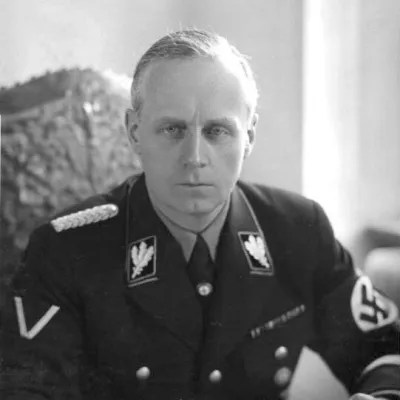
Ribbentrop first came to Adolf Hitler's notice as a well-travelled businessman with more knowledge of the outside world than most senior Nazis and as a perceived authority on foreign affairs. He offered his house Schloss Fuschl for the secret meetings in January 1933 that resulted in Hitler's appointment as Chancellor of Germany. He became a close confidant of Hitler, to the dismay of some party members, who thought him unintelligent, superficial and lacking in talent. He was appointed ambassador to the Court of St James's, the royal court of the United Kingdom, in 1936 and then Foreign Minister of Germany in February 1938.
Before World War II, he played a key role in brokering the Pact of Steel (an alliance with Fascist Italy) and the Molotov–Ribbentrop Pact (the Nazi–Soviet non-aggression pact). He favoured retaining good relations with the Soviets, opposing the invasion of the Soviet Union. In late 1941, due to American aid to Britain and the increasingly frequent "incidents" in the North Atlantic between U-boats and American warships guarding convoys to Britain, Ribbentrop worked for the failure of the Japanese-American talks in Washington and for Japan to attack the United States.
Joachim von Ribbentrop as a Manifesting Generator 3/5 in Human Design
Manifesting Generator 3/5 — Design at a Glance
Joachim von Ribbentrop's Human Design profile indicated a tendency towards rapid and hybrid energy application. As an Manifestor Generator, he had constant sacral energy, providing him with a steady foundation for his actions. However, he also possessed the ability to skip initiation steps and quickly draw things into his life. This speed was double-edged: it allowed for rapid progress but sometimes led to overlooking important intermediate steps. In such cases, Joachim von Ribbentrop often had to backtrack and make up for missing pieces, which could quickly lead to frustration – the central non-self theme of this type. Additionally, he tended to tackle multiple things at once as he responded to many different impulses. Without clear inner consent, this parallel activity could swiftly turn initial creative enthusiasm into exhaustion. Joachim von Ribbentrop's strategy was not to initiate himself but to react to life and only proceed when his sacral center gave a clear "yes". Regular checks to see if ongoing projects still had inner approval were crucial. When applied correctly, Joachim von Ribbentrop derived deep satisfaction from his work. Then, variety was no obstacle but rather enhanced his strength. He fell into a productive play mode where parallel working was not a burden but a source of energy and fulfillment.
Sacral Authority
Joachim von Ribbentrop lived as a Generator, with his inner authority in the defined Sacral Center. This configuration greatly simplified his decision-making process, since strategy and authority were identical: reacting to external stimuli rather than active action or planning. His leadership did not show through rational analysis but through an immediate physical response – what is called the "gut feeling." This manifested as a surge of energy, vitality, or audible sounds like grunting or humming when his system responded to an impulse. When he felt this confirmation, Joachim von Ribbentrop had inexhaustible energy and completed his tasks with great enthusiasm, entirely without aimlessness. The prerequisite for this clear sacral leadership was his open Emotional Center, ensuring that decisions were not distorted by passing moods. Additionally, an activated Spleen Center acted as a supporting authority, giving him the ability to react particularly quickly and spontaneously, as well as reliable access to instinctive perception of his physical wellbeing. Joachim von Ribbentrop thus followed these immediate, physical signals, which showed him where he could immerse himself with joy and satisfaction.
The 3/5 Profile — Martyr / Heretic
Joachim von Ribbentrop revealed himself as someone who learned through personal experimentation and later presented these practical experiences to others as solution proposals. His design was marked by Profile 3/5, the pattern of the experimenter and hero. Line 3 drove him to question preconceived beliefs; he initially believed nothing but had to experience everything firsthand, often through trial and error. This created a rich trove of practical knowledge that he used following Line 5 to solve other people's problems or expose false knowers. This combination made him attractive to others who wanted to learn from his experiences and flattered his hero instinct. However, this urge to experiment in public could be painful when experiments failed. The mechanics of the third line in Gate 24 emphasized a tendency towards regression and irrational knowledge use to attract attention. At the same time, Line 5 in Gate 19 demanded readiness to sacrifice during crises. Ribbentrop tended to offer himself for greater goals, sometimes with a certain condescension or lack of sensitivity when Jupiter acted. His actions were thus a mix of his own risky experimenting and the role of the rescuer who stood out through personal engagement—or by exposing irrationalities—during crises. This dynamic shaped his interactions: he sought validation through the success of his experiments and recognition for his sacrifices, but always lived with the risk of public failure.
Single Definition — Defined & Open Centers
Joachim von Ribbentrop was characterized by a reliable expression and a strong will. His defined Throat Center gave his voice consistency; he communicated clearly, often driven by the energy of his also defined Heart Center. This created an 'I' consciousness that made claims: 'I want this, I have this.' His actions were marked by this ego-centric willpower, which allowed him to make promises and control resources.
Additionally, he had defined centers for vital energy (Sacral), intuition (Spleen) and stress management (Root). This combination created a person with high endurance and an instinctive sense of survival who could effectively channel the pressure of the material world.
In contrast, his Head, Ajna, and G Centers were open. Joachim von Ribbentrop tended to absorb mental inspirations from the environment without anchoring them as personal truth. He sought answers externally to resolve internal confusion or doubt. His open G Center meant he did not have a fixed, unchanging identity but adapted to the energy of his surroundings and those with whom he interacted. This made him susceptible to adopting 'borrowed' directions rather than acting from a stable inner core. The tension between his strong, will-driven expression and the flexibility of his open mental as well as identity-related centers shaped how he presented himself in the world: external determination combined with internal adaptability to environmental influences.
Channels for willpower, change, intuition and care.
Joachim von Ribbentrop was characterized by a fundamental attitude based on evolutionary change. The Mutation Channel 60-3 connected the Root Center with the Sacral Center and generated a pulsating rhythm of limitation (Gate 60) and order-establishment (Gate 3). This energy worked unpredictably; it required accepting limitations to move beyond the confusion of new beginnings. The associated melancholy was not a lack but a mechanical state in which new possibilities developed underground before suddenly emerging as innovation.
Simultaneously, Joachim von Ribbentrop possessed an intuitive depth that he could channel through technical precision. The Wave Channel 48-16 connected the Spleen Center with the Throat Center. Gate of Depth (48) sought vital information while Gate of Skillfulness (16) perfected it through repetition. This created a talent based on the fusion of inner intelligence and outer control. It was a process where intuitive insights were translated into communicable forms, often within a master-apprentice dynamic that required resources and recognition to flourish.
In material interaction, there was a strong will energy. The Money Line Channel 21-45 connected the Heart Center with the Throat Center. Here, the hunter's drive for control (Gate 21) met the authoritative voice of the gatherer (Gate 45). This configuration aimed to take responsibility for resources and master hierarchical structures, where the balance between self-interest and service to the tribe was crucial.
Furthermore, there was a need for preservation and care. The Preservation Channel 27-50 connected the Sacral Center with the Spleen Center. Through Gate of Care (27) and Gate of Values (50), a mechanism emerged aimed at protecting the tribe through traditional laws and selfless support. This created an aura of trust, but it required others to ask for help before energy was given to avoid overload.
Individual Gates like 24 (mental mutation), 19 (resources/territory) and 33 (reflection) reinforced these patterns through processes of renewal, retreat, and vigilance (Gate 44).
Tribal Circuitry — Circuit Signature
Joachim von Ribbentrop's design tended towards structured, strategic communication. As a person with simple definition, his Sacral, Root, Spleen, Throat, and Heart Centers formed a cohesive energetic flow. This created an integrated system of life force, instinct, expression, and willpower.
The Knowledge Circuit worked through the Mutation Channel between Sacral and Root Center. It promoted the ability to generate new knowledge by deviating from the existing and carry it into the world with pulsating energy. Parallel to this, the Understanding Circuit via Wave Channel connected Throat and Spleen Centers. This enabled strategic and focused sharing of logical insights free from emotional influence to communicate future-oriented solutions.
In the Ego Circuit, the Money Line linked Heart and Throat Centers. Here it was about co-creating material resources through clear agreements on giving and taking. Finally, the Protector Circuit with the Preservation Channel connected Sacral and Spleen Centers. This configuration emphasized instinctive protection, preservation, and care for one's environment as a primal necessity. All these circuits worked in Joachim von Ribbentrop not isolated but as parts of a single defined system where strategic reason, resource-oriented cooperation, and instinctive protection intersected.
Right Angle Cross of the Four Ways 1
Joachim von Ribbentrops Human-Design legt eine Tendenz auf zu einer spezifischen viergliedrigen Struktur, bekannt als das „rechte Kreuz der vier Wege“. Diese Konfiguration prägt seine innere Ausrichtung durch ein tiefes Bedürfnis nach Klarheit und Ordnung in komplexen Zusammenhängen. Im Human-Design beschreibt dieses Muster eine Energie, die darauf abzielt, verschiedene Perspektiven oder Lebensbereiche zu integrieren und sie in einem kohärenten Ganzen zu vereinen. Für Joachim von Ribbentrop zeigte sich dies als ein starker Drang, scheinbar widersprüchliche Elemente unter einen gemeinsamen Nenner zu bringen, wobei er stets nach einer logischen, durchgängigen Linie suchte.
Die Mechanik dieses Kreuzes wirkt wie ein Filter, der chaotische Informationen sortiert und in eine strukturierte Form bringt. Es geht hier nicht um spontane Kreativität oder emotionale Intuition, sondern um die Fähigkeit, Fakten und Gegebenheiten so anzuordnen, dass sie ein stimmiges Bild ergeben. Joachim von Ribbentrop lebte mit dieser inneren Architektur, die ihn dazu veranlasste, immer wieder nach dem „großen Plan“ zu suchen, in den alles passte. Diese Struktur schuf bei ihm eine gewisse Starrheit gegenüber Unordnung oder Ambivalenz; was nicht in das etablierte Schema passte, wurde oft abgelehnt oder ignoriert. Sein Fokus lag darauf, die Welt durch diese vier definierten Wege zu begreifen und zu gestalten, wodurch er sich von jeglicher Form von Willkür distanzierte. Diese Eigenschaft bestimmte maßgeblich seine Art, Entscheidungen zu treffen und Beziehungen zu führen, stets mit dem Ziel, eine klare, zweifelsfreie Ordnung herzustellen.
Saturn Return · Uranus Opposition · Chiron Return — Life Cycles
Joachim von Ribbentrops Design zeichnete sich durch Phasen tiefgreifender Strukturierung und plötzlicher, radikaler Umbrüche aus, die sein Handeln maßgeblich prägten. Diese Dynamik wurde durch spezifische astronomische Zyklen in seinem Chart ausgelöst, welche seine Lebensentscheidungen zu bestimmten Zeitpunkten kanalisieren.
Der erste Saturn-Return markierte 1920, im Alter von 27 Jahren, einen Wendepunkt hin zur Stabilisierung. In diesem Jahr heiratete Joachim Ribbentrop Anna Elisabeth Henkell. Dieser Zyklus förderte die Notwendigkeit, Fundamente zu legen und Verbindungen auf Dauerhaftigkeit auszurichten, was sich in der Eheschließung konkretisierte.
Später wirkte der Druck der Uranus-Opposition, ein Zeitraum des intensiven Wandels und der Loslösung von alten Strukturen. 1932, mit 39 Jahren, trat Joachim Ribbentrop der NSDAP bei. Dieser Schritt entsprach dem typischen Muster dieses Zyklus: eine schnelle, oft radikale Neuausrichtung der beruflichen oder politischen Identität, getrieben durch das Bedürfnis nach Veränderung und neuen Perspektiven.
Der Chiron-Return schließlich brachte die Phase der Erfüllung und des Höhepunkts. 1941, im Alter von 48 Jahren, unterzeichnete Ribbentrop eine Grundsatzvereinbarung mit Himmler am 8. August. Dieser Zyklus ist gekennzeichnet durch die Verwirklichung des eigenen Zwecks; hier zeigte sich seine Rolle in ihrer vollen Tragweite und Verbindlichkeit, als sein Einfluss und seine Entscheidungen ihre maximale Wirkung entfalteten. Diese Abfolge verdeutlichte, wie seine innere Mechanik äußere Meilensteine formte: von der Gründung über den radikalen Bruch bis hin zur endgültigen Festigung seiner Position.
Manifesting Generator · Sacral Authority — Synthesis
Joachim von Ribbentrop lebte ein Leben, das durch eine dynamische Wechselwirkung zwischen Initiative und Reaktion geprägt war. Als Manifestierender Generator besaß er die Fähigkeit, Dinge schnell anzustoßen (durch die Verbindung des Sakralen Zentrums zum Throat Center), doch sein Design erforderte primär das Antworten auf innere Impulse – eine sakrale Autorität, die sich in körperlichen Reaktionen zeigte. Dieses Zusammenspiel von potenzieller Schnelligkeit und der Notwendigkeit, auf den Moment zu warten, bildete einen roten Faden durch seine Entscheidungen, wobei ein Überspringen von Schritten (Kanal Mutation 3-60) immer wieder eine Rolle spielte. Sein Profil als Experimentierer/Held und Retter verstärkte diesen Drang, Erfahrungen zu sammeln und diese dann anderen zugänglich zu machen – ein Muster, das sich in der Bereitschaft zeigte, neue Wege zu gehen, aber auch die Notwendigkeit, aus Fehlern zu lernen.
Ein zentrales Paradox lag in der Spannung zwischen dem Wunsch nach Ausdruck und Transformation (Wissens-Schaltkreis) und den Bedingungen seiner Autorität. Obwohl er über die Energie verfügte, um Dinge anzustoßen, war sein authentischer Weg auf das Reagieren auf äußere Impulse angewiesen. Dies führte zu einer inneren Dynamik, in der das Bedürfnis nach Initiierung mit der Notwendigkeit übereinstimmte, sich dem Fluss des Lebens anzuvertrauen und die eigenen Erfahrungen durch Experimente (Linie 3) zu validieren, bevor er als Held agierte (Linie 5). Belegte Ereignisse zeigten, wie diese Spannung in bestimmten Phasen seines Lebens zum Tragen kam.
4 Defined Channels
Incarnation Cross - Right Angle Cross of the Four Ways 1
Solar Return
The Solar Return shows the moment when the sun returns to its exact birth position - your personal solar year.
Life Cycles
Discover the life cycles with a detailed triple view (birth chart, cycle chart, composite).
Human Design Profile
- Strategy
- To respond - wait for something to respond to
- Authority
- Sacral Authority
- Profile
- 3/5 - Martyr / Heretic
- Definition
- Single Definition
- Incarnation Cross
- Right Angle Cross of the Four Ways 1
- Date of Birth
- 30.04.1893 02:45
- Place of Birth
- Wesel, Germany
Frequently Asked Questions
What was Joachim von Ribbentrop's Human Design type?
What Profile did Joachim von Ribbentrop have in Human Design?
What Authority did Joachim von Ribbentrop have?
Which incarnation cross was active for Joachim von Ribbentrop?
When was Joachim von Ribbentrop born?
Discover your own Human Design
Are you also a Manifesting Generator? Find out in a personal reading how to unfold your multi-talents and direct your energy wisely.
More Personalities
Back to overviewAldair

Alizée

Angeli

Arletty

Artus

Balthus