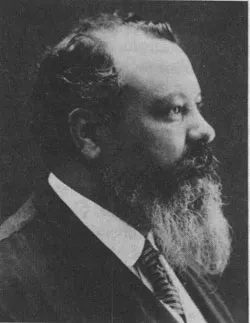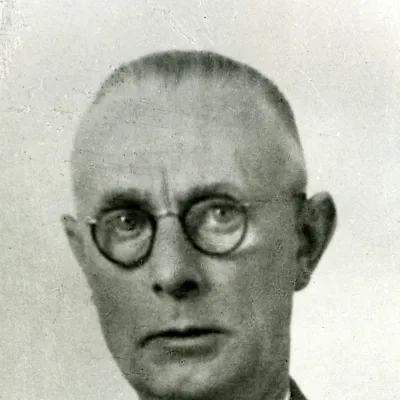
Johannes Kleiman
Human Design Chart
Biography
Kleiman met Otto Frank in 1923, when he was trying to establish a branch of the Michael Frank Bank in Amsterdam. Kleiman was registered as a proxy for the bank in May 1924 and given full powers in December of that year when the bank went into liquidation. He was hired by Frank as a bookkeeper for Opekta and Pectacon in 1938, but had become a close friend from about 1933, when the Frank family fled to the Netherlands to escape Nazi persecution in Germany.
Johannes Kleiman became a member of the board of Opekta and the company was established at his home address for the next five months until it moved to Prinsengracht 263 at the end of 1940. He officially joined as bookkeeper for both Opekta and Pectacon, with Victor Kugler and secretary Bep Voskuijl for Pectacon, and Otto Frank and his secretary Miep Gies for Opekta.
In August 1944, Kleiman was arrested with Victor Kugler during the Gestapo raid that arrested the Frank family and four other concealed Jews in the premises on the Prinsengracht. After interrogation at Gestapo headquarters, he and Kugler were transferred to a prison on the Amstelveenseweg for Jews and political prisoners awaiting deportation. Kleiman was imprisoned in the Amersfoort labour camp before he was released by special dispensation of the Red Cross because of his ill health. In all, he was a prisoner of the Nazis for about six weeks.
After the publication of Anne Frank's diary, which detailed her two years in hiding, Kleiman regularly took journalists and visitors around the former hiding place, which had been vacated in the early 1950s.
The Human Design of Johannes Kleiman: Manifestor 1/3
Manifestor 1/3 — Design at a Glance
Johannes Kleiman revealed himself as a pioneer and visionary whose design was destined to lead the world actively into new directions. His Human Design type is that of a Manifestor, often compared to the role of an emperor in ancient Rome: He possessed the great vision for the empire but did not wage wars himself; instead, he sent others out to conquer lands on his behalf. This structure led Johannes Kleiman to polarize; he was misunderstood because his thinking often exceeded that of those around him. Some people loved and followed him due to these grand visions, while others hated or rejected him for the same reason. To find the right followers, it was crucial for him to inform others in a timely and precise manner about his plans. This strategy of informing before acting formed the core of his optimal way of living. When he lived according to this principle and followed his inner authority, his system rewarded him with an internal sense of peace. If he deviated from this path or acted against his design, however, he felt a persistent, deep-seated anger instead. His life was thus characterized by the tension between the necessity to communicate his visions and the resulting reaction from the outside world, which either showed approval or rejection.
Emotional Authority
Johannes Kleiman exhibited an inner decision-making structure that was marked by profound emotional waves. His authority lay in his defined Emotional Center; this position always took precedence over all other defined centers in his design, regardless of any additional mechanisms at play. He was subject to a constant up and down of emotions that colored his perception of the world significantly. What excited him one moment could appear negative the next. The immediate feeling he experienced was only a snapshot, not a final judgment. Quick, spontaneous decisions from this emotional heat often proved detrimental for him as they did not reflect his deeper truth.
The mechanics of his emotional authority required patience and time. Johannes Kleiman had to let decisions mature in order to reach comprehensive understanding. This meant consciously delaying them and sleeping on them multiple times. Through this delay, the intense feelings subsided, allowing him to gain emotional distance. Only then did clarity and calmness set in – a sign that he had completed his inner process. This strategy was particularly crucial for long-term life decisions as they heavily influenced his further path. Without this waiting period, he risked confusing superficial moods with his true direction.
The 1/3 Profile — Investigator / Martyr
Johannes Kleiman showed himself to be someone who not only collected knowledge theoretically but also validated it through personal, practical experimentation. His Human Design Profile 1/3 marked him as both a researcher and an experimenter: The first line prompted him to study fundamentals and build a solid foundation, while the third line encouraged action and trial-and-error. This interplay meant that his life was shaped by trial and error. He learned from mistakes and thus gained authority; his judgments were trustworthy because they had been tested both theoretically and practically.
Sometimes he tended to overemphasize planning, driven by a feeling of not knowing enough yet. This conflicted with his inner need for experience. The mechanics of his Line 1 required time and endurance to gather experiences, while Line 3 demanded adaptability through direct practice. Thus, he moved between the recruit who took on commitments and endured them, and the experimenter who learned from mistakes. His design promoted a stance where self-earned insights held the highest value, as they emerged from a combination of discipline and lived experience.
Single Definition — Defined & Open Centers
Johannes Kleiman was characterized by a defined G Center, which gave him a firm inner identity and a clear sense of personal direction. He had the ability to act from this reliable self-love without being dependent on others. His defined Solar Plexus served as an emotional authority; he needed time to go through his wave of feelings before making decisions, since truth revealed itself over time. This combination created deep emotional sensitivity and a stable core.
His defined Throat Center allowed him to clearly and consistently convey these inner states into the world. His voice was a direct expression of his identity and emotions, which made his communication authentic and honest. However, he lacked the constant motoric impulses of the Root or Sacral Centers for spontaneous action; his actions followed more an internal logic than external pressure.
In contrast, Johannes Kleiman was open in several areas and thus susceptible to conditioning. His open Head Center often left him flooded by foreign inspiration or mental confusion without identifying these thoughts as his own truth. The open Ajna Center allowed him flexibility in thinking but led to the adoption of other people's concepts without always clearly distinguishing them from his own convictions.
Especially defining were his open Heart and Sacral Centers. He tended to want to prove his worth through performance or promises, which could lead him into spirals of self-doubt if he couldn't keep these commitments. Additionally, he absorbed the vital energy of his environment, leading to overexertion since he lacked a constant, steady source for generative power. His open Spleen Center made him sensitive to health and well-being but also left him vulnerable to fears when not relying on his inner authority. Finally, he took on the stress of his surroundings through his open Root Center, which could lead to internal unrest if he didn't recognize this pressure as external and release it.
Channels for inspiring presence and emotional transformation.
Johannes Kleiman inspired others to discover their unique qualities simply by being himself and living authentically. This effect stems from Channel of Inspiration 1-8, connecting the G Center with the Throat Center. He lived not just an idea but embodied it; his contribution to the world was radiating as an individual and thereby drawing attention to himself. This required courage to stand out without primarily using words or explanations as tools. Instead, it was his exemplary attitude that awakened new perspectives in others – similar to how a musician inspires listeners through their performance to make music themselves.
Parallel to this, he was driven by a deep emotional longing for new experiences. Channel of Transience 35-36 connected his Solar Plexus Center with the Throat Center and made him an emotional explorer of life. He actively sought adventures to explore the depth of his feelings and gain wisdom through direct experience. Aware of the impermanence of all things, his journey was about fully tasting life and later passing on these gained insights as advice to others. His interactions were marked by a drive to share experiences completely, even if this sometimes led to instability since he always followed the next emotional wave.
Additionally, Gate 14 shaped his ability to handle power and resources with grace. It gave him pulsating energy for direction-finding and self-control. Gate 29 in the Sacral Center emphasized his persistence: He said yes to life when it was right and endured challenges with the certainty that reward is inevitable. Gate 30 helped him see through illusions of great expectations and accept limitations as fate. While Gate 20 anchored him in the present moment and highlighted his authentic self, Gate 62 provided logical clarity and pattern recognition in detail. Gate 31 allowed him to transfer his strength onto others, and Gate 45 gathered these energies on a tribal level, making his appeal beneficially affect his surroundings.
Individual Circuitry — Circuit Signature
Johannes Kleiman was characterized by a design that combined emotional depth with the drive to carry this inner truth outward. His simple definition extended over a coherent energetic chain: From the Solar Plexus Center, the source of his emotional waves and cyclical moods, energy flowed directly into the Throat Center, the place of expression, and further to the Identity Center. This connection created a natural flow where felt experiences did not remain internal but were verbally formulated and became confirmation of his individuality.
Within this framework, two specific circuits worked. The Knowledge Circuit was active through the Channel of Inspiration in him. This channel connected the Throat Center with the Identity Center and promoted creative impulses often arising from moments of letting go or sudden inspiration. It was about confirming one's uniqueness through acoustic and pulsating energy without new revolutionary ideas (as other channels of this circuit would provide) taking center stage.
Parallel to this, the Meaning Circuit worked through the Channel of Transience. This channel also connected the Throat Center with the Solar Plexus. Here reflection on past experiences was central. Johannes Kleiman used this channel to process emotional waves from the past and share these insights with others. The energy was cyclical and visually marked, tending to diminish over time, serving the process of letting go and learning together from history. Both circuits utilized the Throat Center as a central node to transform inner emotional processes into external expression.
Right Angle Cross of Contagion 3
Johannes Kleimans design carried the signature of the right cross of infection. This configuration deeply influenced a tendency to unconsciously immerse oneself in the problems and struggles of others until they became personal burdens. It was not superficial sympathy but rather a mechanical process of identification: Johannes Kleiman had a tendency to 'infect' himself with the emotional or existential crises of his surroundings by internalizing their pain and making it the starting point for his own actions.
This pattern worked like a mirror that absorbed foreign suffering and transformed it into personal motivation. The boundary between self and other often blurred; what was initially intended as support quickly turned into personal obsession. For Johannes Kleiman, this meant that his path was often shaped by the necessity to resolve these adopted conflicts – not just for others but also to free himself from emotional burden. The mechanics of this cross described a life dynamic in which understanding foreign struggles became central motivation, with the risk of losing one's own compass in the labyrinth of other people's problems. Johannes Kleiman lived this dynamic as an ongoing challenge, navigating between empathic connection and preserving his identity, driven by the power that lay in overcoming crises together.
Saturn Return · Uranus Opposition · Chiron Return · 2nd Saturn Return — Life Cycles
Johannes Kleimans design showed a tendency towards structural anchoring, which intensified particularly around his first Saturn return. This cycle marks a transition from experimental phases to serious engagement with long-term commitments and positioning oneself in the world in Human Design. For Kleiman, this development concretely began in 1923 when he met Otto Frank at age 27 and took over the representation of Michael Frank Bank in Amsterdam.
This career step was no random event but aligned with the energetic quality of the first Saturn return: The accumulated experiences and skills were now consolidated into a solid foundation. Taking on this responsibility signaled maturity, where internal structure stabilized externally. Instead of continuing to explore various options, Kleiman chose a path of continuity and reliability. The Saturn return here acts as a catalyst that translates latent potentials into visible, socially recognized roles. Through this positioning, he found his firm place within a larger economic framework, which was formative for his further life development. This mechanism shows how astrological cycles can favor concrete career turning points when aligned with individual strategy.
Manifestor · Emotional Authority — Synthesis
Johannes Kleiman was a Manifestor whose life was marked by a profound drive towards innovation and the desire to initiate new things. His design showed a combination of pioneering spirit and the ability to move others through inspiration (Channel 1-8) – an energy that propelled him to forge his own path and transform knowledge (Knowledge Circuit). The defined Throat indicated he communicated his visions powerfully, always from an inner source. The Profile of Researcher/Experimentor underscored this process of continuous exploration and verification, enabling him to gain insights with certainty.
Central to his essence was a paradox: emotional authority required time for decision maturation, while the Manifestor type tends towards immediate action. This tension between the need for emotional clarity and natural impulse to initiate things created dynamic interaction. Thus, he designed visions (as in Saturn Return marking the start of a new career phase), but only brought them into the world after careful examination and emotional consideration.
2 Defined Channels
Incarnation Cross - Right Angle Cross of Contagion 3
Solar Return
The Solar Return shows the moment when the sun returns to its exact birth position - your personal solar year.
Life Cycles
Discover the life cycles with a detailed triple view (birth chart, cycle chart, composite).
Human Design Profile
- Type
- Manifestor
- Strategy
- To inform others before acting
- Authority
- Emotional Authority
- Profile
- 1/3 - Investigator / Martyr
- Definition
- Single Definition
- Incarnation Cross
- Right Angle Cross of Contagion 3
- Date of Birth
- 17.08.1896 19:30
- Place of Birth
- Koog aan de Zaan, Netherlands
Frequently Asked Questions
What was Johannes Kleiman's Human Design type?
Which Profile did Johannes Kleiman have?
What authority did Johannes Kleiman possess?
What incarnation cross did Johannes Kleiman have?
When was Johannes Kleiman born?
Discover your own Human Design
Are you also a Manifestor? Find out in a personal reading how to use your initiation power peacefully and dissolve resistance.
More Personalities
Back to overviewChristian-Jaque

Kesha

Lucebert

Marilyn

Masaccio

Papus