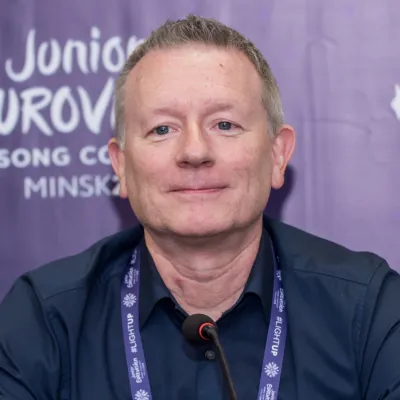
Jon Ola Sand
Human Design Chart
Biography
Jon Ola Sand as a Manifesting Generator 1/3 in Human Design
Manifesting Generator 1/3 — Design at a Glance
Jon Ola Sands' Human Design shows a tendency towards hybrid dynamics: constant inner energy paired with the ability to skip steps and achieve results quickly. As an Manifesting Generator, he had defined sacral power, implying the same basic advice for Generators - react to impulses rather than initiate on his own. However, unlike a pure Generator, he could break through barriers faster by connecting Motor Centers to Throat.
This speed carried specific risks. His design tended to skip important processes or handle multiple projects simultaneously. Without internal confirmation, this acceleration often led to frustration – the non-self of this type – as what was skipped had to be caught up later.
The mechanics of his design promoted deep satisfaction only under one condition: the 'Play Mode'. When he responded to life impulses and his sacral center along with his inner authority gave a clear 'yes', parallel work wasn't a source of stress but joy. The strategy involved regularly checking if the current activity was still enjoyable. Only then did his immense creative power become beneficial rather than frustrating. His design allowed him to be efficient as long as he didn’t work against his own rhythm and sought the variety that kept him alive.
Emotional Authority
Jon Ola Sands' inner authority lies in his defined Solar Plexus Center, shaping an emotional decision-making process. This configuration is subject to a wave motion of feelings: perception is always colored by the current mood, with enthusiasm and rejection often being temporary states. Impulsive action based on this momentary intensity risks misjudgment as the feeling in the first moment does not yet represent final truth.
The mechanics here demand time. Decisions must mature ideally over several nights. Only when the initial emotional wave has subsided and a certain distance is established, clarity and calmness set in. This process of delay serves to distinguish between temporary moods and deeper insight, which is particularly crucial for long-term, life-defining steps.
As inner authority, the Solar Plexus Center takes precedence over all other defined centers in Jon Ola Sands' design. Regardless of any other strategies or energies present, emotional clarity must always be achieved first. Only when this emotional wave has been run through and calmed is the path open for an authentic decision. This requires patience and conscious allowance of hesitation to ensure that actions do not arise from a temporary emotional peak.
The 1/3 Profile — Investigator / Martyr
Jon Ola Sand exhibited a fundamental attitude of intense learning through direct action. His design suggested he did not merely collect knowledge theoretically but only considered it valid when practically tested. This Profile 1/3 combined the curiosity of the Researcher with the necessity of the Experimenter. Often, he faced an internal tension between wanting full preparation and the urge to simply start.
Line 1 promoted a stance of humility and adaptability. It signaled him to accept his place in structures and not be overbearing. Attempts from outside to correct this natural behavior often triggered hypersensitivity. At the same time, Line 3 introduced a process of trial and error. Here it was about learning from mistakes and making decisions within the flow of experience.
When Jon Ola Sand made an assessment or decision, he based it on double verification: theoretical understanding and practical validation. Others could trust his judgment because he had integrated both perspectives. The challenge lay in not falling into the trap of projecting possible futures as present reality, which would hinder the necessary learning process. Instead, it was about surrendering to the imperfect but authentic process of self-discovery through experience.
Triple Split Definition — Defined & Open Centers
Jon Ola Sand revealed a design characterized by immense inner stability and direct presence. His defined centers – G Center, Heart, Sacral, Solar Plexus, Spleen, and Root – formed a rare configuration full of energy and clarity. The defined G Center endowed him with a firm sense of self-identity and a clear direction for his life path; he intuitively knew where he belonged without constantly questioning it. This inner security allowed him to attract others without being dependent on their validation.
Parallel to this, the defined Heart Center provided him with a constant source of willpower and resources. He could make promises and keep them, building trust in his environment. This determination was reinforced by the vital energy of the defined Sacral Center: His strategy involved waiting and responding correctly to offers rather than impulsively initiating action. Once he felt an affirmative response, he could carry out his work with persistence and satisfaction.
Emotionally, Jon Ola Sand had a defined Solar Plexus Center that served as his inner authority. He learned to wait for emotional clarity before making important decisions, giving depth and authenticity to his judgments. Additionally, the defined Spleen Center provided spontaneous intuitive security in the present moment, while the defined Root Center ensured a healthy handling of stress and pressure, propelling him forward without overwhelming him.
In contrast, his Head and Ajna Centers were open. This did not mean he was intellectually weak but rather that he did not carry constant mental inspiration or conceptual answers within himself. Instead, he tended to pick up thoughts from the environment. The trap lay in identifying foreign questions or confusion as his own and feeling pressured to provide immediate answers. His strength, however, lay in letting go of this mental noise and instead trusting his deep physical authority from G Center, Heart, and Sacral, which always provided reliable orientation.
Channels for synthesis, devotion, discovery and impermanence.
Jon Ola Sand was marked by a profound sensitivity for belonging and tribal dynamics. The Synthesis Channel 19-49 connected his Root Center with the Solar Plexus, giving him an instinctive drive to hold groups together through shared values and emotional loyalty. This created a basis of trust that was steered by waves of emotional acceptance or rejection.
Simultaneously, the Devotion Channel 44-26 between Spleen and Heart influenced his approach. This connection gave him a sharp sense for what would benefit the tribe, coupled with the ability to sell or promote ideas convincingly. He could intuitively recognize which offers or strategies appealed to the market and used this insight to mobilize resources effectively.
In terms of life energy, the Discovery Channel 29-46 between Sacral and G Center shaped his approach to projects. Through a clear yes-saying and persistent adherence to a path, even if initially nonsensical, he achieved long-term successes that often only revealed their full significance at the end of the process.
Additionally, the Transience Channel 35-36 between Solar Plexus and Throat propelled him towards seeking new experiences. This channel fostered restless curiosity, driving him to explore boundaries and gain wisdom through emotional intensity, which he then shared with others.
Individual Gates like Gate 10 (Complexity/Integration) and Gate 25 (Innocence/Mysticism) supported these dynamics through a deep capacity for centering, while Gates such as 30 (Fate/Experience) and 50 (Tradition/Values) shaped his stance towards aging and preservation.
Tribal Circuitry — Circuit Signature
Jon Ola Sand was marked by two distinct energetic focal points. The Meaning-Making Circuit connected his Throat with the Solar Plexus Center and Identity with the Sacral Center – each as independent groups, not merged together. This created a cyclical emotional wave: feelings and past experiences were processed to make insights visually and emotionally shareable for the collective. Energy followed a wave pattern of beginning, middle, and end, driven by the Transience and Discovery Channels.
Parallel to this, the Ego Circuit functioned as part of tribal dynamics. Here he connected Heart with Spleen and Solar Plexus with Root Center – also as two isolated segments. This area focused on cooperation, the joint creation of resources, and a balanced give-and-take relationship. As there was no connection to Sacral Center, regular rest was essential to regenerate the necessary energy for the tribe. The Devotion and Synthesis Channels supported this traditional, exploratory approach to cohesion.
As a three-defined individual, these three groups – Head/Ajna/Identity/Sacral (here separate), Heart/Spleen, and Root/Solar Plexus/Throat (here separate) – existed as parallel adjacent forces. They formed no continuous flow but autonomous energetic islands that offered Jon Ola Sand different perspectives on the past, emotional processing, and tribal cooperation without directly linking these areas.
Right Angle Cross of the Vessel of Love 4
Jon Ola Sands Human-Design legte eine Tendenz zu tiefgründiger, oft stiller Hingabe an zwischenmenschliche Bindungen fest. Sein Charakter zeigte sich geprägt von einem inneren Kompass, der nach echter Verbundenheit und dem Gefühl des Gehaltenseins suchte, weniger nach äußerem Glanz oder oberflächlicher Anerkennung. Diese Ausrichtung entspringt der Konfiguration „Das rechte Kreuz des Gefäßes der Liebe 4“.
In der Human-Design-Mechanik beschreibt dieses Muster eine spezifische Qualität der emotionalen und relationalen Energie. Es handelt sich nicht um ein lautes, dominierendes Bedürfnis nach Aufmerksamkeit, sondern um eine subtile, aber beständige Kraft, die darauf abzielt, tiefe Resonanz in Beziehungen zu schaffen. Die Zahl vier verweist hier auf eine Struktur, die Stabilität und Dauerhaftigkeit sucht; das „Gefäß der Liebe“ symbolisiert dabei den inneren Raum, in dem diese Gefühle gelagert und verarbeitet werden.
Für Jon Ola Sand bedeutete dies, dass seine wichtigste Lebensaufgabe darin bestand, diese innere Kapazität für Zuneigung und Loyalität zu nutzen, um vertrauensvolle Verbindungen aufzubauen. Die Energie wirkt nicht impulsiv oder oberflächlich, sondern entwickelt ihre Wirkung durch Beständigkeit und eine stille, aber spürbare Präsenz in der Nähe anderer Menschen. Es ist ein Design, das lernt, dass wahre Liebe oft im Hintergrund wirkt, indem sie Halt bietet und Raum für echtes Miteinander schafft, ohne dabei die eigene Identität aufzulösen. Diese Konfiguration fordert dazu auf, die eigenen emotionalen Ressourcen bewusst zu pflegen, um sie authentisch teilen zu können.
Saturn Return · Uranus Opposition · Chiron Return · 2nd Saturn Return — Life Cycles
Jon Ola Sands Human-Design legte eine Tendenz zu strategischer Strukturierung und langfristiger Verantwortung fest. Diese Konfiguration beschreibt jemanden, der durch klare Rahmenbedingungen und nachhaltige Planung wirkt, wobei das Inkarnationskreuz sich im Chiron-Return-Zyklus (ca. 49–51 Jahre) als Erfüllungsphase entfaltet, sofern Strategie und Autorität gelebt wurden. In dieser Blütezeit wird der innere Sinn erfahrbar und strukturiert sich nach außen ab.
2010, mit 49 Jahren, wurde Jon Ola Sand zum Produktionsleiter des Eurovision Song Contest in Oslo ernannt. Dieser Karriereschritt markierte den Höhepunkt seines Chiron-Returns: Die jahrelange Ausrichtung auf seine Natur kulminierte in einer Position, die genau diese strukturelle Klarheit und Verantwortung erforderte. Es war kein Zufall, sondern die sichtbare Entfaltung seines Designs in einem Moment höchster Wirksamkeit.
Das zweite Saturn-Return (ca. 58 Jahre) bringt oft eine Neubewertung von Lasten und Grenzen mit sich, was zu Krisen oder Rückzugsentscheidungen führen kann. 2019, mit 58 Jahren, kündigte Jon Ola Sand an, nach dem Eurovision Song Contest 2020 in Rotterdam als Supervisor zurückzutreten. Dies entsprach der typischen Dynamik dieses Zyklus: Die Konfrontation mit den Grenzen der eigenen Kapazität führte zu einer bewussten Entscheidung zur Beendigung eines Kapitels, um die Integrität des eigenen Systems zu wahren. Beide Ereignisse zeigen, wie seine Mechanik in Phasen der Bestätigung und der notwendigen Abgrenzung wirkte.
Manifesting Generator · Emotional Authority — Synthesis
Ein zentraler roter Faden zieht sich durch das Design: die dynamische Verbindung von Initiierung und Reaktion. Als Manifestierender Generator (MG) besitzt er die Fähigkeit, Dinge schnell anzustoßen und zu transformieren (Throat Center), ist aber gleichzeitig tief verwurzelt in sakraler Energie, die auf Impulse wartet. Diese Kombination aus scheinbarer Selbstständigkeit und dem Bedarf an äußeren Reizen prägt seinen Ansatz – ein ständiges Pendeln zwischen eigenem Antrieb und der Notwendigkeit, sich einzulassen und zu kooperieren (Synthesis Channel). Das Profil als Forscher/Experimentierer verstärkt diesen Aspekt noch, indem es den Drang nach Prüfung und Verifizierung vor jeder Umsetzung hinzufügt; ein tiefes Bedürfnis, Dinge selbst auszuprobieren, um sie wirklich zu verstehen.
Das zentrale Paradox liegt in der emotionalen Autorität, die eine reifende Welle von Gefühlen erfordert, im Kontrast zur schnellen Energie des Manifestierenden Generators. Während das Design also zum sofortigen Handeln tendiert, fordert die emotionale Welle Geduld und mehrmaliges Überdenken (Perception Circuit). Dies führt zu einer inneren Spannung zwischen dem Wunsch nach zügiger Umsetzung und der Notwendigkeit, Entscheidungen emotional zu verdauen – ein Wechselspiel, das sich in den belegten Ereignissen zeigt, wo sowohl schnelle Karriere-Schritte als auch Phasen des Rückzugs und der Neubewertung erkennbar sind.
4 Defined Channels
Incarnation Cross - Right Angle Cross of the Vessel of Love 4
Solar Return
The Solar Return shows the moment when the sun returns to its exact birth position - your personal solar year.
Life Cycles
Discover the life cycles with a detailed triple view (birth chart, cycle chart, composite).
Human Design Profile
- Strategy
- To respond - wait for something to respond to
- Authority
- Emotional Authority
- Profile
- 1/3 - Investigator / Martyr
- Definition
- Triple Split
- Incarnation Cross
- Right Angle Cross of the Vessel of Love 4
- Date of Birth
- 21.12.1961 01:30
- Place of Birth
- Oslo, NOR
Frequently Asked Questions
What is Jon Ola Sand's Human Design type?
What Profile does Jon Ola Sand have in Human Design?
What authority does Jon Ola Sand have?
What incarnation cross is Jon Ola Sand associated with?
When was Jon Ola Sand born?
Discover your own Human Design
Are you also a Manifesting Generator? Find out in a personal reading how to unfold your multi-talents and direct your energy wisely.
More Personalities
Back to overviewAldair

Alizée

Angeli

Arletty
Artus

Balthus