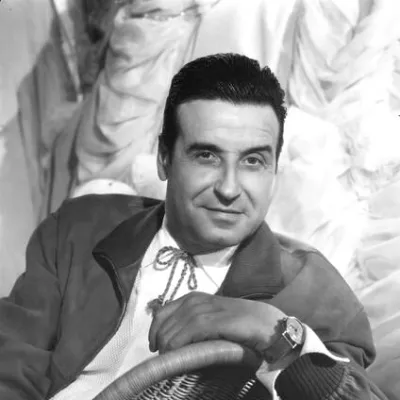
José María Aznar
Human Design Chart
Biography
Aznar was born into a politically active, conservative family in Spain. His grandfather was a friend of dictator General Francisco Franco, and both his father and grandfather held government jobs during Franco’s regime.
In 1975, during Spain’s transition to democracy, Aznar received a law degree from the Complutense University of Madrid, and he subsequently worked as a government tax inspector. He became active in the conservative Popular Alliance, and in 1982 he was elected to the Congress of Deputies, the lower house of the Cortes (legislature). He served as the party’s secretary-general in 1982–87 and was elected its vice president in 1989 and its president in 1991. By the end of the 1980s the party, which by then had changed its name to the Popular Party (PP), had moderated its platform and abandoned much of its Francoist legacy, adopting centre-right positions on most issues. Aznar was active in this transformation, recruiting women and young people to the party.
In April 1995 Aznar was wounded in a car bombing that was attributed to the Basque separatist group ETA. In elections the following year, the PP benefited from the scandals and corruption plaguing the ruling Spanish Socialist Workers’ Party, which had governed the country from 1982. Although the PP failed to win an outright majority, it was able to form a governing coalition with several small regional parties, and Aznar took office as prime minister on 6 March. He appointed a cabinet with a wide range of views and emphasized economic reforms, including a reduction in government expenditures. During the following years there were steady improvements in the economy, though unemployment remained stubbornly high.
Human Design Analysis: José María Aznar as Projector 1/3
Projector 1/3 — Design at a Glance
José María Aznar exhibited a nature that immediately and precisely recognized system errors - like a bright flashlight directed straight onto weaknesses in the dark. This dense, focused aura of the Projector type allows him to identify inefficient structures or incorrect processes in his environment instantly. However, this immediate perception carries a risk: When he addresses these flaws directly and corrects them, he often encounters resistance as others perceive his intense light as an attack.
The more elegant dynamics of his design do not lie in direct intervention but rather in radiating harmony. By José María Aznar himself being a functioning, shining example, he attracts others automatically. People come to him seeking advice because his success and clarity are attractive. The central strategy is therefore waiting for an honest invitation. Through this patience, he avoids unnecessary conflicts and secures the necessary authority to exercise leadership.
Furthermore, his undefined Sacral Center requires a rhythmic approach to energy management. Since he does not have constant intrinsic life force available, José María Aznar must alternate active phases of work with targeted rest periods to prevent burnout. If he lives by this principle - waiting for the invitation and protecting his energy - his path will be rewarded with success. Ignoring these mechanisms and intervening too early inevitably leads to his non-self theme: bitterness over the resistance from his environment.
Emotional Authority
José María Aznars design tended towards thoughtful decision-making: spontaneous impulses were consciously delayed until emotional waves subsided, gaining clarity. This results from his Emotional Authority carried by the defined Solar Plexus Center. In Human Design mechanics, this authority is always effective when this center is colored - regardless of other definitions in the chart. It follows a natural rhythm of highs and lows; current mood colors perception temporarily but isn’t an ultimate truth. Quick reactions to these snapshots risk misjudgments as feelings haven’t matured yet.
The strategy consists of consciously “slumbering” decisions. Through patience and multiple pauses, José María Aznar gains emotional distance. Initial intensity fades, allowing deeper understanding. Only when this calmness sets in does the inner truth lie at the base. This process is particularly crucial for long-term decision-making as it ensures actions aren’t based on fleeting moods but a stable internal foundation. The necessity of this waiting period isn’t an obstacle, but rather the essential mechanism to transition from momentary excitement to clear insight.
The 1/3 Profile — Investigator / Martyr
José María Aznar exhibited a fundamental stance that combined theoretical grounding with practical experimentation. His design suggested he accumulated knowledge not just through theory but by testing it through direct experience and mistakes. This dynamic stemmed from Profile 1/3, the Researcher and Experimenter. Here, Line 1 drives the need for thorough preparation while Line 3 urges action and learning through error.
For José María Aznar, authenticity emerged only through integrating both aspects: A statement or decision was trustworthy only if it had been tested both theoretically and practically. An internal conflict lay in the tension between fear of ignorance - typical for Line 1, which feels insecure when not enough is known - and the necessary courage to act demanded by Line 3.
The energy of Line 1 (Gate 37) emphasized development without polarity and served as a starting point for guideline formation, with harmony in relationships being crucial. Simultaneously, Line 3 (Gate 9) highlighted errors as learning opportunities; small details could bring processes to failure but also required low tolerance for error to ensure future security. Therefore, José María Aznars judgment was considered absolutely trustworthy, based on self-earned and tested insights that had passed both the mind and practice.
Triple Split Definition — Defined & Open Centers
José María Aznar revealed himself as someone with a clear, reliable identity and willpower who acted from this inner security. His design featured defined centers in the Throat, G Center, Heart, Solar Plexus, Spleen, and Root. This configuration created a personality that knew its direction and carried it outward through consistent communication. The connection between Heart and Throat allowed him to articulate his will directly - an 'I want' that was not negotiable. At the same time, the defined Solar Plexus served as emotional authority; he had to wait out the waves of his feelings to gain clarity before deciding. This gave his demeanor a certain depth and thoughtfulness, as he did not react impulsively but trusted in the emotional cycle. The defined Spleen provided intuitive security in the moment while the Root Center supplied a steady pressure to move forward and manage stress.
In contrast, Head, Ajna, and Sacral were open. The open Head and Ajna centers meant mental flexibility: he had no constant inspiration or fixed concepts but was open to new ideas and could take on others' thoughts without clinging to them. This prevented dogmatic thinking while also allowing external influences to shape his strategy. The open Sacral center showed situational energy availability; he did not have a consistent life impulse but took in energy from the environment and worked in bursts. This made him vulnerable to overloading when he amplified others' energy rather than trusting his own authority. Overall, these open centers shaped an adaptability that was nonetheless limited by the strong definition in will and identity: he was flexible in the head but unshakable at his core.
Channels for community, reflection and ambitious transformation.
José María Aznar's design tended towards patient reflection before articulating positions. This stemmed from the Lost Soul Channel 13-33, which combines listening and gathering information (Gate 13) with the need to withdraw to recognize deeper truths (Gate 33). This energy promoted a stance of conscious observation where experiences were shared only when fully ripe.
Parallel to this, his design showed a strong ambition to achieve social recognition and transformation through constant effort. The Channel of Transformation 54-32 drove this process: Gate 54 sought upward mobility and visibility while Gate 32 instinctively scanned the talents of the 'tribe' to ensure that one's value was recognized and supported. This ambition was less individualistic but rather aimed at strengthening his own group or nation, where loyalty had to be reciprocated through concrete results.
However, the primary mode of expression lay in the Channel of Community 37-40, determined by the Sun in Gate 37. Here it was about creating stable bonds through fair agreements and emotional clarity. Aznar sought belonging and recognition within the collective while waiting for a personal invitation or 'touch' before engaging. The willpower of the Heart Center (Gate 40) ensured that these arrangements - whether business or emotional - were understood and secured as mutual benefit ('I do this for you if you do this for me'). This combination of reflective experience, transformative ambition, and contractual community-building shaped his way of operating in the world: not impulsively but through carefully weighed alliances and a will to structural change within a social framework.
Tribal Circuitry — Circuit Signature
José María Aznar's design tended towards cyclical emotional processing paired with a conservative orientation toward cooperative resource building. With his triple definition, three separate energetic groups existed without direct flow between them.
The Meaning-Making Circuit connected his Throat and Identity Center (Channel 33-13). This generated a wave-like movement of emotions from the Solar Plexus that was not directly linked but acted as separate power. The energy served to reflect on past experiences, find meaning in them, and share these insights with the collective. The process unfolded illogically and emotionally, with clear phases of beginning, middle, and end.
Parallel to this, the Ego Circuit worked in two isolated segments: Heart and Solar Plexus Center (Channel 37-40) as well as Spleen and Root Center (Channel 32-54). This configuration promoted cooperation, mutual support, and resource creation within the tribe. As there was no connection to the Sacral center, the energy was timeless and traditionally oriented. This required necessary rest periods for regeneration to maintain strength for communal giving and taking. The Spleen-Root connection supported an intuitive, exploratory orientation.
Together, this structure shaped a person who drew emotional depth from the past to communicate it while simultaneously creating cooperative resources in stable, traditional structures - always interrupted by necessary pauses for recovery of his separate energetic systems.
Right Angle Cross of Planning 1
José María Aznar's Human Design profile emphasized a tendency towards strategic long-term planning and vision. He was someone who possessed the ability to recognize large-scale connections and strategically prepare for long-term goals. This orientation stemmed from the influence of the 'right cross of Planning 1'. In Human Design, this aspect describes an internal structure that is not fixated on short-term reactions but rather focuses on the bigger picture. It's about seeing patterns that are hidden from others and based on this, paving a path into the future. José María Aznar thus had a natural sense of how current developments can be situated within a larger context. This allowed him to make decisions not in isolation but as part of an overarching strategy. The emphasis was on preparation and understanding connections that extend beyond the immediate horizon. Through this configuration, his approach to action was characterized: thoughtful, forward-looking, and oriented towards long-term goals. It wasn't about spontaneous action but rather a careful weighing of possibilities in light of a larger plan. This trait shaped his work sustainably as it helped him maintain an overview in complex situations and develop strategic options for action.
Saturn Return · Uranus Opposition · Chiron Return · 2nd Saturn Return — Life Cycles
José María Aznar emerged during a phase marked by a profound break with the previous life order. His configuration pointed to a necessary realignment triggered by external circumstances that disrupted established rhythms and forced fundamental change. This dynamic is described in Human Design mechanics as an Uranus Opposition: a cyclical turning point where old structures are no longer sustainable and must make way for something new. It's a moment of crisis, but also an opportunity for authentic realignment.
Specifically, this energetic shift came to light in 1995 when José María Aznar, at the age of 42, was injured in a bombing attack. This event marked the concrete point where the theoretical turning point translated into actual experience. The physical injury served as a catalyst for the inner realignment demanded by the Uranus Opposition. Instead of passively enduring it, the system had to recalibrate to cope with the disrupted environment. Pain and unpredictability of the attack forced confrontation with the fragility of previous plans and opened the way for a new strategy in dealing with external threats and internal stability.
Projector · Emotional Authority — Synthesis
José María Aznar seems to be driven by a profound urge towards understanding and transformation. The combination of defined G Center, Heart Center, and Root Center points to a strong inner identity that is always connected with the need to exert influence and achieve material goals - an impulse strengthened by the connection between Gate 54 (Ambition) and Gate 32 (Continuity). He acts as someone who is aware of his direction and pursues it with willpower, constantly seeking ways to secure resources and strengthen the circle of his community.
However, this drive for control and influence stands in tension with emotional depth and the need for reflection that arises from the defined Solar Plexus Center and Channel 37-40 (Community). Aznar seems to oscillate between a desire to push things forward and achieve results and the necessity to take time for emotional processes and nurture relationships. The experience of a traumatic event at age 42 (injured in a bombing attack) could have intensified this inner conflict - a moment of crisis that underscored the need for transformation and adaptation.
3 Defined Channels
Incarnation Cross - Right Angle Cross of Planning 1
Solar Return
The Solar Return shows the moment when the sun returns to its exact birth position - your personal solar year.
Life Cycles
Discover the life cycles with a detailed triple view (birth chart, cycle chart, composite).
Human Design Profile
- Type
- Projector
- Strategy
- Wait for the respectful invitation
- Authority
- Emotional Authority
- Profile
- 1/3 - Investigator / Martyr
- Definition
- Triple Split
- Incarnation Cross
- Right Angle Cross of Planning 1
- Date of Birth
- 25.02.1953 07:00
- Place of Birth
- Madrid, Spain
Frequently Asked Questions
What is José María Aznar's Human Design type?
What Profile does José María Aznar have in Human Design?
Which authority determines José María Aznar's decision-making?
Which incarnation cross is assigned to Jose Maria Aznar?
When was Jose Maria Aznar born?
Discover your own Human Design
Are you also a Projector? Find out in a personal reading how to unfold your leadership qualities and recognize the right invitations.
More Personalities
Back to overviewSissy Spacek
Alain-Fournier

Anémone
Ann-Margret
Bourvil
Christian-Jaque