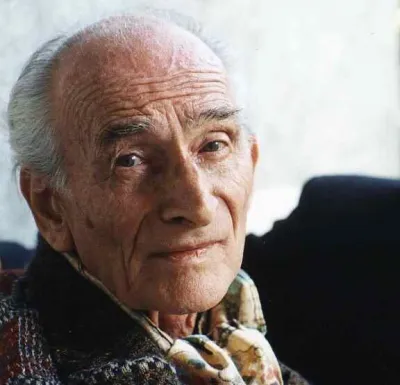
Photo: Wikimedia Commons
Joseph Wambaugh
Human Design Chart
Biography
As of 1996, 22 years after he turned in his LAPD badge, he had written 15 books, including his latest novel entitled "Floaters," the story of an America Cup sailing regatta, sabotage, sex, alcohol and cops.
Wambaugh and his wife, Dee, had three children, one of whom died in a car crash in 1984. Joseph Wambaugh died from oesophageal cancer at his home in Rancho Mirage, California on 28 February 2025 at the age of 88.
The Human Design of Joseph Wambaugh: Manifesting Generator 1/3
Manifesting Generator 1/3 — Design at a Glance
Joseph Wambaugh worked with hybrid energy: he had the constant power of a Generator but also the ability to skip steps and achieve results quickly. His design tended to pursue multiple projects simultaneously rather than focusing strictly on one task. This speed was a double-edged sword. If he reacted to impulses without waiting for inner confirmation, he tended to miss important steps. This often led to having to backtrack and make up for missing steps, causing frustration – the specific non-self theme of his configuration.
The mechanics of his Manifesting Generator required a clear strategy: he should not initiate but react to life. Only when his Sacral Center gave a clear 'yes' was it advisable to start. Only under this condition could his natural speed be beneficial. If he followed this strategy and regularly checked whether his authority still supported the work he had begun, he found deep satisfaction. In this state, working on several tasks simultaneously was no obstacle but a source of creative power. He entered a play mode in which variety and fun nourished his energy rather than depleting it through hasty action.
Emotional Authority
Joseph Wambaugh was subject to an emotional wave that significantly shaped his judgment. His inner authority resided in the defined Emotional Center. This configuration meant that his perception of the world was always colored by the current mood. In one moment, he could be enthusiastic about something, in the next, he could completely negatively assess the same situation. This up and down of feelings required a specific strategy: patience.
Immediate decisions based on a passing emotion often risked negative consequences, as the first impression did not yet reflect the deeper truth. For Joseph Wambaugh, it was crucial to take time. Long-term choices that influenced his life course should not be made in the heat of the moment. Instead, decisions needed to mature, often through multiple nights of reflection.
Over time, the intense feelings subsided. This process created the necessary emotional distance, leading to clarity and calmness. Only then, when the initial wave had subsided, could he recognize his true direction. Emotional authority always took precedence over other defined centers in his chart. It dictated the pace of his life decisions: not speed, but the waiting time until inner peace was the key to sustainable results. Joseph Wambaugh thus showed himself to be someone who found his true clarity by waiting for the emotional tides.
The 1/3 Profile — Investigator / Martyr
Joseph Wambaugh was someone who combined theoretical knowledge and practical experience inseparably. His Human Design Profile 1/3, that of the Researcher and the Experimenter, established a basic attitude based on learning through trial and error. He was not only a thinker seeking answers but also an actor who tested these answers in reality.
This dynamic arose from the tension between his Line 1, which sought deep understanding and inner reflection, and his Line 3, which fostered a love of adventure and risk-taking. Initially, the urge to research often dominated, which could lead to a certain reticence, as the feeling persisted that he did not yet know enough. But Line 3 pushed him to transcend these theoretical boundaries and learn through direct experience.
His judgment was therefore particularly trustworthy because he had tested things both intellectually and practically. Line 1 demanded a precise assessment of feelings and responsibility, while Line 3 taught him to rationally weigh risks and be more selective. Joseph Wambaugh embodied this process: he gathered insights not only through study but through direct confrontation with life. His authority arose from seeing his theories proven in practice. This created a solid foundation for his work, where he uncovered complex connections and conveyed them based on his own, tested experiences.
Split Definition — Defined & Open Centers
Joseph Wambaugh had a consistent, trustworthy mental function. His defined Ajna Center ensured that he created concepts and theories in the same way, unaffected by the environment. This mental preference combined with his defined Throat Center allowed him to express what he thought. His voice served as a focal point to make these mental processes effective in the world as communication and action.
His willpower was marked by the defined Heart Center. He liked to control his resources himself and kept promises he made, which strengthened his self-esteem and ego. At the same time, his defined Sacral Center generated a tremendous power source. As the guardian of this vital energy, it was essential for him not to initiate but to wait for questions to correctly apply his energy. Only this way did he avoid frustration and exhaustion.
Emotional clarity came through his defined Solar Plexus Center. He had to wait for the emotional wave to pass before making decisions, as truth revealed itself over time. His defined Spleen Center provided spontaneous, intuitive judgments in the present, while the defined Root Center provided the pressure to move forward and survive.
In contrast, his Head Center was open. He tended to mentally unwind when trying to find answers that weren't his, leading to doubts and confusion if he didn't trust his inner authority. His G Center was also open. He had no fixed identity but adapted to the environment. He didn't actively seek direction or love but waited to be initiated to meet the right people in the right place.
Channels for curiosity, emotional depth, devotion, meaning and power.
Joseph Wambaugh was a storyteller whose creativity lay in weaving ideas and experiences into parables. The Channel of Curiosity 11-56 connected the Ajna Center with the Throat Center; he was less interested in bare facts and more in how stories teach. His curiosity drove him to always seek new perspectives to inspire others.
His emotional impact depended on the wave of his moods. The Channel of Openness 22-12 connected Solar Plexus and Throat. He had the gift of influencing others through the quality of his voice, but this worked only when he was in the right mood. Compulsion led to harshness; patience allowed him to act as a catalyst for change.
Instinctively, he knew what his tribe needed often before they did. The Channel of Devotion 44-26 connected Spleen and Heart. As an entrepreneur and salesman, he used his willpower to offer improvements. He didn't act during office hours but in compressed, intense phases, driven by a sense of what felt justified to him.
A stubborn will to follow his own path marked his life. The Channel of Life Struggle 38-28 connected Root and Spleen. He found meaning in the struggles he encountered and resisted external forces that wanted to distract him from his integrity. This adrenalized energy gave him purpose, even when the struggle was difficult.
His intuition was a vital instrument. The Channel of Power 34-57 connected Sacral and Spleen. He responded spontaneously to vibrations in his environment, free from mental delay. This defensive intelligence kept him alert and physically fit to navigate every moment safely.
Additionally, Gates like 41, which processes evolutionary development and crises, and 31, which understands leadership as energetic transmission, were at work. Gate 27 provided caring warmth, while 16 sought mastery through experimentation. Gate 54 connected worldly success with spiritual insight, 36 used crises for new experiences, and 24 sought inner peace. Gate 47 tried to find meaning in the past.
Individual Circuitry — Circuit Signature
Joseph Wambaugh's design presented itself as a Split Definition, meaning two separate, parallel functioning energy blocks. He had no continuous connection between these areas but had to integrate these different forces in life.
The Knowledge Circuit formed the first block. Here, the Channel of Openness connected the Throat Center with the Solar Plexus. This created a pulsating energy that allowed Joseph Wambaugh to emotionally filter and express new insights authentically. Parallel to this, the Channel of Life Struggle connected the Spleen Center with the Root Center. This gave him a deep, instinctive endurance and the ability to persevere in stressful situations. These two connections, however, were not directly linked but existed as separate resources.
A second, isolated aspect came from the Meaning Circuit. Here, the Channel of Curiosity connected the Ajna Center with the Throat Center. This gave Joseph Wambaugh the ability to formulate and share inner images and concepts. This process was cyclical and served to reflect on past experiences and grasp their meaning.
The Ego Circuit contributed another independent part: The Channel of Devotion connected the Heart Center with the Spleen Center. This promoted a cooperative attitude and the joint use of resources within a community based on mutual support and tradition.
Finally, the Integration Channel of Power connected the Sacral Center with the Spleen Center. This ensured that Joseph Wambaugh drew strength from reacting to life and channeled this through intuitive knowledge.
Since all these circuits belonged to different, not directly connected groups, Joseph Wambaugh experienced these energies as separate phenomena. He had to learn how to combine the expressive power of knowledge, the reflective curiosity, the cooperative devotion, and the intuitive power in everyday life without them automatically overlapping.
Right Angle Cross of the Unexpected 4
Joseph Wambaugh revealed himself through a fundamental attitude that integrated the unpredictable as a central life factor. His design was marked by the right cross of the Unexpected 4, a configuration that did not allow for linear planning but required constant adaptation to sudden turns. This structure meant that stability was not achieved through predictability but through the ability to handle surprises.
The right cross of the Unexpected 4 describes a life dynamics in which external circumstances often intervene abruptly. Those who carried this configuration had to learn that control was an illusion. Instead of fighting against the unexpected, Joseph Wambaugh used this energy to remain flexible. The mechanics of this cross promoted a kind of resilience that only became visible in the moment of crisis. It was not about avoiding chaos but navigating through it.
This orientation led to a path that rarely followed a straight line. Each phase could change quickly, requiring a certain ease in dealing with setbacks. Joseph Wambaugh lived in a reality where the unexpected was the norm. This shaped his reaction to events: less shock, more accepting adaptation. The design suggested that true strength lay in taking the next step only after the unexpected had occurred. Thus, unpredictability was not experienced as an obstacle but as a driving force of his development.
Saturn Return · Uranus Opposition · Chiron Return · 2nd Saturn Return — Life Cycles
Joseph Wambaugh showed a life span marked by a radical break with established order, followed by a deep existential test. His configuration pointed to an inner drive to question structural boundaries and not be bound to predefined roles.
In 1975, at the age of 38, Wambaugh left the police. This event corresponded with the Uranus opposition, a mechanical point where the desire for individual freedom often asserts itself against collective structures. Here, the dynamics of breaking old bonds to follow one's own path were shown, rather than staying within the system.
Later, in 1984, Wambaugh experienced the death of a child in a car accident at the age of 47. This fell into the period of the Chiron return. In Human Design mechanics, this cycle does not mark healing in the traditional sense but a phase of fulfillment and bloom of the incarnation purpose. The crisis served as a catalytic moment when the deepest life task condensed. The pain became the nourishment for a new, more authentic orientation. The mechanics show that such turning points are necessary to make the true meaning experiential. Wambaugh lived these transitions not as coincidences but as integral parts of his development, leading him from external structure to inner truth.
Manifesting Generator · Emotional Authority — Synthesis
Joseph Wambaugh was a Manifestor Generator, whose life was marked by a constant interplay between the urge for quick implementation and the necessity of emotional maturation. The sacral energy always at his disposal (defined sacral center) nourished a natural tendency to react to impulses and set things in motion (Manifestor Generator). This was reinforced by the connection of mental clarity (defined Ajna Center) and the channel of curiosity (Gate 11/56), through which he constantly sought and shared new information and perspectives. His profile as a researcher and experimenter (1/3) underscored this process of learning through experience and the need to work out and verify insights for himself.
A central paradox in his design lay in the tension between the ability to initiate things quickly and the emotional authority that required a thorough confrontation with his feelings. The quick energy of the Manifestor Generator clashed with the need to let decisions mature over a longer period (emotional authority). This led to an internal field of tension that showed in cycles: a sudden exit from an established career (1975) was later overshadowed by a deep personal crisis (1984), pointing to the challenge of aligning impulsive actions with emotional depth.
5 Defined Channels
Incarnation Cross - Right Angle Cross of the Unexpected 4
Solar Return
The Solar Return shows the moment when the sun returns to its exact birth position - your personal solar year.
Life Cycles
Discover the life cycles with a detailed triple view (birth chart, cycle chart, composite).
Human Design Profile
- Strategy
- To respond - wait for something to respond to
- Authority
- Emotional Authority
- Profile
- 1/3 - Investigator / Martyr
- Definition
- Split Definition
- Incarnation Cross
- Right Angle Cross of the Unexpected 4
- Date of Birth
- 22.01.1937 06:50
- Place of Birth
- Wilkinsburg, PA, United States
Frequently Asked Questions
What was Joseph Wambaugh's Human Design type?
What profile did Joseph Wambaugh have in Human Design?
What authority guided Joseph Wambaugh?
What incarnation cross did Joseph Wambaugh have?
When was Joseph Wambaugh born?
Discover your own Human Design
Are you also a Manifesting Generator? Find out in a personal reading how to unfold your multi-talents and direct your energy wisely.
More Personalities
Back to overviewAldair
Alizée

Angeli
Arletty
Artus

Balthus