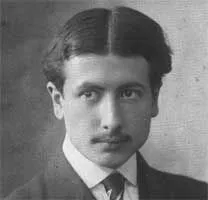
Photo: Wikimedia Commons
Jules Verne
Human Design Chart
Biography
What does Generator 6/3 mean for Jules Verne?
Generator 6/3 — Design at a Glance
Jules Verne possessed as a Generator an immense, enduring power comparable to that of a workhorse. This energy was not automatically available to him but unfolded only in reaction to inner impulses. His fundamental strategy consisted of reacting rather than initiating; he acted effectively when his Sacral Center gave a clear "yes" signal.
This design offered him the potential for deep fulfillment and unparalleled endurance as long as he followed this inner compass. The dynamics of his character were revealed in the sharp boundary between this contentment and the risk of burnout or frustration. When Jules Verne engaged in tasks that did not bring him internal joy, he wasted his valuable energy. Similarly problematic was when external circumstances prevented him from working on projects for which he still had full power.
Ignoring his own impulses or forcing himself to initiate actions inevitably led to a lack of energy and persistent frustration. His design required a way of life where he responded to signals from life rather than taking the first step independently. Only through this gut reaction could he fully unleash his material creative force and experience the deep satisfaction that his type rewarded when properly aligned. Any deviation from this cost him energy and prevented his power from materializing sustainably.
Sacral Authority
Jules Verne revealed himself as a Generator whose decision-making did not rely on planned purposefulness but was instead guided by inner resonance. His design established that vitality and enthusiasm only arose when he correctly responded to external stimuli. The Sacral Authority was his internal instance; it manifested as gut feelings or bursts of energy – audible as grunts, hums, or short "mmms." These physical signals were the only reliable indicators of whether a situation released energy.
The strategy of waiting for the external trigger was central here. Only through this reaction did the Sacral motor activate and create that inexhaustible energy, allowing him to engage in activities with great joy. Without this external impulse, the energy remained inactive; false initiatives led instead to frustration and energy loss. Since his Emotional Center was open, no emotional confusion could overlay this clear physical response. Jules Verne therefore did not live from a pre-set goal but allowed himself to be guided by the moment when his body positively responded to an inquiry from the outside world. This mechanism spared him the need to force decisions through logical deliberation and instead enabled a life flowing in harmony with his natural, bodily resonance.
The 6/3 Profile — Role Model / Martyr
Jules Verne exhibited a fundamental attitude of the experimenting adventurer that over the course of his life evolved into the broad vision of a role model. His design contained Profile 6/3, meaning he lived as a pure experimenter in the first three decades of his life. This phase was characterized by numerous self-experiments and a drive for extraordinary experiences far from everyday standards. The line of the adventurer propelled him to learn through trial and error, constantly adapting even when this drew criticism.
Around age thirty, this dynamic changed. Pure experimenting slowed down but never ceased entirely, as the experimental line remained permanently anchored in his nature. Instead, he integrated his accumulated, often unusual experiences into a stance of wisdom and responsibility. The sixth line promoted unwavering hope for openness and better relationships. Jules Verne used his mutant energy for renewal and tolerated criticism to appear as a far-sighted role model. His inner restlessness of an old soul always sought the perfect, unconventional path. Ultimately, he united the courage of adventure with the ability to humorously and responsibly pass on these insights, becoming the figure that inspired others through their life wisdom.
Split Definition — Defined & Open Centers
Jules Verne revealed a design characterized by persistent internal structure and situational openness. His defined centers – Ajna, Throat, Sacral, Spleen, and Root – formed the mechanical foundation: a reliable way of thinking, acting, and reacting. The defined Ajna Center generated continuous mental activity; concepts were constantly created, independent of external influence. These thoughts flowed into the defined Throat center, where communication and action were clear, honest, and based on his own truth. Energy for this came from the defined Sacral Center, which as a motor provided immense vital force – but only in reaction to external impulses, not through initiation. The defined Spleen Center offered spontaneous intuition and existential warning signals in the present moment, while the defined Root Center supplied a fixed stress pressure to maintain the life impulse.
In contrast, Head, G, Heart, and Solar Plexus were open. These centers reflected their environment rather than producing persistent content of their own. The open Head Center received inspiration or mental pressure from outside; Jules Verne tended to be inspired or confused by foreign questions without claiming them as his own truth. The open G Center meant no fixed identity or direction; he adopted the identities and directions of others to find his own orientation in the right environment. The open Heart Center absorbed foreign willpower and ego dynamics, which could make him vulnerable to pressure to prove himself – a pattern of not-self that he had to overcome through trust in his authority. Finally, the open Solar Plexus took on emotional waves from the environment; it mirrored other people's feelings without identifying them as his own, allowing him to be a sensitive barometer for the emotional climate so long as he did not fall into conditioning. This combination created a person with a strong inner motor and a permeable surface that absorbed information, identities, and emotions from the world, tested them, and reflected them.
Channels for change, insight, care and life purpose.
Jules Verne showed a fundamental attitude that drove evolutionary change by accepting limitations and structuring innovative perspectives. His design pushed beyond confusion to bring new things into the world.
The Mutation Channel 60-3 connected his Root Center with the Sacral Center through the Gate of Limitation (60) and the Gate of Order (3). This connection generated a pulsating, often melancholic energy aimed at evolutionary change. Jules Verne had to learn to accept internal tension when this pulse stopped and wait patiently until new mutations set in through him. This channel brought pressure to introduce innovation into his life and environment, swinging between chaos and order.
At the same time, the Structuring Channel 23-43 supported this dynamic. It connected the Ajna Center with the Throat Center through the Gate of Insight (43) and the Gate of Assimilation (23). Inspired breakthroughs were received here as spontaneous insights and translated into clear, efficient expression forms. This allowed Jules Verne to develop new ways of thinking and techniques that could mutate the collective. Crucial was proper timing: Only when he waited for his inner authority did his innovative perspectives gain understanding rather than being dismissed as offbeat.
The combination of these channels created a tension between melancholic, unpredictable mutation energy and the ability to structure complex ideas clearly. Jules Verne lived with the pressure to bring innovations into the world while waiting for his unique insights to be accepted at the right time to avoid rejection or feelings of being an outsider.
Individual Circuitry — Circuit Signature
Jules Verne revealed himself through his split definition as someone who depended on the environment to activate his inner energies. His design presented two parallel, not directly connected power fields: a drive toward individual transformation and instinctive urges for protection.
The Knowledge Circuit in Jules Verne linked Ajna with Throat Center along with Sacral, Root, and Spleen Centers into two separate groups. This promoted the structuring of thoughts, mutations as deviation from the known, and life struggle. It was about going new ways and bringing change through expression.
Parallel to this, the Protector Circuit worked, connecting Sacral with Spleen Center. This connection emphasized preservation, care, and safeguarding of family and genetic stock. It dealt with ancient energies of protection and sustenance driven by instinctive knowledge and life force.
Between these two circuits there was no direct energetic flow since they belonged to different groups. Jules Verne often experienced these forces – the urge for new knowledge on one hand and the need for familial security on the other – as separate challenges. The split definition meant that he needed external impulses to activate either his innovative side or his protective instincts.
Left Angle Cross of Masks 1
Jules Verne's Human Design configuration set a tendency towards a profound, often unconscious search for identity and meaning. This setup, the left cross of Masks 1, shaped his inner experience through constant oscillation between the desire for individual expression and the feeling of standing behind a facade or role. It was not about superficial adaptation but an existential dynamic: the drive to discover the true essence beyond societal expectations and personal masks. This energy propelled him to renegotiate the boundaries between private self and public persona repeatedly. The mechanics of this cross described a process of learning through experience, where each life revealed another facet of his nature. It was not just about existing but understanding the deepest motives behind his actions and aligning them with an authentic view of himself. This inner work was not a one-time event but a continuous flow that structured his perception of the world and his place in it. The tension between the hidden and the revealed formed the core of this orientation, making life understood as a journey through various levels of self.
Saturn Return · Uranus Opposition · Chiron Return · 2nd Saturn Return — Life Cycles
Jules Verne's life followed a clear rhythm of structural consolidation and deep upheaval. His first Saturn Return marked the transition into societal responsibility: 1857, at age 29, he married Honorine Anne Hébée Verne. This cycle established the outer order and family framework that carried his further life.
Twenty years later, the Uranus Opposition broke out, a phase of inner transformation and questioning old structures. Paradoxically, this moment fell in 1870: Jules Verne was knighted into the Legion of Honor. While his inner self yearned for change, the outer world affirmed his status – a tension field between personal transformation and public recognition.
The Chiron Return around age 49 was not a conventional healing process but an achievement cycle where life's mission painfully crystallized. In 1876, at 48 years old, Jules Verne had to temporarily place his son Michel in an educational institution. This crisis forces confrontation with personal weakness and demands the assumption of responsibility for one's legacy.
The second Saturn Return finally brought a hard test of established structure. In 1886, at age 58, Jules Verne suffered a severe injury from a gunshot by his mentally ill nephew. This turning point revealed the fragility of external protection and demanded redefinition of personal boundaries and security after decades of public presence.
Generator · Sacral Authority — Synthesis
Jules Verne lived a profound cycle of energetic reaction and experimental search. As a Generator with sacral authority (Sacral Center), he reacted immediately to outer stimuli, signaling an inner
4 Defined Channels
Incarnation Cross - Left Angle Cross of Masks 1
Solar Return
The Solar Return shows the moment when the sun returns to its exact birth position - your personal solar year.
Life Cycles
Discover the life cycles with a detailed triple view (birth chart, cycle chart, composite).
Human Design Profile
- Type
- Generator
- Strategy
- To respond - wait for something to respond to
- Authority
- Sacral Authority
- Profile
- 6/3 - Role Model / Martyr
- Definition
- Split Definition
- Incarnation Cross
- Left Angle Cross of Masks 1
- Date of Birth
- 08.02.1828 12:00
- Place of Birth
- Nantes, France
Frequently Asked Questions
What was Jules Verne's Human Design type?
What Profile did Jules Verne have in Human Design?
Which Authority guided Jules Verne?
What incarnation cross did Jules Verne have?
When was Jules Verne born?
Discover your own Human Design
Are you also a Generator? Find out in a personal reading how to use your sacral energy correctly and discover deep satisfaction.
More Personalities
Back to overviewAaliyah

Alain-Fournier
Alexia

Angèle

Angeli
Anne-Marie