
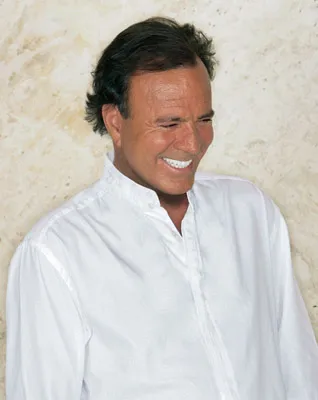
Julio Iglesias
Human Design Chart
Biography
The son of a physician and a homemaker, Julio grew up in Madrid in an atmosphere of wealth and privilege. Well-mannered, athletic and eager to please, the average student spent most of his childhood and adolescence playing soccer, displaying a precocious talent which later earned him a place on the national team, playing goalie for Real Madrid. "I was one of the best young soccer players in my country," he said. "You never know at what age you can be a superstar, but it was definitely my dream. Up until the accident."
The professional athlete who took no interest in music whatsoever suffered a setback at age 20 that was to alter the course of his life. While driving recklessly around a curve, Julio's car turned over, ejecting the two other passengers. Miraculously, everyone walked away relatively unharmed, including Julio. Or so he thought.
Months later, a progressive weakening of reflexes and increased numbing rendered Julio unable to walk. Tests revealed that he had suffered a hemorrhage in the accident which caused compression in his spine. After surgery, paralysis set, resulting in the prospect of life in a wheelchair. "I felt like I had died."
Still there was light at the tend of the tunnel. His spine had been traumatized, not severed, and by all accounts he could walk again, but it required much rehabilitation and effort.
Julio Iglesias — Manifestor with Profile 2/4
Manifestor 2/4 — Design at a Glance
Julio Iglesias revealed himself as someone who actively directed the world into new directions. His design marked him as a pioneer and visionary. He had a clear vision of a desired future. Similar to an emperor in ancient Rome, who did not fight battles personally but sent his soldiers to conquer lands, Julio Iglesias used other forces to implement his plans.
This kind of leadership often polarized people. Because he thought further ahead than many around him, he was frequently misunderstood. Some loved him for his big dreams and followed him. Others disliked him precisely because of these visions or even hated him. This conflict between supporters and opponents was a central pain point in his design.
To find the right support, it was crucial that he informed others about his intentions early and accurately. This strategy of informing was key to his success. When Julio Iglesias followed this strategy and trusted his inner authority, his design rewarded him with a feeling of inner peace. If he lived against this principle, however, he felt instead a persistent, deep anger within himself. His path was thus marked by the tension between the urge to lead and the necessity to anchor this leadership through clear communication.
Emotional Authority
Julio Iglesias exhibited a basic attitude characterized by emotional wave movements: his inner compass was the defined Solar Plexus Center. In this design, Emotional Authority always operates with absolute priority over all other defined centers, regardless of further configurations in the chart. This mechanism means that his perception of the world was always colored by the current mood – sometimes highly enthusiastic, and in the next moment negatively influenced.
Since feelings in the moment are only a snapshot and not an ultimate truth value, spontaneous decisions made from such an emotional state were risky for him. The strategy of his design required patience: he had to take time to let decisions mature, often sleeping on them multiple times. Only when intense emotions subsided and he gained emotional distance did clarity set in. This process of delay was essential, especially for long-term life decisions that significantly shaped his path. By waiting for this calmness, he could gain deeper insights rather than being led by fleeting impulses.
The 2/4 Profile — Hermit / Opportunist
Julio Iglesias showed a characteristic tension between the deep need to withdraw and the longing for connection. His design suggested that in his 'me-time', he immersed himself in internal processes to find peace and clarity. This phase of the hermit was essential before he longed again for time with his favorite people. It was important for him to create a safe environment where he could clearly communicate: when he sought company and when he wanted to be undisturbed.
This dynamic arises from his Profile 2/4. Line 2 represents the Hermit, while line 4 symbolizes the network. When Julio Iglesias spent time alone, he could reflect on the knowledge of his network and develop brilliant ideas from it. Once this inner need was satisfied, he emerged from his 'cave' to connect with others.
Additionally, there was a tendency towards determination toward success that was often accompanied by unrealistic demands. These traits attracted attention and sometimes offended others. At the same time, there was an aspect of humility as protection against felt inadequacies. This part of his design led him occasionally to find himself in an outsider status, especially when he had to resist expectations. The balance between this self-assured determination and protective withdrawal shaped how he interacted with his environment.
Single Definition — Defined & Open Centers
Julio Iglesias was marked by a design featuring four defined centers: Throat, G Center, Heart, and Solar Plexus. This configuration created a reliable foundation for expression and identity. His voice wasn't just a random tool but a steady channel for messages of willpower (Heart), inner direction (G), and emotional depth (Solar Plexus). He didn't just speak thoughts; he transmuted these energies into clear communication and action.
His defined Heart Center gave him the strength to keep promises and determine his life. He had natural willpower that allowed him to be successful and demand recognition for his work. At the same time, through his defined G Center, he possessed a deep sense of self-love and knew where his life was heading. This enabled him to show others new directions without being dependent on their approval.
The emotional wave of his Solar Plexus served as his inner authority. Julio Iglesias was designed not to make decisions impulsively but to wait for emotional clarity before acting. This patience gave his actions a seductive depth and ensured that he only acted when something felt truly right.
In contrast, Head, Ajna, Sacral, Spleen, and Root were open centers. These open centers made him vulnerable to conditioning by the environment. He tended to absorb mental pressure from the surroundings without it being his own, and could get lost in endless questions. His open Sacral Center meant he didn't have a consistent generative energy; he had to learn not to rely on borrowed energy from others to avoid burnout. Similarly, his open Spleen Center was prone to fears and the need to hold onto others' security rather than trust his own intuition. The stress of an open Root Center could push him into excessive activity to relieve external pressure, leading to long-term burnout over time. His design challenged him not to interpret these open areas as his truth but to strictly adhere to his defined centers and emotional authority.
Channels for leadership, emotional depth, reflection and pioneering spirit.
Julio Iglesias sought leadership through logical organization and collective consensus rather than authority. The Alpha Animal 7-31 connected the G Center with the Throat Center; Gate 7 provided the rational role of the manager, while Gate 31 acted as a collective leader. This configuration required Julio Iglesias to become effective only when invited by the majority to share his logical patterns. He could show the way but not take it.
Parallel to this, the openness 22-12 defined his expression. Channel 22 connected Solar Plexus with Throat Center; Gate 22 brought emotional passion and romance, while Gate 12 exercised cautious restraint to limit interaction to those with high potential. His voice had a transformative effect but only unfolded powerfully when his inner mood allowed it. Coercion here led to harshness; patience and waiting for the right emotional timing were crucial for his communicative depth.
Additionally, he carried the burden of memory through the Lost Son channel 13-33. Gate 13 in G Center collected experiences and secrets, while Gate 33 in Throat Center withdrew to reflect on them. Julio Iglesias was a natural listener who categorized life stories before passing them along. This structure promoted an attitude of conscious passenger, practicing patience and learning that outcomes often differ from expectations.
In the background, Initiation 51-25 worked through his Heart Center. Gate 51 brought competitive ego energy linked to universal love from Gate 25. This created a tension between the drive to be first and the ability to recognize beauty in everything. Initiation here only occurred through invitation or shock, not coercion.
Individual Gates complemented this picture: Gate 15 promoted adaptation to natural rhythms, Gate 10 integrated genetically fixed behavioral rules, and Gate 46 emphasized dedication in the present moment. Gate 62 facilitated logical pattern recognition, while Gate 35 sought change through interaction. Gate 56 abstracted mental processes into narratives, Gate 45 bundled tribal energy, and Gate 16 experimented with new skills.
Individual Circuitry — Circuit Signature
Julio Iglesias was someone whose design clearly separated inner confirmation from external expression. As he was simply defined, all his active centers – Identity, Heart, Solar Plexus, and Throat – formed a single, coherent energetic flow. This created a cohesive experience where internal convictions were directly linked to emotional waves and their articulation.
The Knowledge Circuit worked through the Openness Channel (Gates 12-22), connecting Throat with Solar Plexus. This allowed Julio Iglesias to immediately translate emotional impulses into words. The energy was pulsing and acoustically marked, favoring a direct translation of feeling into expression.
In the Centering Circuit, the Initiation Channel (Gates 25-51) came into play. It connected Identity with Heart Center. This configuration fostered strong personalities with firm individual beliefs. However, without connection to Throat, these deep inner values often remained unspoken or hard to articulate directly, turning individuality inward.
The Understanding Circuit carried the Alpha Animal Channel (Gates 31-7), linking Throat and Identity Centers. Here it was about focused rational components and the future. Julio Iglesias could share logical structures and strategic insights detached from emotional influence.
Finally, the Meaning-Finding Circuit worked through the Lost Son Channel (Gates 33-13) between Throat and Identity as well. This aspect related to the past and cyclical emotional waves. Julio Iglesias reflected on past experiences to understand their meaning and share these insights with others. Together, these circuits formed a profile that combined rational future perspectives with emotional reflection of the past, always supported by the defined connection of Identity, Heart, and Solar Plexus in expression.
Right Angle Cross of the Vessel of Love 3
Julio Iglesias' design shows a tendency towards a deep, almost fateful bond with the theme of unconditional devotion. His inner compass was strongly oriented towards the quality of being a 'Vessel' - that is, how he made his own energy and essence available to others. It wasn't about superficial interaction but rather an intense, often silent readiness to give himself completely without losing or dissolving his own self.
This configuration, known as the right cross of the Love Vessel 3, describes a specific energetic impulse: the ability to practice love and care in such a way that it acts like a secure container for others. Julio Iglesias did not present himself as someone actively seeking validation or showing off his devotion. Instead, his approach was rather reserved and service-oriented. He offered space and stability, a kind of energy sanctuary where others could feel safe.
The mechanics of this cross emphasize the purity of intention behind the act of giving. It is less important what exactly is given - whether it's time, attention or emotional support - but more so the integrity and unconditional nature of this gesture. For Julio Iglesias, this meant an inner discipline: his devotion had to be authentic, free from hidden expectations or a desire for control. His design challenged him to maintain this pure form of connection even when it often remained invisible in everyday life and was only truly felt in moments of deepest trust.
Saturn Return · Uranus Opposition · Chiron Return · 2nd Saturn Return — Life Cycles
In this phase of his life, Julio Iglesias showed a clear orientation towards the private sphere and the establishment of a family. In 1971, at age 28, he married Isabel Preysler - an event typical for his design: The first Saturn Return often marks the transition from explorative youth to stable, long-term commitments and structures. During this cycle, years of internal development condense into a solid foundation for life. For Julio Iglesias, this was not just a social act but the anchoring of his identity in a stable relationship that served as a basis for further development. The mechanics of the Saturn Return demand here not only responsibility but also clarity about which bonds should truly endure. Through this marriage, he established a space of security and continuity that allowed him to focus on other areas of his life without losing sight of the foundation. This step underscores the tendency of his design to bring internal values outward into concrete, sustainable forms.
Manifestor · Emotional Authority — Synthesis
A central red thread in this design is the dynamic interaction between inner clarity and external expression. Emotional authority requires a maturation process for decisions, an internal processing before they are communicated through the defined Throat Center (Centers, Channels/Gates). This corresponds with the Profile as a Natural Talent/Networker that fluctuates between solitude for inner collection and the need for social connection (Profile Role). The Alpha Animal Channel points to a natural ability for leadership, which is however filtered by the emotional wave - a process that brings both strength and vulnerability. The Knowledge Circuit underscores this internal transformation process and the need to generate and express unique knowledge (Circuit).
The central paradox lies in the tension between the Manifestor type - born to lead and set things in motion (Design Perspective) - and emotional authority, which requires a waiting strategy. While the design is geared towards initiation and trailblazing roles, inner wisdom of the heart demands time for decision-making. This leads to an internal tension between the urge to actively shape and the necessity to first align emotionally - a give-and-take that is further intensified by the right cross of the Love Vessel (Cross) and finds its expression in a documented event (Relationship).
4 Defined Channels
Incarnation Cross - Right Angle Cross of the Vessel of Love 3
Solar Return
The Solar Return shows the moment when the sun returns to its exact birth position - your personal solar year.
Life Cycles
Discover the life cycles with a detailed triple view (birth chart, cycle chart, composite).
Human Design Profile
- Type
- Manifestor
- Strategy
- To inform others before acting
- Authority
- Emotional Authority
- Profile
- 2/4 - Hermit / Opportunist
- Definition
- Single Definition
- Incarnation Cross
- Right Angle Cross of the Vessel of Love 3
- Date of Birth
- 23.09.1943 11:30
- Place of Birth
- Madrid, Spain
Frequently Asked Questions
What is Julio Iglesias' Human Design type?
What profile does Julio Iglesias have in Human Design?
What authority guides Julio Iglesias?
What incarnation cross does Julio Iglesias have?
When was Julio Iglesias born?
Discover your own Human Design
Are you also a Manifestor? Find out in a personal reading how to use your initiation power peacefully and dissolve resistance.
More Personalities
Back to overviewAaliyah

Alexia

Alizée

Angèle

Anne-Marie

Arcángel
