
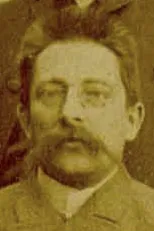
Julius Richard Petri
Human Design Chart
Biography
Petri first studied medicine at the Kaiser Wilhelm Academy for Military Physicians (1871–1875) and received his medical degree in 1876. He continued his studies at the Charité Hospital in Berlin and had active duty as a military physician until 1882, continuing then as a reservist.
From 1877 to 1879 he was assigned to the Imperial Health Office (German: Kaiserliches Gesundheitsamt) in Berlin, where he became an assistant to Robert Koch. On the suggestion of Angelina Hesse, the New York-born wife of another assistant, Walther Hesse, the Koch laboratory began to culture bacteria on agar plates. Petri then invented the standard culture dish, or Petri plate, and further developed the technique of agar culture to purify or clone bacterial colonies derived from single cells. This advance made it possible to rigorously identify the bacteria responsible for diseases.
He died on 20 December 1921, aged 69, in Zeitz, Germany.
The Human Design of Julius Richard Petri: Generator 5/2
Generator 5/2 — Design at a Glance
Julius Richard Petri revealed himself as someone with remarkable inner endurance. His design identified him as a Generator, a configuration that possessed a high degree of sacral energy. This power worked similarly to that of a workhorse: strong and steady, provided it was used for appropriate tasks. However, the effectiveness of this energy depended crucially on its proper use.
The mechanics of his design dictated that his strength would be unleashed primarily when he reacted to impulses from his environment rather than initiating things himself. His strategy involved waiting for signals before acting, only proceeding once his inner self gave a clear "yes". If Julius Richard Petri lived in harmony with this principle, it led to a deep sense of fulfillment.
At the same time, his chart indicated two specific risks. One danger lay in expending energy on things that did not matter to him, which could lead to long-term exhaustion. The other pitfall occurred when he was prevented from doing his actual work despite still having plenty of drive left. If he constantly initiated independently without waiting for inner responses, he likely encountered frustration and a lack of energy. His success thus depended on whether he learned to react from the gut rather than fighting against the flow of his own nature.
Sacral Authority
Julius Richard Petri demonstrated a direct, body-based way of decision-making. His design indicated that his inner authority did not lie in the Head Center but rather operated in the lower abdominal region. As a Generator, his strategy and his authority were identical: he should wait for external stimuli and then react to them. This unity greatly simplified his process since there was no separation between "What should I do?" and "How do I decide?"
The prerequisite for this clear leadership was an open Emotional Center, meaning that he did not get trapped in impulsive emotional storms. Instead, his system responded to stimuli with an immediate physical reaction – often a soft grunting sound, a deep "Hmm," or a noticeable surge of energy in the abdominal area. Such signals were reliable: they showed where his energy wanted to flow. When this reaction occurred, he felt vital and acted with natural enthusiasm, without the pressure of external purposefulness.
Furthermore, his activated Spleen Center served as a supportive instance for sacral authority. This gave him quick, instinctive responsiveness. He could immediately react to situations and orient himself based on his physical well-being. This combination of sacral energy and spleen-supported intuition allowed him to act spontaneously and confidently, guided by deep inner knowledge of what sustained him in life.
The 5/2 Profile — Heretic / Hermit
Julius Richard Petri reveals himself through the Profile 5/2 as someone who oscillates between a desire for public recognition and the need to withdraw. This design suggests a tendency to initially hide one's gifts in the "cave" to sharpen them before they are put to use for the collective. Line 5 brings with it the archetype of the hero, often accompanied by self-doubt; Petri tended not to immediately recognize his talent as such and would reject external validation. At the same time, Line 2 calls for alone-time to ask one's own questions and maintain control over the research process. This combination meant that he only acted when he felt ready to emerge from withdrawal. As long as he waited passively for "discovery," frustration could arise because heroism does not flourish in isolationism. Only through consciously leaving the cave and sharing clear insights did his presence become effective. The transformation lay in overcoming his critical stance toward himself and recognizing that his abilities could serve others without sacrificing the necessary boundaries for his recovery. Thus, he united the role of the lone thinker with that of a supportive mentor who encouraged others to use their own talents.
Split Definition — Defined & Open Centers
Julius Richard Petri demonstrated a persistent mental intensity combined with profound internal energy. His design was characterized by defined Head and Ajna Centers, creating constant pressure for inspiration, questioning, and conceptual understanding. This mental process ran continuously; it served not to directly implement ideas but rather to formulate concepts and theories. Simultaneously, he had a defined Sacral Center, the source of his vital energy. This energy was only available when he responded to external stimuli instead of initiating action himself. A further defined Root Center provided physical pressure for survival consciousness and logical structuring in daily life.
In contrast, his design revealed several sensitive areas. His open Throat Center meant that he could not speak consistently; under pressure, he tended to demand attention rather than waiting naturally for the right moment to speak. His open G Center lacked a fixed identity or direction; he relied on being initiated by his environment to find love and the right place, instead of seeking these out himself. The open Heart Center was lacking in constant willpower; ideally, he avoided making promises he could not keep and did not seek proof of his worth through competition. Additionally, his open Solar Plexus absorbed foreign emotions, making him vulnerable to emotional conditioning, while his open Spleen Center warned against impulsive decisions, as spontaneous actions driven by fear or false security often led to unhealthy dependencies. His strength lay in the connection between clear mental structure and reactive vitality, protected from emotional and identity-related pitfalls.
Channels for focused details and questioning logic.
Julius Richard Petri exhibited a fundamental attitude of skeptical scrutiny combined with the ability to focus on details over long periods. His design suggested that he did not accept patterns at face value but instead investigated their consistency through logical analysis and continuous experimentation.
This attitude was shaped by the Channel of Logic 63-4, connecting the Head Center with the Ajna Center and creating a mind that used doubt as an essential part of seeking truth. For Julius Richard Petri, an answer was only valid if it appeared in a consistent, verifiable pattern. Unfounded belief had little room here; instead, skepticism led to logical experimentation and necessary proof. He sought answers by asking questions and incorporating data to make well-founded predictions – not for himself but as a service to the collective.
Parallel to this, the Channel of Concentration 52-9 influenced his design. This channel connected the Root Center with the Sacral Center and gave him the energy to remain still and maintain focus on facts and details. It was a formative energy that affected all other aspects of his design: it allowed him to fully dedicate himself to something, keep distractions at bay, and gradually perfect patterns. The pressure to be still helped him apply his energy precisely until his inner authority responded and indicated where the focus should be directed.
Additionally, Gates like Gate 16 (Experimentation in the Collective) and Gate 58 (Perfection through Pressure) contributed to engaging with new processes and improving them. Gate 24 promoted individual renewal of knowledge, while Gate 64 helped clarify past experiences. This configuration described a person who contributed to enlightenment through patient observation, logical scrutiny, and focused action.
Collective Circuitry — Circuit Signature
Julius Richard Petri was marked by a split definition, indicating two separate, parallel existing energy flows. This configuration meant that his internal systems did not function as an integrated whole but rather as independent units. The Understanding Circuit formed a central aspect of his design. It connected the Head with the Ajna Center and separately the Sacral with the Root Center. These two groups were not energetically merged but existed alongside each other. The connection between Head and Ajna promoted the ability for logical structuring and strategic planning. This was about rational thinking, free from emotional influence by the Solar Plexus Center, which played no role in this circuit. Simultaneously, energy flowed between Sacral and Root Centers, linking action impulses with a certain sense of urgency. Julius Richard Petri used these separate channels to develop logical insights and focus them further. His design suggested a tendency towards structural improvement through clear understanding. However, the separation of groups prevented a single all-encompassing flow; instead, areas of thinking and acting operated as independent force fields within his personality.
Left Angle Cross of Identification 1
Julius Richard Petri's Human Design profile revealed a tendency towards analytical sharpness, manifesting in the drive to not only understand complex issues but also precisely name and categorize them. This identifying cross 1 on the left side combined deep, often intuitive perception with the ability to translate these impressions into clear structures. It was a configuration that inclined toward seeking underlying principles behind observable phenomena. Julius Richard Petri emerged as someone who brought clarity to apparent chaos through his observations and conclusions. The mechanics of this cross encouraged an approach less focused on superficial acceptance but rather on examining and defining things at their core essence, fostering an internal discipline of perception where discernment was paramount. He used this disposition to penetrate his environment and the processes within it with a critical yet constructive eye. This design's energy acted like a filter that separated the essential from the trivial, thereby creating a solid foundation for further actions or insights. It wasn't a quest for absolute truth in a metaphysical sense but rather an ongoing process of categorization and understanding through logical and intuitive synthesis.
Saturn Return · Uranus Opposition · Chiron Return · 2nd Saturn Return — Life Cycles
Julius Richard Petri's Human Design profile inclined towards structured authority and scientific precision. This configuration promoted the ability to systematically organize complex relationships and integrate them into bureaucratic structures. In 1889, at age 37, he became a government councilor at the Imperial Health Office and head of a bacteriological laboratory. For his design, this was a typical Uranus opposition moment: A cycle where internal maturation often manifests through external recognition and new responsibilities. The energy of this phase supported the establishment of standards and leadership in specialized fields with clear guidelines.
Later, in 1900 at age 48, he retired early as a Privy Councilor. This coincided with his Chiron return, a fulfillment cycle that for Julius Richard Petri appeared as stepping back from active leadership roles. During this period, there was a tendency to set one's own pace after years of service and distance oneself from official duties. Retirement marked not an end but a phase of consolidation where the work previously done found its meaning. The mechanics of this cycle facilitated a step back from public office towards a more personal orientation once professional goals were achieved.
Generator · Sacral Authority — Synthesis
Julius Richard Petri lived with a profound inner drive that arose from his sacral authority (sacral center) and definition in the Head and Ajna centers. This combination generated an unceasing energy source as long as he engaged in activities truly fulfilling him – constant generation of power through following his internal reactions (sacral authority). Simultaneously, he was marked by the contradiction between a desire to help and a need for withdrawal (Profile Hero/Natural Talent), manifesting in a dynamic interplay between active shaping and retreating to gather strength. This cycle of engagement and isolation was a central pattern in his life path.
A fundamental paradox lay in how Petri processed information. The logic channel (Gates 63 & 4) created constant mental pressure to question everything and verify consistency – an unceasing filtering of patterns. Yet, this corresponded with the understanding circuit that emphasized sharing logical insights. Thus, a tension arose between his inner need for absolute certainty through analysis and the urge to share this knowledge, leading him into phases of intense work followed by periods of distancing (documented event: retirement).
2 Defined Channels
Incarnation Cross - Left Angle Cross of Identification 1
Solar Return
The Solar Return shows the moment when the sun returns to its exact birth position - your personal solar year.
Life Cycles
Discover the life cycles with a detailed triple view (birth chart, cycle chart, composite).
Human Design Profile
- Type
- Generator
- Strategy
- To respond - wait for something to respond to
- Authority
- Sacral Authority
- Profile
- 5/2 - Heretic / Hermit
- Definition
- Split Definition
- Incarnation Cross
- Left Angle Cross of Identification 1
- Date of Birth
- 31.05.1852 19:30
- Place of Birth
- Wuppertal, GER
Frequently Asked Questions
What was Julius Richard Petri's Human Design type?
What profile did Julius Richard Petri have?
Which authority guided Julius Richard Petri?
What incarnation cross was assigned to Julius Richard Petri?
When was Julius Richard Petri born?
Discover your own Human Design
Are you also a Generator? Find out in a personal reading how to use your sacral energy correctly and discover deep satisfaction.
More Personalities
Back to overviewAaliyah

Alexia

Angèle

Anne-Marie

Arcángel

Arno
