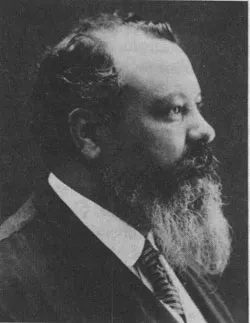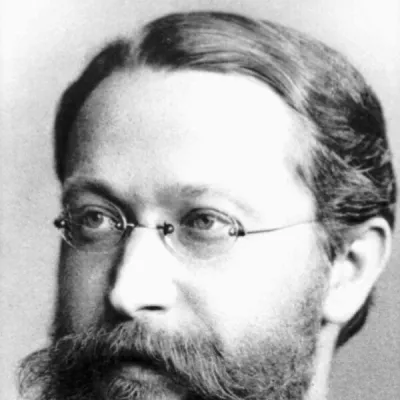
Karl Ferdinand Braun
Human Design Chart
Biography
In 1909 he shared the Nobel Prize for Phiysics with Guglielmo Marconi.
He died on 20 April 1918, Brooklyn, New York, as a result of a serious accident.
Human Design Analysis: Karl Ferdinand Braun as Manifestor 5/1
Manifestor 5/1 — Design at a Glance
Karl Ferdinand Braun revealed himself as someone who actively directed the world into new directions. His design marked him out as a pioneer and visionary whose task was to point the way towards another future. Similar to an emperor in ancient Rome, he possessed the great idea of an empire but did not wage wars himself; instead, he sent others to conquer foreign lands for him.
This configuration brought specific challenges: Braun often polarized people. His visions went far ahead of many people's understanding, leading to misunderstandings and misinterpretations. While some loved his big dreams and followed him, others rejected or even hated him. This pain point of not being understood was a central aspect of his experience.
To find the right followers, it was crucial for him to inform others about his plans at the right time and precisely. This strategy of information served to minimize resistance and mobilize support. When he followed this approach and adhered to his inner authority, he was rewarded with an internal sense of peace. If he lived against this design, however, he felt a persistent deep anger within himself. His path was thus marked by the tension between the necessity to lead and the need for acceptance through clear communication.
Emotional Authority
Karl Ferdinand Braun exhibited a decision-making style characterized by emotional wave movements. His design indicated that he perceived the world always colored by his current mood; enthusiasm could quickly turn into negative evaluations. This dynamic resulted from the emotional authority anchored in his defined Solar Plexus Center. In Human Design mechanics, this authority has absolute priority: once an Emotional Center is defined, it determines inner decision-making regardless of other defined centers on the chart.
For Karl Ferdinand Braun, this meant that spontaneous judgments were often just momentary snapshots and did not necessarily reflect his deeper truth. Quick reactions from a temporary emotional state carried the risk of proving detrimental. Instead, his design pointed towards letting decisions rest. Through patience and multiple reconsiderations, intense feelings gained distance. Only when these waves had subsided would clarity set in. This process of emotional maturation was crucial for long-term direction-setting as it allowed him to reach beyond initial impressions to true understanding.
The 5/1 Profile — Heretic / Investigator
Karl Ferdinand Braun revealed himself as someone who generated deep knowledge from the background to offer others solutions to their problems. His design indicated a tendency to go into depth first (Line 1) before carrying solutions outward (Line 5). Others often sought his advice, given his seemingly inexhaustible insights. This could be burdensome if clear boundaries were not set; the environment's need for answers risked his own exhaustion.
His mechanics included selflessness and sharing of experience (Gate 35). He learned from practical crisis solutions and shared these without clinging to them. At the same time, a stance of attention and humility (Gate 22) was promoted. This line fostered self-awareness and acceptance of a supportive role. Attempts to stand in the spotlight or demand recognition for hidden work often led to frustration or social humiliation. Instead, he brought mutations into society without always being rewarded.
The challenge lay in maintaining balance between private research and public problem-solving. By learning to say no as well, Karl Ferdinand Braun could optimally utilize his gifts. He protected his energy for deep work while helping others specifically. His path was marked by the tension between a drive for knowledge and the expectation of always providing available solutions.
Split Definition — Defined & Open Centers
Karl Ferdinand Braun was marked by a design characterized by constant mental pressure and deep emotional resonance. His defined Head and Ajna centers created an enduring inner compulsion to question and conceptualize; he never escaped this thought process. This mental stream flowed directly into his defined Throat Center, making his communication always the result of his intellectual processing – he spoke what he thought with a reliable yet limited manner.
At the same time, his defined Solar Plexus Center acted as an emotional authority. Braun tended to avoid making decisions in the moment and waited until his emotional wave had clarified itself before taking action. This combination of sharp intellect and deep feeling created a person who was intellectually precise but required emotional clarity to act confidently. His defined G Center also gave him a stable identity and clear sense of direction, independent of external expectations.
In contrast, his open Heart Center revealed a vulnerability to the pressure of needing to prove himself. Without constant willpower, he tended to make promises or adopt competitive behavior to demonstrate his worth – a pattern that often ended in frustration due to the lack of energy needed for such efforts. His open Sacral Center made him sensitive to vital surroundings; he could easily overextend by taking on foreign energies and not knowing when enough was enough. Additionally, his open Spleen Center carried a fundamental survival fear, making him prone to clinging to people or situations that gave a false sense of security rather than trusting his own inner wisdom. This constellation described a person navigating between the urging of the mind and the need for emotional and energetic boundaries.
Channels for reflection, emotional openness and mental abstraction.
Karl Ferdinand Braun was someone whose social interaction and internal processing were strongly influenced by emotional waves and patient reflection. His design tended to act not impulsively but waited for the right moment to make his unique perspective effective.
This attitude drew from the Channel of Openness 22-12. It connected the emotional wave of the Solar Plexus with the cautious articulation in the Throat Center. Braun often acted on a whim; when he was in the mood, he could deeply touch and transform others through his voice and presence. However, if not in the right emotional state, he would withdraw to avoid misunderstandings. This openness depended on his inner resonance rather than external pressure.
Parallel to this, the Channel of the Lost Son 13-33 was at work. It gathered information and secrets (Gate 13) and then withdrew to reflect on these experiences and integrate them into a larger context (Gate 33). For Braun, it was important to practice patience and only pass on lessons once they were fully understood. This channel promoted deep wisdom through memory and contemplation rather than immediate action.
Additionally, the Channel of Emotional Release 39-55 influenced his way of interacting with others. Through provocation and emotional authenticity, he could engage the minds of others and open up new perspectives. His moodiness was not a flaw but a tool to find the correct resonance and resolve emotional tensions.
The Channel of Abstraction 64-47 drove him to filter experiences through kaleidoscopic mental images. He sought meaning behind events and tried to weave coherent narratives from seemingly chaotic elements. This mental activity often led to confusion, but also moments of sudden clarity that he could then communicate.
Individual Gates like Gate 35 (Change Through Interaction) and Gate 5 (Rhythm) supported this dynamic by encouraging him to act at his own pace and learn from experiences. Gate 7 (Leadership) and Gate 45 (Tribe Level) gave him the ability to project patterns for the future and bundle energy within communities. Overall, Braun was a person who unfolded his impact through emotional authenticity, patient reflection, and abstract thinking.
Collective Circuitry — Circuit Signature
Karl Ferdinand Braun showed himself through a split definition that created two independent energetic poles in his design. These poles worked parallel to each other without direct communication, creating an internal tension between different life areas.
One pole formed the Knowledge Circuit. Here, the Throat Center, Solar Plexus and Root Center connected into a cohesive flow. This area drove him to gain new insights and bring them into the world through emotional waves from the Solar Plexus as well as impulsive energy bursts from the Root. The connection between Throat and Solar Plexus allowed him to express his unique identity acoustically and in the present moment, while the Root Center provided the necessary pressure for this change.
The second, completely separate pole was the Sense-making Circuit. It consisted of two isolated segments: a connection between Head and Ajna Centers as well as another between Throat and Identity Centers. The first segment processed visual information and abstract concepts often as inexplicable impulses. The second segment served to connect these past experiences and emotional reflections with his deepest identity and share them with the collective. While the first pole set towards future-oriented transformation, this second pole looked into the past to decipher hidden connections and make sense of them. Both systems provided different, not directly linked energies for his work.
Left Angle Cross of Separation 1
Karl Ferdinand Braun's Human Design configuration indicated a tendency towards inner conflict arising from the tension between deep faith and sober analysis. This configuration, known as the left cross of separation 1, did not describe a harmonious unity but rather an ongoing process of negotiating two opposing forces within him.
On one side was a driving force that relied on trust in higher orders or intuitive truths. On the other side stood a critical mind that questioned facts, allowed for doubt, and demanded logical consistency. For Karl Ferdinand Braun, this was not a single event but a structural aspect of his character: he lived in the tension between the desire for absolute certainty and the necessity to question it repeatedly.
This mechanism shaped how he experienced the world. Instead of calm detachment, he faced a dynamic, often arduous struggle for clarity. The separation should not be seen as a deficiency but as a specific quality of his perception: it allowed him to feel both the emotional depth of faith and the cool distance of reason simultaneously. This created a unique perspective that came with a constant feeling of incompleteness, since neither side ever fully prevailed.
Saturn Return · Uranus Opposition · Chiron Return · 2nd Saturn Return — Life Cycles
Karl Ferdinand Braun's design was characterized by a clear structuring of life phases where inner maturation and external recognition were closely linked. His first Saturn return around the age of 28 marked the transition into stable commitments. This became concrete in 1878: Braun married Amélie Bühler and started a family with four children. This cycle condensed years of personal development into a solid social foundation, typical for this mechanical configuration – creating stability through binding structures.
Later came his Chiron return, an actualization cycle between the ages of 49 and 51, where one's incarnation cross unfolds and meaning becomes tangible. In 1900, at age 50, Stollwerck made contact with Professor August Raps. This event underscores the nature of this cycle: it was not about healing but about the effectiveness of his life task in professional spheres. The connection to the outside world confirmed Braun's position and purpose.
His second Saturn return around the age of 59 crowned this development with public recognition. In 1909, he received the Nobel Prize in Physics. This moment represented the logical conclusion of a long journey of integrating knowledge and practice. The design points to a late bloom where earlier investments in structure and competence reached their peak. Braun lived these cycles as an ongoing condensation of his identity: from private foundation through professional affirmation to highest professional accolade.
Manifestor · Emotional Authority — Synthesis
Karl Ferdinand Braun experienced a process of continuous deepening and expansion of his knowledge. His Profile as Heart/Finder (5/1) indicated a natural ability to grasp complex information and make it accessible to others – an impulse that was reinforced by the defined Head Center. This constant drive for understanding and inspiration shaped his approach, leading him to continually develop new questions (Gate 11). However, emotional authority required time for the maturation of insights, which slowed down the process but made it all the more thorough.
A central paradox in his design lay in the interplay between Manifestor type and emotional authority. As a Manifestor, he was destined to initiate and inspire, while emotional waves demanded careful deliberation and sleeping on decisions. This likely led to tension between the need for quick action and listening to one's inner voice – an exchange that showed in documented cycles where relationships (1878) and career success (1900, 1909) appeared through phases of intense negotiation.
4 Defined Channels
Incarnation Cross - Left Angle Cross of Separation 1
Solar Return
The Solar Return shows the moment when the sun returns to its exact birth position - your personal solar year.
Life Cycles
Discover the life cycles with a detailed triple view (birth chart, cycle chart, composite).
Human Design Profile
- Type
- Manifestor
- Strategy
- To inform others before acting
- Authority
- Emotional Authority
- Profile
- 5/1 - Heretic / Investigator
- Definition
- Split Definition
- Incarnation Cross
- Left Angle Cross of Separation 1
- Date of Birth
- 06.06.1850 15:45
- Place of Birth
- Fulda, Germany
Frequently Asked Questions
What was Karl Ferdinand Braun's Human Design type?
What Profile did Karl Ferdinand Braun have in Human Design?
Which Authority guided Karl Ferdinand Braun?
What incarnation cross did Karl Ferdinand Braun have?
When was Karl Ferdinand Braun born?
Discover your own Human Design
Are you also a Manifestor? Find out in a personal reading how to use your initiation power peacefully and dissolve resistance.
More Personalities
Back to overviewChristian-Jaque
Kesha

Lucebert
Masaccio

Nadar
Papus