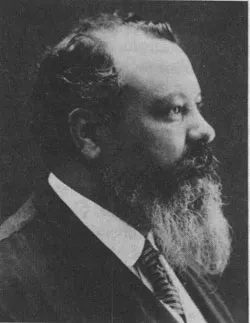
Karl Wilhelm Rosenmund
Human Design Chart
Biography
Rosenmund studied chemistry and received his Ph.D. in 1906 from University of Berlin for his work with Otto Paul Hermann Diels.
He died in Kiel on 8 February 1965, aged 80.
What does Manifestor 2/4 mean for Karl Wilhelm Rosenmund?
Manifestor 2/4 — Design at a Glance
Karl Wilhelm Rosenmund's design inclined towards proactive initiative and clear vision. As a Manifestor, he was geared to move the world actively into new directions, similar to an emperor in ancient Rome who does not execute his plans himself but instructs others to carry them out. This role often placed him at the forefront of processes where he acted as a trailblazer and leader.
However, his greatest pain point lay in the frequent disregard of his intentions by those around him. Since his visions often reached further than the understanding of others, he polarized: Some followed him enthusiastically, while others rejected or even hated him precisely because of these great dreams. To minimize this friction and find the right 'followership', it was crucial for Karl Wilhelm Rosenmund to communicate his intentions timely and accurately. The strategy of informing before acting served to reduce resistance and create clarity.
If he adhered to this strategy and held onto his inner authority, he was rewarded with a sense of inner peace. Conversely, if he lived against his design and neglected the necessary information or ignored his leadership, he felt an enduring, deep-seated anger within him. Thus, his life was characterized by the tension between his driving force and the need to bring this power to a comprehensible level through clear communication.
Splenic Authority
Karl Wilhelm Rosenmund's design inclined towards spontaneous, instinct-driven decision-making. His inner authority lay in the defined Spleen Center, implying that both his Emotional and Sacral Centers were open – a configuration only Projectors or Manifestors exhibit. The Spleen Center functioned here as a health and alarm system with pronounced survival intelligence. This manifested for Karl Wilhelm Rosenmund as spontaneous inner knowledge about whether a situation, environment, or society was right for him. His instinct and physical well-being served as reliable indicators; the first immediate impulse always signified the correct path to preserve his health and rigorously delineate against harmful influences. However, this Spleen voice was a very fine impulse that only occurred once in each moment. Therefore, it required high vigilance not to ignore or drown out these signals through other influences. Since Karl Wilhelm Rosenmund could only know what was right for him at the moment, plans could change short-term. Long-term commitments were thus difficult; he needed much freedom and flexibility in his life to accommodate this spontaneous nature. A retreat for decision-making could be helpful to clearly perceive the fine voice of the Spleen.
The 2/4 Profile — Hermit / Opportunist
Karl Wilhelm Rosenmund was characterized by Profile 2/4, marked by a constant oscillation between the need for withdrawal and the desire for community. As a 'Natural Talent / Networker', he fluctuated between Line 2, which demanded solitude and internal reflection, and Line 4, which sought contact with his closest reference group. This dynamic required clear communication of his boundaries: He had to signal when he needed company and when he wanted to retreat into his 'cave' for clarity.
During this alone time, he processed the impulses from his network. Line 2 brought elements of rigor and selectivity; it demanded patience so that ideas could mature. If this inner work was neglected, boredom or projection of undeveloped thoughts onto others threatened. Simultaneously, Line 4 in Gate 6 acted as a dominant emotional force, driving him to carry his feelings outward and shape the emotional field of his environment – a process of 'conquest and cleansing', where he exerted influence through wisdom and kindness.
The balance lay in the necessity of Line 2's solitude for evaluating social experiences from Line 4. Only when he withdrew sufficiently could he reflect on the knowledge of his network and develop precise, brilliant ideas. His design suggested that his strength lay in this cyclical movement between isolation for idea formation and active exchange with his 'favorite people', where the emotional intensity of Line 4 was always channeled through the selective filtering of Line 2.
Split Definition — Defined & Open Centers
Karl Wilhelm Rosenmund revealed himself as someone with a consistent, trustworthy mental function. His defined Ajna Center ensured that he created concepts and theories in the same way every time; his mind served as an external authority conditioning his mental field in his aura. This mental structure directly flowed into his communication: The defined Throat Center reliably spoke what the mind thought. His willpower was also firmly anchored. With the defined Heart Center, he enjoyed controlling his own resources and life, keeping promises, and using his ego strength to provide for family and community – provided that he followed his inner guidance. His survival consciousness was shaped by the defined Spleen Center, which allowed him spontaneous intuitive judgments in the present moment and radiated a state of well-being. The associated pressure from the defined Root Center helped him nurture existential awareness and rise materially.
At the same time, Karl Wilhelm Rosenmund was open to external influences in other areas. His open Head Center had no consistent way of processing mental information; he tended to engage with others' questions or be overwhelmed by doubts that were not his own. His open G Center meant a lack of fixed identity; he adapted to those around him and gathered directions through initiations from the environment rather than proposing them himself. The open Sacral Center made him vulnerable to the intense conditioning field of others; he amplified their energy, often running on "borrowed" power and not always knowing when it was enough or how to set healthy boundaries. Finally, his open Solar Plexus absorbed the emotions of the surroundings. He took in these feelings, amplified them, and had to learn not to identify with them to remain emotionally stable and handle confrontations correctly.
Channels for money flow, structured insight and life's meaning.
Karl Wilhelm Rosenmund revealed himself as someone who combined material responsibility with a strong individual voice. This stance drew from the Money Line 21-45, which directly connected his Heart Center (Will) to his Throat Center (Expression). This design promoted clear authority in matters of resources and control: He often knew exactly when he needed to act to maintain his independence, and sought ways to structure work so that it served him rather than burdened him. At the same time, he possessed the ability to reorganize complex relationships. Structure 23-43 linked his Ajna Center (Mind) with his Throat Center, enabling him to translate spontaneous insights into clear, efficient concepts. His thinking often seemed prescient; he developed methods or explanations that changed the status quo as soon as they were communicated at the right time. This mental clarity served a deep inner drive to walk his own path. Life Struggle 28-38 connected his Root Center (Adrenaline/Pressure) with his Spleen Center (Intuition). Here lay his stubborn determination to participate in struggles that made personal sense to him. He did not seek conformity but used resistance and crises as a motor to sharpen his individuality and find deeper meaning in the challenges of everyday life. This combination of willful resource management, innovative communication, and intuitive fighting spirit shaped his work enduringly.
Individual Circuitry — Circuit Signature
Karl Wilhelm Rosenmund was marked by two parallel, unconnected energy streams. As a Split Definition, he did not have an uninterrupted connection between these areas; they existed as independent force fields alongside each other. The Knowledge Circuit formed here two separate segments: On one hand, the Ajna Center connected with the Throat Center, which enhanced his ability to structure thoughts and express them clearly. On the other hand, a connection between the Spleen and Root Centers supported his struggle for survival and security in the present moment. This configuration allowed him to formulate innovative ideas while simultaneously trusting inner intuition for safety, without these two processes directly overlapping. Parallel to this, the Ego Circuit was active, connecting Karl Wilhelm Rosenmund's Throat Center with the Heart Center. This channel, known as the "Money Line," represented the accumulation of resources and material well-being through joint efforts. Since this circuit did not connect to the Sacral Center, he required periods of rest for energy regeneration. Thus, Karl Wilhelm Rosenmund’s design combined the power of expression with the ability to create resources through cooperation and exertion of willpower, while intellectual structuring and survival instinct worked as separate yet equally important forces in his life.
Right Angle Cross of Eden 4
Karl Wilhelm Rosenmund's design indicated a tendency towards a specific spiritual orientation marked by the right cross of Eden 4. This configuration did not describe general mysticism but rather a very concrete path: the search for truth in material life and everyday relationships. For him, spirituality was not something abstract or otherworldly, but had to prove itself in physical reality. His focus lay on integrating ethical principles and higher values directly into his actions and interactions with others. It was about setting an example through personal integrity and clear actions rather than just teaching theoretically. This mechanism connected the energy of spiritual ascent with the necessity of being effective in this world. Karl Wilhelm Rosenmund thus showed himself to be someone who consistently carried his inner conviction outward without losing touch with reality. His path consisted of making the divine visible through concrete deeds and responsible action in the world, without breaking the connection to material existence. This shaped his way of dealing with his environment: always aiming to turn spiritual principles into tangible results.
Saturn Return · Uranus Opposition · Chiron Return · 2nd Saturn Return — Life Cycles
Karl Wilhelm Rosenmund's design indicated a tendency towards structural renewal when established orders proved insufficient. This configuration described an inner pressure not just to criticize existing systems but to replace or expand them with new, often radically different approaches. The Uranus opposition in his chart marked phases of intense transformation where the old met the new and forced synthesis.
In 1926, at age 42, Karl Wilhelm Rosenmund published his 'Helpful Book for the Execution of Qualitative Analysis'. This was not a random time but fell precisely into this phase of Uranus opposition. For his design, it was a typical moment: years of work on refining and structuring chemical analysis methods culminated in a book that permanently changed the status quo of the field. The book served as an instrument to make complex connections tangible and useful for others – an expression of his ability to order chaotic or unclear areas through clear, innovative structures. This success confirmed the effectiveness of his design during times of change: by questioning old methods and reformulating them, he created a foundation that would have lasting impact beyond his own time. The opposition here did not show as conflict but as creative tension leading to a lasting improvement in scientific practice.
Manifestor · Splenic Authority — Synthesis
Karl Wilhelm Rosenmund was a Manifestor whose life seemed marked by a strong drive towards initiation and an inner conviction. His design showed a pioneer who developed visions and could inspire others to follow them – a role strengthened by the defined Mental Center (Ajna), which formed consistent concepts and influenced his environment. The connection between Heart and Throat Centers through the Line of Money pointed to natural authority, taking responsibility and showing a desire for control to secure the survival of the 'tribe'.
A central paradox in his chart lay in the interplay between the need for solitude (Line 2) and the longing for community (Line 4). This tension might reflect phases of intense internal work alternating with a desire to share knowledge with others – a rhythm determined by Spleen Authority in the present moment. The success, marked by the publication of a work (1926), could be interpreted as an expression of the Knowledge Circuit generating new insights and setting transformative impulses.
3 Defined Channels
Incarnation Cross - Right Angle Cross of Eden 4
Solar Return
The Solar Return shows the moment when the sun returns to its exact birth position - your personal solar year.
Life Cycles
Discover the life cycles with a detailed triple view (birth chart, cycle chart, composite).
Human Design Profile
- Type
- Manifestor
- Strategy
- To inform others before acting
- Authority
- Splenic Authority
- Profile
- 2/4 - Hermit / Opportunist
- Definition
- Split Definition
- Incarnation Cross
- Right Angle Cross of Eden 4
- Date of Birth
- 15.12.1884 07:00
- Place of Birth
- Berlin, GER
Frequently Asked Questions
What Human Design type was Karl Wilhelm Rosenmund?
What Profile did Karl Wilhelm Rosenmund have?
What Authority did Karl Wilhelm Rosenmund have?
What incarnation cross was assigned to Karl Wilhelm Rosenmund?
When was Karl Wilhelm Rosenmund born?
Discover your own Human Design
Are you also a Manifestor? Find out in a personal reading how to use your initiation power peacefully and dissolve resistance.
More Personalities
Back to overviewChristian-Jaque
Kesha

Lucebert
Masaccio
Nadar
Papus