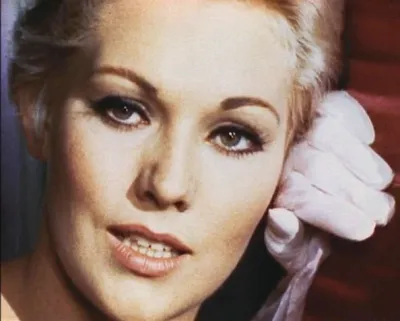
Kim Novak
Human Design Chart
Biography
Born Marilyn Pauline, her dad, Joseph worked for the Chicago-Milwaukee Railroad and came from a family of farmers who believed in hard physical work. He was very remote, private and a loner who never talked about his feelings. She wanted her father's approval more than anything and worked so hard to get it, but never succeeded. "I always had to prove my worth," she said. Her parents were strong disciplinarians, Catholic and very Old Country. She and her older sister were raised in a tough, working-class district of Chicago where she was a shy, often frightened child with few friends. Unusually tall and thin for her age, she used to lock herself in her room. When she was 11, a doctor urged her mom, Blanche, to have her meet children her own age. At her mom's insistence, she joined the Fair Teens Club, a Chicago meeting place for youngsters. The lady in charge talked her into modeling in one of its fashion shows. Through the club modeling she won a scholarship to modeling school. After high school she attended three semesters at college, modeling part-time. Her mom died in 1983 and her dad in 1987.
In 1953, after winning a beauty contest, a refrigerator company hired her to travel nationally as "Miss Deepfreeze." The job took her to Hollywood where she screen-tested for Columbia Pictures and caught the eye of Harry Cohn, Columbia's ruthless chief. He changed her name to Kim, her hair from brunette to platinum blond and seemingly overnight., with no acting experience, a star was born. From the first, she worked with a lot of powerful men in Hollywood - Harry Cohn, Otto Preminger and Alfred Hitchcock, among others.
Kim Novak as a Projector 6/2 in Human Design
Projector 6/2 — Design at a Glance
Kim Novak's design tends towards precise, focused perception. As a projector, her aura acts like a bright flashlight, targeting weaknesses in systems or others. She had the ability to immediately recognize where processes were not functioning or where there was a lack of clarity. This direct diagnostic ability could, however, be misunderstood; addressing flaws immediately often felt like a bright light in someone's face, causing defense rather than gratitude.
The optimal strategy for this design was not active correction but waiting for an honest, appreciative invitation. Kim Novak was most effective when she exemplified her own harmony and showed others the way without intruding. Since projectors do not have a constant, intrinsic energy center, their powers fluctuated. Phases of high productivity had to be balanced with necessary rest periods to avoid burnout. If this rhythm was not observed, the non-self theme of bitterness would arise. Living according to this strategy of recognition and waiting for invitations rewarded her with success. Her influence was based on bringing light into the dark for others, waiting until they asked for her advice rather than imposing it.
Emotional Authority
Kim Novak's design tends towards emotional depth and wave-like experience. She appeared as someone who could not make decisions immediately but needed time to gain clarity. This results from her emotional authority, anchored in a defined emotional center. In Human Design mechanics, once the emotional center is defined, it takes on the role of inner authority – regardless of which other centers are also defined. This priority is a central mechanism.
People with this configuration experience constant emotional waves. Perception of the world is always colored by the current mood; what seems inspiring in one moment can appear negative in the next. A spontaneous judgment is only a snapshot, not yet the deeper truth. Quick decisions from an emotional peak can therefore be problematic.
Instead, the process requires patience. By letting Kim Novak's decisions rest and reviewing them multiple times, intense feelings smoothed out. With this distance, calmness set in and genuine clarity became effective. This path of waiting and maturation was essential for long-term, life-defining decisions to distinguish true inner resonance from passing moods.
The 6/2 Profile — Role Model / Hermit
Kim Novak's design tends towards prolonged experimentation before a clear direction emerges. Before the age of 30, her 6-line profile appeared like a 3-line profile: trial and error characterized her early years, with necessary retreats after mistakes. This aligns with the nature of a 6/2 configuration, which must initially gather many personal life experiences.
Around age 30, the 6-line activates. Then, Kim Novak likely withdraws into a metaphorical cave to reflect on these experiments with distance. This phase serves for intensive reflection, healing, and deep self-knowledge. Only when this inner work is completed does she emerge as a wise person. Others recognize this wisdom and come to her to partake in her life wisdom and learn the ability for deep introspection.
The mechanics of the sixth line from Gate 49 support this: it considers revolutions and carefully decides on support based on emotional clarity and principles. The elevation through Neptune enables transformation through personal example. At the same time, the second line necessitates trusting experts and delegating responsibility, rather than proving everything oneself. Frustration arises only when it is unclear who is called. Kim Novak's path thus shows the transition from impulsive experimentation to wise, delegating leadership, gaining authority through reflection.
Split Definition — Defined & Open Centers
Kim Novak's Human Design suggests a tendency towards constant mental pressure and a strong willpower. Her defined Head and Ajna Centers generated a continuous inspiration to ask questions and form concepts. This mental process was always active, regardless of external circumstances. At the same time, her defined Heart Center gave her a clear sense of will and the desire to determine her own life. She tended to keep her promises and prove her own worth, which strengthened her self-confidence.
This internal structure contrasted with her open centers. Her open Throat Center made her vulnerable to the pressure of seeking attention by speaking or acting, rather than waiting for the right invitation. She tended to wonder if she was noticed and risked wasting energy trying to gain attention. Her open G Center meant she lacked a fixed identity and instead formed herself through relationships and places. She could question who she really was or which direction to take if she did not wait for external initiation.
Her open Sacral Center lacked consistent generative energy. She was sensitive to the energy of others and tended to overextend herself by using "borrowed" energy rather than listening to her own rhythms. This often led to exhaustion if she did not pause. Her open Spleen Center amplified fears about survival and well-being. She was prone to clinging to uncertain situations to get a sense of security from the outside rather than trusting her own intuition. This combination of strong mental and willful drive, along with vulnerable open centers, required patience and waiting to avoid falling into stress or conditioning.
Channels for synthesis, intuition, logic, community and abstraction.
Kim Novak's Human Design suggests a tendency towards analytical skepticism, paired with a deep desire for emotional connection and communal solidarity. Her mind sought not blind faith but verifiable patterns. The Channel of Logic 63-4 connects the Head Center and Ajna Center, making doubt an essential tool for filtering truths. Only what was proven in practice was considered logical by her. This process was collectively oriented: she asked questions to give her environment direction, not to resolve her own uncertainties. Parallel to this, the Channel of Abstraction 64-47 filtered every experience through a kaleidoscope of mental images. Here, the focus was less on dry facts and more on weaving a meaningful narrative from the chaos of life to share with others.
In interpersonal relationships, Kim Novak sought belonging and fair agreements. The Channel of Synthesis 19-49 connects the Root Center and Solar Plexus Center, fostering a fine sensitivity to tribal principles. Loyalty and the protection of shared resources were important to her; she intuitively sensed who belonged to the "we" and who did not. This was complemented by the Channel of Community 37-40, which connects the Solar Plexus and Heart. Here, it was about building trust through direct, personal contacts and fair agreements. She waited for the right invitation to find her role in the group and understood that true support is based on reciprocity.
Another aspect was her inner restlessness. The Channel of Recognition 30-41 drove her to collect new experiences to escape boredom. However, this urge for the new was tempered by her emotional wave, giving her the necessary time to reflect on desires before acting. Individual Gates like Gate 14 (skillful power preservation) or Gate 26 (innovation in the tribe) rounded out this Profile by showing a calm handling of resources and the ability to open her circle to new things without endangering stability.
Collective Circuitry — Circuit Signature
Kim Novak's Human Design suggests a tendency towards rational structuring, which was, however, marked by separated energetic poles. Due to the Split Definition, there existed two independent power centers: a cognitive field and an emotional-physical field, which did not flow directly into each other.
The cognitive field included the Understanding Circuit. Here, the Logic Channel connected the Head Center with the Ajna Center. This created a clear, emotionless ratio aimed at improving things through focus and strategy, and sharing logical insights.
Parallel to this, the second field, which united the Meaning and Ego Circuits, was at work. In the Meaning Circuit, Abstraction again connected Head and Ajna, while Recognition linked the Solar Plexus Center with the Root Center. This generated cyclical emotional waves reflecting past experiences. In the Ego Circuit, Community connected the Heart Center with the Solar Plexus and Root Centers, supported by Synthesis. This promoted cooperation and the exchange of resources within a group based on mutual support. Since there was no connection to the Sacral Center, rest periods were necessary to maintain energy for these social interactions. The Awareness in the Solar Plexus Stream underscored the sensitivity of these emotional and social dynamics. Kim Novak thus emerged as someone who combined clear logical structures with deep, wave-like emotional processes and social cohesion – as two coexisting but non-fusing systems.
Left Angle Cross of Revolution 1
Kim Novak's Human Design shows a tendency towards a radical new beginning, driven by the necessity to break old structures. The left cross of Revolution 1 describes an energy that is not interested in the status quo but questions and transforms existing systems. It is a force that brings about change by breaking down the old to make way for the new. This configuration shows someone who does not get lost in routines but is always seeking the next opportunity for development. The energy of this cross is dynamic and often unpredictable, as it reacts to spontaneous impulses that can change the course of events. Kim Novak integrated this revolutionary energy into her life by repeatedly facing new challenges and leaving established patterns behind. This was not a conscious act of rebellion but a natural expression of her design, which is aligned with evolution and progress. The power of the left cross of Revolution 1 shaped her way of experiencing and shaping the world, always having the courage to take the first step into the unknown.
Saturn Return · Uranus Opposition · Chiron Return · 2nd Saturn Return — Life Cycles
Kim Novak's Human Design profile showed a structure where external validation and inner development were closely intertwined. In 1959, at the age of 26, she starred in "Night and the City" as her best role – a success that coincided with her first Saturn Return. This cycle often marks the point where years of groundwork condenses into a solid, publicly visible achievement. The recognition affirmed the maturity and stability she had attained.
A turning point occurred in 1974, at the age of 41, with the Uranus Opposition. That year, she began her relationship with Robert Malloy. This planetary configuration often brings sudden changes and a desire for freedom or reorientation in interpersonal relationships. The relationship signaled a break with old patterns and the entry into a new, more dynamic phase of life.
Her Chiron Return around 1983, when she was 50 years old, coincided with the death of her mother. In Human Design mechanics, this cycle is not a phase of healing wounds but of fulfilling the incarnation purpose. The event marked the transition into a time when her life's purpose and inner authority increasingly unfolded and became experiential.
In 1987, at the age of 54, her second Saturn Return followed, accompanied by the death of her father. This cycle deepens the structure established during the first Saturn Return and demands a final integration of responsibility and identity. The loss of her father underscored the closure of a long developmental cycle and the solidification of her own, now self-determined life foundation.
Projector · Emotional Authority — Synthesis
Kim Novak's design is characterized by a deep ability to recognize patterns and shed light on the unknown (Projector Type, Logic Channel). This tendency to see and address imperfections is amplified by emotional authority, which requires an intense engagement with feelings and a maturing decision-making process. The profile as a role model and natural talent suggests that experiences are initially lived privately and later shared as wisdom – a process emphasized by the cyclical return points of Saturn and Uranus, marking turning points in life development and relationships. Overall, the picture of a person who achieves deep insight through observation and reflection and makes this wisdom accessible to others emerges.
Central to Kim Novak's design is a paradox between the need for distance and the gift of projection. On one hand, the 6/2 line points to a withdrawal for self-discovery and healing, a life that unfolds in phases of intense reflection and subsequent sharing of insights. On the other hand, she is designed as a Projector to project her energy onto others and recognize flaws in the system (Head Center), which can potentially create resistance. This tension between the desire for inner peace and the natural inclination to connect with the world shapes her dynamics.
5 Defined Channels
Incarnation Cross - Left Angle Cross of Revolution 1
Solar Return
The Solar Return shows the moment when the sun returns to its exact birth position - your personal solar year.
Life Cycles
Discover the life cycles with a detailed triple view (birth chart, cycle chart, composite).
Human Design Profile
- Type
- Projector
- Strategy
- Wait for the respectful invitation
- Authority
- Emotional Authority
- Profile
- 6/2 - Role Model / Hermit
- Definition
- Split Definition
- Incarnation Cross
- Left Angle Cross of Revolution 1
- Date of Birth
- 13.02.1933 06:13
- Place of Birth
- Chicago, IL, United States
Frequently Asked Questions
What is Kim Novak's Human Design type?
What Profiles does Kim Novak have in Human Design?
What authority does Kim Novak have?
What is Kim Novak's incarnation cross?
When was Kim Novak born?
Discover your own Human Design
Are you also a Projector? Find out in a personal reading how to unfold your leadership qualities and recognize the right invitations.
More Personalities
Back to overviewSissy Spacek

Alain-Fournier

Anémone

Ann-Margret

Bourvil
Christian-Jaque