
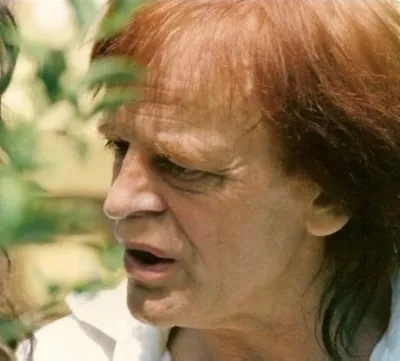
Klaus Kinski
Human Design Chart
Biography
Kinski was found dead of a heart attack at his Los Angeles home on 23 November 1991.
In January 2013, his oldest daughter Pola Kinski published an autobiography, where she reports about years of sexual abuse by her father, between the age of 5 and 19.
What does Manifesting Generator 5/1 mean for Klaus Kinski?
Manifesting Generator 5/1 — Design at a Glance
Klaus Kinski revealed himself as someone who quickly drew things into his life and pursued several projects simultaneously. His design as an expressing generator combined the constant sacral energy of a generator with the initiative of a manifestor. This hybrid nature allowed him to skip steps and move forward rapidly. However, this speed carried risks: Often, his actions were too quick, leading him to have to make up for missed stages later on. This often led to frustration, the specific non-self theme of this type. Additionally, Kinski reacted to many different impulses at once. When strategy and inner authority did not align, this creative drive quickly turned into dissatisfaction. The appropriate approach for him was to first react to life. Only when his sacral center gave a clear 'yes' would he take action. Regular checks to see if the projects were still providing energy were crucial. With proper application of this strategy, Kinski drew deep satisfaction from his work. Then parallel working was not an obstacle but a strength. The compulsion to finish one thing before starting another would have held him back. Instead, his creative power flourished in play mode, driven by variety and enjoyment of the diversity of his ventures.
Emotional Authority
Klaus Kinski lived with an inner authority that did not grant him immediate clarity but led him through a permanent emotional wave. His design saw him making decisions never on impulse, as his feelings were often deceptive when taken as snapshots. What appeared as absolute enthusiasm in one moment could turn into total rejection the next; current mood heavily colored his perception of the world.
This mechanism stemmed from his defined Emotional Center. In Human Design mechanics, this center, if filled, always carries inner authority – regardless of which other centers are also defined. This priority rule was central: The emotional truth takes precedence over all other internal signals. Since emotions have wave characteristics and need time to calm down, Kinski could only recognize his true self once the initial heat had subsided.
Quick, spontaneous actions out of enthusiasm or anger often had negative consequences as they were based on an immature insight. His path to clarity required patience and conscious delay. He needed to 'sleep' decisions multiple times to gain emotional distance. Only when intense feelings had abated and calmness set in did deep, comprehensive understanding emerge. This process of waiting was no obstacle for him but the only reliable way to make long-term life decisions correctly.
The 5/1 Profile — Heretic / Investigator
Klaus Kinski revealed himself as someone who used profound knowledge to offer solutions to others. His design as a Hero/Researcher (Profile 5/1) set a tendency towards building expertise through intensive research (Line 1), which magnetically attracted others seeking answers. People often sought him out for advice, but this quickly overwhelmed him if he did not establish clear boundaries. Line 5 gave him almost compulsive attraction; others desperately wanted to know what treasures he had to offer. This led to a dynamic where he acted like an expert, answering questions for hours only to feel drained afterward. His energy was depleted by the unbridled inquiries of others, similar to an expert whose inbox is overflowing with more questions or criticism. Line 1 emphasized his need for quality and stimulation. He required feedback to understand if his suggestions were effective. Without this feedback system, he risked serving trivial purposes or distorting his expression. The key for him lay in also saying no sometimes. Only then could he maintain the beneficial balance between researching for himself and problem-solving for others. His design challenged him to optimally use his gifts by learning to uphold his boundaries rather than being drained by the constant needs of others. This configuration described a life task of uncovering hidden connections and passing them on to others, but only under the condition that he protected his own energy.
Split Definition — Defined & Open Centers
Klaus Kinski revealed himself as someone with a fixed, reliable self-identity and a clear sense of direction, carried by his defined G Center. This internal security allowed him to show others new paths without needing their approval. His energy source came from the defined Sacral Center, generating constant vital power; he was dependent on reacting to life circumstances to correctly apply this energy and find satisfaction.
His communication and actions were shaped by a defined Throat Center, serving as a pivot point to translate messages from his body into the world. This gave his expression a consistent yet limited clarity. At the same time, he moved within a deep emotional wave, since his Solar Plexus Center was defined. His inner authority lay in waiting for this emotional dynamic to clarify rather than reacting impulsively to its highs and lows. His defined Spleen Center provided spontaneous intuitive judgments in the present moment, while the defined Root Center delivered a consistent pressure to move forward and manage stress.
In contrast, his design's vulnerability was revealed in the undefined centers. His open Head Center lacked a consistent way to process mental information; he tended to be overwhelmed by doubts or questions from others when not trusting his inner authority. Similarly, his Ajna Center was open, meaning he took on concepts and ideas from the environment but should not hold them as his own firm truth. Particularly defining was his open Heart Center: it lacked a consistent energy for willpower in terms of competition or promises. He was vulnerable to wanting to prove himself through overcompensation or spiraling into self-doubt when trying to meet expectations that did not align with his strategy.
Channels for resource power, emotional depth, ambition and maturation.
Klaus Kinski revealed himself as someone marked by a deep connection between generative energy and identity. The Beat 14-2 connected his Sacral Center with the G Center, giving him resources to translate mutations into material reality. This configuration drove him to take innovative directions by trusting reactions from within without foreseeing the exact path. His life force acted as an empowering force for others who could find their own direction through his aura.
Simultaneously, his emotional rhythm determined his expression. The Openness 22-12 connected Solar Plexus and Throat Center, bringing out his moodiness and passion. He only communicated effectively when in the right mood; otherwise, he appeared harsh or isolated. His voice served as a catalyst to move others but was dependent on the tides of his emotional wave.
His ambition was driven by the Transformation 54-32 linking Root and Spleen. This channel motivated him to rise through constant effort and improve his position, spurred by fear of family failure. He worked hard to gain recognition and prove his worth, often pushing himself to exhaustion.
The process of maturation 42-53 between Root and Sacral Center challenged him to complete experiences before starting new cycles. Only through finishing phases could he gain wisdom and pass it on.
Additionally, gates like 56 (Inspiration), 60 (Acceptance of Limitations) and 38 (Resistance for Integrity Preservation). Gate 1 emphasized his uniqueness while Gate 57 promoted intuitive clarity. Gate 13 collected experiences for collective memory, and Gate 36 allowed the release of emotional energy in crises. Gate 29 called for persistence in saying yes to life, Gate 30 steered feelings and desires, Gate 25 fostered mystical innocence, and Gate 39 activated through provocation adrenaline for mutations.
Individual Circuitry — Circuit Signature
Klaus Kinski revealed himself as someone marked by pulsating creativity and emotional waves. His design included two separate energetic systems: on one hand, the connection of Throat and Solar Plexus Centers; on the other hand, the linking of Identity, Sacral, Root, and Spleen Centers. This separation meant that his expressive power was not directly connected to his inner stability.
In the Knowledge Circuit in Klaus Kinski, the channel 'Openness' linked Throat with Solar Plexus Center. This promoted the expression of unique identity through emotional impulses acting as acoustic or pulsating energy. Parallel to this, the same circuit linked Identity with Sacral Center via the channel 'The Beat'. Here it was about confirming one's individuality and acquiring new knowledge through internal mutations. These two parts existed side by side without direct energetic flow between them.
The Meaning Circuit in him connected Sacral with Root Center via the channel 'Maturation'. This directed energy towards sharing emotional experiences from the past to learn together. The energy worked cyclically and descending, focused on reflection rather than cool logic.
Finally, the Ego Circuit linked Spleen with Root Center via the channel 'Transformation'. This supported cooperation in the family through a good balance of giving and taking. Since this circuit had no connection to the Sacral Center, it required pauses for resource regeneration. The energy was timeless and conservative, oriented towards touch and smell senses as well as mutual support within the community.
Left Angle Cross of Limitation 2
Klaus Kinski exhibited a fundamental attitude characterized by the pursuit of inner order and clear boundaries. His design suggested that he felt comfortable in structures that provided him with support, while chaotic or undefined situations often pushed him to his limits. This tendency towards limitation did not serve as a restriction in a negative sense but rather as a protective mechanism to focus energy and prevent overextension.
The left cross of Limitation 2 describes a life task where it is about realistically assessing one's own capacities and consciously setting boundaries. People with this configuration often learn through experience that temptations or excessive demands can endanger their stability. Therefore, Klaus Kinski sought ways to shape his environment so that it met his needs for clarity and control. This was evident in the way he approached relationships and projects: he needed defined conditions to act effectively. Without this structural security, he tended to withdraw or distance himself to restore his inner balance. The mechanics of this cross emphasize the importance of discipline and self-reflection as means to achieve long-term stability. Klaus Kinski lived these principles by always striving to clearly define and adhere to his personal boundaries, which helped him remain true to his life task even in challenging phases.
Saturn Return · Uranus Opposition · Chiron Return · 2nd Saturn Return — Life Cycles
Klaus Kinski revealed himself as someone whose life energy gained increasing structural clarity in the second half of his life. His design indicated a tendency to channel inner impulses through external discipline and long-term dedication, transforming chaotic potentials into focused creative power.
This process crystallized in 1975 at the age of 49 during his Chiron Return. In this fulfillment cycle marking the blossoming of one's incarnation purpose, he published his autobiography “Ich bin so wild nach deinem Erdbeermund”. This was not merely a biographical act but a moment when his inner core increasingly unfolded in life and meaning became tangible.
Six years later, in 1982 at the age of 56, the second Saturn Return took effect. This cycle often demands the integration of responsibility and structure into established patterns. Kinski used this phase for filming “Fitzcarraldo”. Here it was evident how years of groundwork and inner maturation led to a robust, complex result. The mechanics of his design promoted not spontaneous outbursts but deep, almost ascetic dedication to the work, which only through the more mature cycles reached its full effectiveness.
Manifesting Generator · Emotional Authority — Synthesis
He was a Manifesting Generator who, with his defined Sacral Center (Channel of Beats), possessed a constant energy source. This sacral power, combined with the ability to skip steps, led him to quickly set things in motion and initiate changes. His profile as Hero/Researcher (Line 5/1) amplified this drive towards problem-solving and knowledge acquisition; others sought him out to benefit from his insights. This nurtured a deep engagement with the world and a quest for innovation, further fueled by the Knowledge Circuit – an ongoing pulse of creative energy that could also evoke melancholy.
A central paradox lay in the combination of his emotional authority and manifesting drive. He needed time to let decisions mature (emotional wave), yet his design allowed him simultaneous quick action. This tension between the need for inner clarity and the ability for lightning-fast implementation often placed him in a state between initiation and reaction – an interplay of forward momentum and stepping back to ensure no crucial steps were overlooked.
4 Defined Channels
Incarnation Cross - Left Angle Cross of Limitation 2
Solar Return
The Solar Return shows the moment when the sun returns to its exact birth position - your personal solar year.
Life Cycles
Discover the life cycles with a detailed triple view (birth chart, cycle chart, composite).
Human Design Profile
- Strategy
- To respond - wait for something to respond to
- Authority
- Emotional Authority
- Profile
- 5/1 - Heretic / Investigator
- Definition
- Split Definition
- Incarnation Cross
- Left Angle Cross of Limitation 2
- Date of Birth
- 18.10.1926 21:30
- Place of Birth
- Sopot, Poland
Frequently Asked Questions
What was Klaus Kinski's Human Design type?
What Profile did Klaus Kinski have in Human Design?
Which Authority guided Klaus Kinski?
What incarnation cross did Klaus Kinski have?
When was Klaus Kinski born?
Discover your own Human Design
Are you also a Manifesting Generator? Find out in a personal reading how to unfold your multi-talents and direct your energy wisely.
More Personalities
Back to overviewSissy Spacek

Aldair

Alizée

Anémone

Angeli

Ann-Margret
