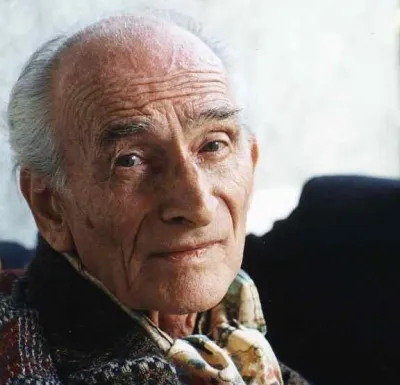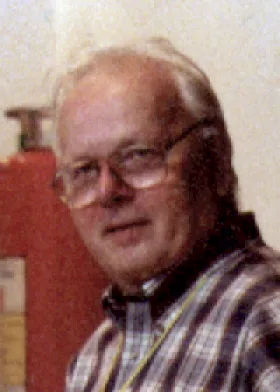
Kristen Nygaard
Human Design Chart
Biography
He was professor of Computer science at the University of Århus 1975-1976, professor II (part-time) at the University of Oslo from 1977, and full-time 1984-1996.
Nygaard died of a heart attack on 10 August 2002 in Oslo, Norway, aged 75.
Kristen Nygaard as a Manifesting Generator 4/6 in Human Design
Manifesting Generator 4/6 — Design at a Glance
Kristen Nygaard revealed himself as a Manifesting Generator, a configuration that united hybrid energy. He possessed the constant power of the Sacral Center but did not merely react passively to impulses; instead, he had the ability for direct initiation through connections to the Motor Centers. This allowed him to skip steps and draw rapid changes into his life.
This speed was a double-edged sword. Often, he acted so quickly that important intermediate steps were missed, forcing him later to backtrack and fill in gaps—a potential source of frustration since his Non-Self theme lay in fighting against this natural dynamic. Additionally, he tended to take on multiple projects simultaneously, driven by various impulses. Without clear inner consent, this could quickly lead to overload.
His strategy involved initially waiting and reacting to life before acting. Only when his Sacral Center gave a clear "yes" did he deploy his energy. Regular checks ensured that the desire for variety did not turn into distraction. When these conditions were met, a specific state emerged: He worked effectively on multiple tasks simultaneously and found deep satisfaction in a playful mode. The requirement to focus solely on one thing would have been counterproductive for him; his strength lay in diversity and rapid, impulse-driven creation.
Emotional Authority
Kristen Nygaard's design indicated a tendency towards emotional depth and temporal detachment in decision-making. She appeared as someone who did not make judgments immediately but subjected them to internal maturation. This attitude stemmed from her Emotional Authority: With her Emotional Center defined, it always served as an inner guiding force – regardless of which other Centers were also active. This meant that her perception was marked by a constant wave of emotional ups and downs. The world appeared to her in varying moods, either enthusiastically positive or strongly negative depending on the momentary feeling. However, her immediate feeling was only considered a first impression, not an ultimate truth. Spontaneous reactions from this fleeting emotion often proved misleading and could have negative consequences. Instead, her system required patience: She took time, let decisions mature overnight, and consciously sought emotional distance. Only when the intense waves subsided did clarity set in. This process of multiple re-evaluations was crucial for long-term direction setting. Through waiting, she gained calmness and made decisions on a deeper, more comprehensive level that transcended momentary moods.
The 4/6 Profile — Opportunist / Role Model
Kristen Nygaard's design showed a tendency that changed significantly throughout his life. In the first thirty years, he experimented intensively with relationships and friendships. The Profile 4/6 worked during this phase similarly to a 3/4-Profile, driven by Line 4. This line emphasized brotherhood, sisterhood, and non-sexual closeness as paths to deeper connection. Intellectual understanding often preceded implementation here.
With the return of Saturn, Line 6 became active. Nygaard now experienced the inner conflict between the desire for community (Line 4) and the need to reflect distantly on meaning (Line 6). This characterizes the entire life of a 4/6 personality: the contradiction of heart against head. In his later years, it was expected that he would take on the role of a wise mentor. Line 6 enabled practical implementation of understanding through three phases: self-empowerment, transpersonalism, and authenticity in role modeling. Venus in elevation promoted values for the benefit of society. Nygaard had to learn to cautiously open his big heart so as not to attach himself to the wrong people and get hurt. His task was to make wisdom visible through cooperation with others while simultaneously overcoming the danger of isolation on the "mountain" of reflection.
Split Definition — Defined & Open Centers
Kristen Nygaard revealed himself as someone who was constantly under mental pressure to ask questions and understand connections. This trait resulted from his defined connection between the Head Center and Ajna Center. He was not inclined to immediately turn these thoughts into action, as he lacked the direct energy for it; instead, he acted as an inspiration source for others by providing conceptual clarity. His mental function was specific and trustworthy, with confusion and doubt being natural parts of his thought process that required their own timing.
As a Generator, Kristen Nygaard had an enormous vital energy source in his defined Sacral Center. However, his design required him to wait for external initiatives before correctly deploying this energy. By waiting and responding rather than initiating, he avoided frustration and resistance. His strength showed in persistence once he received an affirming sacral response.
At the same time, his Solar Plexus Center was defined, making him an emotional authority. He needed time to ride out the waves of his emotions before making decisions. Emotional clarity did not come for him at the moment of decision but only after going through the emotional cycle. This protected him from impulsive reactions and allowed deep insights by exploring various perspectives.
In contrast, his G Center, Heart Center, and Spleen Center were open. His open G Center meant he had no fixed identity or direction but rather took them from his environment. He tended to question whether he was in the right place to find the correct guidance. His open Heart Center made him vulnerable to the pressure of proving his worth through promises, which often ended in frustration as he lacked consistent willpower. Additionally, his Spleen Center being open brought a fundamental fear of survival and a tendency towards conditioning by others. Spontaneous decisions were risky for him since he did not have intuitive security at the moment but had to learn to face his fears and develop wisdom about well-being in healthy ways.
Channels for logic, charisma, emotional clarity and maturation.
Kristen Nygaard's design inclines towards rigorous, critical analysis paired with a powerful, action-oriented presence. His mind seeks not blind faith but verifiable patterns. Channel 63-4 connects his Head Center to his Ajna Center and drives him to question and accept answers as true only if they are consistent and practically functional. This skepticism is not a flaw but a filter: Only what stands up can persist.
At the same time, he possesses immense physical energy that pushes for direct impact. Channel 34-20 channels sacral life force into his expression, giving him charismatic presence and the potential to manifest quickly – provided he reacts to external impulses rather than acting from internal pressure. Without this inner guidance, however, this energy could become chaotic; with it, it becomes a source of lasting inspiration for others.
His emotional landscape is marked by waves. Channel 39-55 connects Root and Solar Plexus, causing moods to swing between joy and melancholy. These fluctuations are not disturbances but a mutative principle: They allow him to filter out the “essence” of a situation or person and respond authentically rather than rationalizing.
Long-term, his actions orient towards deepening through experience. Channel 42-53 connects Root and Sacral Center and challenges him to complete cycles before reflecting. Only then does experience become wisdom. Individual Gates like Gate 3 (Mutation) or Gate 59 (Strategy) support this process by seeing change as a necessity for survival and relationships as strategic connections – always in service of collective development, not just individual satisfaction.
Individual Circuitry — Circuit Signature
Kristen Nygaard's design indicates a tendency towards separate, parallel existing energetic fields. His chart showed itself as a Split Definition: One stream connected the Head Center with the Ajna Center, another linked the Throat, Sacral, Root, and Solar Plexus Centers. These areas were not directly merged but rather existed alongside each other.
The Understanding Circuit connected his Head and Ajna through the Logic Channel (Gates 63–4). This created a focused, rational energy aimed at forming logical structures and conveying them free from conditioning – an "emotionless ratio" directed towards future improvements.
Parallel to this, three additional circuits operated in the second stream field. The Knowledge Circuit connected Solar Plexus and Root Center (Channel 55–39, Release Emotions). Here it was about expressing a unique identity through emotional waves that pulsed and sounded acoustically.
The Meaning Circuit linked Sacral and Root Center (Channel 42–53, Maturity). This energy reflected past experiences cyclically to learn from them together with the collective – a wave-like movement from beginning through middle to end.
Lastly, the Integration Circuit worked between Throat and Sacral Centers (Channel 20–34, Charisma). It combined power from reacting to life with intuitive knowledge to express this in the present moment and thus strengthen one's individuality.
This configuration describes a person whose rational future planning is clearly separated from their emotional, experience-based expression abilities, each area possessing its own inner coherence.
Right Angle Cross of the Sleeping Phoenix 3
Kristen Nygaards Design entailed the right cross of the sleeping Phoenix 3. This configuration established a specific energetic structure that significantly shaped his way of functioning. In Human-Design, this cross marks a profound potential for transformation and renewal, often associated with the ability to forge new paths out of difficult or stagnant situations. The name 'sleeping Phoenix' points to latent power that is not constantly active but becomes effective in certain life phases or under pressure, breaking old patterns to allow something new to emerge.
For Kristen Nygaard, this meant that his inner compass was set to initiate or embody deep changes, especially where others might fail at boundaries. The number 3 refers to a specific aspect of this energy often linked with communication, learning, or building connections. It was not about superficial adaptation but fundamental restructuring. This mechanism manifested in his lifestyle as someone ready to question established structures and develop innovative solutions based on deeper levels of truth or efficiency. His design thus promoted an attitude of respectful revolution where change is achieved through demonstrating better alternatives rather than destruction.
Saturn Return · Uranus Opposition · Chiron Return · 2nd Saturn Return — Life Cycles
Kristen Nygaards Design indicated a tendency towards structural anchoring and increasing authority in professional contexts. His life path was marked by clear milestones that correlated with Saturn Returns – cycles where inner maturity often crystallizes into external positions of responsibility. In 1957, at the age of 31, his first Saturn Return occurred; simultaneously, he became head of the Operations Research department at Forsvarets forskningsinstitutt (FFI). This marked a transition from individual performance to institutional leadership, a typical pattern for this phase.
The second major developmental line revealed itself during the Chiron Return between 49 and 51 years. This cycle represents the blossoming of incarnational purpose: if strategy and authority are respected, here unfolds the deeper meaning of the design. Nygaard was a professor in Århus in 1975, a position that not only conveyed academic knowledge but mirrored his own development as a teacher and architect of structures. It was a phase of full potential realization.
The second Saturn Return around age 58 brought further consolidation. In 1984, Nygaard led the Computer Committee at the University of Oslo. This assumption of a coordinating role underscores the design's inherent ability to organize complex systems and create long-term sustainable frameworks. The sequence of these events confirms the mechanics: each Saturn Return deepened his authority while the Chiron Return brought the substantive content of his work into focus.
Manifesting Generator · Emotional Authority — Synthesis
Kristen Nygaard was an Expressing Generator, whose life was marked by a constant interplay between the drive for rapid implementation and the need for emotional maturity. The connection of sacral energy (from the defined Sacral Center) with expressing impulses (Expressing Generator type) led to a capacity for quickly seizing opportunities, yet his emotional center always demanded time for decision-making and deeper insight. This dynamic was evident in professional phases characterized by swift progress (Saturn Return 1, career start) followed by periods of deepening and reflection (Chiron Return, Saturn Return 2) – a pattern reflecting the inner conflict between heart and head (Profile 4/6).
A central paradox in his design lay in the tension between the defined Head Center, which inclined towards constant inspiration and questioning (Channel Logic), and the need for emotional clarity. Logical analysis and questioning patterns (Gate 63/4) clashed with the emotional wave that required thorough engagement with issues. This dynamic led to a profound search for stability and truth, where the knowledge circuit propelled him to gain new insights and express them through emotional filters – a process continually reshaping and transforming him.
4 Defined Channels
Incarnation Cross - Right Angle Cross of the Sleeping Phoenix 3
Solar Return
The Solar Return shows the moment when the sun returns to its exact birth position - your personal solar year.
Life Cycles
Discover the life cycles with a detailed triple view (birth chart, cycle chart, composite).
Human Design Profile
- Strategy
- To respond - wait for something to respond to
- Authority
- Emotional Authority
- Profile
- 4/6 - Opportunist / Role Model
- Definition
- Split Definition
- Incarnation Cross
- Right Angle Cross of the Sleeping Phoenix 3
- Date of Birth
- 27.08.1926 09:40
- Place of Birth
- Oslo, NOR
Frequently Asked Questions
What was Kristen Nygaard's Human Design type?
What Profile did Kristen Nygaard have in Human Design?
What Authority did Kristen Nygaard have?
What incarnation cross did Kristen Nygaard have?
When was Kristen Nygaard born?
Discover your own Human Design
Are you also a Manifesting Generator? Find out in a personal reading how to unfold your multi-talents and direct your energy wisely.
More Personalities
Back to overviewAldair

Alizée

Angeli

Arletty
Artus

Balthus