
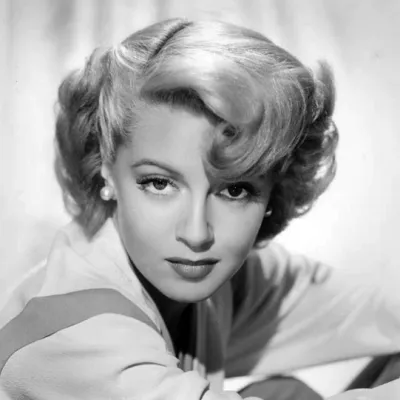
Lana Turner
Human Design Chart
Biography
During the '40s, she was manufactured by MGM into a starlet and gave creditable performances in such great films as "The Postman Rings Twice," "Peyton Place" and "Dr. Jekyll and Mr. Hyde." With over 50 films to her credit, most of her roles were due to her elegance, poise and the ability to project promiscuous sensuality.
Turner's personal life was as melodramatic as her films. Eight marriages (to one man twice), she was always in-and-out of personal dilemmas. Her father was murdered when she was nine, she had a poor childhood, one abortion, several miscarriages, suicide attempts, lawsuits and sexual escapades. In 1958, her name was exploded on the news when her daughter stabbed her lover, Johnny Stompanato, to death. Cheryl was the daughter from her brief second marriage, to restaurateur Stephen Crane. Cheryl revealed that she had been raped repeatedly by Lex Barker, one of her mom's eight husbands, between the ages of 10 ½ and 13. When she told her grandmother, who told Turner, Turner said she held a gun to Barker's head while he slept, then thought, "Is this bastard worth the rest of my life in prison?" When Barker woke in the morning, she ordered him out of the house. They divorced, but to avoid a scandal, no criminal action was taken.
She had throat cancer twice, 1992 and 1994.
Turner died of natural causes on Thursday night, 29 June 1995 aged 74 at her Century City home after years of treatment for throat cancer.
The Human Design of Lana Turner: Generator 1/3
Generator 1/3 — Design at a Glance
Lana Turner had the design of a Generator, which endowed her with immense, sacral energy. She was like a workhorse: extremely strong and enduring, provided she had energy for her tasks. Her life was marked by this immense power, which she used to materialize things. However, this process worked differently from other types; her energy was primarily released when she responded to impulses. Not initiating but reacting was her motto.
Her most successful strategy was to respond to signals from life. When her sacral center gave a clear „yes,“ she acted accordingly. This led to deep satisfaction and a sense of fulfillment. If she did not live according to this design, for example by constantly initiating herself, she encountered frustration and energy depletion.
Two stumbling blocks shaped her experience. The first occurred when she did things she had no desire to do, leading to energy waste and burnout. The second danger was being held back from her heart project, even though she wanted to continue working with full power. Lana Turner thus showed herself as someone who acted from the gut to make her inner strength effective.
Sacral Authority
Lana Turner was a person whose decision-making was characterized by an immediate physical reaction. As a Generator, she possessed sacral authority, which also served as her strategy and simplified the decision-making process. This inner leadership manifested not in the head but in a direct bodily response to external stimuli. She learned to pay attention to her „gut feeling,“ which expressed itself in sounds like grunts, hums, or a confirming „mm-hm.“ Such signals marked the moment when her sacral motor kicked in. In these states, she felt vital and alive, had seemingly inexhaustible energy, and tackled her tasks with great enthusiasm. Her design suggested that she was born to go through life with joy and satisfaction, fully immersed in her activities, without them being bound to an external purpose. A prerequisite for this clear sacral guidance was her open emotional center. Additionally, her activated spleen center acted as a supportive authority. This gave her the ability to react particularly quickly and spontaneously. She had an immediate access to her physical well-being and instinctive perception, which she could rely on to guide her. This configuration allowed her to make decisions in the here and now, supported by a deep, bodily intuition.
The 1/3 Profile — Investigator / Martyr
Lana Turner's design established a basic attitude as a researcher and experimenter. She showed herself as someone who not only collected knowledge theoretically but tested it through direct engagement and experience. This Profile 1/3 combined the desire to understand fundamentals with the necessity to validate them through trial and error.
Her inner dynamics were shaped by two specific forces. On the one hand, the energy of Gate 49, which addressed the law of necessity and revolutionary changes, was at work. This force required patience: emotional waves had to run their course before action-ready decisions could be made to avoid harmful impulses. On the other hand, Line 3 of Gate 43 shaped her adaptability and courage to renew. Here, it was about the willingness to enter into connections and learn from mistakes, even if this entailed criticism or blame.
For Lana Turner, life was a continuous process of verification. She had to learn to navigate between the urge to know more and the impulse to simply act. Only when she had tested a matter both theoretically and practically could she make a trustworthy judgment. Her wisdom did not arise from pure planning but from lived experience, adapting to new circumstances and turning every mistake into a foundation for future actions.
Split Definition — Defined & Open Centers
Lana Turner's design laid a tendency towards constant mental pressure, asking questions and seeking answers. The definition between the Head Center and Ajna Center created a permanent inner drive to understand connections. However, this process was not connected to direct action power, leading her to often experience the mental pressure as concern or confusion rather than immediately turning it into action. Her communication was shaped by the defined Throat Center, serving as a pivot point to carry these mental concepts and inspirations outward.
Despite this strong mental activity, Lana Turner had a reliable energy source in her defined Sacral Center. As a Generator, her strategy was not to initiate but to respond to life. Only through an affirmative sacral response could she unleash her full vitality and find satisfaction. Parallel to this, she possessed a defined Spleen Center, which gave her spontaneous, intuitive body intelligence. These instincts served as a protection mechanism in the here and now, enabling her to recognize what was right for her health and existence, independent of rational considerations.
In contrast, her vulnerability was evident in her open centers. Her open G Center meant she did not have a fixed, unchanging identity but rather blended with her environment and needed to be initiated by others to find direction and love. She tended to question who she really was when not in the right environments. Her open Heart Center led to her not having a constant will to assert herself, often feeling not valuable enough, which could drive her into spirals of self-proving. Additionally, her open Solar Plexus absorbed the emotions of others, leading to inner unrest when she interpreted these foreign feelings as her own. Finally, her open Root Center took on external stress, leading to a tendency to become stressed and try to release it through overactivity rather than addressing its source.
Channels for clarity, care and mental comprehension.
Lana Turner's design inclined towards innovative, structuring communication, paired with a deep instinct for care and the grasp of complex interconnections. This configuration created a personality that not only acted but translated its actions into clear, efficient concepts.
Central was the Channel of Structuring 43-23. It connected the Ajna Center with the Throat Center. Through the Gate of Insight (43), she received spontaneous breakthroughs, which were processed and expressed through the Gate of Assimilation (23). This allowed her to formulate unique perspectives that changed the thinking of others. However, this knowledge was only effective if she followed the natural timing of her strategy; otherwise, she risked misunderstandings.
Parallel, the Channel of Preservation 27-50 between Sacral and Spleen Center was active. The Gate of Care (27) drove her to nourish and protect others, while the Gate of Values (50) guarded traditional orders. She naturally attracted trust and took responsibility for her "tribe," whether family or close community. Her energy served to preserve and protect what she had created.
The Channel of Abstraction 64-47 connected Head and Ajna Centers. The Gate of Confusion (64) filtered experiences through mental images until the Gate of Understanding (47) revealed a coherent story or perspective. Her mind constantly sought meaning behind events, often through a kaleidoscope of possible interpretations. Clarity emerged only through patience and waiting for the "aha" moment.
Additionally, further Gates shaped her essence: Gate 49 (Transformation) reacted sensitively to principles and emotional waves. Gate 4 (Formulation) developed logical patterns for future security. Gate 3 (Mutation) sought new order from confusion. Gate 17 (Succession) organized for the future based on human rights. Gate 33 (Reflection) required withdrawal for processing. Gate 28 (Player) decided on risks in the here and now. Gate 14 (Power) handled influence with grace. Gate 11 (Memory) used visual memories for situational assessment. Together, these energies formed a complex, meaningful, and nurturing presence.
Individual Circuitry — Circuit Signature
Lana Turner's design showed a tendency towards structured, individual expression, which was characterized by separate energetic poles. As a person with split definition, she did not have a continuous, direct connection between her defined centers. Instead, there were two independent energy fields existing parallel to each other.
In the Knowledge Circuit, the Channel of Structuring (Gates 43-23) connected the Ajna Center with the Throat Center. This allowed Lana Turner to pour her unique, often innovative thoughts into clear, acoustically effective forms. She could manifest her individual identity through precise expression, with the pulsating energy of this channel emphasizing her creativity and sometimes her melancholy.
Regardless of this, the Meaning Circuit featured the Channel of Abstraction (Gates 64-47), which linked the Head Center with the Ajna Center. This was about grasping meaning from past experiences. This connection fostered a cyclical, visually oriented way of perceiving, reflecting and sharing emotional waves from the past.
A third, completely isolated field was formed by the Hunter Circuit. The Channel of Preservation (Gates 27-50) connected the Sacral Center with the Spleen Center. This gave her an ancient, instinctive power for protection and preservation of the family. However, this timeless energy of nurturing and defending did not engage in any direct exchange with her intellectual or emotional expression centers. Lana Turner thus lived with these three separate, highly specialized energies, working alongside each other without merging into a single, cohesive flow.
Right Angle Cross of Explanation 1
Lana Turner's Design inclined towards a clear, explanatory nature, which was evident through the right cross of the Explanation 1. This configuration described a life task of uncovering hidden connections and passing them on to others by translating complex issues into understandable language. She sought the truth beneath the surface and felt compelled to convey these insights in a way that others could truly grasp. Her charisma lay not only in seeing but also in explaining what she saw, thereby helping others sharpen their own perspective. This energy shaped her interactions and her approach to the world, always striving to create clarity and eliminate misunderstandings.
Saturn Return · Uranus Opposition · Chiron Return · 2nd Saturn Return — Life Cycles
Lana Turner's design indicated a tendency towards intense, often dramatic turning points that significantly shaped her public presence. Her first Saturn return around age 25 marked a phase of consolidation and professional anchoring. In 1946, at the age of 25, she starred in the film noir "Panic in the Streets" as a murderous adulteress. This event underscores the Saturn energy: an early but profound establishment of her career identity through a role that embodied moral ambiguity and consequence. It was not just a start but a moment when her professional foundation was solidified through a challenging, dark portrayal.
Later, during the Uranus opposition around age 38, a phase of sudden change and unexpected success emerged. Uranus often brings disruptive but liberating impulses that break established patterns. In 1959, at 38 years old, she experienced her greatest success with the melodrama "A Place in the Sun." This triumph was not a linear result of earlier steps but a sudden peak that reflected the Uranus energy: a sudden, almost random blossoming of recognition that radically changed her position in public consciousness. Both cycles show how Lana Turner's design responded to external, time-specific impulses – once through structural anchoring, once through surprising breakthrough.
Generator · Sacral Authority — Synthesis
Lana Turner lived as a Generator, deeply rooted in her sacral authority. This manifested as an immediate reaction to external stimuli, an intuition that guided her towards activities that ignited her energy and gave her a sense of aliveness. Her Profile as a Researcher and Experimentor (1/3) underscored this process: she was constantly seeking new experiences to test and refine through trial and error, gaining solid insights from these explorations. This combination of sacral energy and the drive for independent experience shaped a personality marked by persistence and the ability to venture into new territories – as long as there was inner consent.
A central tension in her design lay between her defined Head Center, which generated a constant mental pressure for inspiration and understanding, and the need to give this energy a concrete expression through her sacral reaction. The inspiration from the Head Center (Channel 43-23) sought form and validation, while her sacral authority showed the way to bring these insights into the world. This led to a dynamic in which the quest for knowledge and the necessity to validate this knowledge through action were in a constant interplay, evident in documented events.
3 Defined Channels
Incarnation Cross - Right Angle Cross of Explanation 1
Solar Return
The Solar Return shows the moment when the sun returns to its exact birth position - your personal solar year.
Life Cycles
Discover the life cycles with a detailed triple view (birth chart, cycle chart, composite).
Human Design Profile
- Type
- Generator
- Strategy
- To respond - wait for something to respond to
- Authority
- Sacral Authority
- Profile
- 1/3 - Investigator / Martyr
- Definition
- Split Definition
- Incarnation Cross
- Right Angle Cross of Explanation 1
- Date of Birth
- 08.02.1921 12:30
- Place of Birth
- Wallace, ID, United States
Frequently Asked Questions
What was Lana Turner's Human Design type?
What Profile did Lana Turner have?
What Authority did Lana Turner have?
What incarnation cross did Lana Turner have?
When was Lana Turner born?
Discover your own Human Design
Are you also a Generator? Find out in a personal reading how to use your sacral energy correctly and discover deep satisfaction.
More Personalities
Back to overviewSissy Spacek

Aaliyah

Alexia

Anémone

Angèle

Ann-Margret
