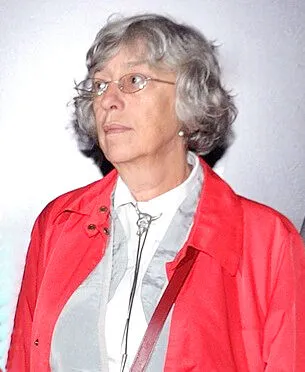
Photo: Wikimedia Commons
Linda McCartney
Human Design Chart
Biography
Linda attended Sarah Lawrence and the University of Arizona. (She studied photography and history at Princeton Univ. and then enrolled at the Univ. of Colorado where she met John Melvin See.) While a student, she married, had a daughter and divorced in 1963. Soon after, she took up photography and returned to New York where she began taking pictures of rock groups in 1965, starting with the Dave Clark Five and the Rolling Stones. Meeting many members of the rock culture, her portraits of the '60s rock stars have become classics. Her "Linda McCartney's Sixties: Portrait of an Era," includes several hundred photos.
In 1967, she met Paul in London and they had an intermittent romance for a year. In September 1968, he asked her to move to London to be with him, and from then on, they were inseparable. Along with her daughter Heather, she and Paul had three kids, Mary, Stella and James. Linda performed as a keyboardist and backup singer in two of her husband's post-Beatle bands, Wings and another, touring in 1989 and in 1994.
A staunch campaigner for animal rights, she was also a vegetarian. With her passion for cooking, she published two vegetarian cookbooks, and in 1991 started marketing a line of frozen vegetarian dinners.
Linda's yearning for simplicity was startling considering her silver-spoon background. Her dad, Lee Eastman was a wealthy Park Avenue lawyer and her mom's family owned department stores.
The Human Design of Linda McCartney: Projector 4/6
Projector 4/6 — Design at a Glance
Linda McCartney appeared as a Projector, a type that does not have its own constant source of life energy but directs its power by focusing on others. Her design marked her as someone who immediately recognized weaknesses in systems or relationships – similar to a bright flashlight that shines directly into the dark. This ability to uncover flaws in a system could, however, be perceived as unpleasant or intrusive when she shone the light directly into others' faces.
The most effective strategy for Linda McCartney was therefore to wait for a respectful and honest invitation before giving her advice. Instead of actively seeking, she should shine by embodying harmony herself; then others would come to her of their own accord to learn her secret tips. Since her Sacral Center was undefined, she did not have a steady flow of energy. Instead, she experienced phases of high productivity, followed by necessary rest phases for regeneration. If she ignored this need for pauses, she risked burning out. If she lived according to this design, however, she was rewarded with success. Missing this strategy led to her Non-Self theme: bitterness. Her success therefore depended largely on whether she used her focusing aura as an attractive light or as a disturbing beam.
Self-Projected Authority
Linda McCartney appeared as a Projector with the rare authority in Self. This configuration shaped her basic attitude through great openness, which was, however, always accompanied by the danger of being distracted by external motoric energies. The central challenge was not to lose herself in this openness or to constantly chase after external energy.
Her inner truth lay in her identity. Decisions arose in two ways. Either through self-dialogues or dialogical exchanges when invited to do so. Crucial was to listen to herself and distinguish when her Self spoke and when her mind did. What she spontaneously and without thinking expressed revealed her true essence. Through this expression, her uniqueness became recognizable to others.
The second way was a physical feeling that drew her in a certain direction. She could feel drawn to or away from something geographically or thematically. If she recognized her own direction in life and followed it faithfully, she became a direction setter for others. There lay her specific success potential. The authority in Self therefore did not require quick action, but the ability to feel and articulate her own, often intuitive direction without being overwhelmed by the surrounding energy.
The 4/6 Profile — Opportunist / Role Model
Linda McCartney's design laid a tendency to a strong conflict between the need for community and the urge for personal distance. As a person with Profile 4/6, she experimented intensively with relationships and friendships in her first thirty years, during which Line 6 still acted similarly to a Line 3. In this phase, she sought connection and recognition within her networks.
With the activation of the sixth line after the first Saturn return, a characteristic contradiction became apparent: the desire to be deeply rooted in a community stood in tension with the impulse to withdraw to think about the meaning of life. This inner conflict between heart and head shaped her development. The fourth line drove her towards social influence and success, but also brought the danger of becoming too fixated on her own process or neglecting others. At the same time, the sixth line demanded modesty and self-defense. She learned to recognize and overcome weaknesses rather than ignore them. In her later years, it was expected of her to act as a wise role model. This happened not through isolation, but through cooperation. Her big heart remained cautious to avoid opening up to the wrong people and getting hurt. She navigated between the social demand and her inner truth by translating her experiences into a guiding function for others.
Single Definition — Defined & Open Centers
Linda McCartney revealed herself as a person with a clear inner orientation and a reliable way of communication. Her defined G Center gave her a firm self-image and a deep sense of lovability. She had a natural sense of her life direction and could show others new paths without becoming dependent on them. This inner security allowed her to speak her truth from a stable identity.
Her defined Throat Center served as a focal point for her messages. It transmuted information from her design into clear language and action. Since the throat was connected to her identity, she spoke from an 'I' that knew who it was and where it was going. This shaped an honest and direct expression that did not depend on fleeting moods but on her deep conviction.
In contrast, her Head Center was open. Linda McCartney tended to take mental inspirations from the environment without identifying them as her own truth. She could be distracted by doubts or questions from others when she did not trust her inner authority. Her open Ajna Center, however, allowed her to be flexible with concepts and grasp various perspectives without clinging to a single opinion.
Her Heart Center was also open. She was not designed to generate willpower in the sense of competition or promises. Instead, she took the pressure to prove herself from the outside. This led her to sometimes put herself in situations to demonstrate her worth, although she did not consistently possess this energy. Her open Sacral Center reinforced this dynamic: She absorbed the vital energy of her environment, which could lead to overexertion since she did not have a constant source for generative power.
Her open Solar Plexus made her sensitive to emotional currents. She reflected the feelings of others and had to learn not to personalize them. Her open Spleen Center led her to cling to people with defined Spleen Centers to feel a sense of security and well-being, even if this was not always healthy. Finally, her open Root Center absorbed stress from the environment, which could lead to a cycle of overactivity and exhaustion if she did not recognize this stress as foreign.
Channels for inspired presence and conscious action.
Linda McCartney showed herself as someone who worked through authentic presence and creative example. Her design tended towards individual leadership, not through words but through living her own truth.
This trait was marked by the Inspiration Channel 1-8. This channel connects the G Center with the Throat Center and allows a transformative perspective to be creatively expressed. Through Gate 1 (Self-Expression) and Gate 8 (Contribution), she was designed to gain attention by living her uniqueness. She inspired others to discover their own individuality, like a pianist whose playing encourages listeners to play the piano. This channel does not require social adaptation but courage to stand out from the crowd.
Parallel to this, the Awakening Channel 10-20 worked. This channel also connects the G Center with the Throat Center, this time through Gate 10 (Presence) and Gate 20 (Now). This channel expresses the wisdom of being awake in the present and loving oneself. Linda McCartney lived this attitude by making decisions based on inner clarity. Through her self-acceptance and behavior in the moment, she radiated an awareness that encouraged others to be themselves. She survived and flourished by fulfilling her potential as a living expression of awakened self-love.
Additionally, prioritized gates contributed to her orientation. Gate 46 emphasized dedication and the care of the body as a temple, promoting happiness through engagement. Gate 25 brought a mystical attitude of innocence and self-love. Gate 15 facilitated adaptation to natural rhythms and humility. Gate 45 gathered energy on the tribal level and expressed willpower. Gate 62 enabled logical pattern recognition and patience. Gate 16 allowed experimentation and mastery through identification with skills. Gate 23 translated inner sound into language and promoted multifaceted mutations. Gate 31 transferred leadership to others.
Individual Circuitry — Circuit Signature
Linda McCartney showed a clear, coherent energy between her Identity and Throat Centers. This direct connection shaped her expression: What she was, she could articulate immediately. Her design included the Knowledge Circuit, activated by the Inspiration Channel (Gates 1–8). This channel connected the Identity with the Throat Center and promoted the impulse to directly translate new ideas or emotional waves into words. It was about confirming one's individuality through acoustic expression.
Additionally, the Integration Circuit worked through the Awakening Channel (Gates 10–20). This channel also connected the Identity with the Throat Center. Here, it was about drawing strength from reacting to life and channeling this through intuitive knowledge and proper behavior in the present. Linda McCartney lived this energy by speaking her inner truth directly.
Since she had a simple definition, these channels formed a single, closed group. There were no separate, parallel energies acting independently. Instead, the power of inspiration and integration flowed seamlessly through the same axis. Her identity found its natural expression in the voice or spoken word, supported by the pulsating, creative energy of the Knowledge Circuit and the clarifying power of the Integration Circuit. This configuration allowed her to carry her unique perspective outward without inner blocks.
Right Angle Cross of the Vessel of Love 3
Linda McCartneys design indicated a tendency towards a deep, often silent dedication to her closest relationships. This configuration, the right cross of the Love Vessel 3, described a life task that did not lie in loud expression or public display, but in the quiet, almost sacrificial care of connections to others. It was an energy that worked in the background and whose strength lay in not seeking recognition, but in seeking to provide emotional stability for her environment from the background.
This mechanism manifested as a kind of inner discipline of love: Linda McCartney lived according to a pattern that made it difficult for her to place her own needs before those of the loved person. The 'Love Vessel' implied that she strongly identified her identity with the role of care and support. The addition 'right' and the number '3' pointed to a specific orientation that aimed less at intellectual analysis and more at direct, emotional resonance. She did not seek the perfect relationship in an abstract sense, but rather the concrete, everyday connection.
It was characteristic of her design that she found strength in stepping back and making space for others. This was not a weakness, but an active, albeit silent form of presence. Her energy flowed where it was needed without her having to communicate this explicitly. This attitude shaped her interactions sustainably: She was the anchor point that offered security through its constancy and silence, rather than through words or actions.
Saturn Return · Uranus Opposition · Chiron Return — Life Cycles
Linda McCartney showed herself to be someone who found her most stable foundation in committed relationships and clear role structures. This corresponded to the dynamics of her first Saturn Return, which often marks the anchoring in long-term commitments. In 1969, at the age of 28, she married Paul McCartney. This step condensed years of development into a sustainable life structure that gave her stability.
Later, during the Uranus Opposition, a phase of detachment and new perspectives emerged. Uranus often demands breaking old patterns and finding individual expression possibilities. In 1980, at the age of 39, Linda McCartney appeared as a guest musician on the albums 'McCartney II' and 'Japanese Tears'. This was not just a side project, but a visible step towards her own artistic autonomy, separate from the pure partner role.
The Chiron Return around the age of 50 is a fulfillment cycle in which the personal life purpose unfolds, provided one has followed their own strategy. It is not about healing, but about blooming and finding meaning. In 1991, at the age of 50, Linda McCartney began distributing a line of frozen vegetarian ready meals. This undertaking was the concrete embodiment of her deepest values and missionary strength, carrying her convictions into the world. The cycle confirmed that her path was not only private but also publicly effective.
Projector · Self-Projected Authority — Synthesis
Linda McCartney lived a path marked by a deep inner authority that revealed itself in self-dialogues and listening to her own spontaneous truth. This inner listening, combined with the profile of a networker and role model, led her to intensively explore relationships and friendships before she later turned to the role of an inspiring figure. Her ability to recognize flaws in the system (Gate 1), paired with the channel of inspiration, points to a natural ability to develop new perspectives and express them creatively – an expression of the knowledge circuit, which triggered transformation.
A central paradox in her design lay in the interplay of Heart and Head. The profile points to an inner conflict between the desire for belonging (Line 4) and the need for independent reflection (Line 6). At the same time, she projected her energy onto her environment and quickly recognized what did not work for others, while she herself adopted an open and vulnerable stance. This tension between recognizing others' problems and her own vulnerability shaped her path, particularly in relation to relationships and the search for authenticity.
2 Defined Channels
Incarnation Cross - Right Angle Cross of the Vessel of Love 3
Solar Return
The Solar Return shows the moment when the sun returns to its exact birth position - your personal solar year.
Life Cycles
Discover the life cycles with a detailed triple view (birth chart, cycle chart, composite).
Human Design Profile
- Type
- Projector
- Strategy
- Wait for the respectful invitation
- Authority
- Self-Projected Authority
- Profile
- 4/6 - Opportunist / Role Model
- Definition
- Single Definition
- Incarnation Cross
- Right Angle Cross of the Vessel of Love 3
- Date of Birth
- 24.09.1941 10:00
- Place of Birth
- New York, NY, United States
Frequently Asked Questions
What was Linda McCartney's Human Design type?
What Profile did Linda McCartney have in Human Design?
What Authority did Linda McCartney have?
What incarnation cross did Linda McCartney have?
When was Linda McCartney born?
Discover your own Human Design
Are you also a Projector? Find out in a personal reading how to unfold your leadership qualities and recognize the right invitations.
More Personalities
Back to overviewSissy Spacek
Aaliyah

Alain-Fournier
Alexia

Alizée

Anémone