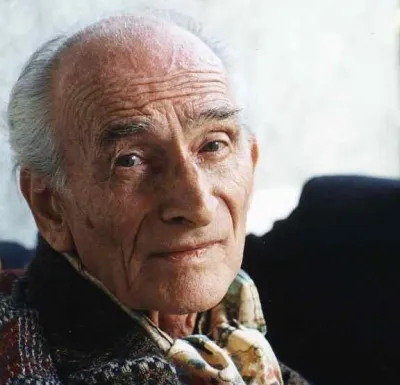
Louis Malle
Human Design Chart
Biography
The son of a wealthy French-Jew industrialist, Louis was educated by Jesuits and then by Catholic monks in Fontainebleau. When the Nazis began picking up Jewish kids, the family moved to the south of France where they lived with great discretion. The experience of the war years made a great impression on the boy. He attended the University of Paris where cinema piqued his interest. Becoming an assistant to Jacques Cousteau, he sailed for months, working on the feature-length documentary, "The Silent World," which won the Palme d'Or, the top prize at the Cannes Festival in 1956.
Well mannered, civilized, soft spoken and gifted, a unpretentious man small in stature, he married and after two children, divorced Anne-Marie Deschodt. Looking for more depth of meaning in his life, he took a two-year sabbatical in India. Out of his exploration came a nine hour documentary entitled "Phantom India," which was acclaimed around the world, but banned in India.
In 1980, he married American actress Candice Bergen; they had one child, Chloe. He met 14-year-younger Bergen on 4 July 1979. Both of them were very independent people, and often they would be working on different continents.
Malle had extensive heart surgery in early 1993. He was diagnosed with cancer of the lymph nodes in mid-1995.
Died on 23 November 1995, Beverly Hills, CA.
Louis Malle as a Manifesting Generator 5/1 in Human Design
Manifesting Generator 5/1 — Design at a Glance
Louis Malle worked with hybrid energy: he had the constant power of a generator but also possessed the ability to quickly draw things into his life. This design tended to skip steps and handle multiple projects simultaneously. While this speed initially seemed efficient, it carried the risk of overlooking important intermediate steps. When this happened, he had to backtrack and make up for missing elements – a process that could quickly lead to frustration as it aligned with his non-self theme.
His creative drive was strongest in „play mode“, when he sought variety and wasn’t forced to finish one thing before starting the next. Crucial to his well-being was responding to inner impulses. Only when his Sacral Center – his energy source – clearly affirmed: „Yes, I find this great“, could he use his speed constructively. Without this affirmation or if he acted against his internal rhythm, his creative joy quickly turned into exhaustion. Louis Malle drew deep satisfaction from his work once he learned to respond to life impulses rather than force them and regularly check parallel activities for inner approval. Thus, his hybrid nature became a source of lasting fulfillment instead of the engine for constant corrections.
Emotional Authority
Louis Malle lived with an internal authority that required him never to make decisions in the heat of the moment. His design featured a defined Emotional Center, meaning his inner voice was marked by wave-like mood swings. He saw the world colored by his current emotional state; enthusiasm could quickly turn into rejection. Yet this first impression did not represent ultimate truth; spontaneous judgments were often misleading and potentially harmful to his life path.
The mechanics of his design dictated that emotional authority took precedence over all other defined centers, regardless of further configurations in his chart. This was a central rule: As long as the Emotional Center is active, it dominates decision-making. Louis Malle had to exercise patience and give himself time to gain clarity. Only after „sleeping on“ an issue and letting intense feelings subside did calmness set in for him. This process of emotional detachment was essential, especially for long-term steps with significant influence on his life course. He learned to hesitate and ask questions repeatedly until the emotional wave subsided and a grounded, calm insight took hold.
The 5/1 Profile — Heretic / Investigator
Louis Malle carried Profile 5/1, which shaped a fundamental stance: he used deep, individual knowledge (Line 1) to offer it to others for problem-solving (Line 5). This gave him almost magnetic appeal; people sought him out to find answers. Yet this dynamic held risks. Without clear boundaries, there was the danger of being overburdened, comparable to an expert exhausted after hours of consultation and still receiving inquiries.
His design included Gate 28 (Line 5), which addressed life struggles. It questioned whether a conflict was worth the effort. There was the risk that trust would be abused by sending others into conflicts whose purpose remained unclear. This connected with the ability to dissolve alliances and join stronger groups.
Simultaneously, Gate 33 (Line 1) operated, demanding retreat and reflection. In weak positions, wisdom was required; unreflective courage only led to repeating mistakes. Louis Malle had to learn to hold back and communicate only after his internal process was complete. Only then could he maintain the balance between his own research drive and supporting others. Learning to say „No“ was crucial for him to optimally use his gifts without exhausting himself.
Split Definition — Defined & Open Centers
Louis Malle revealed himself as someone who lived under a constant mental pressure to question and understand connections. His defined Head and Ajna centers created a perpetual inspiration, but this was not directly translatable into energy; he had to wait until others were ready to embrace his concepts. This mental work flowed into his defined Throat Center, which served as the pivot point for translating thoughts into communication and action. Simultaneously, he possessed immense vital force through his defined Sacral Center. As a Generator, his strategy was not to initiate but to respond with full energy to stimuli from the environment. This contrasted with his also defined Solar Plexus Center, which acted as an inner authority. He had to wait for the emotional wave to clear before making decisions, as impulsive action at its peaks or troughs led to chaos. His defined Root Center provided a constant stress pressure that propelled him forward and shaped his way of surviving in the material world.
This clear internal engine starkly contrasted with his open centers. His open G Center meant a lack of firm identity; he tended to orient himself towards his environment and often sought validation through the right place or people, rather than pursuing his own direction. The open Heart Center made him vulnerable to the pressure to prove his worth, which could lead to a cycle of promises that he couldn't keep. Additionally, his Spleen Center was open, making him sensitive to well-being and fear. He tended to cling to people with defined Spleen energy for a sense of security and was prone to making spontaneous decisions that were later regretted because they weren't based on his own authority.
Channels for logic, maturation, abstraction, intimacy and openness.
Louis Malle exhibited a fundamental attitude of skeptical intellect. His design inclined him to constantly filter patterns to test their reliability; only when proven reliable did he accept them. This skepticism served not to doubt everything but to seek verifiable proof. The Logic Channel 63-4 connected his Head Center with the Ajna Center, generating an active mind that questioned to provide useful predictions for the collective. If this mental pressure wasn't resolved, it could lead to anxiety; however, in flow, it helped him support others through well-founded answers.
Parallel to this was a deep drive towards merging. The Union Channel 59-6 connected his Sacral Center with the Solar Plexus and rooted him in powerful quantum energy of intimacy. Here, sexuality and emotional waves of pleasure and pain intertwined, making relationships personal and profound. Louis Malle needed patience as his emotional wave determined the timing for friendships and intimate bonds; only after waiting for clarity could he foster fertility in creative or interpersonal endeavors.
His expression followed a capricious openness. The Openness Channel 22-12 connected Solar Plexus and Throat Center, making his articulation dependent on ebbs and flows of his mood. He used the quality of his voice to emotionally impact others but only when he felt like it. Forced effort led to harshness; in the right mood, however, he could act as a catalyst for change.
Additionally, he experienced cycles until completion. The Maturation Channel 53-42 connected Root and Sacral Centers and demanded living each cycle fully before reflecting to gain wisdom. Each new experience built on the previous one; premature ending would force repetition.
Mentally, he sought the mysterious behind facts. The Abstraction Channel 64-47 linked Head and Ajna and drove him to sift through experiences with mental imagery until an inspiring story or fresh perspective emerged that he could share.
Furthermore, Gates like Player (28) with its focus on present risks and Caregiver (27), enriching activities with altruistic warmth, were active. Gate 33 promoted reflection before new cycles, while Gate 19 marked the need for secure territory and spiritual community.
Collective Circuitry — Circuit Signature
Louis Malle revealed himself through his design as someone who oscillated between cool analysis and deep emotional experience. His split definition generated two parallel, non-directly connected energy flows that shaped different aspects of his personality.
One stream linked Head to Ajna Center via the Understanding Circuit (Channel 63-4). This gave him a focused, logical thinking style aimed at structuring and sharing rational insights for the future. Parallel to this, the same channel-Head-Ajna as separate segments worked in the Meaning Circuit, while another isolated stream connected Sacral with Root Centers (Channels 64-47 and 42-53). This second part of the Meaning Circuit directed attention to past experiences. The energy here was cyclical, serving to learn from the past and share these felt insights with the collective.
The other main flow in his design united Throat with Solar Plexus Center via the Knowledge Circuit (Channel 12-22). This allowed for an authentic expression of his individual identity driven by pulsating creativity and emotional wave movements. Additionally, the Archer Circuit connected Sacral with Solar Plexus Center (Channel 59-6). This connection underscored primal instincts of protection and care aimed at securing survival and preserving genetic lineage and family. Together, these separate streams formed a profile linking logical future visions with processing past emotions and protecting instinctive needs.
Left Angle Cross of Alignment 2
Louis Malles Human-Design profile featured the left cross of Manifestor. This configuration fostered a fundamental stance characterized by a profound connection to the flow of life, coupled with a clear inner orientation towards what is essential. It was not about stubbornly clinging to plans but rather an ability to recognize the right moment and act in harmony with it.
This structure promoted a kind of intuition that relied less on logical analysis and more on a direct feeling for the environment and one's resonance within it. In this context, Louis Malle demonstrated someone who carefully dosed his energy, deploying it only when he was internally confirmed that his path was correct. This protected him from overexertion and allowed him to maintain a certain calm even in complex or chaotic situations.
The Manifestor orientation within this cross emphasized the importance of rhythm and patience. It was about not fighting against the current but going with the flow while maintaining one's own center. This trait enabled Louis Malle to see challenges not as threats, but as part of a larger whole that he shaped through his existence. His actions thus arose from a place of inner peace, helping him remain clear and authentic without being led by external expectations.
Saturn Return · Uranus Opposition · Chiron Return · 2nd Saturn Return — Life Cycles
Louis Malle exhibited a life rhythm marked by sudden, disruptive forces. This tendency towards unexpected breaks and new beginnings stemmed from the Uranus opposition in his design: a mechanism that resolved internal tensions through external shocks, requiring constant adaptation. In 1971, at age 39, this dynamic came to a dramatic head when he was diagnosed with heart palpitations. This event marked a critical turning point in his career, forcing an acute physical crisis into a necessary pause and realignment – the kind of reset often brought by Uranus influence.
Later, around 1980, Louis Malle reached his Chiron Return. At about age 48, this began a cycle of fulfillment where his deepest life purpose increasingly unfolded in everyday life. This was not a phase of healing old wounds but rather one of blooming, living his authentic nature. As evidence of this inner clarity and stability, he married Candice Bergen for the second time in 1980. This relationship represented the fertility of this fulfillment cycle: a step taken not out of compulsion or repair need, but from an awakened awareness of what truly served him and who he was in his full destiny.
Manifesting Generator · Emotional Authority — Synthesis
Louis Malle was a Manifesting Generator whose life was marked by a deep tension between the urge for rapid initiation and the necessity of emotional maturation. The connection of sacral energy (from the defined Sacral Center) with manifesting impulses led to seizing opportunities quickly, yet often realizing steps had been skipped. This pattern manifested in a constant oscillation between creative forward momentum and returning to clarity – a dynamic process that shaped his path. The defined Head-Ajna Channel (Logic) amplified this inner drive, filtering patterns through questions and doubts while always seeking constancy.
A central paradox in his design lay in the interplay of emotional authority and the Profile of Hero/Explorer. Emotional waves required time for decisions, while Line 5 magnetically drew him to impart knowledge and solve others' problems. This configuration led him to deeply research and inspire (Knowledge Circuit), yet also feel pressured to provide quick answers – a tension field visible in cycles of career and relationships.
5 Defined Channels
Incarnation Cross - Left Angle Cross of Alignment 2
Solar Return
The Solar Return shows the moment when the sun returns to its exact birth position - your personal solar year.
Life Cycles
Discover the life cycles with a detailed triple view (birth chart, cycle chart, composite).
Human Design Profile
- Strategy
- To respond - wait for something to respond to
- Authority
- Emotional Authority
- Profile
- 5/1 - Heretic / Investigator
- Definition
- Split Definition
- Incarnation Cross
- Left Angle Cross of Alignment 2
- Date of Birth
- 30.10.1932 01:00
- Place of Birth
- Thumeries, France
Frequently Asked Questions
What was Louis Malle's Human Design type?
What profile did Louis Malle have in Human Design?
What authority did Louis Malle have?
What incarnation cross did Louis Malle have?
When was Louis Malle born?
Discover your own Human Design
Are you also a Manifesting Generator? Find out in a personal reading how to unfold your multi-talents and direct your energy wisely.
More Personalities
Back to overviewAldair

Alizée

Angeli

Arletty

Artus
Balthus