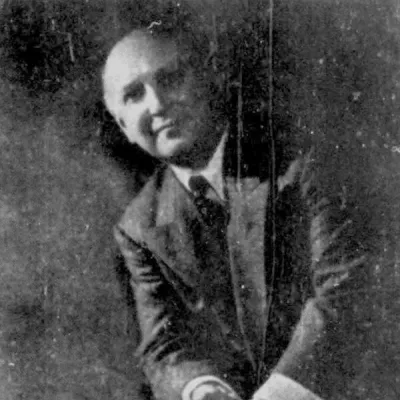
Ludwig Bemelmans
Human Design Chart
Biography
Ludwig Bemelmans as a Manifesting Generator 3/5 in Human Design
Manifesting Generator 3/5 — Design at a Glance
Ludwig Bemelmans revealed himself as someone who possessed a constant energy source combined with the ability to quickly bring things into existence. His design tended towards skipping steps and handling multiple projects simultaneously, which endowed him with immense creative power. This hybrid configuration united the stable strength of a Generator with the direct action of a Manifestor.
The challenge lay in this speed: Often, important stages were overlooked, leading to residues and frustration - the central non-self theme of this type. Also, reacting to many impulses simultaneously could endanger inner satisfaction if it was unclear whether a project still resonated.
The solution involved initially waiting for external stimuli and then acting only when an internal confirmation came. Regular checks helped ensure that energy continued to flow. When Ludwig Bemelmans felt this resonance, he entered a 'play mode'. In this state, variety was not an obstacle but the source of his deep satisfaction. Instead of focusing on one thing alone, he found his strength in parallel creation and joy in the process itself as long as there was inner approval.
Sacral Authority
Ludwig Bemelmans revealed himself as someone whose decisions did not come from the head but directly from the gut. His design tended to react to external stimuli with immediate physical signals - a soft grunting at rejection or a powerful humming at agreement. This sacral authority was his primary decision-making instance and source of inexhaustible energy.
As a Generator, this inner guidance was also his strategy: responding. Instead of actively approaching the world, he waited for an impulse from outside. When his Sacral Center responded positively, a state of great vitality ensued. He felt alive and acted with great enthusiasm, completely without compulsion or purposefulness. This physical validation guaranteed satisfaction; ignoring the signal deprived him of his natural energy source.
Especially relevant was the connection to the Spleen Center. If this was activated and linked to the Sacral Center, Ludwig Bemelmans received direct access to instinctive perception. This allowed for quick, spontaneous reactions where bodily well-being and intuitive security went hand in hand. His life was characterized by his ability to reliably orient himself towards inner resonance frequencies, which enabled him to engage in activities with joy as long as they appealed to his sacral energy.
The 3/5 Profile — Martyr / Heretic
Ludwig Bemelmans revealed himself as someone who possessed a wealth of practical experience and was eager to present it to others. His design tended towards not assuming anything but trying everything out for himself first. This attitude of the explorer (Line 3) meant that he learned through trial and error. Mistakes were not failure in the negative sense, but necessary steps to expose false knowledge and create new concepts.
From these personal experiences developed his role as hero and savior (Line 5). The self-acquired knowledge was attractive to others; they sought his advice because he solved problems encountered in practice. This appeal flattered him, but also contained a tension: Public presentation of this knowledge could be painful if experiments failed before everyone's eyes and false knowledge was exposed.
Furthermore, there was a need for readiness to sacrifice during crises. In traditional contexts, such actions were highly praised. However, this willingness was endangered by emotional instability (Gate 49), which could lead to blind sacrifices. When Jupiter fell, the design tended towards sacrificing with condescension or justifying regression through apparent success. Therefore, it was important that such sacrifices only occurred according to individual strategy and authority as well as genuinely in crisis situations to avoid a condescending attitude or lack of sensitivity.
Split Definition — Defined & Open Centers
Ludwig Bemelmans revealed himself as someone whose inner drive was characterized by a rare combination of constant mental pressure and direct articulation ability. His definitions in the Head, Ajna, and Throat Centers combined inspiration with the ability to immediately express these thoughts in words. This created a 'speaking inspiration' that lacked initial action power but relied on reaction. As a Generator, he had a defined Sacral Center that endowed him with immense vital life energy. However, this energy only unfolded correctly through responses to external inquiries; active initiation led to energy loss and frustration. The challenge lay in not converting mental pressure into hasty actions but waiting for the Sacral Center's affirmative response.
This reactive pattern contrasted with his open identity. His open G Center meant that Ludwig did not have a fixed inner direction, instead changing depending on environment and people. He was prone to adopting 'borrowed' identities or feeling lost in the wrong place, often leading him to seek love and orientation rather than experiencing them through correct environments. Additionally, his open Solar Plexus absorbed others' emotions, making him emotionally vulnerable and inclined to interpret foreign moods as his own or avoid confrontation out of fear of rejection. His open Heart Center lacked consistent willpower; he was not designed to keep promises or prove his worth through competition but suffered from the pressure to constantly legitimize himself. Furthermore, his open Spleen Center made him susceptible to health and well-being fears, causing him to tendentially hold onto uncertain situations to maintain a sense of security. Finally, his open Root Center amplified external stress, which could make him hyperactive in an attempt to escape this pressure rather than recognizing it as non-self and letting go.
Channels for powerful action and clear inner truth.
Ludwig Bemelmans revealed himself as someone whose design carried a tension-charged synthesis of immediate action capability and deep inner knowledge. His essence was significantly influenced by the Channel of Charisma 34-20, connecting the Sacral Center with the Throat Center to generate a constant physiological drive for manifestation through reaction to external stimuli. It is the energy of the 'warrior' who must submit to the 'Buddha': Only through sacral reaction does charismatic power correctly direct itself into the world. This requires strict self-endorsement; his energy was not meant to be tapped by others but had to be available for things that truly brought him joy, preserving vitality and inspiration.
Simultaneously, the Channel of Awareness 61-24 operated in the Head-Ajna area. It describes a mental process of inspiration and mutation (Satori), where knowledge cannot be controlled but happens at its own pace. Here, the mind seeks silence to process the 'white noise' of inspiration from Gate 61 to transform inner truth through Gate 24.
The challenge lay in not blocking fast manifestation energy with rational 'shoulds'. Instead, it was about directing this energy through intuitive guidance of the design while the mind listened for inspiration in stillness. Additional nuances were provided by Gates like 44 (awareness and transformation through interaction) and 19 (need for resources and secure territory). Gate 33 promoted active withdrawal for reflection, while gates such as 56 (pictorial storytelling) and 9 (detail work in the Sacral Center) influenced the nature of concrete implementation. Bemelmans' design was thus a balance between the urge to act now and the necessity to await mutative knowledge.
Individual Circuitry — Circuit Signature
Ludwig Bemelmans' design inclined towards pulsating creativity and acoustic expression. His inner self was marked by the search for hidden truth, connected with the need to convey insights in ways others could receive. This configuration describes the life task of uncovering and passing on connections.
The Knowledge Circuit linked his Head and Ajna Centers directly. This was the Channel of Awareness (Gates 61-24), source of innovative flashes of insight. It promoted the ability to generate new knowledge and transform it through personal individuality. The energy here was impulsive, with creative inspiration often striking suddenly.
Parallel to this, the Integration Circuit ensured survival by connecting Throat and Sacral Centers via the Charisma Channel (Gates 20-34). Here, power flowed from reaction to life directly into expression. It was about making this vital energy effective in the present, supported by correct behavior and intuitive knowledge.
Since Ludwig Bemelmans had a Shared Definition, these two systems existed as separate, parallel forces. Intellectual creativity (Head-Ajna) was not directly linked with the powerful expressive energy (Sacral-Throat). He needed to learn to integrate these different energy sources: the creative spark of the mind and the powerful voice of survival instinct, to express his unique identity.
Right Angle Cross of the Four Ways 1
Ludwig Bemelmans had the configuration of the Right Cross of the Four Paths. Since this specific mechanism is not defined in detail within the current material, no concrete behavior or character trait can be derived from this aspect of his design. It remains a structural element without any describable impact on his actions or perception. The mere mention of the configuration does not suffice to explain how Ludwig Bemelmans dealt with conflicts, what strategies he pursued, or how he made decisions. Without an underlying description of the dynamics – that is, exactly what this cross represents in terms of forces, tensions, or potentials – any assumption about his personality in this area would be speculative and unsupported by the provided facts. The design shows a gap: an architectural element exists but its function remains undefined. Therefore, no connection can be established between this configuration and actual life events or typical reaction patterns. Ludwig Bemelmans’ Human-Design includes this building block, yet it provides no usable information for characterization. Any further interpretation would go beyond what can objectively be deduced from the given data. The analysis must therefore rely on other clearly described aspects of his design to make valid statements.
Saturn Return · Uranus Opposition · Chiron Return · 2nd Saturn Return — Life Cycles
Ludwig Bemelmans’ design featured a life structure shaped by recurring cosmic rhythms, creating natural phases of consolidation and transformation. The first Saturn return typically marked the transition from youth to full responsibility, a moment when inner values crystallized into a stable foundation for living.
The Uranus opposition followed as a phase of letting go. Often there was a need to question old structures and explore new freedoms, understood in the design as necessary corrections or expansions of the previous path.
The Chiron return, a cycle of fulfillment, did not show itself as healing from injuries but rather as a blooming period. During this time, one’s own incarnation cross unfolded increasingly; if Ludwig Bemelmans had lived according to his strategy and authority, his deeper purpose became experiential in everyday life. It was a phase of integration and clear recognition of one's purpose.
The second Saturn return rounded off this development. Often it brought further deepening of the already found structures, reinforcing what had proven authentic and sustainable over the years. These astronomical transits formed the framework within which his inner mechanics expressed themselves: phases of building, letting go, unfolding, and affirming created a dynamic yet orderly lifespan.
Manifesting Generator · Sacral Authority — Synthesis
A central red thread runs through this design: the dynamic interaction between internal power and external reaction. The defined throat, connected with the sacral center (Channel 34-20), points to someone who can quickly manifest energy upon reacting to something. This ability is reinforced by the defined head and Ajna centers, which provide inspiration and transform it into rational thought (Channel 61-24). However, openness in root, solar plexus, heart, and spleen centers suggests that the person is strongly influenced by external factors and must adapt to find a sense of security. The profile as an experimenter/hero (3/5) underscores this tendency: gathering experiences, taking risks, and passing on what has been learned – always in search of one’s own path and confirmation from others.
The central paradox lies in the tension between the need for inner autonomy and dependence on external stimuli. Sacral authority demands reacting to impulses while open centers require constant adaptation to the environment. This discrepancy can lead to a cycle of quick action, conditioning by others, and subsequent need for reflection – an interplay between manifestation and absorption that can be both invigorating and exhausting.
2 Defined Channels
Incarnation Cross - Right Angle Cross of the Four Ways 1
Solar Return
The Solar Return shows the moment when the sun returns to its exact birth position - your personal solar year.
Life Cycles
Discover the life cycles with a detailed triple view (birth chart, cycle chart, composite).
Human Design Profile
- Strategy
- To respond - wait for something to respond to
- Authority
- Sacral Authority
- Profile
- 3/5 - Martyr / Heretic
- Definition
- Split Definition
- Incarnation Cross
- Right Angle Cross of the Four Ways 1
- Date of Birth
- 30.04.1898 03:00
- Place of Birth
- Meran, Italy
Frequently Asked Questions
What is Ludwig Bemelmans' Human Design type?
What profile does Ludwig Bemelmans have?
What authority does Ludwig Bemelmans possess?
What incarnation cross does Ludwig Bemelmans have?
When was Ludwig Bemelmans born?
Discover your own Human Design
Are you also a Manifesting Generator? Find out in a personal reading how to unfold your multi-talents and direct your energy wisely.
More Personalities
Back to overviewAlain-Fournier

Aldair

Alizée

Angeli

Arletty
Artus