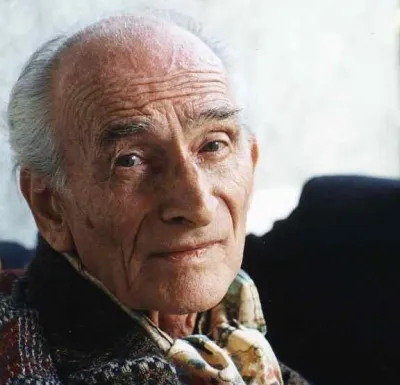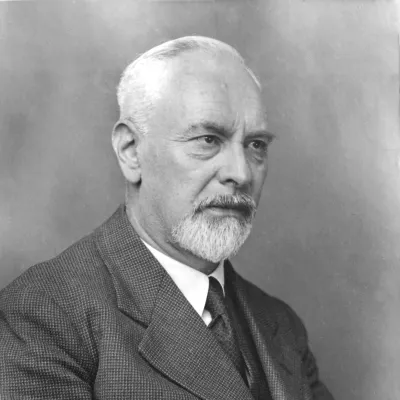
Ludwig Prandtl
Human Design Chart
Biography
He died on 15 August 1953 in Gottingen, Germany.
What does Manifesting Generator 3/5 mean for Ludwig Prandtl?
Manifesting Generator 3/5 — Design at a Glance
Ludwig Prandtl was characterized by a hybrid energy configuration: He had the constant power of a Generator but also possessed the ability to accelerate processes. His design suggested that he could quickly draw things into his life by skipping steps. This speed carries specific risks: Important stages were often skipped, leading him to return later to fill gaps – a process that caused frustration if inner consent was lacking. Additionally, he tended to pursue multiple projects simultaneously, driven by various impulses. He succeeded only when he did not initiate but reacted to life and acted only when his sacral energy gave a clear 'yes'. Regular checks to see if the projects still brought joy were essential. With correct application of this strategy, Ludwig Prandtl derived deep satisfaction from his work. The requirement to focus on one thing alone did not suit him; instead, his creative power flourished in 'play mode' when variety and fun prevailed. His energy worked best when he reacted rather than initiated and used the diversity of his interests as a source of fulfillment, avoiding frustration caused by moving too quickly or multitasking without inner resonance.
Sacral Authority
Ludwig Prandtl's decision-making was marked by direct physical resonance. As a Generator, he had sacral authority, meaning that his strategy and internal guidance were identical: waiting for external stimuli and then responding from the gut. This mechanism greatly simplified his process as no complex weighing was necessary. His responses appeared as spontaneous bursts of energy or inner confirmations – often audible as grunts or an 'mm-hm' – signaling whether something vitalized him.
The prerequisite for this clear guidance was his open emotional center; he did not decide in emotional troughs but reacted to what sparked his sacral motor. Once activated, he had inexhaustible energy and completed tasks with great enthusiasm and joy, completely free from compulsive purposefulness. Additionally, his activated spleen center acted as a supportive instance. By connecting to the sacral center, it enabled quick, spontaneous reactions and reliable access to his instinctive perception and physical well-being. He followed this immediate instinctual guidance, allowing him to efficiently and intuitively respond to his environment.
The 3/5 Profile — Martyr / Heretic
Ludwig Prandtl was someone who first had to try everything himself before helping others. His 3/5 Profile marked him as an experimenter who learned from his own mistakes to later offer practical solutions as a hero. Line 3 instilled in him skepticism towards abstract beliefs; he sought concrete evidence and listening to overcome pessimism through satire or humor. This openness was often tinged with suspicion, as he saw personal experience as the only valid measure.
Line 5 placed him in a role where society projected high expectations on him. He attracted others who wanted to learn from his rich treasury of practical life experiences. This hero role flattered him but could be painful if experiments before an audience failed. His creativity was particularly evident during crises, where he found steadfast solutions. Eccentric behavior, however, could hinder the creative process. Prandtl used his steadfastness to handle interference and maintain his insights despite external pressure. He presented his acquired knowledge to others who recognized his authority based on his practical competence.
Single Definition — Defined & Open Centers
Ludwig Prandtl showed himself to be someone who acted from a deep inner security and a clear sense of his own direction. His defined G Center gave him a reliable self-identity; he knew where he came from and where he was going without needing others to follow the same path. This internal compass needle was the basis for his actions, not a desire for external validation.
This stability was fed by his defined Sacral Center, which provided an enormous source of vital energy. Prandtl had the strength to engage in tasks that he felt inner approval for. Once he reacted and gave a "yes" from the gut, he could work with persistence and find satisfaction. His defined Throat Center ensured that this energy was translated into clear communication and action; his voice was a direct expression of his inner truth and will, not just idle talk. Additionally, his defined Spleen Center supported him through spontaneous intuition in the here and now, helping him make healthy decisions and protect himself from what could harm him.
At the same time, Prandtl was vulnerable to external influences in his open centers. His open Head and Ajna Centers meant that he did not have a constant internal mental pressure but rather took in inspirations from the environment. He tended to identify with other people's questions or get stuck in doubt if he didn't trust his inner authority. His open Heart Center made him susceptible to the pressure of needing to prove his worth, although he could not generate this energy mechanically himself. Furthermore, his open Solar Plexus absorbed the emotions of his surroundings, leading him to experience foreign moods as his own and avoid confrontations to maintain peace. Also, his open Root Center allowed him to take on external stress that he did not create but rather amplified.
Channels for reflection, rhythm and intuitive completion.
Ludwig Prandtl revealed himself as someone who acted through deep inner intuition and pointed out new directions. His design combined powerful impulses for mutation with a clear orientation. The Channel 14-2 connected the generative energy of the Sacral Center with the G Center. Through Gate 14, which cleverly dealt with material resources, and Gate 2, which represented higher knowledge, he gained the ability to initiate innovative changes. This configuration allowed him to set a strengthening new direction through trusting responses to life without having to foresee the exact path.
Parallel to this, the Channel of Perfect Form 57-10 was active. It connected the intuitive insight of the Spleen (Gate 57) with self-behaviour in the G Center (Gate 10). This gave him spontaneous clarity and the ability to move through the world existentially unburdened. His behaviour was guided by this deep intuition, which helped him let go of unfounded future anxieties and perfect his survival in the present moment. He lived a form of self-love and authenticity that touched others through their example.
Another aspect was the Channel of the Lost Son 13-33 between G Center and Throat Center. Gate 13 gathered as a listener information and secrets, while Gate 33 withdrew to reflect on them. This mechanism fostered patience and deep reflection over past experiences before insights were shared. It was about understanding life's lessons and creating continuity.
Additionally, Gates like Gate 1 with its unique creativity in the here and now and Gate 7 with its leader instinct contributed to his personality. Gate 18 brought a critical distance from authority, while Gate 50 protected traditional values. This mix of mutative power, intuitive action ability, and reflective depth shaped his way of moving through the world and inspiring others.
Individual Circuitry — Circuit Signature
Ludwig Prandtl revealed himself as someone whose inner identity was intimately intertwined with the power of survival and the rhythm of life energy. For him, a simple definition held true: The centers of Identity, Sacral, Spleen, and Throat formed one continuous energetic flow. This meant that his decisions (Identity) were not made in isolation but always emerged from deep instinctive knowledge (Spleen), along with stable cyclical life force (Sacral), and directly translated into expression (Throat).
The Knowledge Circuit connected his Identity Center to the Sacral Center through Channel "The Beat." This gave his unique individuality a pulsing, acoustic rhythm; his way of walking his path was marked by a fundamental, recurring life energy. Simultaneously, the Meaning Circuit operated via Channel "The Lost Son," linking the Throat with the Identity Center. Here it was about processing past experiences emotionally: Prandtl reflected on events, found meaning in them, and shared these felt insights with others to learn together.
Additionally, he integrated through the Integration Circuit by means of Channel "Perfect Form" his Identity Center with the Spleen Center. This connected his highest individuality with intuitive knowledge. He responded to life, channeled this energy through appropriate behavior, and manifested it in the present moment. Overall, his design worked as a coherent unit: instinct, rhythm, and emotional reflection flowed seamlessly into his expression without internal fractures or separate energetic islands.
Right Angle Cross of the Sphinx 1
Ludwig Prandtl showed a deep, often unspoken loyalty to the people and systems he defined as his "family." This bond was not light-hearted affection but rather a heavy, almost fateful commitment. The right cross of Sphinx 1 described a dynamic of sacrifice: those who were taken into this circle received unconditional support; those who left or betrayed it faced iron resistance and often an ultimate break.
For Ludwig Prandtl, this meant that he did not distribute his energy evenly but invested it concentrated in a tight group. He sought out a structure that gave him security – whether a team, an institution, or an ideological community. Within this circle, he was willing to give everything, even at his own cost. Outside these boundaries, he appeared distant and difficult to approach.
This configuration created a clear dividing line between "us" and "the others." There was no neutral space; one belonged or did not belong. This sharp demarcation served the protection of the inner circle. Ludwig Prandtl learned early that trust was a precious commodity, given only to those who passed the test of time. The right cross of Sphinx 1 shaped his life through this intense but also lonely form of connection.
Saturn Return · Uranus Opposition · Chiron Return · 2nd Saturn Return — Life Cycles
Ludwig Prandtl's design indicated a tendency towards structured and sustained work that condensed into clear professional milestones. In 1902, at age 27, he became the youngest professor at the Technical University of Hanover, marking his first Saturn return – a cycle in which years of groundwork often crystallizes into a solid result and fundamental structures for further career development emerge.
The configuration also showed phases of change and recognition. In 1918, at age 43, he received the Ackermann-Teubner Memorial Prize. This fell during the Uranus opposition, a period often marked by unexpected breakthroughs or breaking out of old patterns, enabling new perspectives.
A central aspect of his design was the unfolding of life purpose in middle age. In 1925, at age 50, he led as director the Kaiser Wilhelm Institute for Flow Research. This marked his Chiron return – a fulfillment cycle in which one's incarnation cross increasingly unfolds and meaning and purpose become experiential – provided one has lived according to their own strategy. For Prandtl, this meant the concrete realization of his life mission through leading a leading research institution until 1946.
Ultimately, this development condensed during his second Saturn return. In 1930, at age 55, he received the Daniel Guggenheim Medal. This cycle solidified previous achievements and confirmed the long-term effectiveness of his work in the scientific community.
Manifesting Generator · Sacral Authority — Synthesis
Ludwig Prandtl lived a life path marked by a deep drive for practical experience followed by sharing this knowledge. As a Manifesting Generator with sacral authority (Sacral Center), he primarily responded to external stimuli, while the connection to the Throat Center (Communication and Manifestation) enabled him to quickly process and express insights. The profile as an experimenter/hero and rescuer (Line 3/5) underscored this dynamic: He gathered experiences through personal experimentation (Line 3) and then shared these as solutions for others (Line 5). The channel of the Beat (Gate 14-2) points to energy that drives mutation and innovation – a constant striving for new paths, driven by sacral life force. Repeated recognitions for his work (Saturn Return, Uranus Opposition, Chiron Return) confirmed this path.
Prandtl seemed to live in a paradox: On one hand, he was a generator whose strength lay in reacting and acting; on the other hand, through the manifestor component, he had the ability to skip steps. This may have led him to gain new insights quickly but occasionally neglect important foundations. The knowledge feedback loop points towards an inner drive for transformation that stands in tension with the need to constantly gather new experiences and communicate them – a dynamic interplay between the urge for innovation and the need to make this knowledge fruitful.
3 Defined Channels
Incarnation Cross - Right Angle Cross of the Sphinx 1
Solar Return
The Solar Return shows the moment when the sun returns to its exact birth position - your personal solar year.
Life Cycles
Discover the life cycles with a detailed triple view (birth chart, cycle chart, composite).
Human Design Profile
- Strategy
- To respond - wait for something to respond to
- Authority
- Sacral Authority
- Profile
- 3/5 - Martyr / Heretic
- Definition
- Single Definition
- Incarnation Cross
- Right Angle Cross of the Sphinx 1
- Date of Birth
- 04.02.1875 18:45
- Place of Birth
- Freising, GER
Frequently Asked Questions
What was Ludwig Prandtl's Human Design type?
What Profile did Ludwig Prandtl have in Human Design?
What Authority did Ludwig Prandtl have?
Which incarnation cross was active for Ludwig Prandtl?
When was Ludwig Prandtl born?
Discover your own Human Design
Are you also a Manifesting Generator? Find out in a personal reading how to unfold your multi-talents and direct your energy wisely.
More Personalities
Back to overviewAldair
Alizée

Angeli

Arletty
Artus
Balthus