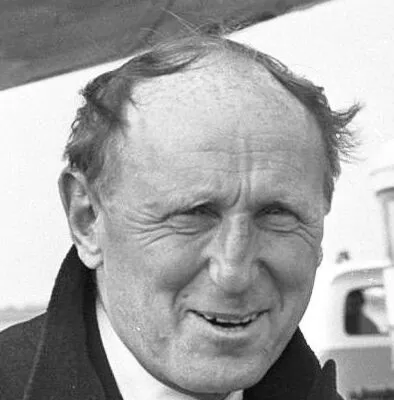
Photo: Wikimedia Commons
Ludwig Thoma
Human Design Chart
Biography
Thoma first studied Forestry then Law until 1893. Subsequently, he settled down as a lawyer, at first in Dachau, later in Munich.
After 1899, he worked for the magazine Simplicissimus and published humorous narrations, comedies, novels and stories. Thoma satirized Bavarian rural and small-town life.
In the later years of his life, he wrote nationalistic propaganda agitating against left-wing politicians.
During World War I he served as a paramedic. In July 1917 he joined the German Fatherland Party.
His best known works are Ein Münchner im Himmel (A Municher in Heaven), the Lausbubengeschichten (Scoundrel Stories) that was adapted into a movie in 1964 under the title Tales of a Young Scamp.
He died 26 August 26 1921, Rottach.
Ludwig Thoma as a Projector 5/2 in Human Design
Projector 5/2 — Design at a Glance
Ludwig Thoma was someone who immediately recognized flaws in other systems. His Human Design type is Projector, a configuration with a dense, focusing aura that acted like a bright flashlight. This trait allowed him to shed light on darkness and guide others by precisely identifying where something wasn't functioning properly in his counterpart.
However, this direct perception could be perceived as unpleasant if addressed immediately – akin to shining a light directly into someone's face. The optimal strategy for Ludwig Thoma was therefore to wait for an externally offered invitation that was respectful and sincerely meant. Instead of actively pushing, he attracted others by radiating harmony himself; people would then come to him on their own seeking advice.
As a Projector, Ludwig Thoma did not have a defined Sacral Center, meaning he didn't possess a constant, intrinsic source of life energy. Instead, he experienced phases of high productivity and speed followed by necessary rest periods for regeneration. This need for pauses often conflicted with societal structures like the school system or standardized work models that did not accommodate such rhythms. If Ludwig Thoma lived according to this design – waiting for invitations and respecting his energy cycles – he was rewarded with success. Missing this strategy led to the non-self theme of bitterness manifesting.
No Inner Authority
Ludwig Thoma lacked inner authority – a rare trait that set him apart from most people. His design did not allow him to make decisions based on a single, fixed internal compass. Instead, he found orientation through intense exchanges with various individuals. In these dialogues, dormant potentials in his open centers were activated and provided him specific information. This enabled him to view issues from many perspectives and express them differently. This high resonance ability helped him identify the right environment and suitable conversation partners.
Evaluating these diverse impressions was a complex process that required time and withdrawal. Ludwig Thoma needed moments of solitude to discern the thread and distinguish what made sense for him and what fit. Through this filtering, he developed his specific intelligence: distilling essential information from a mass of data, organizing it meaningfully, and structuring it. This formed his capital as a Projector.
A key element for him was being in an environment where he felt comfortable. There, he met people with whom he could confidently discuss decision-making processes. Over time, this regular exchange deepened his sense of what was right for him. His strength did not lie in quick self-determination but in the ability to gain clarity through external resonance and internal condensation.
The 5/2 Profile — Heretic / Hermit
Ludwig Thoma oscillated between a desire for public recognition and a deep need for withdrawal. His design carried an inner contradiction: on one hand, he aspired to help others and earn admiration (Line 5), while on the other hand, he preferred being left alone and spending time in solitude (Line 2). Unlike obvious leadership figures, Thoma initially hid his talents in his 'cave'. As long as the world hadn't discovered him, he worked intensively on himself and used this isolation to strengthen himself for a larger role.
This pattern stemmed from the dynamics of Profile 5/2. Line 5, combined with Gate 60, conveyed the ability to lead and offer practical solutions, especially when old limitations dissolved. However, this power did not immediately manifest outwardly; it needed time to form. Simultaneously, Gate 28 on Line 2 shaped his actions: an unconditional drive for victory, coupled with risk-taking and the ability to enter intuitive alliances, even if this violated principles. For Thoma, life without this game and the attempt to win was meaningless. The risk was calculable for him and formed the core of his personal purpose.
His path involved not passively waiting for discovery by others, which would have led to frustration, but actively stepping out of isolation. Once he showed his presence and formulated clear insights, he found resonance. Crucial here was maintaining balance: He had to set boundaries and preserve sufficient alone time to maintain the energy needed for his appearance on the 'hero's pedestal'. His strength lay in the combination of intuitive risk management and later ability to serve as an example.
Single Definition — Defined & Open Centers
Ludwig Thoma appeared as someone who constantly felt an internal pressure to ask questions and understand connections. His defined Head and Ajna Centers created a permanent mental activity; he thought continuously, processed data, and formed concepts. This state was not a choice but his mechanical nature: inspiration came to him in the form of questions, not complete answers. Since these centers did not have their own energy for implementation, fighting against this unresolved state led to frustration. Instead, he worked best when he accepted the pressure and stimulated others with his thoughts without having to carry the burden of execution himself.
At the same time, Ludwig Thoma was highly receptive to external influences due to his open centers. His open G Center meant that he did not have a fixed identity; he adapted to his environment and sought the right place where he felt comfortable. In relationships or at work, he reflected the energy of others, making him vulnerable to borrowed directions. His open Heart Center often led him to try proving his worth through performance, even though he lacked consistent willpower for it. This could lead to a cycle of promises and disappointment.
Furthermore, his open Solar Plexus absorbed the emotions of his surroundings, leading him to feel foreign moods as his own and avoid confrontation to maintain peace. His open Sacral Center made him susceptible to overloading; he took up vital energy from others, often burning it out without always knowing when enough was enough. The open Root Center also amplified external stress and led him to try escaping this pressure through hectic activity, which could end in burnout. Finally, his open Spleen Center left him feeling fears about health and survival, with spontaneous decisions often risky due to conditioned uncertainty. Ludwig Thoma thus lived in the tension between clear but energyless thinking and high vulnerability to the emotional and energetic currents of his world.
Channels for inner truth and rational clarity.
Ludwig Thoma appeared as someone whose mind was constantly engaged with the 'white noise' of inspiration. His design set a basic attitude: seeking hidden truth, coupled with the need to convey insights in a way that others could absorb them. This configuration described a life task of uncovering and passing on hidden connections.
Central to this was Channel 61-24 of Awareness. It connected the Head Center with the Ajna Center through Gate of Secrets (61) and Gate of Rationalizing (24). This mental definition brought about a sudden experience of knowledge, a Satori. The pressure in the head to know the unknown was transformed into rational answers in the Ajna. It wasn't about discovery but how the acoustic mind processed inspiration. Ludwig Thoma could not control his thinking; knowledge happened at its own pace. He was here to give himself over to the happy coincidence of inner truth that emerged through Gate 24.
Additionally, key gates were active: Gate 60 brought acceptance of limitations as a prerequisite for transcendence and genetic mutations and melancholy. Gate 56 allowed abstract mental processes to be depicted in imagery and storytelling. Gate 28 stood for hearing in the present moment and taking risks according to the type strategy. Gate 27 added a genetic role of care that improved all activities with warmth. Finally, Gate 43 enabled breakthroughs of individual insights through spontaneous realizations from inner dialogue, seeking communication and recognition but also carrying fear of rejection.
Individual Circuitry — Circuit Signature
Ludwig Thoma appeared as someone whose internal focus was strongly on mental clarity and the ability to be aware. His design set a tendency not just to receive thoughts but to structure them through a specific kind of understanding. This orientation stemmed from the Knowledge Circuit, though in his case it was in a reduced form.
Within this circuit for Ludwig Thoma, only Channel 24-61, the Awareness Channel, existed. This channel connected the Head Center with the Ajna Center. For him, this meant a direct energetic bridge between the place of spontaneous insight and the center of mental processing. He had the capacity to translate impulsive thought impulses from the head directly into clear, conscious knowledge. It was not about emotional expression or deep transformations for others as other parts of this circuit might describe but purely about the internal process of thinking and understanding.
Since Ludwig Thoma had a Simple Definition and all his defined centers (Head and Ajna) were in the same group, these areas experienced a unified, coherent flow. There were no separate or conflicting energetic blocks within his personality; his mental process was cohesive. The energy pulsed between receiving an idea and its mental formation, giving him clear, though possibly introverted, thinking.
Left Angle Cross of Distraction 2
Ludwig Thoma exhibited a fundamental disposition marked by the left cross of distraction. This design element described an internal tension between the urge for clear orientation and the constant danger of being sidetracked by irrelevant sensory overload. His attention tended to spread across many different points, making it difficult to focus on a single goal. Instead of linear concentration, his mind sought patterns in the environment often without clear intention or prior planning. This structure promoted a kind of awareness that could easily lead to distraction if no conscious alignment was chosen. The left cross of distraction acted as a filter for his perception: It highlighted details relevant at the moment but quickly lost sight of them once new impulses arose. For Ludwig Thoma, this meant he had to learn to deal with this natural dispersion without valuing it as a deficit. His energy did not move in straight lines but in wave-like movements that allowed him to adopt various perspectives while also making him vulnerable to overstimulation. The challenge lay in filtering out the essential from the abundance of impressions and remembering what was truly important rather than being carried away by each new stimulus.
Saturn Return · Uranus Opposition · Chiron Return — Life Cycles
Ludwig Thoma showed himself as someone whose creative power became palpable in clear cycles. His design laid a tendency towards periodic bursts of productivity and structural consolidation. In 1895, at the age of 28, he published the short story “Der Truderer”. This marked his first Saturn return: a time when years of inner groundwork often condenses into a tangible external result. For his chart, this was no coincidence but the mechanism of Saturn promoting stability and long-term achievements.
Projector · No Inner Authority — Synthesis
Ludwig Thoma lived primarily through observation and recognizing patterns in his environment (Projector Type, Gate 61/24). However, identifying “errors in the system” was not without friction as direct confrontation generated resistance. Instead, he worked subtly, projecting his knowledge and inspiration onto others (defined Head and Ajna Centers), especially when engaged in exchanges that provided him with information (open centers below the Throat Center). Repeated successes — such as publishing a short story or having an exceptionally productive year — coincided with cycles allowing new insights and transformations (Knowledge Circuit).
A central tension field shaped his essence: The desire for recognition as a hero (Line 5) clashed with the need for withdrawal and solitude (Line 2). This led to hiding his talents, strengthening in secrecy until the world “discovered” him. This ambivalence also reflected how he processed his inspiration — an abrupt flash of insight (Channel 24-61) was rationalized and transformed before being expressed.
1 Defined Channel
Incarnation Cross - Left Angle Cross of Distraction 2
Solar Return
The Solar Return shows the moment when the sun returns to its exact birth position - your personal solar year.
Life Cycles
Discover the life cycles with a detailed triple view (birth chart, cycle chart, composite).
Human Design Profile
- Type
- Projector
- Strategy
- Wait for the respectful invitation
- Authority
- No inner authority - learn more
- Profile
- 5/2 - Heretic / Hermit
- Definition
- Single Definition
- Incarnation Cross
- Left Angle Cross of Distraction 2
- Date of Birth
- 21.01.1867 11:00
- Place of Birth
- Oberammergau, GER
Frequently Asked Questions
What was Ludwig Thoma's Human Design type?
What profile did Ludwig Thoma have in Human Design?
What inner authority did Ludwig Thoma possess?
What incarnation cross did Ludwig Thoma have?
When was Ludwig Thoma born?
Discover your own Human Design
Are you also a Projector? Find out in a personal reading how to unfold your leadership qualities and recognize the right invitations.
More Personalities
Back to overviewSissy Spacek
Alain-Fournier
Anémone
Angeli
Ann-Margret
Bourvil