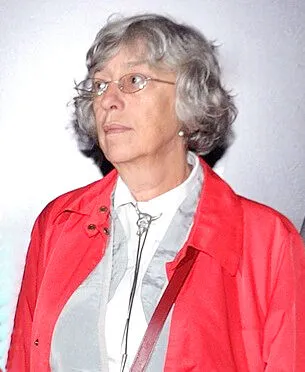
Photo: Wikimedia Commons
Mano Solo
Human Design Chart
Biography
He was the son of the illustrator Cabu and Isabelle Monin, co-founder of the ecology-related magazine, La Gueule ouverte.
Solo had HIV/AIDS. He suffered a series of aneurisms before he died at the age of 46 on 10 January 2010.
Human Design Analysis: Mano Solo as Projector 3/5
Projector 3/5 — Design at a Glance
Mano Solo was someone who directed his energy focusedly towards his environment, much like a bright flashlight illuminating specific areas that would otherwise remain in the dark. His Projector design allowed him to immediately recognize where other systems had errors or blockages. However, this direct perception could, if expressed abruptly, provoke resistance in others, as if the light were shining directly into their faces.
Instead, his true strength lay in attracting others through his own harmony and clarity. When he himself was a shining example, people sought him out for advice. The central strategy of his design was to wait for an honest and respectful invitation before taking on a leadership role. This protected him from the typical Projector trap of feeling bitter when his insights were not acknowledged.
Since his Sacral Center was undefined, Mano Solo did not have a constant, intrinsic energy source. Instead, he experienced phases of high activity followed by necessary rest periods for regeneration. The conventional work life, which often demands continuous performance, did not suit this rhythm. Living according to these principles rewarded him with success; ignoring them led to the feeling of bitterness as a warning signal of his non-self. His path was to bring his specific perspective only when it was explicitly requested.
Emotional Authority
Mano Solo was someone who did not make decisions on impulse but needed conscious time to gain clarity. His design carried emotional authority, meaning his defined Emotional Center held the inner guidance. This configuration was subject to a wave movement of emotions, showing a constant up and down. The world appeared to him always colored by the current mood; what seemed inspiring in one moment could be perceived as negative in the next. Since this immediate emotional reaction was often only a temporary snapshot and not the deeper truth, spontaneous judgments were risky.
The mechanics of his inner authority required patience. By giving himself time and reconsidering decisions multiple times, often even letting them rest overnight, he could let the initial emotional heat subside. With this distancing, intense feelings subsided, and a calm, clear insight emerged. This process of emotional maturation was crucial for long-term course corrections that could shape his life path. Only through this conscious hesitation and willingness to question himself did he manage to recognize the true essence of a situation beyond the transient waves of his feelings.
The 3/5 Profile — Martyr / Heretic
Mano Solo's design was characterized by the configuration of the Explorer and Hero. He primarily learned through his own experimentation and failure, gaining practical knowledge that he offered to others as a solution. This profile created a strong attraction, as people perceived his experiences as valuable and cast him in the role of the savior.
Line 3 of his design conveyed the necessity of experiencing everything firsthand before belief was possible. This included a process of adaptation through trial and error. At the same time, he carried the burden of Line 5, which was projected from the outside. Others expected heroism and wisdom from him, which flattered him but could also be painful when his experiments failed in public.
A central conflict arose from the tension between greed and limitation. On one side, there was a compulsion to possess or know more than necessary to care for others – often linked to secret information. On the other side, the empowerment by others led to a strong projection, forcing him into a single fantasy. This limitation generated lasting frustration over constraints, as his nature yearned for freedom and the joy of experimentation. Thus, he lived in the tension field between the need to learn through his own mistakes and the pressure to be the perfect solution for others.
Split Definition — Defined & Open Centers
Mano Solo's Human Design profile was characterized by a consistent mental structure and a clear inner direction. His defined Ajna Center ensured a reliable way of conceptualizing; he thought constantly and was hard to influence by external opinions. This mental stability was combined with a defined G Center, which gave him a firm sense of self and a clear purpose for his personal life mission. He knew who he was and could show others new perspectives without losing his own identity.
His communication was marked by a defined Throat Center, serving as a pivot point to bring the thoughts of the Ajna and the impulses of the Solar Plexus into the world. His voice was a reliable expression of his inner processes. The defined Solar Plexus Center functioned as his inner authority: He needed time to wait out emotional waves before making decisions. This emotional depth allowed him to view situations from many angles, rather than acting impulsively. The defined Root Pressure provided the necessary energy to move forward in the material world and transform stress into constructive action.
At the same time, Mano Solo was open to external influences through several open centers. His open Head Center made him vulnerable to mental pressure and the temptation to answer questions that were not his own. He tended to get entangled in the confusion of others rather than trusting his inner clarity. The open Heart Center led to him not being driven by the need to prove his worth through willpower or promises, which could confuse him in a competitive world. His open Sacral Center meant that he did not have constant generative energy, but rather absorbed and amplified the life force of his environment, which could lead to exhaustion if he ignored his limits. Finally, the open Spleen Center made him sensitive to health and survival fears; he had to learn to avoid spontaneous decisions and not cling to unhealthy situations just to feel secure.
Channels for logical acceptance, leadership and mystical synthesis.
Mano Solo was someone who created logical structures to make complex emotional and social connections understandable. His design combined the ability to recognize patterns with the drive to translate them into clear language and exercise collective leadership based on trust.
The Synthesis Channel 19-49 connected the Root Center with the Solar Plexus. This generated a deep sensitivity to the cohesion of the 'tribe' – whether family or community. Mano Solo sought principles that supported this bond and was careful to ensure fairness and protection within his social circles. This emotional frequency determined who belonged to his inner circle.
Parallel to this, the Acceptance Channel 17-62 between Ajna and Throat Centers was at work. Here he organized visual patterns and details mentally before articulating them verbally. He translated what he saw into words to create understanding. This process required patience; he sought the invitation to speak to effectively convey his logically structured opinions without encountering resistance.
The collective dimension was added through the Alpha Animal 7-31, connecting the G Center with the Throat Center. This gave him a logical leadership role. He did not seek absolute authority but rather an influence area where he was guided by competence and an understanding of trends. His leadership was democratic: It only acted when it was recognized and invited by the majority.
Additionally, Gates like 27 (Care) and 28 (Risks in the Here and Now) shaped his approach. He cared for the well-being of his surroundings but only took steps that aligned with his personal sense. Gate 41 drove him to find the next experience through emotional crises, while Gate 2 made him receptive to new evolutionary directions. Thus, he combined mystical innocence (Gate 25) with sober reflection (Gate 33) to bring his unique perspective (Gate 1) into the world.
Collective Circuitry — Circuit Signature
Mano Solo's design tended towards structured, rational analysis free from emotional coloring. This was evident through the Understanding Circuit, which in him directly connected the Ajna Center (focus, strategy) with the Throat Center (expression) and the Identity Center (who I am). This connection allowed him to clearly articulate and share logical insights and strategic visions for the future without emotions distorting the process. It was an 'emotionless ratio' aimed at improving things and guiding society in a better direction.
Parallel to this, there was a separate, unconnected energy group: The Solar Plexus Center (emotional waves) was connected with the Root Center (survival pressure, energy). This formed the second part of his design, the Ego Circuit. Here it was not about individual identity but about tribe dynamics and cooperation. Through the Synthesis Channel (Gates 49-19), Mano Solo processed emotional waves and transformed them into tangible, material support. Since this group was not connected to the Sacral Center, he needed rest periods to regenerate resources for the tribe. The two groups – the rational, future-oriented communication and the emotional, tribe-related resource building – existed side by side as separate forces, without directly flowing into each other. This created a profile that on one hand conveyed clear, strategic visions and on the other was based on mutual support and the balance of giving and taking.
Right Angle Cross of the Unexpected 1
Mano Solo's design carried the signature of the right cross of the Unexpected 1. This configuration placed him in a specific archetypal field characterized by sudden turns and breaking established patterns. The right cross of the Unexpected 1 describes an energy that does not develop linearly but progresses through unexpected events. It is a structure that often challenges stability through the unpredictable and clears new paths by questioning the known.
For Mano Solo, this meant a life dynamic based on the principle of surprise. His design suggested that he found himself in situations where the expected failed to materialize or changed abruptly. This energy acted as a catalyst for change, not through gradual evolution, but through disruptive moments. It demanded an openness to the unknown, as the path often only became visible in hindsight. The mechanics of this cross underscore the need not to orient oneself to rigid plans but to use the power of surprise to open up new perspectives. Mano Solo lived in a rhythm determined by these unexpected impulses, which significantly influenced his way of experiencing and shaping the world.
Saturn Return · Uranus Opposition — Life Cycles
Mano Solo was someone whose creative energy condensed into clear, cyclical phases, with external milestones marking internal developmental processes. His design suggested a structure in which long-term work led up to specific timepoints where results became visible.
This mechanism became evident in 1993, at the age of 30, when the first Saturn Return, a cycle often symbolizing the maturation and solidification of earlier efforts, coincided with his breakthrough. The album „La Marmaille Nue“ achieved gold status. For his design, this was no coincidence but the moment when years of groundwork turned into a solid, recognized result. The Saturn Return here acted as a catalyst for validation and structuring of the previous path.
Later, in 2002, at the age of 39, another shift occurred. The Uranus Opposition, an aspect often associated with suddenness, change, and questioning existing structures, marked this phase. The live album „La Marche“ was released. This did not mark a static continuation but a dynamic further development of his career. While the Saturn Return stabilized the foundation, the Uranus Opposition opened new spaces for expression. Mano Solo's design thus showed how different planetary influences shaped his artistic development in various life stages: once through solidification and recognition, another time through change and new impulses.
Projector · Emotional Authority — Synthesis
Mano Solo was a projector who, through his ability to recognize patterns (defined Ajna Center) and logically communicate them (Channel „The Alpha Animal“), played a formative role. He saw where systems did not function and shared his knowledge from practical experience (Profile 3/5 Experimenter/Leader) to help others. However, this tendency to bring light to the dark was always marked by the emotional wave that delayed his decisions – a process that allowed him to gain deeper insights but also required patience.
A central paradox in his design lay in the combination of the ability for clear, future-oriented leadership (Channel „The Alpha Animal“) and emotional authority. While the mind offered logical solutions, it took time for emotions to confirm or reject them. This led to a tension between the drive to share knowledge and lead and the need to wait for his own emotional clarity, which was reflected in professional successes (Saturn Return 1993, Uranus Opposition 2002) enabled by mature decisions.
3 Defined Channels
Incarnation Cross - Right Angle Cross of the Unexpected 1
Solar Return
The Solar Return shows the moment when the sun returns to its exact birth position - your personal solar year.
Life Cycles
Discover the life cycles with a detailed triple view (birth chart, cycle chart, composite).
Human Design Profile
- Type
- Projector
- Strategy
- Wait for the respectful invitation
- Authority
- Emotional Authority
- Profile
- 3/5 - Martyr / Heretic
- Definition
- Split Definition
- Incarnation Cross
- Right Angle Cross of the Unexpected 1
- Date of Birth
- 24.04.1963 22:20
- Place of Birth
- Châlons en Champagne, France
Frequently Asked Questions
What was Mano Solo's Human Design type?
What profile did Mano Solo have?
What was Mano Solo's Authority?
What incarnation cross did Mano Solo have?
When was Mano Solo born?
Discover your own Human Design
Are you also a Projector? Find out in a personal reading how to unfold your leadership qualities and recognize the right invitations.
More Personalities
Back to overviewSissy Spacek
Aaliyah

Alain-Fournier
Alexia
Alizée
Anémone